
Home/Animals/Insecta/Hercules Beetle
Species profileIUCN: NE

Hercules Beetle

Dynastes hercules

A giant Neotropical rhinoceros beetle whose males wrestle with elongated horns.

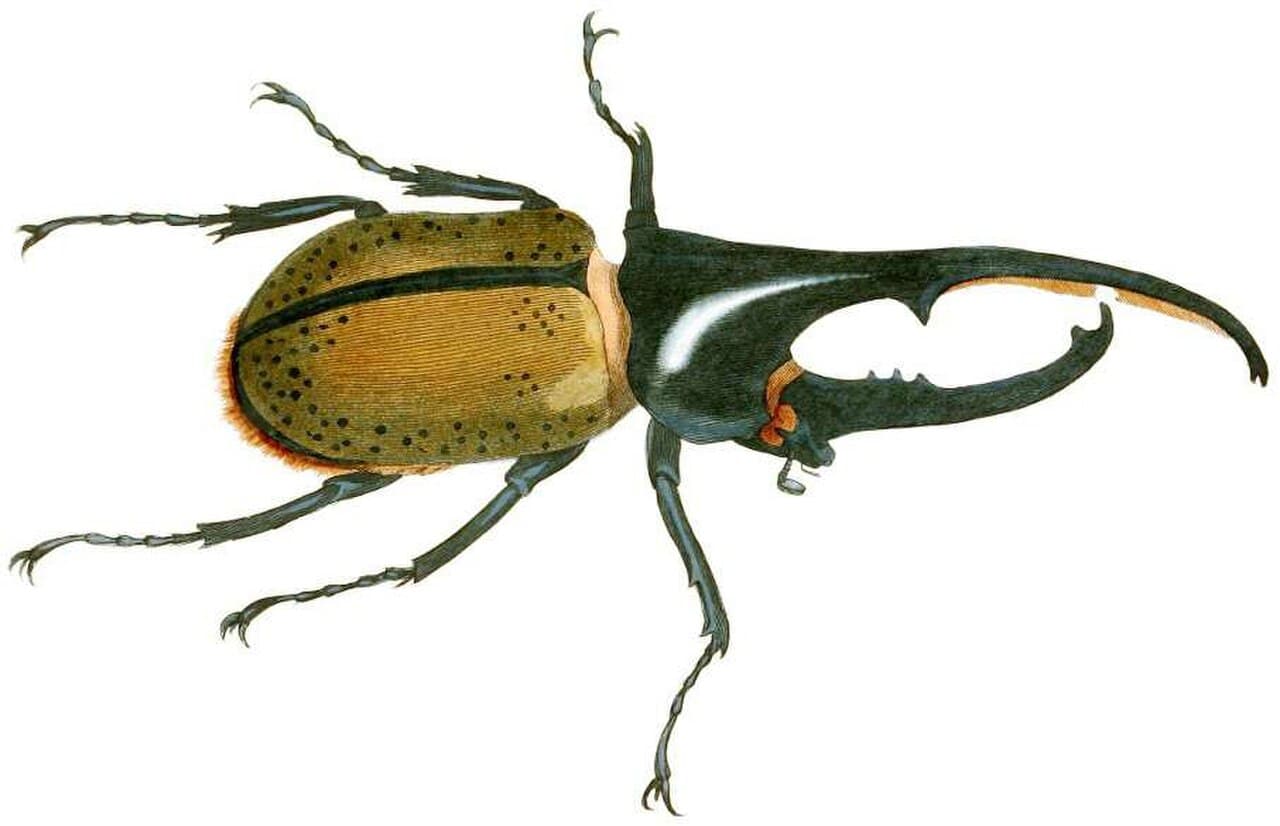
Historical color illustration of a male Hercules beetle with long opposing horns
Dru Drury / Biodiversity Heritage Library / public domain
๐ŸŒ Read in Language:

โšก At a Glance

Species profile
Diet Category
Detritivore as a larva and frugivore as an adult
Activity Rhythm
Adults are mainly nocturnal and may fly to lights.
Wild Lifespan
Larval development often one to two years; adults live several months
Typical Weight
commonly several tens of grams
Conservation Status
NE
๐Ÿ’ก Key Biological Insight: Microscopic structure in the wing covers makes them appear yellow when dry and much darker when humid.

๐ŸŒณ Scientific Taxonomy Hierarchy

The Hercules beetle belongs to the scarab family Scarabaeidae and rhinoceros-beetle subfamily Dynastinae. Several geographic subspecies have been named.

KingdomAnimalia
PhylumArthropoda
ClassInsecta
OrderColeoptera
FamilyScarabaeidae
GenusDynastes
SpeciesDynastes hercules

Distinguishing Anatomical Features

  • โœ“A very large beetle; males carry a long upper thoracic horn and opposing lower head horn. Dry male wing covers are yellow-olive with black spots, while females are hornless and generally dark.
  • โœ“Male horns form a lifting clamp in contests
  • โœ“Elytra protect folded flight wings
  • โœ“Humidity changes the optical appearance of wing covers
  • โœ“Powerful clawed legs grip bark

๐Ÿ“ Physical Measurements

Total Lengthadults about 2โ€“6.7 in including male horns
Body Weightcommonly around 1โ€“3 oz
Tail LengthNot applicable
WingspanHind wings unfold beneath the hardened elytra
Top SpeedNo dependable universal maximumMovement changes with context and conditions.

๐ŸŽจ Appearance & Distinctive Markings

Yellow-oliveBlackBrown

Skin / Covering: Hard chitinous exoskeleton

Sexual Dimorphism: Males possess enormous opposing horns and may be much longer; females lack horns and have a rougher, darker body.

๐Ÿ—บ๏ธ Geographic Distribution & Habitat

Tropical southern Mexico, Central America, northern and western South America and parts of the Lesser Antilles.

Humid lowland and montane tropical forest with decaying wood, leaf litter, sap flows and fallen fruit.

Country-level distribution map

Native range
FijiTanzaniaWestern SaharaCanadaUnited StatesKazakhstanUzbekistanPapua New GuineaIndonesiaArgentinaChileCongo - KinshasaSomaliaKenyaSudanChadHaitiDominican RepublicRussiaBahamasFalkland IslandsNorwayGreenlandFrench Southern TerritoriesTimor-LesteSouth AfricaLesothoMexico โ€” Native rangeUruguayBrazil โ€” Native rangeBolivia โ€” Native rangePeru โ€” Native rangeColombia โ€” Native rangePanama โ€” Native rangeCosta Rica โ€” Native rangeNicaragua โ€” Native rangeHonduras โ€” Native rangeEl SalvadorGuatemala โ€” Native rangeBelize โ€” Native rangeVenezuela โ€” Native rangeGuyanaSurinameFranceEcuador โ€” Native rangePuerto RicoJamaicaCubaZimbabweBotswanaNamibiaSenegalMaliMauritaniaBeninNigerNigeriaCameroonTogoGhanaCรดte dโ€™IvoireGuineaGuinea-BissauLiberiaSierra LeoneBurkina FasoCentral African RepublicCongo - BrazzavilleGabonEquatorial GuineaZambiaMalawiMozambiqueEswatiniAngolaBurundiIsraelLebanonMadagascarPalestinian TerritoriesGambiaTunisiaAlgeriaJordanUnited Arab EmiratesQatarKuwaitIraqOmanVanuatuCambodiaThailandLaosMyanmar (Burma)VietnamNorth KoreaSouth KoreaMongoliaIndiaBangladeshBhutanNepalPakistanAfghanistanTajikistanKyrgyzstanTurkmenistanIranSyriaArmeniaSwedenBelarusUkrainePolandAustriaHungaryMoldovaRomaniaLithuaniaLatviaEstoniaGermanyBulgariaGreeceTรผrkiyeAlbaniaCroatiaSwitzerlandLuxembourgBelgiumNetherlandsPortugalSpainIrelandNew CaledoniaSolomon IslandsNew ZealandAustraliaSri LankaChinaTaiwanItalyDenmarkUnited KingdomIcelandAzerbaijanGeorgiaPhilippinesMalaysiaBruneiSloveniaFinlandSlovakiaCzechiaEritreaJapanParaguayYemenSaudi ArabiaCyprusMoroccoEgyptLibyaEthiopiaDjiboutiUgandaRwandaBosnia & HerzegovinaNorth MacedoniaSerbiaMontenegroKosovoTrinidad & TobagoSouth Sudan
Highlighted countries are recorded profile locations, not precise biological range boundaries.Map boundaries: Natural Earth

๐Ÿ’ก Did You Know?

  • ๐Ÿ’กMale horns form a lifting clamp in contests
  • ๐Ÿ’กElytra protect folded flight wings
  • ๐Ÿ’กHumidity changes the optical appearance of wing covers
  • ๐Ÿ’กPowerful clawed legs grip bark

๐ŸŒฟ Conservation Status & Threats

IUCN: NE โ€” NE

โ€œNot Evaluated by the IUCN; status should be assessed by region rather than assumed from its broad distribution.โ€

Population TrendUnknown
Wild Population EstimateNo dependable global population estimate is available.

โš ๏ธ Major Threats to Hercules Beetle

  • โ€ขForest loss
  • โ€ขRemoval of decaying wood
  • โ€ขUnsustainable collection
  • โ€ขPesticide exposure

๐Ÿ”„ Life Cycle & Reproduction

Wild vs. Captivity Lifespan Comparison

๐ŸŒฟ In the WildLarval development often one to two years; adults live several months
๐Ÿ  In Captivity (with veterinary care)Can differ under managed care.
Clutch / Litter SizeSeveral dozen eggs may be laid individually through the breeding period.
Incubation / GestationEggs hatch after several weeks under warm humid conditions
Fledging / WeaningThe grub passes through three larval stages, grows for one to two years, forms a pupal chamber and metamorphoses into an adult.
Sexual MaturityAdult at emergence after pupation
Mating SystemInternal fertilization; egg-laying
Nesting / Den TypeEggs placed in rotting wood or organic soil

๐Ÿฆ… Behavior & Field Ecology

Detritivore as a larva and frugivore as an adult

๐ŸŒ Ecological Food Web & Relationships: Larvae help decompose dead wood and recycle nutrients; adults and larvae feed predators.

Social Group SizeSolitary except at food and mating sites
Activity RhythmAdults are mainly nocturnal and may fly to lights.
Feeding StrategyDetritivore as a larva and frugivore as an adult

๐Ÿฅฉ Primary Prey & Preferred Diet

โœ“ Decaying woodโœ“ Rotting fruitโœ“ Tree sap

๐Ÿ“ข Communication & Territorial Signals

  • Chemical cues
  • Horn contact
  • Substrate vibration

๐Ÿพ Wild Temperament & Traits

โ€ข Nocturnalโ€ข Strong-clingingโ€ข Nonvenomous

๐Ÿค Human Interaction & Pet Advisory

โš ๏ธ Strictly Wild Species
๐Ÿšซ

Can You Keep a Hercules Beetle as a Pet?

Possible for specialist invertebrate keepers using lawful captive-bred stock and deep decomposed substrate.

Domestication StatusWild and not domesticated
Danger to HumansHarmless to people
Economic & Ecotourism RoleNutrient cycling, research on biomechanics and structural color, education and responsible insect culture.

โš ๏ธ Behavioral Risk Factors & Wildlife Safety

  • Claws may feel sharp
  • Large males can pinch weakly between horns

๐ŸŒ Ecological Food Web & Relationships

๐Ÿฆ… Natural Predators (3)

BirdsAves
MammalsMammalia
Parasitoid WaspsHymenoptera

๐Ÿงฌ Related Species (2)

Eastern Hercules BeetleDynastes tityusNorth American relative
Western Hercules BeetleDynastes grantiiSouthwestern North American relative

Hercules Beetle (Dynastes hercules) is one of the worldโ€™s longest beetles and lives in tropical forests of the Americas. This guide separates well-supported biology from common assumptions and covers identification, range, habitat, diet, behavior, reproduction and conservation.

Identification

A very large beetle; males carry a long upper thoracic horn and opposing lower head horn. Dry male wing covers are yellow-olive with black spots, while females are hornless and generally dark. Males possess enormous opposing horns and may be much longer; females lack horns and have a rougher, darker body.

Identification should combine body shape, markings, size, voice or movement, and location. One feature by itself can overlap with a related animal, a juvenile, or an individual in unusual light.

Photographs are most useful when they preserve scale and show several diagnostic features. Handling or repositioning a wild hercules beetle for identification can cause stress and is unnecessary.

Size and physical adaptations

Hercules Beetle typically measures adults about 5โ€“17 cm including male horns and weighs commonly several tens of grams. Body length excluding horns is far shorter, and male horn size responds strongly to larval nutrition.

Its useful adaptations include male horns form a lifting clamp in contests, elytra protect folded flight wings, humidity changes the optical appearance of wing covers, powerful clawed legs grip bark. These traits work together in the animal’s normal setting rather than serving as isolated curiosities.

Published measurements may use different methods, life stages or sample locations. Comparing figures responsibly means checking what was measured rather than selecting the largest number available.

Range and distribution

Tropical southern Mexico, Central America, northern and western South America and parts of the Lesser Antilles. The native range includes Mexico, Belize, Guatemala, Honduras, Nicaragua, Costa Rica, Panama, Colombia, Venezuela, Ecuador, Peru, Bolivia, Brazil, Dominica, Guadeloupe.

A country-level map indicates broad distribution, not continuous occupation. Climate, elevation, water, vegetation, prey, breeding sites, barriers and survey effort all affect where records occur.

Records near the edge of the range deserve careful documentation because they may reflect natural movement, improved survey coverage, accidental transport or a genuine distribution change.

Habitat

Humid lowland and montane tropical forest with decaying wood, leaf litter, sap flows and fallen fruit.

Larvae develop inside rotting wood and organic debris, while adults climb trees and visit damaged fruit or sap. Protecting a population therefore requires the feeding, shelter and breeding features that make a site usable, along with connections that allow movement.

Microhabitat matters. Shade, soil, current, moisture, shelter or host plants can determine whether a small area is usable even when the surrounding landscape appears suitable.

Diet and feeding

Hercules Beetle is a detritivore as a larva and frugivore as an adult. Important foods include decaying wood, rotting fruit, tree sap. Larvae chew decomposed plant material and associated microbes; adults use mouthparts to take soft fermented fruit and sap rather than solid leaves.

Diet changes with age, season, location and food supply. A dramatic prey record does not establish what most individuals eat most of the time; repeated field observations provide a stronger picture.

Feeding opportunities also create risk. An animal focused on prey may be less alert to predators, traffic or people, while contaminated prey can transfer pollutants through the food web.

Behavior and communication

Adults are mainly nocturnal and may fly to lights. Males meet on feeding or mating sites and use the two horns as a clamp to lift and throw rivals from the substrate.

Chemical cues help locate food and mates, while horn contact and vibration dominate close male contests. Behavior should be interpreted in context: alarm, courtship, feeding and temperature regulation can produce very different actions from the same animal.

Daily schedules are flexible responses, not rigid rules. Weather, breeding condition, disturbance, tides or food can move activity into a different part of the day.

Reproduction and development

Females lay eggs in decomposing wood or rich organic substrate where larvae can feed for many months. Several dozen eggs may be laid individually through the breeding period. undefined

Young animals face different risks and may use different microhabitats or food than adults. Breeding success depends on adult condition, suitable sites and the survival of offspring through vulnerable early stages.

Counts of eggs or young describe reproductive output, not the number expected to reach adulthood. Mortality is normally greatest during eggs, larval or juvenile stages.

Predators and ecological role

Larvae help decompose dead wood and recycle nutrients; adults and larvae feed predators. Documented or likely predators include Birds, Mammals, Parasitoid Wasps.

This animal is both a consumer and a food source. Its influence comes through many repeated interactions, so ecological claims should be based on measured populations rather than assumptions drawn from appearance.

Predator and prey relationships differ among places. A species can be ecologically influential without being abundant everywhere, and its role can change across its range.

Relationship with people

The species is popular with insect keepers and collectors; lawful captive-bred sourcing reduces pressure on wild populations.

It is not venomous and does not sting, but strong claws can scratch. Handle minimally and never release captive insects. Responsible observation means keeping an appropriate distance, avoiding capture or feeding, protecting habitat and following local wildlife or invasive-species guidance.

Wildlife guidance should come from the responsible local agency because collection rules, reporting requests and appropriate responses differ between native and introduced ranges.

Conservation

Not Evaluated by the IUCN; status should be assessed by region rather than assumed from its broad distribution. The reported global trend is Unknown.

Important pressures include forest loss, removal of decaying wood, unsustainable collection, pesticide exposure. Global status can hide local decline or recovery, so current regional monitoring and habitat management remain necessary.

The most useful conservation action follows the documented pressure. Protecting breeding sites, reducing road deaths or limiting pollutants can require different tools in different populations.

Sources and further reading

โ“ Frequently Asked Questions

Answers to frequently asked questions verified against peer-reviewed zoological research.

Exceptional males can approach 17 centimetres including their horns, while the body alone and females are substantially shorter.