
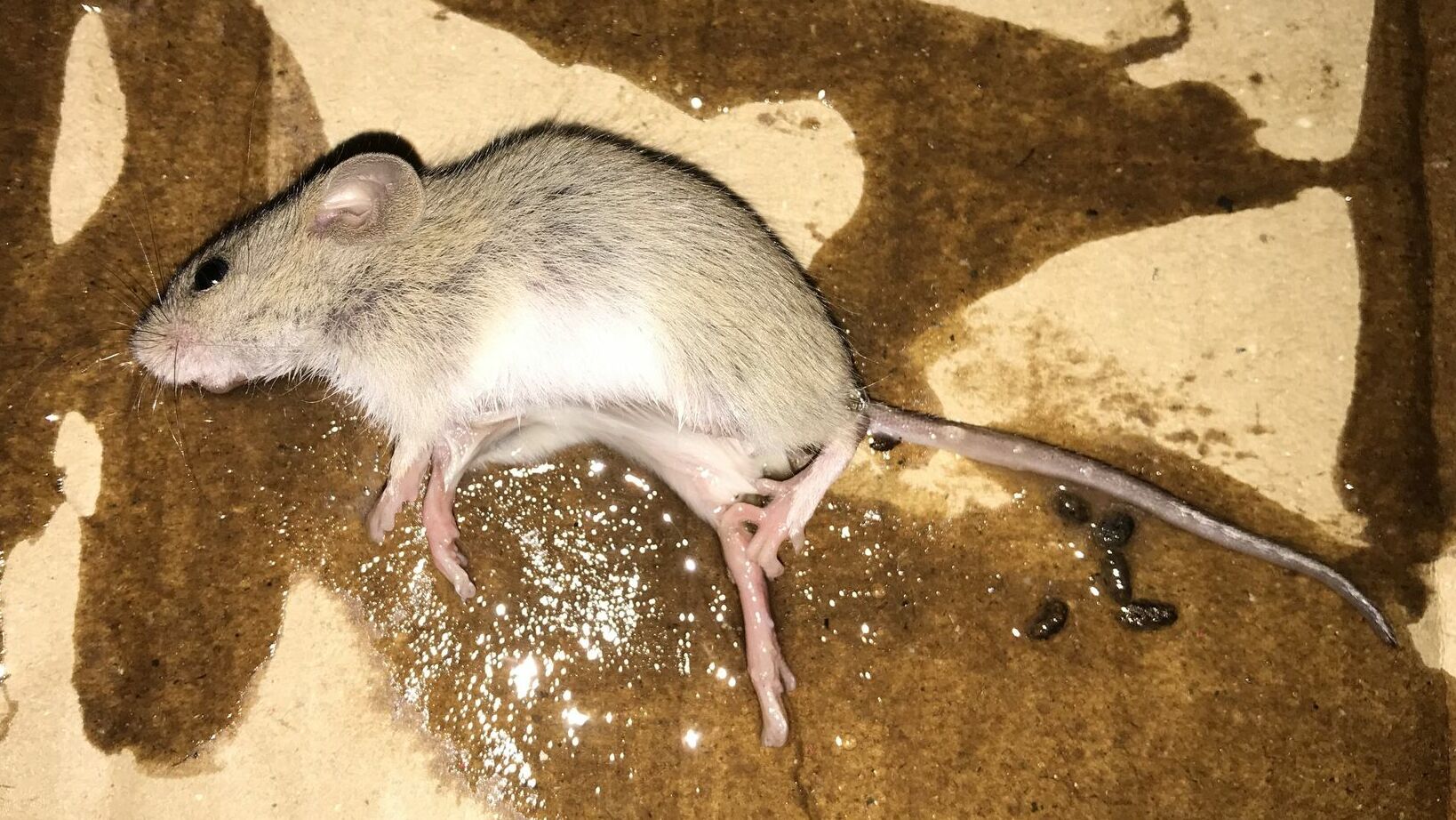
Himalayan Field Mouse (Apodemus pallipes) are small murid rodents found across high valleys and mountain slopes from Central Asia through the Hindu Kush and western Himalayas, usually above 1,400 metres. This guide separates well-supported biology from common assumptions and covers identification, range, habitat, diet, behavior, reproduction and conservation.
Identification
This is a small, long-tailed field mouse with large dark eyes, rounded ears and a pointed muzzle. Museum series describe the back as pale buff-brown to drab brownish gray and the underside as whitish gray or solid white without a colored chest wash. The tail is about as long as, or slightly longer than, the head and body. Published identification accounts do not describe a strong difference in external color or size between adult males and females. Reliable sexing requires examination of anatomy.
Identification should combine body shape, markings, size, voice or movement, and location. One feature by itself can overlap with a related animal, a juvenile, or an individual in unusual light.
Photographs are most useful when they preserve scale and show several diagnostic features. Handling or repositioning a wild himalayan field mouse for identification can cause stress and is unnecessary.
Size and physical adaptations
Himalayan Field Mouse typically measures Head and body up to about 10 cm in a Nepal identification key and weighs No well-supported species-wide range located. Measurements are difficult to generalize because museum series span a wide mountain range; identification often also uses hind-foot, skull and tooth measurements.
Its useful adaptations include long tail aids balance in rocky and vegetated terrain, large eyes support activity in low light, rounded ears detect faint movement and calls, small body fits crevices and dense ground cover, ever-growing incisors process seeds and other firm foods. These traits work together in the animal’s normal setting rather than serving as isolated curiosities.
Published measurements may use different methods, life stages or sample locations. Comparing figures responsibly means checking what was measured rather than selecting the largest number available.
Range and distribution
The accepted range follows the Pamirs of Kyrgyzstan and Tajikistan, the mountains of northern Afghanistan, northern Pakistan and northwestern India, then extends east through the Himalayas to central Nepal and southwestern Tibet in China. The native range includes Afghanistan, China, India, Kyrgyzstan, Nepal, Pakistan, Tajikistan.
A country-level map indicates broad distribution, not continuous occupation. Climate, elevation, water, vegetation, prey, breeding sites, barriers and survey effort all affect where records occur.
Records near the edge of the range deserve careful documentation because they may reflect natural movement, improved survey coverage, accidental transport or a genuine distribution change.
Habitat
Mountain grasslands, forest edges, shrub cover, agricultural margins and other vegetated ground in the Pamirs, Hindu Kush and Himalayas, recorded from roughly 1,465 to 3,965 metres.
Records are concentrated above about 2,440 metres. The mouse uses ground cover, rock spaces and vegetation for concealment; distribution records should not be read as proof that it occupies every habitat throughout each listed country. Protecting a population therefore requires the feeding, shelter and breeding features that make a site usable, along with connections that allow movement.
Microhabitat matters. Shade, soil, current, moisture, shelter or host plants can determine whether a small area is usable even when the surrounding landscape appears suitable.
Diet and feeding
Himalayan Field Mouse is a opportunistic omnivore, with species-specific diet details poorly documented. Important foods include seeds, grains, fruits, green plant material, small invertebrates. Like other Apodemus field mice, it forages on or close to the ground and handles small food items with the forefeet. Direct quantitative studies of this species’ diet are scarce, so the relative importance of seeds, vegetation and invertebrates remains uncertain.
Diet changes with age, season, location and food supply. A dramatic prey record does not establish what most individuals eat most of the time; repeated field observations provide a stronger picture.
Feeding opportunities also create risk. An animal focused on prey may be less alert to predators, traffic or people, while contaminated prey can transfer pollutants through the food web.
Behavior and communication
Likely most active from dusk through night, as in closely related Apodemus mice; detailed species-specific activity studies are limited. The Himalayan field mouse moves through low vegetation and sheltered ground, using its long tail for balance. Much of what is known comes from museum specimens and trapping surveys rather than continuous behavioral observation, so precise home-range and social estimates are not available.
No species-specific call repertoire has been published in the major references used here. As a murid rodent it relies on scent marks, touch, posture and audible or ultrasonic vocal signals, but details should not be assumed identical to better-studied Apodemus species. Behavior should be interpreted in context: alarm, courtship, feeding and temperature regulation can produce very different actions from the same animal.
Daily schedules are flexible responses, not rigid rules. Weather, breeding condition, disturbance, tides or food can move activity into a different part of the day.
Reproduction and development
Detailed field data on breeding season, gestation and litter size are not available in the main taxonomic accounts. It is a placental mammal and gives birth to dependent young in a concealed nest, but numerical values from other field-mouse species should not be assigned to it. Not reliably documented for this species Young are born dependent in a sheltered nest and develop fur, hearing, sight and independent movement before dispersing. Species-specific timing remains insufficiently documented.
Young animals face different risks and may use different microhabitats or food than adults. Breeding success depends on adult condition, suitable sites and the survival of offspring through vulnerable early stages.
Counts of eggs or young describe reproductive output, not the number expected to reach adulthood. Mortality is normally greatest during eggs, larval or juvenile stages.
Predators and ecological role
As a small ground-dwelling omnivore, the Himalayan field mouse can consume plant material and small invertebrates and serve as prey for mountain carnivores, snakes and raptors. Direct species-level food-web studies remain limited, so these roles should be understood in the broader context of Apodemus mice. Documented or likely predators include Owl, Fox, Small mustelid, Snake.
This animal is both a consumer and a food source. Its influence comes through many repeated interactions, so ecological claims should be based on measured populations rather than assumptions drawn from appearance.
Predator and prey relationships differ among places. A species can be ecologically influential without being abundant everywhere, and its role can change across its range.
Relationship with people
People rarely see this secretive mountain mouse except during small-mammal surveys or when rodents enter fields and stores near settlements. It is not known as a major human-use species, and identification from appearance alone can be difficult where related field mice overlap.
Avoid handling wild rodents or their waste with bare hands. Store food securely, ventilate enclosed spaces before cleaning, use damp disinfection methods rather than sweeping dry droppings and contact local health guidance after a bite. Responsible observation means keeping an appropriate distance, avoiding capture or feeding, protecting habitat and following local wildlife or invasive-species guidance.
Wildlife guidance should come from the responsible local agency because collection rules, reporting requests and appropriate responses differ between native and introduced ranges.
Conservation
The Mammal Diversity Database reports the IUCN Red List category as Least Concern. The species has a broad mountain range, but its population size and trend are not well quantified and local habitat change can still matter. The reported global trend is Unknown at a species-wide scale.
Important pressures include loss of mountain vegetation, agricultural intensification, road and settlement expansion, overgrazing and ground-cover degradation, rodent-control poisons, climate-driven shifts in mountain habitat, limited survey information. Global status can hide local decline or recovery, so current regional monitoring and habitat management remain necessary.
The most useful conservation action follows the documented pressure. Protecting breeding sites, reducing road deaths or limiting pollutants can require different tools in different populations.
