
Identity and the famous hood
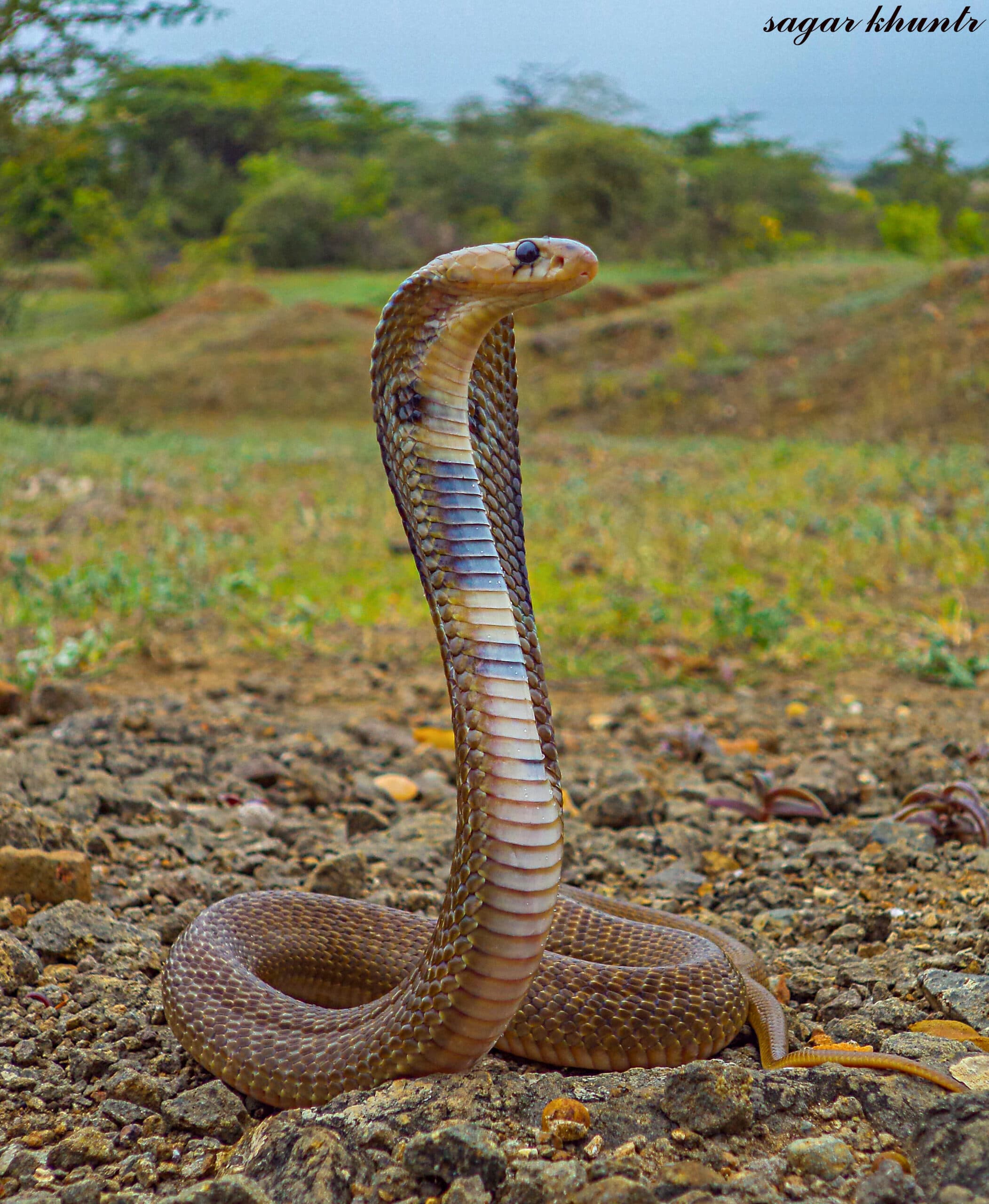
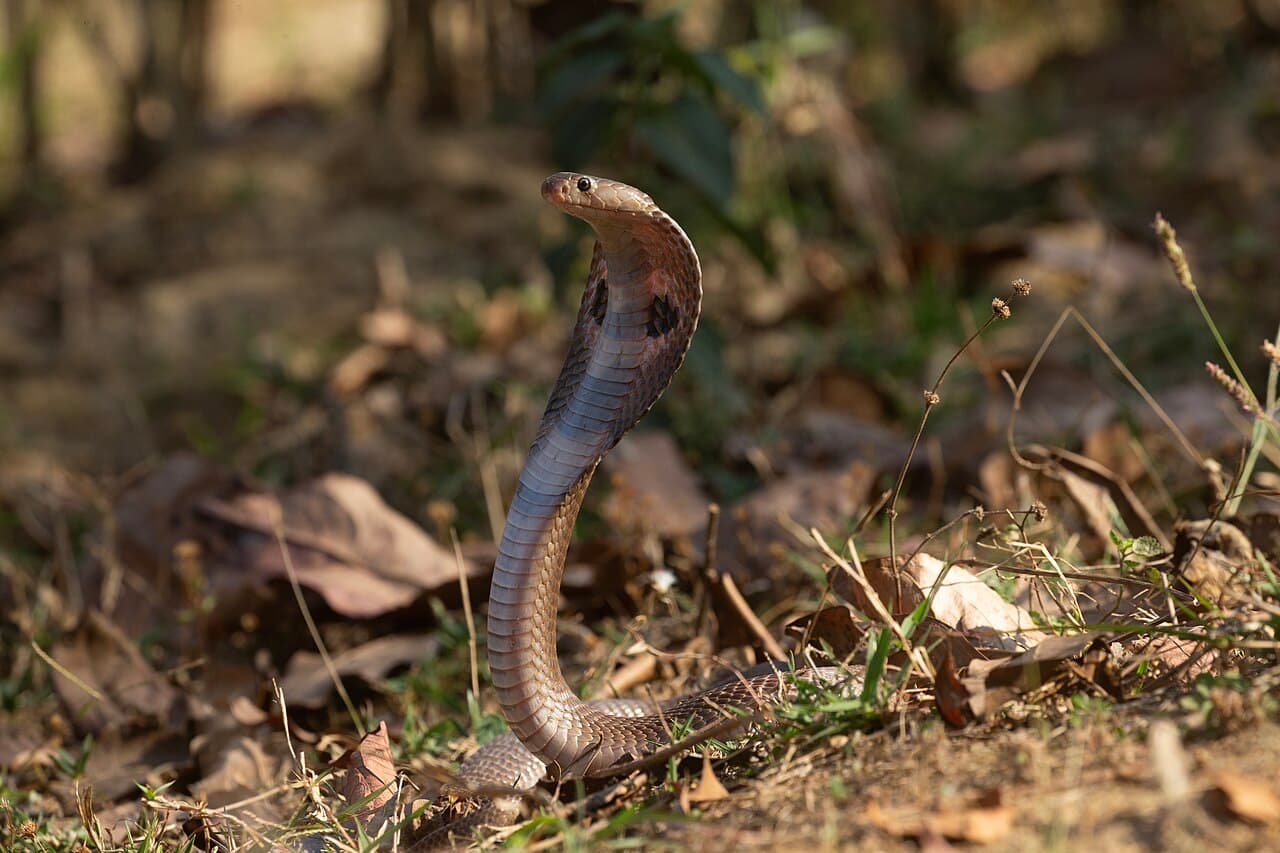
The Indian Cobra (Naja naja) is a living species of true cobra in the family Elapidae. It is also called the spectacled cobra because many individuals carry a paired, eye-like mark on the back of the hood. That mark is useful, but it is not universal: hood patterns, body colors, and the sharpness of bands vary across the range. Reliable identification therefore depends on the whole animal and its location, not one symbol. The species is distinct from the King Cobra, which belongs to a different genus, and from the Monocled Cobra of eastern South Asia. Its broad hood forms when elongated neck ribs spread the skin. The display makes the snake look larger and warns a perceived threat to stop approaching.
Appearance and size
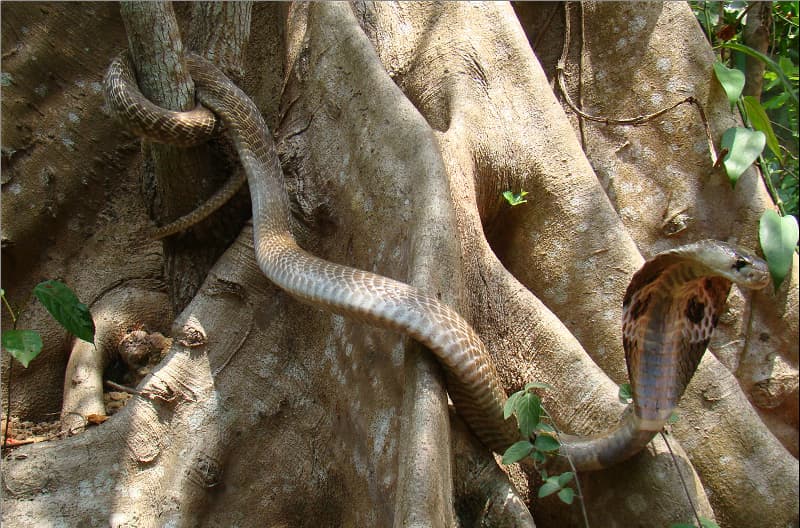
Adults are usually slender to moderately built, with a rounded snout, smooth-looking overlapping scales, and a tail that narrows gradually. Brown, tan, gray, yellowish, and nearly black individuals all occur. The throat often shows dark bars, while the familiar spectacle pattern may appear as two connected rings behind the hood. Many adults measure roughly 1 to 1.5 metres, although exceptionally large animals can approach 2 metres. Sexes overlap strongly in color and proportions, so field observers generally cannot determine sex at a safe distance. When relaxed, the neck is narrow and the hood disappears. A raised forebody, expanded hood, hiss, or forward movement signals that the animal needs space.
Range and habitat
The species occurs across much of the Indian subcontinent, including India, Pakistan, Nepal, Bangladesh, Sri Lanka, and Bhutan. The Reptile Database confirms the accepted name and South Asian distribution, while regional checklists distinguish it from other cobras. Indian Cobras occupy dry scrub, open forest, farmland, wetlands, village edges, and gardens. They often shelter in rodent burrows, termite mounds, rock gaps, hollow trees, drainage banks, or piles of building material. Grain stores and irrigated fields can support abundant rats, indirectly drawing cobras near people. This does not mean the snake seeks human company. It follows cover, suitable temperature, moisture, and prey. Reducing rubbish, sealing gaps, controlling rodents without indiscriminate poison, and using lights and footwear at night can lower encounter risk.
Diet, hunting, and ecological role
Indian Cobras are carnivores that take rodents, frogs, toads, lizards, birds, eggs, and other snakes. Chemical information collected by the forked tongue is delivered to the vomeronasal organ in the roof of the mouth, helping the snake follow prey and choose shelter. Vision and sensitivity to ground vibration also guide its behavior. Fixed front fangs inject venom that rapidly disables mobile prey. The cobra then swallows its meal whole, using flexible jaw joints and alternating movements of the jaws. By eating rats and mice, the species participates in food webs that also matter to farms and settlements. Young cobras in turn may be eaten by raptors, mongooses, larger snakes, and monitor lizards. Adults are threatened most consistently by people, vehicles, habitat change, and deliberate killing.
Daily behavior and defense
Activity shifts with season and climate. Cobras may be active by day in cooler weather and become crepuscular or nocturnal during hot periods. Most time is spent moving under cover, waiting for prey, basking briefly, or resting in a secure retreat. The dramatic hood display is defensive rather than evidence that the snake is hunting a person. Given an open route, a cobra commonly withdraws. If cornered or stepped on, however, it can strike quickly. Observers should stop, move back slowly, keep children and pets away, and contact a trained local snake responder if the animal is inside a building. Attempts to catch, pin, photograph closely, or kill it greatly increase the chance of a bite and harm an ecologically useful native predator.
Reproduction and early life
Mating is seasonal and varies across the wide range. Males locate receptive females through chemical trails and may wrestle with rivals, lifting and pressing their bodies without using venom as a normal part of the contest. The species lays eggs. A female selects a protected, humid site such as a burrow, hollow, termite mound, or cavity and may remain near the clutch for part of incubation. Clutch size varies with the female and locality but commonly reaches the low tens. Warmth and humidity influence development, so a single incubation figure cannot describe every nest. Hatchlings emerge fully formed with functional venom apparatus and must hunt for themselves. Their small size does not make handling safe; venomous snake neonates deserve the same distance and professional response as adults.
Venom, bites, and first aid
The Indian Cobra is medically important. Its venom contains neurotoxic components that can disrupt communication between nerves and muscles, potentially producing drooping eyelids, weakness, difficulty swallowing, and respiratory paralysis. Local pain, swelling, and tissue injury can also occur. Effects vary, and early symptoms do not predict a harmless outcome. A suspected bite is an emergency: move away from the snake, keep the person calm and as still as practical, immobilize the bitten limb without stopping circulation, remove rings or tight items, and arrange rapid transport to a hospital able to provide monitored care and antivenom when indicated. Do not cut the wound, suck venom, apply ice, use electric shock, or tighten a tourniquet. Do not attempt to capture the snake; a safe photograph from a distance may help, but treatment must never wait for identification.
Conservation and coexistence
The Indian Cobra is widespread and is assessed globally as Least Concern, yet that category does not protect every local population. Road mortality, expanding development, persecution, collection, prey contamination, and the loss of secure refuges can reduce numbers. The species is included in CITES Appendix II, so international trade is controlled, and national wildlife laws provide additional protection in parts of its range. Snake charming and removal for the skin or live trade can injure animals and misrepresent natural behavior. Effective coexistence combines public education, fast access to trained rescuers, safer housing, and prompt medical care. The most helpful response to an outdoor cobra is distance and an escape route. Protecting native vegetation and reducing conflict allows this predator to continue controlling small vertebrates without forcing close contact with people.