
Home/Animals/Reptilia/Indian Python
Species profileIUCN: NT

Indian Python

Python molurus

A massive nonvenomous South Asian constrictor that guards and warms its eggs.

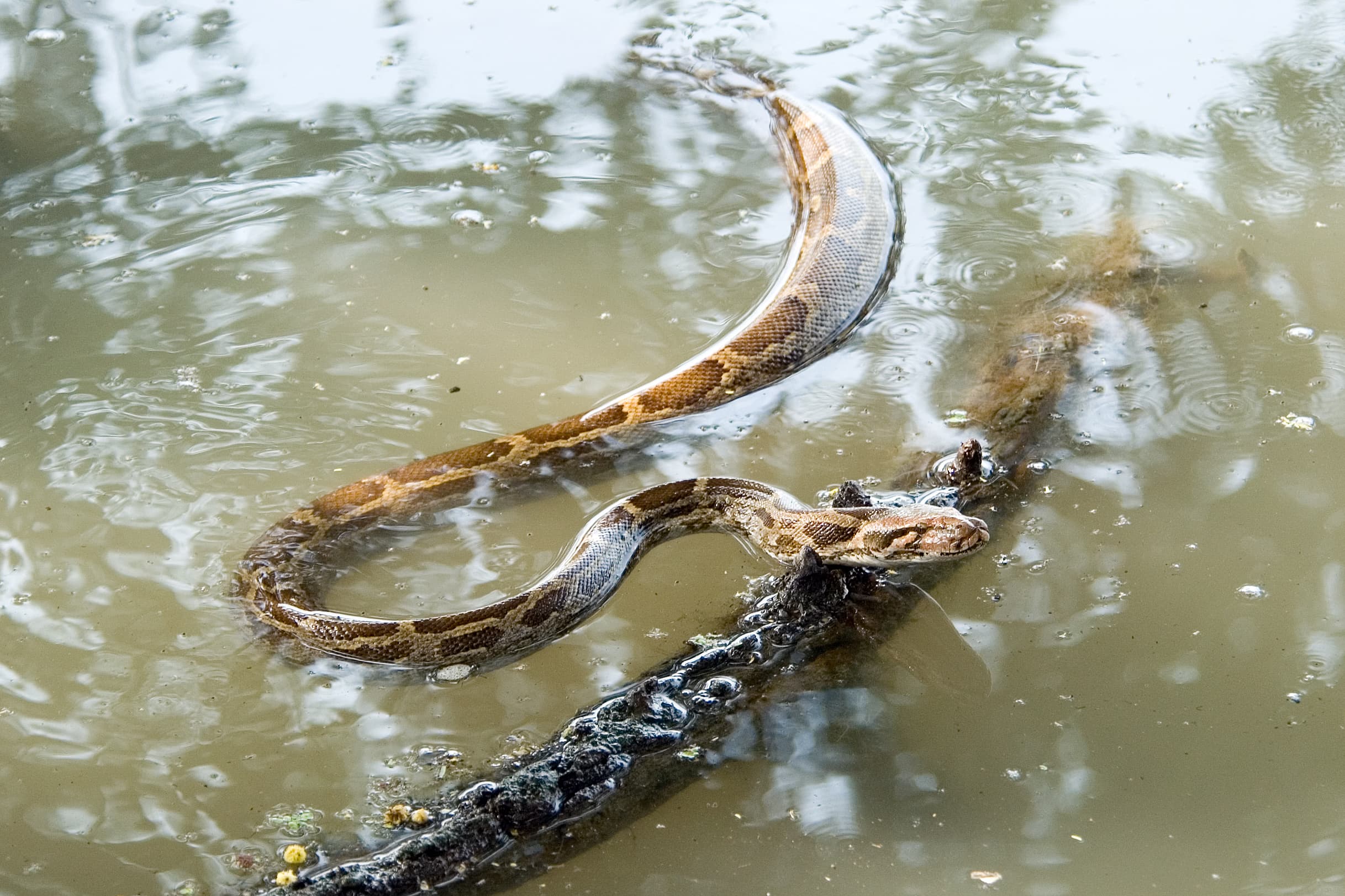
Indian Python Python molurus swimming beside a fallen branch in Keoladeo National Park
Paul Asman and Jill Lenoble / CC BY-SA 3.0
๐ŸŒ Read in Language:

โšก At a Glance

Species profile
Also Known As
Indian Rock Python; Asiatic Rock Python
Diet Category
Carnivore
Activity Rhythm
Mostly crepuscular or nocturnal in heat; may bask by day
Wild Lifespan
Often estimated at more than 20 years, but wild data are limited
Typical Weight
Highly variable; large females are much heavier than males
Conservation Status
NT
๐Ÿ’ก Key Biological Insight: A brooding female can produce heat with repeated muscular contractions while coiled around her eggs.

๐ŸŒณ Scientific Taxonomy Hierarchy

Python molurus is a living South Asian python, currently recognized as distinct from the Burmese Python, Python bivittatus.

KingdomAnimalia
PhylumChordata
ClassReptilia
OrderSquamata
FamilyPythonidae
GenusPython
SpeciesPython molurus

Distinguishing Anatomical Features

  • โœ“Heavy muscular body
  • โœ“Irregular brown blotches
  • โœ“Dark spear-shaped head marking
  • โœ“Heat-sensitive pits along the lips
  • โœ“Vertical pupils
  • โœ“Small pelvic spurs

๐Ÿ“ Physical Measurements

Total LengthCommonly about 8โ€“10 ft; some individuals grow longer
Body WeightHighly variable by length, condition, and sex
Tail LengthRelatively short and tapering
WingspanNot applicable
Top SpeedNo reliable fixed maximum

๐ŸŽจ Appearance & Distinctive Markings

BrownTanOliveCreamGrayChestnut

Skin / Covering: Dry smooth overlapping scales

Sexual Dimorphism: Females generally grow longer and substantially heavier; males usually have more prominent pelvic spurs.

๐Ÿ—บ๏ธ Geographic Distribution & Habitat

Native to the Indian subcontinent.

Dry and moist forest, scrub, grassland, rocky slopes, mangroves, marshes, river edges, farms, and protected wetlands.

Country-level distribution map

Native range
FijiTanzaniaWestern SaharaCanadaUnited StatesKazakhstanUzbekistanPapua New GuineaIndonesiaArgentinaChileCongo - KinshasaSomaliaKenyaSudanChadHaitiDominican RepublicRussiaBahamasFalkland IslandsNorwayGreenlandFrench Southern TerritoriesTimor-LesteSouth AfricaLesothoMexicoUruguayBrazilBoliviaPeruColombiaPanamaCosta RicaNicaraguaHondurasEl SalvadorGuatemalaBelizeVenezuelaGuyanaSurinameFranceEcuadorPuerto RicoJamaicaCubaZimbabweBotswanaNamibiaSenegalMaliMauritaniaBeninNigerNigeriaCameroonTogoGhanaCรดte dโ€™IvoireGuineaGuinea-BissauLiberiaSierra LeoneBurkina FasoCentral African RepublicCongo - BrazzavilleGabonEquatorial GuineaZambiaMalawiMozambiqueEswatiniAngolaBurundiIsraelLebanonMadagascarPalestinian TerritoriesGambiaTunisiaAlgeriaJordanUnited Arab EmiratesQatarKuwaitIraqOmanVanuatuCambodiaThailandLaosMyanmar (Burma)VietnamNorth KoreaSouth KoreaMongoliaIndia โ€” Native rangeBangladesh โ€” Native rangeBhutan โ€” Native rangeNepal โ€” Native rangePakistan โ€” Native rangeAfghanistanTajikistanKyrgyzstanTurkmenistanIranSyriaArmeniaSwedenBelarusUkrainePolandAustriaHungaryMoldovaRomaniaLithuaniaLatviaEstoniaGermanyBulgariaGreeceTรผrkiyeAlbaniaCroatiaSwitzerlandLuxembourgBelgiumNetherlandsPortugalSpainIrelandNew CaledoniaSolomon IslandsNew ZealandAustraliaSri Lanka โ€” Native rangeChinaTaiwanItalyDenmarkUnited KingdomIcelandAzerbaijanGeorgiaPhilippinesMalaysiaBruneiSloveniaFinlandSlovakiaCzechiaEritreaJapanParaguayYemenSaudi ArabiaCyprusMoroccoEgyptLibyaEthiopiaDjiboutiUgandaRwandaBosnia & HerzegovinaNorth MacedoniaSerbiaMontenegroKosovoTrinidad & TobagoSouth Sudan
Highlighted countries are recorded profile locations, not precise biological range boundaries.Map boundaries: Natural Earth

๐Ÿ’ก Did You Know?

  • ๐Ÿ’กHeat-sensitive lip pits
  • ๐Ÿ’กPowerful constricting muscles
  • ๐Ÿ’กFlexible jaws
  • ๐Ÿ’กCryptic blotched pattern
  • ๐Ÿ’กStrong swimming ability
  • ๐Ÿ’กMaternal shivering thermogenesis

๐ŸŒฟ Conservation Status & Threats

IUCN: NT โ€” Near Threatened

โ€œThe Indian Python is assessed as Near Threatened because habitat loss, persecution, collection, road mortality, and other pressures are reducing populations.โ€

Population Trend๐Ÿ“‰ Decreasing
Wild Population EstimateNo dependable global count available
CITESAppendix I

โš ๏ธ Major Threats to Indian Python

  • โ€ขHabitat loss and fragmentation
  • โ€ขDeliberate killing
  • โ€ขRoad mortality
  • โ€ขIllegal skin and live trade
  • โ€ขFishing-gear entanglement
  • โ€ขDeclining prey
  • โ€ขWetland drainage

๐Ÿ”„ Life Cycle & Reproduction

Wild vs. Captivity Lifespan Comparison

๐ŸŒฟ In the WildOften estimated at more than 20 years; wild data are limited
๐Ÿ  In Captivity (with veterinary care)Can exceed 20 years with expert care
Clutch / Litter SizeOften about 20โ€“60 eggs, varying with female size
Incubation / GestationRoughly two to three months, depending on nest conditions
Fledging / WeaningNot applicable
Sexual MaturityUsually reached after several years
Mating SystemSeasonal mating with male competition
Nesting / Den TypeProtected hollow, burrow, cavity, or termite mound

๐Ÿฆ… Behavior & Field Ecology

Carnivore

๐ŸŒ Ecological Food Web & Relationships: Large predator of mammals, birds, and other vertebrates in South Asian forests, wetlands, and agricultural mosaics.

Social Group SizeUsually solitary
Activity RhythmFlexible with temperature; often crepuscular or nocturnal in hot weather
Feeding StrategyCarnivore

๐Ÿฅฉ Primary Prey & Preferred Diet

โœ“ Rodentsโœ“ Haresโœ“ Birdsโœ“ Lizardsโœ“ Civetsโœ“ Small deerโœ“ Other medium vertebrates

๐Ÿ“ข Communication & Territorial Signals

  • Chemical cues
  • Body contact during courtship
  • Vibration sensing
  • Hissing
  • Defensive posture

๐Ÿพ Wild Temperament & Traits

โ€ข Secretiveโ€ข Powerfulโ€ข Nonvenomousโ€ข Defensive when restrainedโ€ข Usually avoids people

๐Ÿค Human Interaction & Pet Advisory

โš ๏ธ Strictly Wild Species
๐Ÿšซ

Can You Keep a Indian Python as a Pet?

Not suitable for casual private keeping; wild conflicts require trained authorized responders

Domestication StatusNot domesticated
Danger to HumansPotentially dangerous if approached or handled
Economic & Ecotourism RoleNative predator with ecological value and conservation importance; illegal trade has harmed populations.

โš ๏ธ Behavioral Risk Factors & Wildlife Safety

  • Backward-curving teeth can cause deep wounds
  • Large animals are extremely powerful
  • Constriction can endanger small pets, livestock, or people

๐ŸŒ Ecological Food Web & Relationships

๐Ÿงฌ Related Species (2)

Burmese PythonPython bivittatusClosest familiar relative, formerly treated as a subspecies
African Rock PythonPython sebaeLarge African congener

๐ŸŒ Ecological Equivalents Across Continents

Reticulated PythonMalayopython reticulatus

Identity and taxonomy

The Indian Python (Python molurus) is a living, nonvenomous constrictor native to South Asia. It is also called the Indian rock python or Asiatic rock python. The Reptile Database recognizes it as a species in the family Pythonidae, separate from the Burmese Python (Python bivittatus). Older references often treated the Burmese Python as a subspecies of P. molurus, which explains why historical range and size statements sometimes mix the two. This profile uses the modern species boundary and covers Python molurus. Like other pythons, it has small heat-sensitive pits along the lips, a muscular body, and flexible jaws suited to swallowing intact prey.

Appearance and size

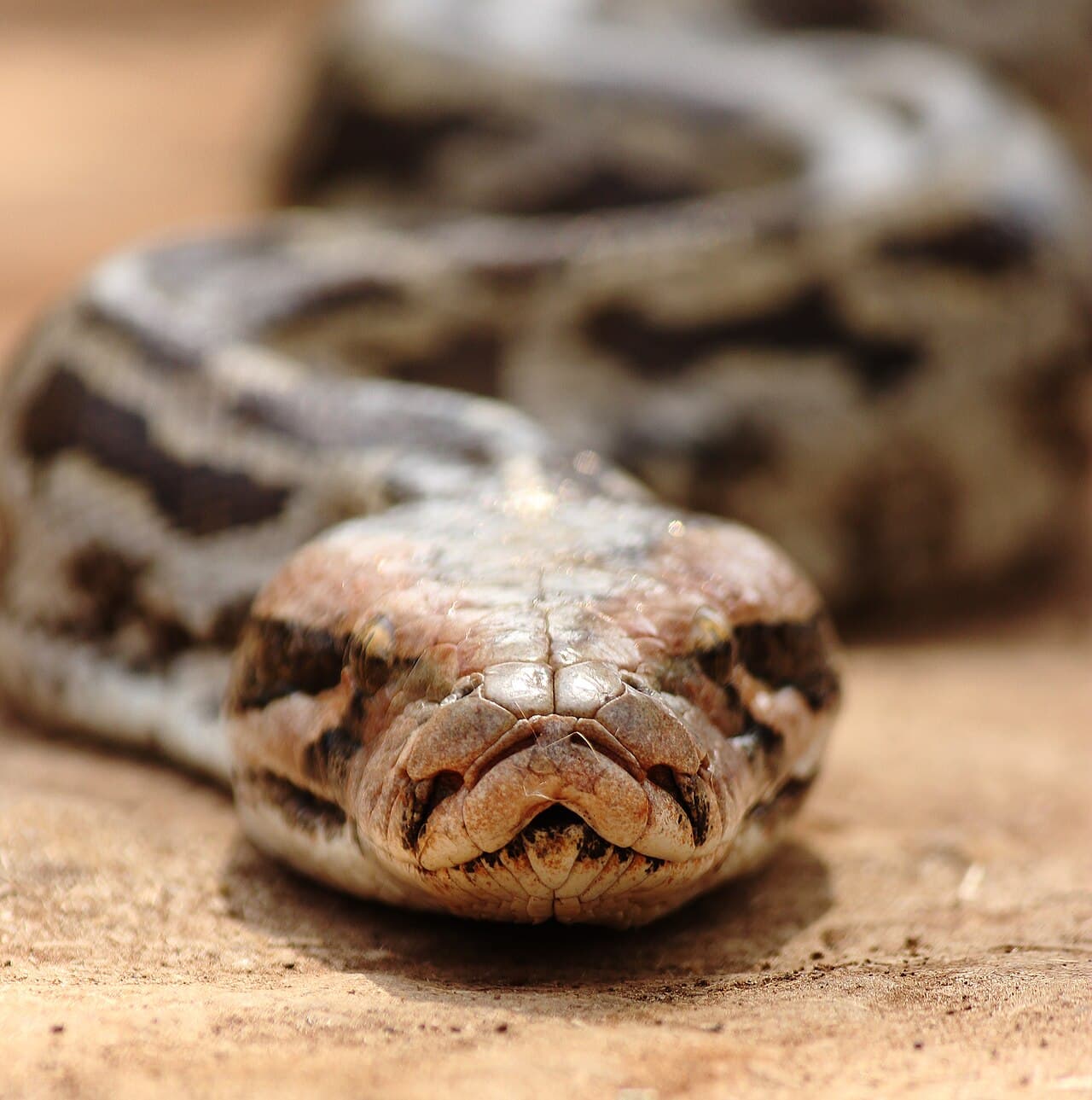
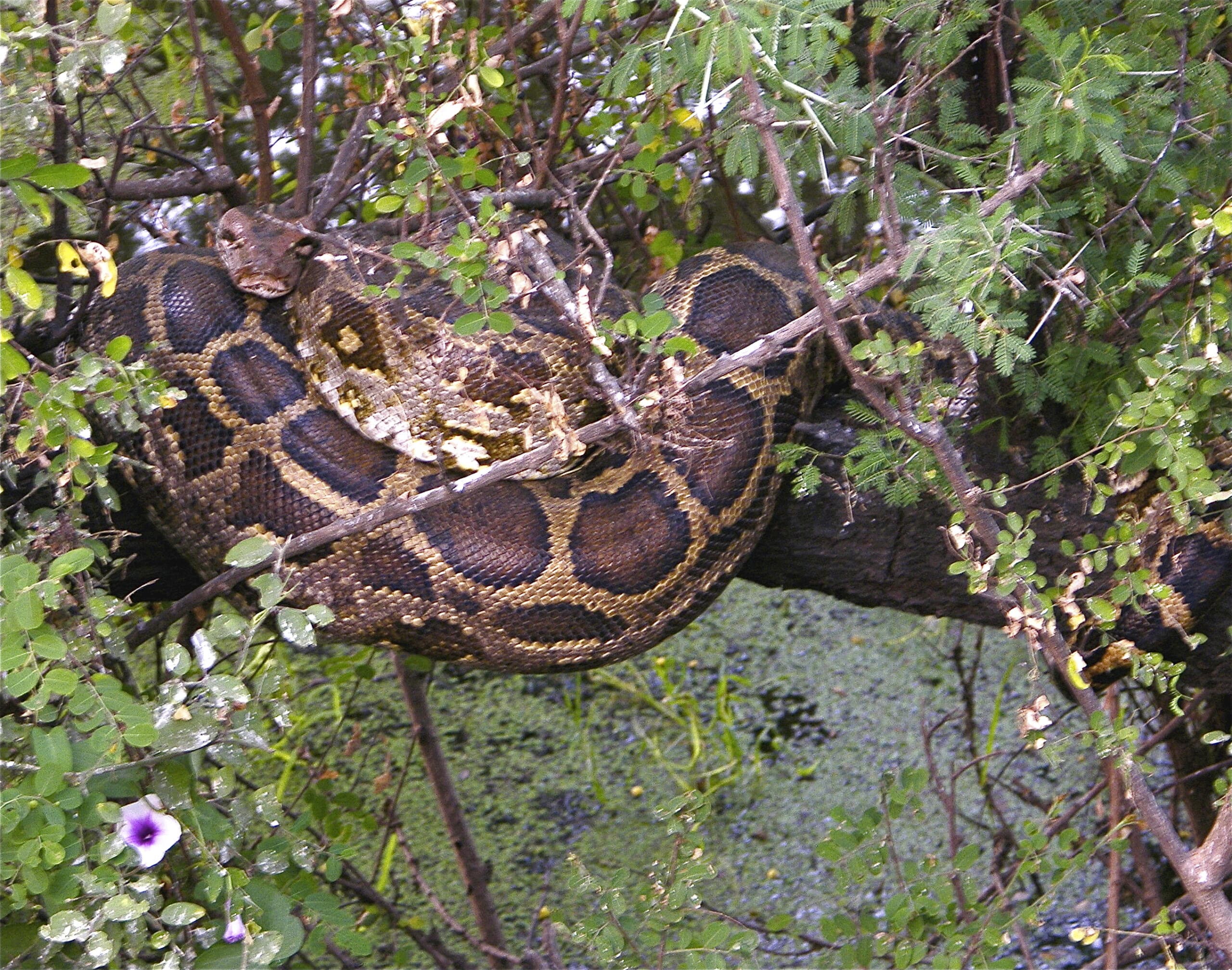
Indian Pythons are heavy-bodied snakes patterned with irregular brown, chestnut, olive, and tan blotches on a pale gray or yellow-brown background. A dark, spear-like marking commonly runs along the top of the head, while dark stripes pass through or behind the eyes. The pattern breaks up the outline among dry leaves, tree roots, rock, reeds, and shallow water. Adults commonly reach about 2.5 to 3 metres, although some grow longer; reliable measurements should be kept separate from exceptional stories and from records of the larger Burmese Python. Females generally grow longer and heavier than males. The tail is relatively short, and small pelvic spurs near the vent are usually more prominent in males.

Range and habitat

The species occurs across much of the Indian subcontinent, including India, Pakistan, Nepal, Bangladesh, Sri Lanka, and Bhutan. It uses dry and moist forest, scrub, rocky slopes, grassland, mangroves, marshes, river edges, agricultural mosaics, and protected wetlands. Water is especially useful for cooling, escaping disturbance, and moving between feeding areas. Individuals shelter in hollow trees, rock crevices, dense vegetation, abandoned mammal burrows, and termite mounds. The species can live near farms when prey and cover remain, but road traffic, persecution, drainage, and land conversion make these landscapes risky. A python found near buildings should be given space and handled only by trained wildlife personnel.

Hunting and diet

Indian Pythons are ambush predators. They use chemical cues, vision, vibration, and heat-sensitive lip pits to detect mammals and birds, especially in dim light. A python strikes, grips prey with recurved teeth, wraps one or more coils around it, and tightens as the prey exhales. Constriction interrupts circulation rapidly; the snake does not need to crush bones. It then swallows the prey head first when possible, advancing the jaws alternately over the body. Diet changes with size and opportunity. Young snakes take rodents, lizards, frogs, and small birds, while large adults can capture hares, waterbirds, porcupines, civets, small deer, and other medium-sized vertebrates. A large meal may sustain a python for weeks while digestion raises metabolism sharply.

Behavior and seasonal rhythm

Most Indian Pythons are solitary outside breeding. Activity varies with temperature: they may bask during cool mornings, move at dusk or night in hot weather, and retreat during extremes. They swim well and can remain partly submerged with only the head exposed. Smaller animals climb readily, and even large adults may rest in low trees or tangled vegetation. In cooler northern parts of the range, pythons may spend prolonged periods inactive in secure dens, sometimes sharing suitable refuges. They are generally quiet and cryptic. When threatened, an individual may hiss, draw the head into an S-shaped posture, or strike. The safest response is to move away and provide an unobstructed escape route.

Breeding and maternal care

Mating often follows the cooler season, although timing differs across the range. Males follow female scent trails and may compete by pressing and twisting against rivals. The female lays a clutch in a protected cavity, hollow, burrow, or termite mound. Unlike many reptiles, she remains coiled around the eggs through incubation. Muscular contractions can generate heat, helping stabilize nest temperature when conditions cool. She usually does not feed during this period and loses body mass while guarding the clutch. Hatchlings cut through the shell with a temporary egg tooth and receive no feeding from the mother. They emerge capable of hiding, striking, constricting small prey, and living independently.

Safety around people

The Indian Python is not venomous, but a large wild constrictor has powerful muscles and many backward-curving teeth. Bites can cause deep punctures, and attempts to lift or pin an animal can provoke prolonged contact. Serious constriction of a person is unusual, yet children, small pets, and livestock should be kept well away from a large python. Never approach for a close photograph, grab the tail, or attempt a home removal. Move people and pets indoors, watch from a safe distance, and call an authorized wildlife responder. If bitten, do not pull forcefully against the teeth. Seek professional help to release the snake safely, control bleeding with clean pressure, wash the wound, and obtain medical care for deep injury or infection risk.

Conservation and coexistence

The IUCN assesses the Indian Python as Near Threatened. Habitat loss and fragmentation, road mortality, deliberate killing, accidental capture in fishing gear, collection for skins or the live trade, and declining prey can all affect populations. The species is listed in CITES Appendix I, which places strict controls on international commercial trade, and it receives national protection in several range countries. Wetland and forest protection benefits pythons along with many other animals. Communities can reduce conflict by protecting drainage channels and native cover, slowing traffic near wildlife crossings, securing poultry at night, and using trained responders instead of killing snakes. A pythonโ€™s predation on rodents and other abundant prey makes it an important part of South Asian food webs.

Sources

โ“ Frequently Asked Questions

Answers to frequently asked questions verified against peer-reviewed zoological research.

No. It is a nonvenomous constrictor, but a large wild python can bite deeply and is powerful enough to cause serious injury if approached or handled.