
Home/Animals/Reptilia/Indigo Snake
Species profileIUCN: LC

Indigo Snake

Drymarchon couperi

The longest snake native to the United States, an iridescent predator of southeastern pine country.

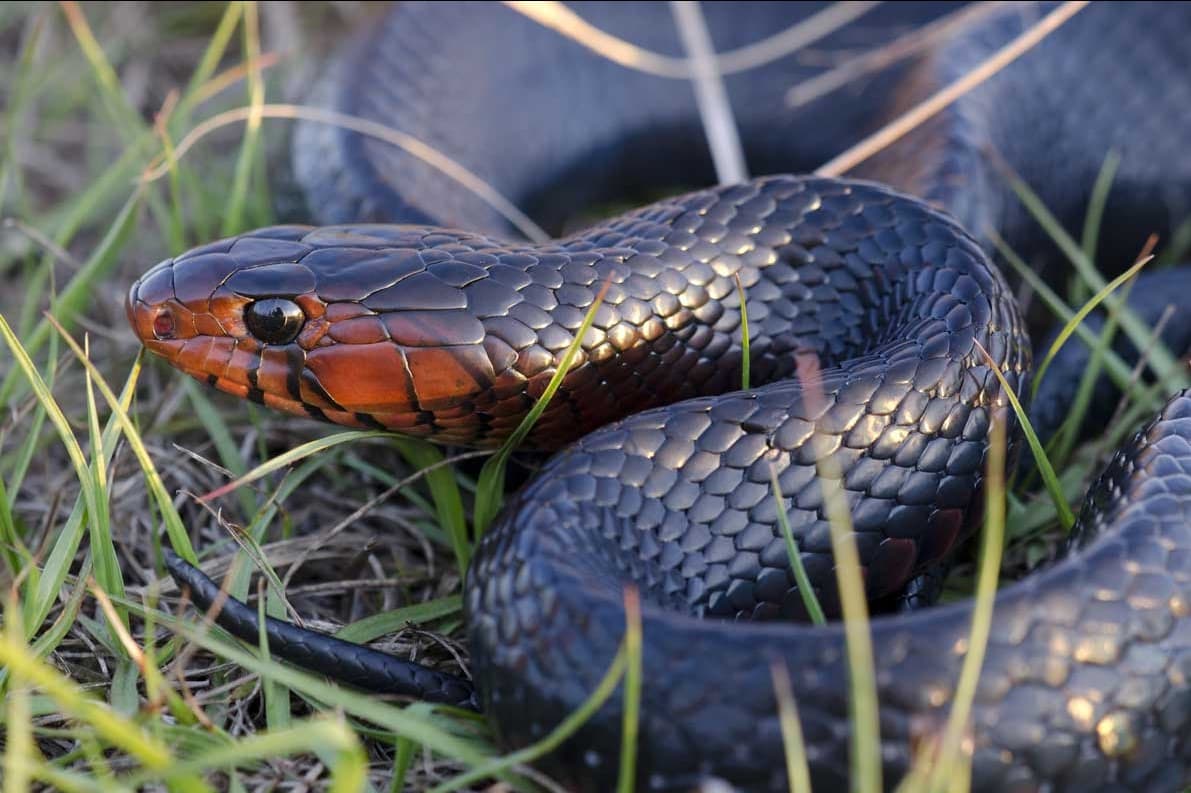
Eastern Indigo Snake Drymarchon couperi coiled in grass with its reddish chin visible
U.S. Fish and Wildlife Service / Public Domain
๐ŸŒ Read in Language:

โšก At a Glance

Species profile
Also Known As
Eastern Indigo Snake; Blue Indigo Snake; Blue Bull Snake
Diet Category
Carnivore
Activity Rhythm
Diurnal, with seasonal use of underground shelter
Wild Lifespan
About 8โ€“12 years reported by the U.S. Fish and Wildlife Service
Typical Weight
Adults about 0.9โ€“4.5+ kg, varying greatly by size and sex
Conservation Status
LC
๐Ÿ’ก Key Biological Insight: At up to about 2.6 m, it is the longest snake species native to the United States.

๐ŸŒณ Scientific Taxonomy Hierarchy

This profile covers the Eastern Indigo Snake, Drymarchon couperi, a living species distinct from other indigo snakes in the genus Drymarchon.

KingdomAnimalia
PhylumChordata
ClassReptilia
OrderSquamata
FamilyColubridae
GenusDrymarchon
SpeciesDrymarchon couperi

Distinguishing Anatomical Features

  • โœ“Glossy blue-black scales
  • โœ“Reddish, orange, or cream chin
  • โœ“Large robust body
  • โœ“Smooth scales
  • โœ“Round pupils
  • โœ“Mostly uniform adult color

๐Ÿ“ Physical Measurements

Total LengthAdults often 5โ€“6.2 ft; maximum about 8.6 ft
Body WeightRoughly 2โ€“10+ lb in mature adults
Tail LengthLong and tapering
WingspanNot applicable
Top SpeedNo reliable fixed maximum

๐ŸŽจ Appearance & Distinctive Markings

Blue-blackBlackRedOrange-brownCream

Skin / Covering: Smooth glossy overlapping scales

Sexual Dimorphism: Males average larger and use much larger home ranges, although external sex differences can be subtle.

๐Ÿ—บ๏ธ Geographic Distribution & Habitat

Native to the southeastern United States.

Longleaf pine sandhills, scrub, pine flatwoods, dry prairie, tropical hardwood hammocks, marsh edges, coastal dunes, and connected seasonal wetlands.

Country-level distribution map

Native range
FijiTanzaniaWestern SaharaCanadaUnited States โ€” Native rangeKazakhstanUzbekistanPapua New GuineaIndonesiaArgentinaChileCongo - KinshasaSomaliaKenyaSudanChadHaitiDominican RepublicRussiaBahamasFalkland IslandsNorwayGreenlandFrench Southern TerritoriesTimor-LesteSouth AfricaLesothoMexicoUruguayBrazilBoliviaPeruColombiaPanamaCosta RicaNicaraguaHondurasEl SalvadorGuatemalaBelizeVenezuelaGuyanaSurinameFranceEcuadorPuerto RicoJamaicaCubaZimbabweBotswanaNamibiaSenegalMaliMauritaniaBeninNigerNigeriaCameroonTogoGhanaCรดte dโ€™IvoireGuineaGuinea-BissauLiberiaSierra LeoneBurkina FasoCentral African RepublicCongo - BrazzavilleGabonEquatorial GuineaZambiaMalawiMozambiqueEswatiniAngolaBurundiIsraelLebanonMadagascarPalestinian TerritoriesGambiaTunisiaAlgeriaJordanUnited Arab EmiratesQatarKuwaitIraqOmanVanuatuCambodiaThailandLaosMyanmar (Burma)VietnamNorth KoreaSouth KoreaMongoliaIndiaBangladeshBhutanNepalPakistanAfghanistanTajikistanKyrgyzstanTurkmenistanIranSyriaArmeniaSwedenBelarusUkrainePolandAustriaHungaryMoldovaRomaniaLithuaniaLatviaEstoniaGermanyBulgariaGreeceTรผrkiyeAlbaniaCroatiaSwitzerlandLuxembourgBelgiumNetherlandsPortugalSpainIrelandNew CaledoniaSolomon IslandsNew ZealandAustraliaSri LankaChinaTaiwanItalyDenmarkUnited KingdomIcelandAzerbaijanGeorgiaPhilippinesMalaysiaBruneiSloveniaFinlandSlovakiaCzechiaEritreaJapanParaguayYemenSaudi ArabiaCyprusMoroccoEgyptLibyaEthiopiaDjiboutiUgandaRwandaBosnia & HerzegovinaNorth MacedoniaSerbiaMontenegroKosovoTrinidad & TobagoSouth Sudan
Highlighted countries are recorded profile locations, not precise biological range boundaries.Map boundaries: Natural Earth

Recorded Native Countries & Territories:

๐Ÿ’ก Did You Know?

  • ๐Ÿ’กLarge mobile body
  • ๐Ÿ’กGlossy protective scales
  • ๐Ÿ’กBroad prey tolerance
  • ๐Ÿ’กSeasonal habitat switching
  • ๐Ÿ’กUse of deep burrows
  • ๐Ÿ’กResistance to some pit-viper venom

๐ŸŒฟ Conservation Status & Threats

IUCN: LC โ€” Least Concern

โ€œGlobally assessed as Least Concern, but federally listed as Threatened in the United States after major range contraction, habitat loss, collection, and mortality.โ€

Population TrendUnknown globally; severe historical regional declines
Wild Population EstimateNo dependable total population count available
CITESNot listed

โš ๏ธ Major Threats to Indigo Snake

  • โ€ขHabitat loss and fragmentation
  • โ€ขRoad mortality
  • โ€ขHuman persecution
  • โ€ขIllegal collection
  • โ€ขDecline of gopher tortoise burrows
  • โ€ขPoor fire management
  • โ€ขSea-level rise in coastal habitat

๐Ÿ”„ Life Cycle & Reproduction

Wild vs. Captivity Lifespan Comparison

๐ŸŒฟ In the WildAbout 8โ€“12 years reported by USFWS
๐Ÿ  In Captivity (with veterinary care)Can exceed wild estimates with expert care
Clutch / Litter SizeUsually one clutch of about 4โ€“14 eggs
Incubation / GestationSeveral months, influenced by nest conditions
Fledging / WeaningNot applicable
Sexual MaturityAbout 3โ€“5 years
Mating SystemSeasonal courtship with male movement and competition
Nesting / Den TypeEggs placed in protected underground sites, including burrow systems

๐Ÿฆ… Behavior & Field Ecology

Carnivore

๐ŸŒ Ecological Food Web & Relationships: A large generalist predator that links upland pine habitats, wetlands, and burrow communities while controlling many vertebrate prey.

Social Group SizeUsually solitary
Activity RhythmPrimarily diurnal, with seasonal sheltering underground
Feeding StrategyCarnivore

๐Ÿฅฉ Primary Prey & Preferred Diet

โœ“ Other snakesโœ“ Turtlesโœ“ Lizardsโœ“ Frogs and toadsโœ“ Fishโœ“ Small mammalsโœ“ Birds and eggs

๐Ÿ“ข Communication & Territorial Signals

  • Chemical cues
  • Visual contact
  • Body contact during courtship
  • Vibration sensing

๐Ÿพ Wild Temperament & Traits

โ€ข Alertโ€ข Wide-rangingโ€ข Nonvenomousโ€ข Usually reluctant to biteโ€ข Powerful when restrained

๐Ÿค Human Interaction & Pet Advisory

๐Ÿพ Domestic / Pet Companion
๐Ÿถ

Indigo Snake as a Pet Companion

Not suitable as a casual pet and federally protected within its native range

Domestication StatusNot domesticated
Danger to HumansLow when left undisturbed
Economic & Ecotourism RoleHigh conservation and ecosystem value as a flagship predator of longleaf pine landscapes.

โš ๏ธ Behavioral Risk Factors & Wildlife Safety

  • A large animal can bite defensively if captured
  • Handling a federally protected snake without authorization is unlawful
  • Roadside rescue can put people and snakes in danger

๐ŸŒ Ecological Food Web & Relationships

๐Ÿงฌ Related Species (2)

Middle American Indigo SnakeDrymarchon melanurusA separate congener distributed farther west and south
Yellow-tailed CriboDrymarchon coraisSouth American congener

๐ŸŒ Ecological Equivalents Across Continents

KingsnakeLampropeltis getula

A blue-black giant of the southeastern United States

The Indigo Snake covered here is the Eastern Indigo Snake (Drymarchon couperi), a living species native to the southeastern United States. Other snakes in the genus Drymarchon also carry the indigo or cribo name, so the scientific name matters. Modern sources, including the U.S. Fish and Wildlife Service and Reptile Database, treat D. couperi as its own species rather than a subspecies of the South American indigo snake.

This is the longest snake species native to the United States. Its size, calm reputation, and glossy blue-black scales make it memorable, but its ecological story is even more striking. An adult may travel across hundreds or thousands of acres, switching between dry uplands and wetter feeding grounds while depending on intact habitat connections.

Appearance and identification

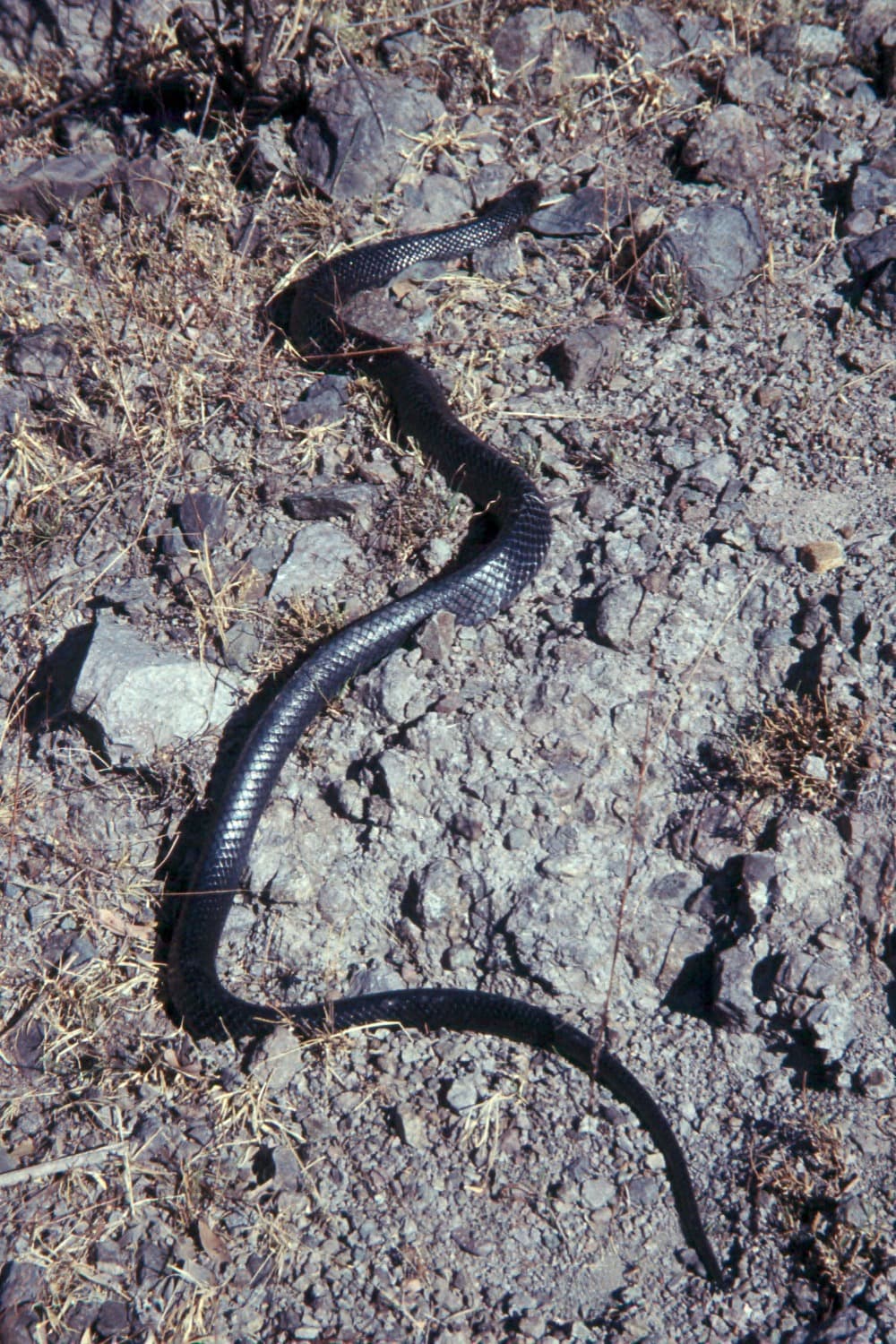
Adults are large, muscular, and mostly uniform black. In sunlight, the smooth scales reflect a deep blue or violet sheen that gives the snake its common name. The chin, throat, and sides of the head may be brick red, orange-brown, pinkish, or cream. The head is broad but not strongly triangular, and the pupils are round.

Adults commonly measure about 1.5 to 1.9 metres, or 5 to a little over 6 feet. The verified record is about 2.6 metres, or 8.6 feet. The Fish and Wildlife Service reports mature weights from roughly 2 pounds to more than 10 pounds. Males tend to grow larger than females, though size alone cannot safely identify sex. A dark racer can look superficially similar, but racers are usually slimmer, lack the Indigo Snakeโ€™s heavy build, and often show different chin coloration and scale details.

Range, pine woods, and seasonal movement

Historically, Eastern Indigo Snakes occupied Florida and the coastal plain from southern South Carolina through Georgia, Alabama, and Mississippi. Today, the strongest natural populations remain in Florida and southern Georgia, with restoration work returning snakes to selected protected landscapes in Alabama. Range loss reflects development, road construction, fragmented forests, and changes in land management.

The species uses longleaf pine sandhills, scrub, pine flatwoods, dry prairie, tropical hardwood hammocks, coastal dunes, and wetland margins. A single animal may need several habitat types during the year. In northern parts of the range, well-drained uplands with gopher tortoise burrows are critical winter refuges. Warmer seasons can draw the snake into lowlands where frogs, fish, and other prey are abundant. The University of Florida wildlife factsheet describes exceptionally large home ranges, especially for males.

A predator with a broad menu

Eastern Indigo Snakes hunt by day and eat a remarkable range of vertebrates: other snakes, turtles, lizards, frogs, toads, fish, small mammals, birds, and eggs. They can consume venomous rattlesnakes, aided by resistance to some North American pit-viper venom. Resistance is not absolute invulnerability, and bites can still injure them.

Unlike a python, an Indigo Snake does not wrap prey in tight coils. It seizes prey with strong jaws, pins or batters it against the ground, and swallows it. This broad diet makes the species an influential predator across the boundary between upland forest and wetland. By moving between those habitats, it links food webs that are often managed as if they were separate.

Burrows, breeding, and young

Gopher tortoise burrows are among the most important shelters in northern Indigo Snake habitat. These long underground tunnels buffer cold, heat, drought, and fire. Snakes use them for refuge, feeding, courtship, and overwintering. The relationship shows why conserving one species can protect an entire community: hundreds of animals may use tortoise burrows, and losing the burrows removes essential structure from the ecosystem.

Breeding peaks from October through January, unusually cool-season timing for a North American snake. Females typically lay one clutch of about 4 to 14 large eggs from late spring into early summer. Underground sites provide stable humidity and temperature during development. Young hatch with the same basic glossy form but may show faint pale bars that fade as they grow. Sexual maturity usually comes after several years, so adult mortality cannot be replaced quickly.

Why a globally common label can hide local danger

The global IUCN assessment lists the species as Least Concern, yet the Eastern Indigo Snake is federally listed as Threatened under the U.S. Endangered Species Act. Those categories measure different questions at different scales. The federal listing reflects severe historical declines and continuing risks within the United States: habitat destruction and fragmentation, road deaths, persecution, illegal collection, and the loss of functioning longleaf pine and gopher tortoise landscapes.

Fire suppression creates an additional problem. Longleaf pine sandhills evolved with frequent low-intensity fire. Without prescribed burning, dense hardwood growth changes the open ground layer used by tortoises and many prey species. Conversely, a well-managed burn leaves deep burrows as refuges and renews diverse grasses and herbs. Recovery therefore requires large protected areas, safe connections across roads and developments, tortoise conservation, prescribed fire, and long-term monitoring.

Recovery and reintroduction

Conservation groups and agencies breed Eastern Indigo Snakes for carefully planned releases into parts of their former range. Reintroduction is more than placing snakes on protected land. Biologists must confirm habitat quality, abundant burrows, prey, connectivity, genetic suitability, and years of funding for tracking. Radio telemetry reveals how released animals move, where they shelter, and which hazards cause losses.

The U.S. Forest Service species review and newer federal status reviews provide baseline and updated evidence for management. Protecting this predator also safeguards longleaf pine forest, wetlands, gopher tortoises, and many smaller animals that share the same landscape.

Safe encounters

An Indigo Snake encountered in the wild should be watched from a respectful distance. It is nonvenomous and usually tries to escape, but capturing or handling a large snake can cause stress and a defensive bite. The species is legally protected, so people should never collect, harass, transport, or keep one without authorization.

Drivers in occupied habitat can help by slowing on warm days, especially near protected lands and wetland crossings. Anyone who finds an injured snake should contact a state wildlife agency or permitted rehabilitator rather than attempting treatment. Photographs taken without touching or blocking the animal can support community science while leaving the snake free to continue its seasonal journey.

Sources and further reading

โ“ Frequently Asked Questions

Answers to frequently asked questions verified against peer-reviewed zoological research.

No. The Eastern Indigo Snake is nonvenomous and does not constrict prey, but any large wild snake may bite defensively if captured or restrained.