
Home/Animals/Reptilia/Inland Taipan
Species profileIUCN: LC

Inland Taipan

Oxyuranus microlepidotus

A secretive Australian elapid adapted to the cracking soils of the arid Channel Country.

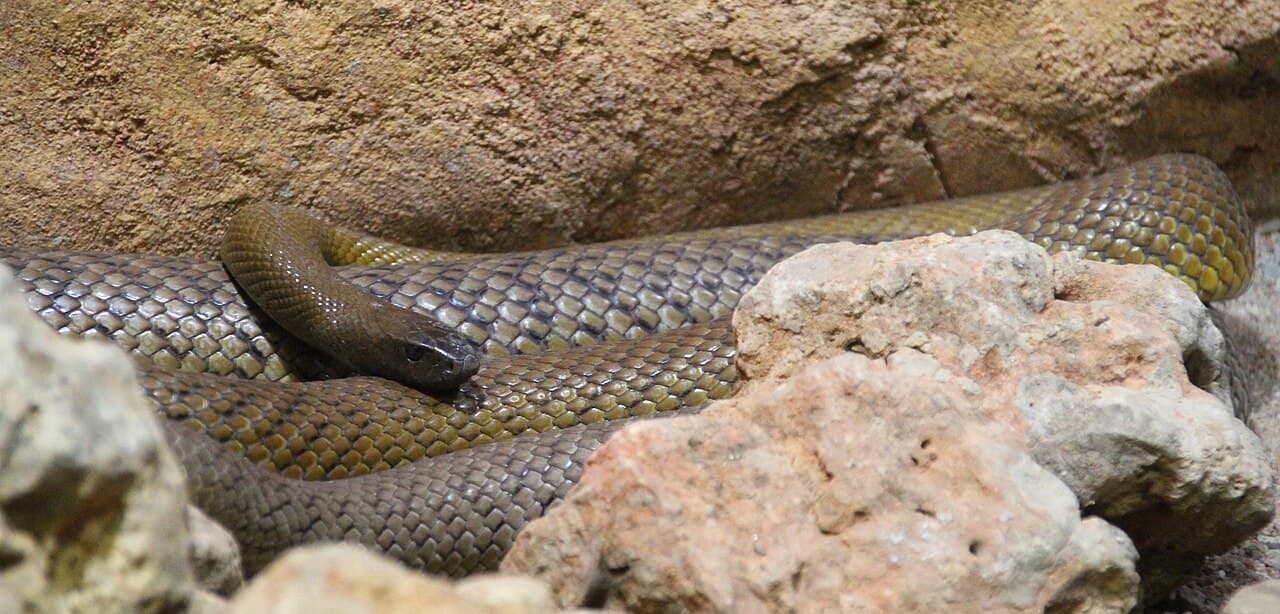
Inland taipan showing its slender brown body and rectangular head
Bjoertvedt / Wikimedia Commons / CC BY-SA 3.0
๐ŸŒ Read in Language:

โšก At a Glance

Species profile
Diet Category
Carnivore; specialist predator of small mammals
Activity Rhythm
Often active in the morning, with timing shifting according to season and temperature.
Wild Lifespan
Not well established in the wild; captive individuals may live for more than a decade
Typical Weight
variable; robust adults may exceed 1 kg
Conservation Status
LC
๐Ÿ’ก Key Biological Insight: The snake often becomes darker in winter and paler in summer, a seasonal change that may help regulate heat gain.

๐ŸŒณ Scientific Taxonomy Hierarchy

The inland taipan is a distinct species in the taipan genus Oxyuranus and the cobra family Elapidae. Its species name is Oxyuranus microlepidotus; it should not be confused with the coastal taipan or Central Ranges taipan.

KingdomAnimalia
PhylumChordata
ClassReptilia
OrderSquamata
FamilyElapidae
GenusOxyuranus
SpeciesOxyuranus microlepidotus

Distinguishing Anatomical Features

  • โœ“A long, slender snake with a rectangular head and smooth scales. Color ranges from dark brown in cooler months to lighter olive or yellow-brown in warmer conditions; the head may be glossy and darker than the body.
  • โœ“Seasonal color shift aids heat absorption and avoidance
  • โœ“Venom rapidly subdues warm-blooded prey
  • โœ“Shelters in deep soil cracks and abandoned burrows
  • โœ“Flexible jaws swallow mammal prey whole

๐Ÿ“ Physical Measurements

Total Lengthusually about 5.9โ€“6.6 ft; exceptionally to about 8.2 ft
Body Weightvariable; robust adults may exceed 2.2 lb
Tail LengthLong tapering tail
WingspanNot applicable
Top SpeedNo dependable universal maximumMovement changes with context and conditions.

๐ŸŽจ Appearance & Distinctive Markings

Dark brownOlive brownYellow brownBlackish head

Skin / Covering: Smooth overlapping scales

Sexual Dimorphism: Males and females look broadly similar, with no conspicuous external sexual difference for casual observers.

๐Ÿ—บ๏ธ Geographic Distribution & Habitat

The Channel Country of southwestern Queensland and northeastern South Australia, with records concentrated in remote inland drainage and floodplain systems.

Arid and semi-arid cracking-clay plains, gibber country and floodplains associated with the Channel Country.

Country-level distribution map

Native range
FijiTanzaniaWestern SaharaCanadaUnited StatesKazakhstanUzbekistanPapua New GuineaIndonesiaArgentinaChileCongo - KinshasaSomaliaKenyaSudanChadHaitiDominican RepublicRussiaBahamasFalkland IslandsNorwayGreenlandFrench Southern TerritoriesTimor-LesteSouth AfricaLesothoMexicoUruguayBrazilBoliviaPeruColombiaPanamaCosta RicaNicaraguaHondurasEl SalvadorGuatemalaBelizeVenezuelaGuyanaSurinameFranceEcuadorPuerto RicoJamaicaCubaZimbabweBotswanaNamibiaSenegalMaliMauritaniaBeninNigerNigeriaCameroonTogoGhanaCรดte dโ€™IvoireGuineaGuinea-BissauLiberiaSierra LeoneBurkina FasoCentral African RepublicCongo - BrazzavilleGabonEquatorial GuineaZambiaMalawiMozambiqueEswatiniAngolaBurundiIsraelLebanonMadagascarPalestinian TerritoriesGambiaTunisiaAlgeriaJordanUnited Arab EmiratesQatarKuwaitIraqOmanVanuatuCambodiaThailandLaosMyanmar (Burma)VietnamNorth KoreaSouth KoreaMongoliaIndiaBangladeshBhutanNepalPakistanAfghanistanTajikistanKyrgyzstanTurkmenistanIranSyriaArmeniaSwedenBelarusUkrainePolandAustriaHungaryMoldovaRomaniaLithuaniaLatviaEstoniaGermanyBulgariaGreeceTรผrkiyeAlbaniaCroatiaSwitzerlandLuxembourgBelgiumNetherlandsPortugalSpainIrelandNew CaledoniaSolomon IslandsNew ZealandAustralia โ€” Native rangeSri LankaChinaTaiwanItalyDenmarkUnited KingdomIcelandAzerbaijanGeorgiaPhilippinesMalaysiaBruneiSloveniaFinlandSlovakiaCzechiaEritreaJapanParaguayYemenSaudi ArabiaCyprusMoroccoEgyptLibyaEthiopiaDjiboutiUgandaRwandaBosnia & HerzegovinaNorth MacedoniaSerbiaMontenegroKosovoTrinidad & TobagoSouth Sudan
Highlighted countries are recorded profile locations, not precise biological range boundaries.Map boundaries: Natural Earth

Recorded Native Countries & Territories:

๐Ÿ’ก Did You Know?

  • ๐Ÿ’กSeasonal color shift aids heat absorption and avoidance
  • ๐Ÿ’กVenom rapidly subdues warm-blooded prey
  • ๐Ÿ’กShelters in deep soil cracks and abandoned burrows
  • ๐Ÿ’กFlexible jaws swallow mammal prey whole

๐ŸŒฟ Conservation Status & Threats

IUCN: LC โ€” Least Concern

โ€œListed as Least Concern globally, but records are sparse and local protection and conservation listings differ between Australian jurisdictions.โ€

Population TrendUnknown
Wild Population EstimateNo reliable global abundance estimate exists; remoteness and highly variable prey cycles make monitoring difficult.

โš ๏ธ Major Threats to Inland Taipan

  • โ€ขHabitat alteration
  • โ€ขChanges to native rodent populations
  • โ€ขRoad mortality
  • โ€ขDeliberate killing
  • โ€ขExtreme climate and floodplain changes

๐Ÿ”„ Life Cycle & Reproduction

Wild vs. Captivity Lifespan Comparison

๐ŸŒฟ In the WildNot well established in the wild; captive individuals may live for more than a decade
๐Ÿ  In Captivity (with veterinary care)Can differ under managed care.
Clutch / Litter SizeCommonly 11โ€“20 eggs, averaging about 16 in documented observations
Incubation / GestationRoughly 9โ€“11 weeks under suitable conditions
Fledging / WeaningHatchlings are about 47 cm long and are equipped with functional venom and hunting behavior. They grow quickly when rodent prey is plentiful.
Sexual MaturitySeveral years, depending on growth and food supply
Mating SystemInternal fertilization; egg-laying
Nesting / Den TypeEggs laid in a sheltered crack, burrow or similar cavity

๐Ÿฆ… Behavior & Field Ecology

Carnivore; specialist predator of small mammals

๐ŸŒ Ecological Food Web & Relationships: A high-level predator of rodents whose numbers boom after favorable rains. By following this prey cycle, inland taipans participate in regulating small-mammal populations in arid ecosystems.

Social Group SizeSolitary except during courtship
Activity RhythmOften active in the morning, with timing shifting according to season and temperature.
Feeding StrategyCarnivore; specialist predator of small mammals

๐Ÿฅฉ Primary Prey & Preferred Diet

โœ“ Long-haired ratsโœ“ House miceโœ“ Other native rodentsโœ“ Small dasyurid marsupials

๐Ÿ“ข Communication & Territorial Signals

  • Chemical trails
  • Tongue-flicking
  • Defensive posture

๐Ÿพ Wild Temperament & Traits

โ€ข Secretiveโ€ข Alertโ€ข Defensive when cornered

๐Ÿค Human Interaction & Pet Advisory

โš ๏ธ Strictly Wild Species
๐Ÿšซ

Can You Keep a Inland Taipan as a Pet?

Unsuitable and often unlawful for private keeping; only trained, licensed specialists with secure facilities should maintain venomous snakes.

Domestication StatusWild and not domesticated
Danger to HumansExtremely dangerous if a bite occurs
Economic & Ecotourism RoleNative predator, subject of venom research and a distinctive component of Australiaโ€™s Channel Country fauna.

โš ๏ธ Behavioral Risk Factors & Wildlife Safety

  • Potent neurotoxic and procoagulant venom
  • Rapid multiple strikes are possible when cornered
  • Early symptoms may be subtle while systemic effects develop

๐ŸŒ Ecological Food Web & Relationships

๐Ÿฆ… Natural Predators (3)

Mulga SnakePseudechis australis
Birds of PreyAccipitridae and Falconidae
Monitor LizardsVaranus species

๐Ÿงฌ Related Species (2)

Coastal TaipanOxyuranus scutellatusWider-ranging taipan relative
Central Ranges TaipanOxyuranus temporalisInland Australian congener

Inland Taipan (Oxyuranus microlepidotus) is a highly venomous snake found in a remote and seasonally harsh part of inland Australia. This guide separates well-supported biology from common assumptions and covers identification, range, habitat, diet, behavior, reproduction and conservation.

Identification

A long, slender snake with a rectangular head and smooth scales. Color ranges from dark brown in cooler months to lighter olive or yellow-brown in warmer conditions; the head may be glossy and darker than the body. Males and females look broadly similar, with no conspicuous external sexual difference for casual observers.

Identification should combine body shape, markings, size, voice or movement, and location. One feature by itself can overlap with a related animal, a juvenile, or an individual in unusual light.

Photographs are most useful when they preserve scale and show several diagnostic features. Handling or repositioning a wild inland taipan for identification can cause stress and is unnecessary.

Size and physical adaptations

Inland Taipan typically measures usually about 1.8โ€“2.0 m; exceptionally to about 2.5 m and weighs variable; robust adults may exceed 1 kg. Reliable identification depends on scalation and expert examination, not size or color alone.

Its useful adaptations include seasonal color shift aids heat absorption and avoidance, venom rapidly subdues warm-blooded prey, shelters in deep soil cracks and abandoned burrows, flexible jaws swallow mammal prey whole. These traits work together in the animal’s normal setting rather than serving as isolated curiosities.

Published measurements may use different methods, life stages or sample locations. Comparing figures responsibly means checking what was measured rather than selecting the largest number available.

Range and distribution

The Channel Country of southwestern Queensland and northeastern South Australia, with records concentrated in remote inland drainage and floodplain systems. The native range includes Australia.

A country-level map indicates broad distribution, not continuous occupation. Climate, elevation, water, vegetation, prey, breeding sites, barriers and survey effort all affect where records occur.

Records near the edge of the range deserve careful documentation because they may reflect natural movement, improved survey coverage, accidental transport or a genuine distribution change.

Habitat

Arid and semi-arid cracking-clay plains, gibber country and floodplains associated with the Channel Country.

Deep fissures in clay, soil cavities and abandoned mammal burrows provide stable shelter from surface heat and dryness. The snake emerges to hunt where native rodents become available. Protecting a population therefore requires the feeding, shelter and breeding features that make a site usable, along with connections that allow movement.

Microhabitat matters. Shade, soil, current, moisture, shelter or host plants can determine whether a small area is usable even when the surrounding landscape appears suitable.

Diet and feeding

Inland Taipan is a carnivore; specialist predator of small mammals. Important foods include long-haired rats, house mice, other native rodents, small dasyurid marsupials. The inland taipan searches shelters and rodent runs, delivers one or more rapid bites and follows chemical cues to subdued prey. Its venom is an adaptation for securing mammals, not evidence of aggressive intent toward people.

Diet changes with age, season, location and food supply. A dramatic prey record does not establish what most individuals eat most of the time; repeated field observations provide a stronger picture.

Feeding opportunities also create risk. An animal focused on prey may be less alert to predators, traffic or people, while contaminated prey can transfer pollutants through the food web.

Behavior and communication

Often active in the morning, with timing shifting according to season and temperature. This snake is shy, alert and seldom encountered because its range is remote and it spends much time under cover. When threatened it may flatten the forebody into low curves and strike repeatedly, so distance is essential.

Like other snakes, it relies strongly on scent gathered by the forked tongue and interpreted by the vomeronasal system; posture warns at close range. Behavior should be interpreted in context: alarm, courtship, feeding and temperature regulation can produce very different actions from the same animal.

Daily schedules are flexible responses, not rigid rules. Weather, breeding condition, disturbance, tides or food can move activity into a different part of the day.

Reproduction and development

Courtship and mating occur during the warmer reproductive season. Females deposit eggs in a protected underground site rather than providing parental care after laying. Commonly 11โ€“20 eggs, averaging about 16 in documented observations undefined

Young animals face different risks and may use different microhabitats or food than adults. Breeding success depends on adult condition, suitable sites and the survival of offspring through vulnerable early stages.

Counts of eggs or young describe reproductive output, not the number expected to reach adulthood. Mortality is normally greatest during eggs, larval or juvenile stages.

Predators and ecological role

A high-level predator of rodents whose numbers boom after favorable rains. By following this prey cycle, inland taipans participate in regulating small-mammal populations in arid ecosystems. Documented or likely predators include Mulga Snake, Birds of Prey, Monitor Lizards.

This animal is both a consumer and a food source. Its influence comes through many repeated interactions, so ecological claims should be based on measured populations rather than assumptions drawn from appearance.

Predator and prey relationships differ among places. A species can be ecologically influential without being abundant everywhere, and its role can change across its range.

Relationship with people

Human encounters are rare because the species occupies sparsely populated country. Its venom is exceptionally potent in laboratory tests, and any suspected bite requires immediate first aid and urgent antivenom-capable medical care.

Do not approach, handle or attempt to kill any unidentified snake. Move away calmly. For a suspected bite, apply pressure immobilization, keep the person still, call emergency services and do not wash, cut or suck the bite. Responsible observation means keeping an appropriate distance, avoiding capture or feeding, protecting habitat and following local wildlife or invasive-species guidance.

Wildlife guidance should come from the responsible local agency because collection rules, reporting requests and appropriate responses differ between native and introduced ranges.

Conservation

Listed as Least Concern globally, but records are sparse and local protection and conservation listings differ between Australian jurisdictions. The reported global trend is Unknown.

Important pressures include habitat alteration, changes to native rodent populations, road mortality, deliberate killing, extreme climate and floodplain changes. Global status can hide local decline or recovery, so current regional monitoring and habitat management remain necessary.

The most useful conservation action follows the documented pressure. Protecting breeding sites, reducing road deaths or limiting pollutants can require different tools in different populations.

Sources and further reading

โ“ Frequently Asked Questions

Answers to frequently asked questions verified against peer-reviewed zoological research.

Its venom ranks among the most toxic tested in laboratory mouse assays, but real-world danger also depends on whether a bite occurs, venom dose and how quickly effective first aid and medical treatment begin.