
Animal group

Jellyfish

Medusozoa

Gelatinous cnidarians that pulse through oceans using stinging cells to capture prey.

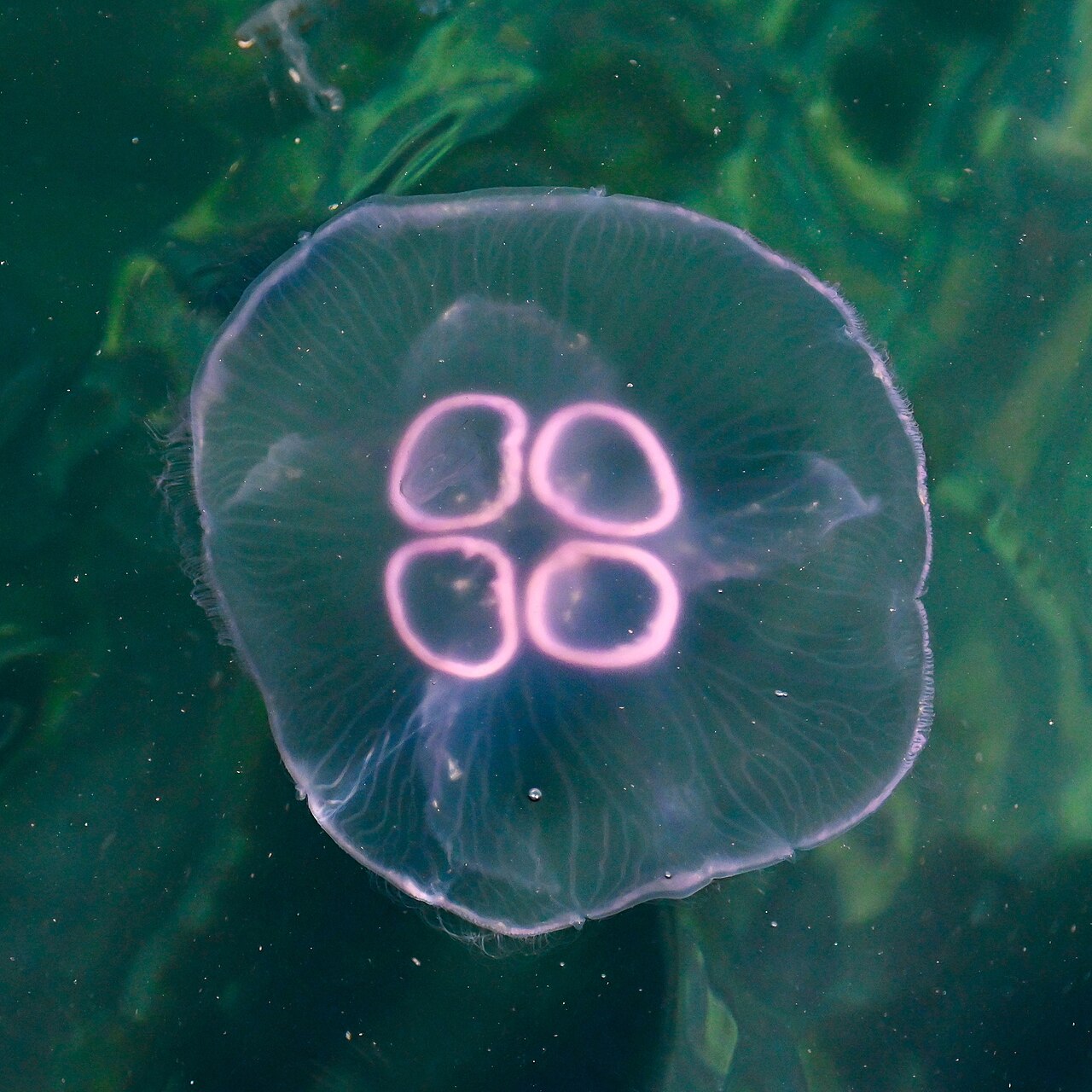
Translucent moon jelly swimming in blue water
Frank Sengpiel / Wikimedia Commons / CC BY 4.0
๐ŸŒ Read in Language:

โšก At a Glance

Animal group
Diet Category
Carnivore
Activity Rhythm
Pulses and drifts day and night; many species migrate vertically.
Wild Lifespan
From weeks to several years, depending on species and life stage
Typical Weight
from less than 1 g to hundreds of kilograms
Conservation Status
Varies by species
๐Ÿ’ก Key Biological Insight: A jellyfish has no brain, heart or bones, but a nerve net coordinates swimming and feeding.

๐ŸŒณ Scientific Taxonomy Hierarchy

Jellyfish usually refers to the free-swimming medusa stages of scyphozoans, cubozoans and some hydrozoans; comb jellies are a separate phylum.

KingdomAnimalia
PhylumCnidaria
ClassMultiple medusozoan classes
OrderMultiple orders
FamilyMultiple families
GenusMultiple genera
SpeciesThousands of described species

Distinguishing Anatomical Features

  • โœ“A typical jellyfish has a gelatinous bell, radial body plan, hanging oral arms and tentacles armed with microscopic stinging cells called cnidocytes.
  • โœ“Cnidocytes fire venomous threads
  • โœ“Gelatinous bodies use little energy
  • โœ“Bells pulse for propulsion
  • โœ“Some species produce light

๐Ÿ“ Physical Measurements

Total Lengthfrom fractions of an inch to bells over 6 ft across
Body Weightfrom less than 0.04 oz to hundreds of pounds
Tail LengthNot separately reported
WingspanNot applicable
Top SpeedNo dependable universal maximumMovement changes with context and conditions.

๐ŸŽจ Appearance & Distinctive Markings

TransparentWhiteBluePinkPurple

Skin / Covering: Gelatinous epidermis surrounding mesoglea

Sexual Dimorphism: Sexes are separate in many species but difficult to distinguish externally; life cycles differ widely.

๐Ÿ—บ๏ธ Geographic Distribution & Habitat

Jellyfish occur in every ocean, from coastal shallows to the deep sea and polar waters; a few species live in fresh water.

Open ocean, coastal bays, estuaries, coral reefs, seafloor zones and deep pelagic water.

Country-level distribution map

Native range
FijiTanzaniaWestern SaharaCanadaUnited States โ€” Native rangeKazakhstanUzbekistanPapua New GuineaIndonesiaArgentinaChileCongo - KinshasaSomaliaKenyaSudanChadHaitiDominican RepublicRussiaBahamasFalkland IslandsNorwayGreenlandFrench Southern TerritoriesTimor-LesteSouth Africa โ€” Native rangeLesothoMexicoUruguayBrazil โ€” Native rangeBoliviaPeruColombiaPanamaCosta RicaNicaraguaHondurasEl SalvadorGuatemalaBelizeVenezuelaGuyanaSurinameFranceEcuadorPuerto RicoJamaicaCubaZimbabweBotswanaNamibiaSenegalMaliMauritaniaBeninNigerNigeriaCameroonTogoGhanaCรดte dโ€™IvoireGuineaGuinea-BissauLiberiaSierra LeoneBurkina FasoCentral African RepublicCongo - BrazzavilleGabonEquatorial GuineaZambiaMalawiMozambiqueEswatiniAngolaBurundiIsraelLebanonMadagascarPalestinian TerritoriesGambiaTunisiaAlgeriaJordanUnited Arab EmiratesQatarKuwaitIraqOmanVanuatuCambodiaThailandLaosMyanmar (Burma)VietnamNorth KoreaSouth KoreaMongoliaIndiaBangladeshBhutanNepalPakistanAfghanistanTajikistanKyrgyzstanTurkmenistanIranSyriaArmeniaSwedenBelarusUkrainePolandAustriaHungaryMoldovaRomaniaLithuaniaLatviaEstoniaGermanyBulgariaGreeceTรผrkiyeAlbaniaCroatiaSwitzerlandLuxembourgBelgiumNetherlandsPortugalSpainIrelandNew CaledoniaSolomon IslandsNew ZealandAustralia โ€” Native rangeSri LankaChinaTaiwanItalyDenmarkUnited Kingdom โ€” Native rangeIcelandAzerbaijanGeorgiaPhilippinesMalaysiaBruneiSloveniaFinlandSlovakiaCzechiaEritreaJapan โ€” Native rangeParaguayYemenSaudi ArabiaCyprusMoroccoEgyptLibyaEthiopiaDjiboutiUgandaRwandaBosnia & HerzegovinaNorth MacedoniaSerbiaMontenegroKosovoTrinidad & TobagoSouth Sudan
Highlighted countries are recorded profile locations, not precise biological range boundaries.Map boundaries: Natural Earth

๐Ÿ’ก Did You Know?

  • ๐Ÿ’กCnidocytes fire venomous threads
  • ๐Ÿ’กGelatinous bodies use little energy
  • ๐Ÿ’กBells pulse for propulsion
  • ๐Ÿ’กSome species produce light

๐ŸŒฟ Conservation Status & Threats

No single assessment recorded

โ€œJellyfish are a broad group and have no single IUCN status.โ€

โš ๏ธ Major Threats to Jellyfish

  • โ€ขPollution
  • โ€ขCoastal habitat change
  • โ€ขClimate-driven ocean change
  • โ€ขOverharvest of predators

๐Ÿ”„ Life Cycle & Reproduction

Wild vs. Captivity Lifespan Comparison

๐ŸŒฟ In the WildFrom weeks to several years, depending on species and life stage
๐Ÿ  In Captivity (with veterinary care)Can differ under managed care.
Clutch / Litter SizeLarge numbers of eggs or larvae may be released into the water.
Incubation / GestationDevelopment time ranges from days to months depending on species and temperature
Fledging / WeaningA ciliated planula settles as a polyp; many polyps bud juvenile medusae called ephyrae.
Sexual MaturityRanges from weeks to years depending on species
Mating SystemUsually broadcast spawning with external fertilization
Nesting / Den TypeNo nest; polyps attach to hard surfaces

๐Ÿฆ… Behavior & Field Ecology

Carnivore

๐ŸŒ Ecological Food Web & Relationships: Predators and prey in marine food webs; dense blooms can alter plankton communities and fish recruitment.

Social Group SizeSolitary individuals may concentrate in blooms
Activity RhythmPulses and drifts day and night; many species migrate vertically.
Feeding StrategyCarnivore

๐Ÿฅฉ Primary Prey & Preferred Diet

โœ“ Zooplanktonโœ“ Fish eggsโœ“ Larvaeโœ“ Crustaceansโœ“ Other jellyfish

๐Ÿ“ข Communication & Territorial Signals

  • Nerve-net signals
  • Light sensing
  • Chemical response

๐Ÿพ Wild Temperament & Traits

โ€ข Driftingโ€ข Predatoryโ€ข Nonsocial

๐Ÿค Human Interaction & Pet Advisory

โš ๏ธ Strictly Wild Species
๐Ÿšซ

Can You Keep a Jellyfish as a Pet?

Specialist kreisel aquaria are required; unsuitable for ordinary home tanks.

Domestication StatusWild and not domesticated
Danger to HumansRanges from harmless to medically dangerous
Economic & Ecotourism RoleMarine food-web function, biomedical research, fisheries and public education.

โš ๏ธ Behavioral Risk Factors & Wildlife Safety

  • Stinging cells can remain active after stranding
  • Box jellyfish and some other species can cause severe envenomation

๐ŸŒ Ecological Food Web & Relationships

๐Ÿฆ… Natural Predators (3)

Leatherback Sea TurtleDermochelys coriacea
Ocean SunfishMola species
Sea TurtlesChelonioidea

๐Ÿงฌ Related Species (2)

Sea AnemonesActiniariaCnidarian relatives with attached adult form
CoralsAnthozoaColonial cnidarian relatives

Jellyfish (Medusozoa) are a diverse group of cnidarians rather than one species. This guide separates well-supported biology from common assumptions and covers identification, range, habitat, diet, behavior, reproduction and conservation.

Identification

A typical jellyfish has a gelatinous bell, radial body plan, hanging oral arms and tentacles armed with microscopic stinging cells called cnidocytes. Sexes are separate in many species but difficult to distinguish externally; life cycles differ widely.

Identification should combine body shape, markings, size, voice or movement, and location. One feature by itself can overlap with a related animal, a juvenile, or an individual in unusual light.

Photographs are most useful when they preserve scale and show several diagnostic features. Handling or repositioning a wild jellyfish for identification can cause stress and is unnecessary.

Size and physical adaptations

Jellyfish typically measures from a few millimeters to bells over 2 m across and weighs from less than 1 g to hundreds of kilograms. This group spans enormous diversity, so no single typical measurement represents all jellyfish.

Its useful adaptations include cnidocytes fire venomous threads, gelatinous bodies use little energy, bells pulse for propulsion, some species produce light. These traits work together in the animal’s normal setting rather than serving as isolated curiosities.

Published measurements may use different methods, life stages or sample locations. Comparing figures responsibly means checking what was measured rather than selecting the largest number available.

Range and distribution

Jellyfish occur in every ocean, from coastal shallows to the deep sea and polar waters; a few species live in fresh water. The native range includes United States, Australia, Japan, South Africa, Brazil, United Kingdom.

A country-level map indicates broad distribution, not continuous occupation. Climate, elevation, water, vegetation, prey, breeding sites, barriers and survey effort all affect where records occur.

Records near the edge of the range deserve careful documentation because they may reflect natural movement, improved survey coverage, accidental transport or a genuine distribution change.

Habitat

Open ocean, coastal bays, estuaries, coral reefs, seafloor zones and deep pelagic water.

Currents transport many species, while swimming, vertical migration and polyp attachment influence local distribution. Protecting a population therefore requires the feeding, shelter and breeding features that make a site usable, along with connections that allow movement.

Microhabitat matters. Shade, soil, current, moisture, shelter or host plants can determine whether a small area is usable even when the surrounding landscape appears suitable.

Diet and feeding

Jellyfish is a carnivore. Important foods include zooplankton, fish eggs, larvae, crustaceans, other jellyfish. Tentacle cnidocytes immobilize small prey, which oral arms move toward a central mouth and digestive cavity.

Diet changes with age, season, location and food supply. A dramatic prey record does not establish what most individuals eat most of the time; repeated field observations provide a stronger picture.

Feeding opportunities also create risk. An animal focused on prey may be less alert to predators, traffic or people, while contaminated prey can transfer pollutants through the food web.

Behavior and communication

Pulses and drifts day and night; many species migrate vertically. Bell contractions propel the body, while sensory structures detect gravity, light and water movement.

Jellyfish lack social communication, but nerve nets coordinate responses to light, gravity, touch and chemicals. Behavior should be interpreted in context: alarm, courtship, feeding and temperature regulation can produce very different actions from the same animal.

Daily schedules are flexible responses, not rigid rules. Weather, breeding condition, disturbance, tides or food can move activity into a different part of the day.

Reproduction and development

Many alternate between attached polyps that reproduce asexually and swimming medusae that reproduce sexually. Large numbers of eggs or larvae may be released into the water. undefined

Young animals face different risks and may use different microhabitats or food than adults. Breeding success depends on adult condition, suitable sites and the survival of offspring through vulnerable early stages.

Counts of eggs or young describe reproductive output, not the number expected to reach adulthood. Mortality is normally greatest during eggs, larval or juvenile stages.

Predators and ecological role

Predators and prey in marine food webs; dense blooms can alter plankton communities and fish recruitment. Documented or likely predators include Leatherback Sea Turtle, Ocean Sunfish, Sea Turtles.

This animal is both a consumer and a food source. Its influence comes through many repeated interactions, so ecological claims should be based on measured populations rather than assumptions drawn from appearance.

Predator and prey relationships differ among places. A species can be ecologically influential without being abundant everywhere, and its role can change across its range.

Relationship with people

Some species sting painfully or dangerously, while others support fisheries, research and aquarium education.

Do not touch stranded or dead jellyfish because tentacles can still fire. Follow local beach warnings and seek medical guidance for severe symptoms. Responsible observation means keeping an appropriate distance, avoiding capture or feeding, protecting habitat and following local wildlife or invasive-species guidance.

Wildlife guidance should come from the responsible local agency because collection rules, reporting requests and appropriate responses differ between native and introduced ranges.

Conservation

Jellyfish are a broad group and have no single IUCN status. The reported global trend is Different among species and regions.

Important pressures include pollution, coastal habitat change, climate-driven ocean change, overharvest of predators. Global status can hide local decline or recovery, so current regional monitoring and habitat management remain necessary.

The most useful conservation action follows the documented pressure. Protecting breeding sites, reducing road deaths or limiting pollutants can require different tools in different populations.

Sources and further reading

โ“ Frequently Asked Questions

Answers to frequently asked questions verified against peer-reviewed zoological research.

No. Jellyfish are invertebrate cnidarians, whereas true fish are vertebrates with backbones.