
Home/Animals/Mammalia/Killer Whale
Species profileIUCN: DD

Killer Whale

Orcinus orca

The largest dolphin, living in matrilineal societies with population-specific calls, prey and hunting traditions.

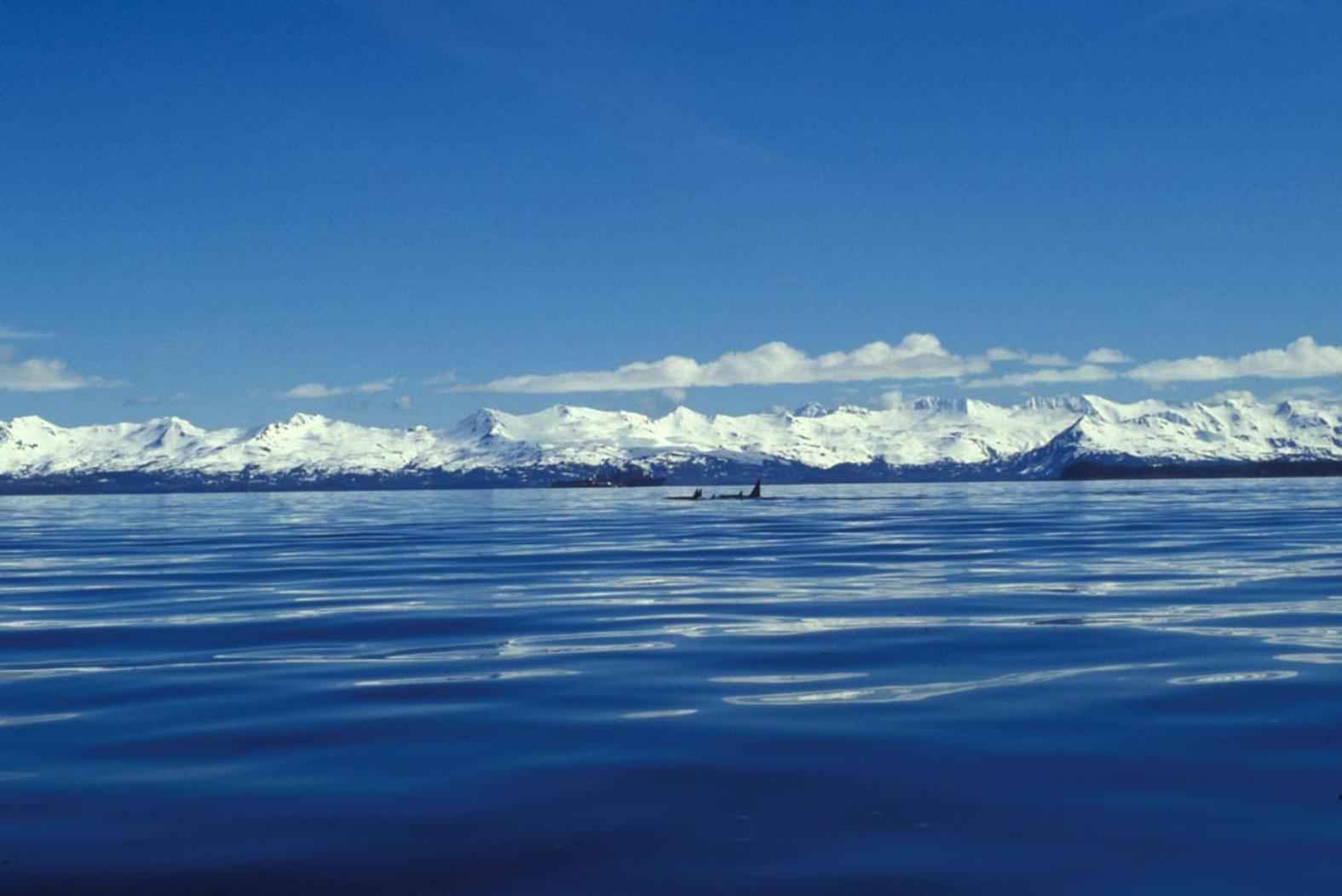
Killer whale surfacing with black dorsal fin and white eye patch visible
Hosking / U.S. Fish and Wildlife Service / Public domain
๐ŸŒ Read in Language:

โšก At a Glance

Species profile
Also Known As
Orca
Diet Category
Carnivore
Activity Rhythm
Active throughout day and night, alternating travel, foraging, socializing and rest.
Wild Lifespan
Females may live 50โ€“80 years or more; males often 30โ€“60 years
Typical Weight
females roughly 1,300โ€“3,600 kg; large males 3,600โ€“5,400 kg or more
Conservation Status
DD
๐Ÿ’ก Key Biological Insight: Different populations can use distinct call dialects and specialize on very different prey.

๐ŸŒณ Scientific Taxonomy Hierarchy

The killer whale is the only living species in genus Orcinus and belongs to the oceanic dolphin family Delphinidae.

KingdomAnimalia
PhylumChordata
ClassMammalia
OrderCetacea
FamilyDelphinidae
GenusOrcinus
SpeciesOrcinus orca

Distinguishing Anatomical Features

  • โœ“A robust black-and-white dolphin with a white eye patch, gray saddle patch, broad paddle-shaped flippers and a tall dorsal fin. Adult males develop much taller, straighter dorsal fins than females.
  • โœ“Echolocation detects prey
  • โœ“Blubber insulates and stores energy
  • โœ“Powerful tail drives bursts of speed
  • โœ“Cultural learning transmits hunting methods

๐Ÿ“ Physical Measurements

Total Lengthfemales about 16โ€“23 ft; males about 20โ€“26 ft
Body Weightfemales roughly 2,900โ€“7,900 lb; large males 7,900โ€“11,900 lb or more
Tail LengthBroad horizontal flukes
WingspanNot applicable
Top SpeedNo dependable universal maximumMovement changes with context and conditions.

๐ŸŽจ Appearance & Distinctive Markings

BlackWhiteGray

Skin / Covering: Smooth skin over thick blubber

Sexual Dimorphism: Adult males are longer and substantially heavier, with dorsal fins that may approach 1.8 m in height.

๐Ÿ—บ๏ธ Geographic Distribution & Habitat

All major oceans from polar pack-ice margins to tropical waters, with concentrations where productive waters or preferred prey occur.

Coastal shelves, fjords, open ocean, ice edges and deep offshore waters.

Country-level distribution map

Native range
FijiTanzaniaWestern SaharaCanada โ€” Native rangeUnited States โ€” Native rangeKazakhstanUzbekistanPapua New GuineaIndonesiaArgentina โ€” Native rangeChile โ€” Native rangeCongo - KinshasaSomaliaKenyaSudanChadHaitiDominican RepublicRussia โ€” Native rangeBahamasFalkland IslandsNorway โ€” Native rangeGreenlandFrench Southern TerritoriesTimor-LesteSouth Africa โ€” Native rangeLesothoMexicoUruguayBrazilBoliviaPeruColombiaPanamaCosta RicaNicaraguaHondurasEl SalvadorGuatemalaBelizeVenezuelaGuyanaSurinameFranceEcuadorPuerto RicoJamaicaCubaZimbabweBotswanaNamibiaSenegalMaliMauritaniaBeninNigerNigeriaCameroonTogoGhanaCรดte dโ€™IvoireGuineaGuinea-BissauLiberiaSierra LeoneBurkina FasoCentral African RepublicCongo - BrazzavilleGabonEquatorial GuineaZambiaMalawiMozambiqueEswatiniAngolaBurundiIsraelLebanonMadagascarPalestinian TerritoriesGambiaTunisiaAlgeriaJordanUnited Arab EmiratesQatarKuwaitIraqOmanVanuatuCambodiaThailandLaosMyanmar (Burma)VietnamNorth KoreaSouth KoreaMongoliaIndiaBangladeshBhutanNepalPakistanAfghanistanTajikistanKyrgyzstanTurkmenistanIranSyriaArmeniaSwedenBelarusUkrainePolandAustriaHungaryMoldovaRomaniaLithuaniaLatviaEstoniaGermanyBulgariaGreeceTรผrkiyeAlbaniaCroatiaSwitzerlandLuxembourgBelgiumNetherlandsPortugalSpainIrelandNew CaledoniaSolomon IslandsNew Zealand โ€” Native rangeAustralia โ€” Native rangeSri LankaChinaTaiwanItalyDenmarkUnited KingdomIceland โ€” Native rangeAzerbaijanGeorgiaPhilippinesMalaysiaBruneiSloveniaFinlandSlovakiaCzechiaEritreaJapan โ€” Native rangeParaguayYemenSaudi ArabiaCyprusMoroccoEgyptLibyaEthiopiaDjiboutiUgandaRwandaBosnia & HerzegovinaNorth MacedoniaSerbiaMontenegroKosovoTrinidad & TobagoSouth Sudan
Highlighted countries are recorded profile locations, not precise biological range boundaries.Map boundaries: Natural Earth

๐Ÿ’ก Did You Know?

  • ๐Ÿ’กEcholocation detects prey
  • ๐Ÿ’กBlubber insulates and stores energy
  • ๐Ÿ’กPowerful tail drives bursts of speed
  • ๐Ÿ’กCultural learning transmits hunting methods

๐ŸŒฟ Conservation Status & Threats

IUCN: DD โ€” DD

โ€œData Deficient globally because killer whale populations differ sharply in ecology and risk; several regional populations are individually threatened.โ€

Population TrendUnknown globally
Wild Population EstimateNo single dependable global total is available.

โš ๏ธ Major Threats to Killer Whale

  • โ€ขPrey depletion
  • โ€ขPersistent pollutants
  • โ€ขUnderwater noise
  • โ€ขVessel disturbance
  • โ€ขEntanglement
  • โ€ขOil spills

๐Ÿ”„ Life Cycle & Reproduction

Wild vs. Captivity Lifespan Comparison

๐ŸŒฟ In the WildFemales may live 50โ€“80 years or more; males often 30โ€“60 years
๐Ÿ  In Captivity (with veterinary care)Can differ under managed care.
Clutch / Litter SizeOne calf, with twins extremely rare.
Incubation / GestationGestation about 15โ€“18 months
Fledging / WeaningCalves nurse for at least a year and learn prey, routes and social traditions over many years.
Sexual MaturityFemales around 10โ€“13 years; males generally later
Mating SystemPolygynandrous; mating occurs outside the closest maternal group
Nesting / Den TypeNo nest; calves are born tail-first in water

๐Ÿฆ… Behavior & Field Ecology

Carnivore

๐ŸŒ Ecological Food Web & Relationships: Apex predator whose effects differ with prey specialization and ecosystem.

Social Group SizeMatrilineal pods and population-specific social networks
Activity RhythmActive throughout day and night, alternating travel, foraging, socializing and rest.
Feeding StrategyCarnivore

๐Ÿฅฉ Primary Prey & Preferred Diet

โœ“ Salmon and other fishโœ“ Sharks and raysโœ“ Sealsโœ“ Dolphinsโœ“ Large whale calves

๐Ÿ“ข Communication & Territorial Signals

  • Pulsed calls
  • Whistles
  • Echolocation clicks

๐Ÿพ Wild Temperament & Traits

โ€ข Highly socialโ€ข Intelligentโ€ข Powerful

๐Ÿค Human Interaction & Pet Advisory

โš ๏ธ Strictly Wild Species
๐Ÿšซ

Can You Keep a Killer Whale as a Pet?

Cannot ethically or practically be kept as a pet; managed-care controversy concerns welfare of highly social wide-ranging animals.

Domestication StatusWild and not domesticated
Danger to HumansPowerful wild marine predator; observe from regulated distance
Economic & Ecotourism RoleEcological, cultural, research and wildlife-tourism significance.

โš ๏ธ Behavioral Risk Factors & Wildlife Safety

  • Large body and high swimming power
  • Close vessel approaches disturb feeding and resting

๐ŸŒ Ecological Food Web & Relationships

๐Ÿฆ… Natural Predators (2)

HumansHomo sapiens
Other Killer WhalesOrcinus orca

๐Ÿงฌ Related Species (2)

Long-finned Pilot WhaleGlobicephala melasLarge social dolphin relative
False Killer WhalePseudorca crassidensRelated oceanic dolphin

Killer Whale (Orcinus orca) also called the orca, is a globally distributed marine mammal and apex predator. This guide separates well-supported biology from common assumptions and covers identification, range, habitat, diet, behavior, reproduction and conservation.

Identification

A robust black-and-white dolphin with a white eye patch, gray saddle patch, broad paddle-shaped flippers and a tall dorsal fin. Adult males develop much taller, straighter dorsal fins than females. Adult males are longer and substantially heavier, with dorsal fins that may approach 1.8 m in height.

Identification should combine body shape, markings, size, voice or movement, and location. One feature by itself can overlap with a related animal, a juvenile, or an individual in unusual light.

Photographs are most useful when they preserve scale and show several diagnostic features. Handling or repositioning a wild killer whale for identification can cause stress and is unnecessary.

Size and physical adaptations

Killer Whale typically measures females about 5โ€“7 m; males about 6โ€“8 m and weighs females roughly 1,300โ€“3,600 kg; large males 3,600โ€“5,400 kg or more. Values differ among populations and exceptional individuals.

Its useful adaptations include echolocation detects prey, blubber insulates and stores energy, powerful tail drives bursts of speed, cultural learning transmits hunting methods. These traits work together in the animal’s normal setting rather than serving as isolated curiosities.

Published measurements may use different methods, life stages or sample locations. Comparing figures responsibly means checking what was measured rather than selecting the largest number available.

Range and distribution

All major oceans from polar pack-ice margins to tropical waters, with concentrations where productive waters or preferred prey occur. The native range includes United States, Canada, Iceland, Norway, Russia, Japan, Argentina, Chile, New Zealand, Australia, South Africa, Antarctica.

A country-level map indicates broad distribution, not continuous occupation. Climate, elevation, water, vegetation, prey, breeding sites, barriers and survey effort all affect where records occur.

Records near the edge of the range deserve careful documentation because they may reflect natural movement, improved survey coverage, accidental transport or a genuine distribution change.

Habitat

Coastal shelves, fjords, open ocean, ice edges and deep offshore waters.

Movement is shaped by prey, social group and population tradition; some communities remain coastal while others range widely offshore. Protecting a population therefore requires the feeding, shelter and breeding features that make a site usable, along with connections that allow movement.

Microhabitat matters. Shade, soil, current, moisture, shelter or host plants can determine whether a small area is usable even when the surrounding landscape appears suitable.

Diet and feeding

Killer Whale is a carnivore. Important foods include salmon and other fish, sharks and rays, seals, dolphins, large whale calves. Diet is population-specific. Some communities specialize on fish, while others cooperatively hunt marine mammals or sharks.

Diet changes with age, season, location and food supply. A dramatic prey record does not establish what most individuals eat most of the time; repeated field observations provide a stronger picture.

Feeding opportunities also create risk. An animal focused on prey may be less alert to predators, traffic or people, while contaminated prey can transfer pollutants through the food web.

Behavior and communication

Active throughout day and night, alternating travel, foraging, socializing and rest. Stable maternal groups coordinate with calls and body movements. Hunting techniques include fish herding, wave washing and coordinated pursuit.

Pods use whistles, pulsed calls and echolocation clicks; stable groups possess recognizable call repertoires. Behavior should be interpreted in context: alarm, courtship, feeding and temperature regulation can produce very different actions from the same animal.

Daily schedules are flexible responses, not rigid rules. Weather, breeding condition, disturbance, tides or food can move activity into a different part of the day.

Reproduction and development

Females produce one calf after a long pregnancy and provide extended care. One calf, with twins extremely rare. undefined

Young animals face different risks and may use different microhabitats or food than adults. Breeding success depends on adult condition, suitable sites and the survival of offspring through vulnerable early stages.

Counts of eggs or young describe reproductive output, not the number expected to reach adulthood. Mortality is normally greatest during eggs, larval or juvenile stages.

Predators and ecological role

Apex predator whose effects differ with prey specialization and ecosystem. Documented or likely predators include Humans, Other Killer Whales.

This animal is both a consumer and a food source. Its influence comes through many repeated interactions, so ecological claims should be based on measured populations rather than assumptions drawn from appearance.

Predator and prey relationships differ among places. A species can be ecologically influential without being abundant everywhere, and its role can change across its range.

Relationship with people

Wild killer whales are not known to hunt people, but boats must follow distance and speed regulations to reduce disturbance.

Never swim toward, feed or pursue wild whales. Follow local vessel exclusion distances and report entanglement to trained responders. Responsible observation means keeping an appropriate distance, avoiding capture or feeding, protecting habitat and following local wildlife or invasive-species guidance.

Wildlife guidance should come from the responsible local agency because collection rules, reporting requests and appropriate responses differ between native and introduced ranges.

Conservation

Data Deficient globally because killer whale populations differ sharply in ecology and risk; several regional populations are individually threatened. The reported global trend is Unknown globally.

Important pressures include prey depletion, persistent pollutants, underwater noise, vessel disturbance, entanglement, oil spills. Global status can hide local decline or recovery, so current regional monitoring and habitat management remain necessary.

The most useful conservation action follows the documented pressure. Protecting breeding sites, reducing road deaths or limiting pollutants can require different tools in different populations.

Sources and further reading

โ“ Frequently Asked Questions

Answers to frequently asked questions verified against peer-reviewed zoological research.

Yes. Orcas are the largest members of the oceanic dolphin family Delphinidae.