
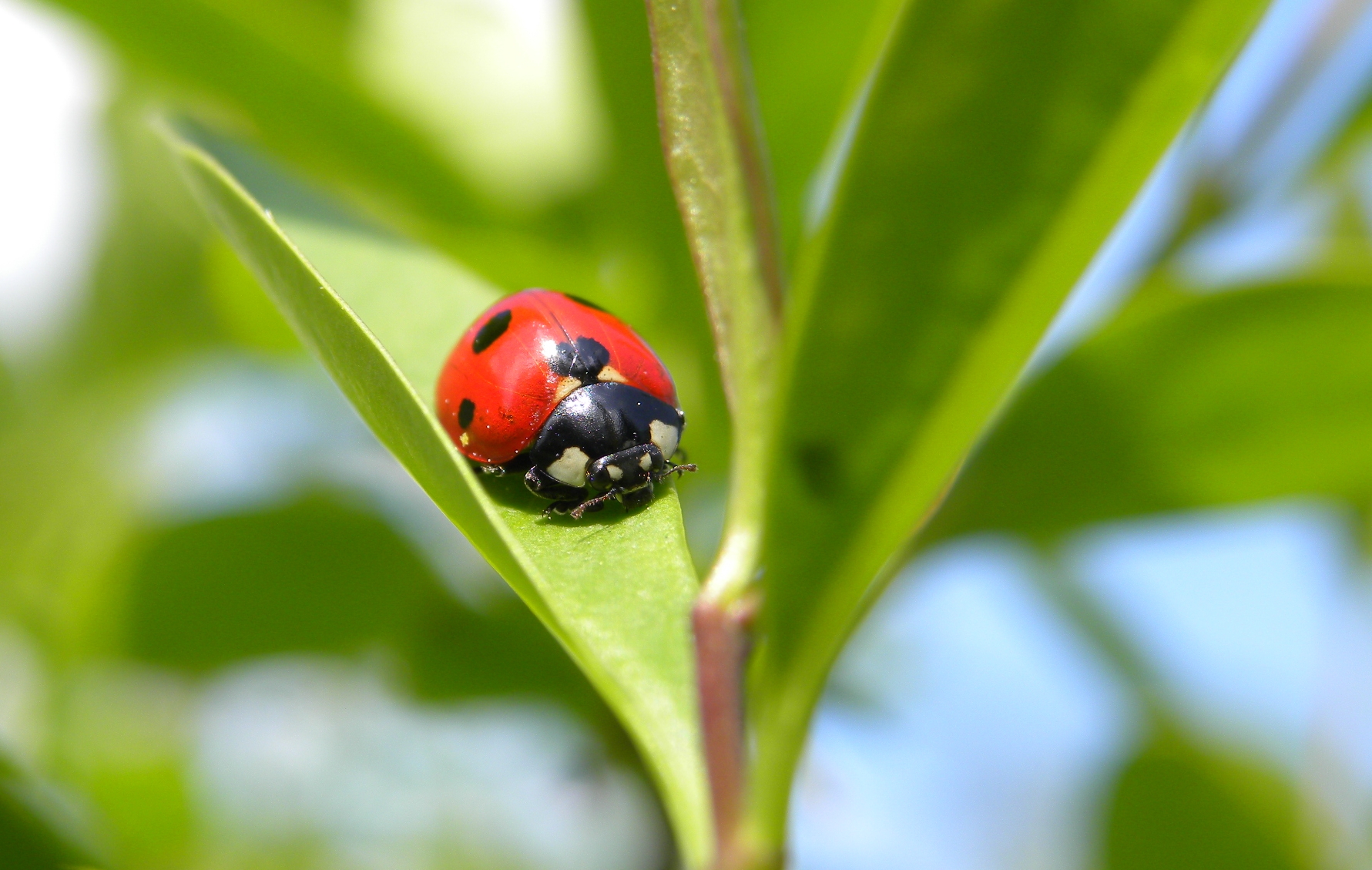
Ladybug (Coccinellidae) is the familiar name for members of Coccinellidae, a diverse beetle family with roughly 6,000 described species. Many are rounded, brightly marked predators of aphids, scales, whiteflies, mealybugs or mites, although others eat fungi or plants. Because this page covers a family rather than one species, color, size, diet, range, lifespan and conservation needs vary widely. This guide separates well-supported biology from common assumptions and covers identification, range, habitat, diet, behavior, reproduction and conservation.
Identification
Adults are usually small, oval to nearly round beetles with a strongly domed back, short clubbed antennae and hardened wing covers. Colors include red, orange, yellow, brown or black, with spots, bands or no markings. Larvae look very different: elongated, mobile and often dark with orange or pale patches and small spines. Eggs are commonly yellow or orange and laid in clusters. Sexes are often similar externally, with subtle differences in size or abdominal structure that vary among species.
Identification should combine body shape, markings, size, voice or movement, and location. One feature by itself can overlap with a related animal, a juvenile, or an individual in unusual light.
Photographs are most useful when they preserve scale and show several diagnostic features. Handling or repositioning a wild ladybug for identification can cause stress and is unnecessary.
Size and physical adaptations
Ladybug typically measures Usually about 1–10 mm, with some species outside that range and weighs Varies greatly and is rarely used for field identification. This is a family-level range; individual species have much narrower adult sizes.
Its useful adaptations include hard elytra shield the abdomen and flight wings, bright warning colors advertise chemical defenses, reflex bleeding releases bitter defensive fluid, strong jaws seize soft-bodied prey, larvae move actively among plant colonies, adults fly to new prey patches and overwintering sites. These traits work together in the animal’s normal setting rather than serving as isolated curiosities.
Published measurements may use different methods, life stages or sample locations. Comparing figures responsibly means checking what was measured rather than selecting the largest number available.
Range and distribution
Ladybugs occur on every inhabited continent in forests, grasslands, deserts, wetlands, farms, orchards, gardens and cities. Each species has its own native range. Human transport and biological-control releases have moved some species far beyond their origins, so a familiar beetle may be native, introduced or invasive depending on the location. The native range includes Worldwide except Antarctica.
A country-level map indicates broad distribution, not continuous occupation. Climate, elevation, water, vegetation, prey, breeding sites, barriers and survey effort all affect where records occur.
Records near the edge of the range deserve careful documentation because they may reflect natural movement, improved survey coverage, accidental transport or a genuine distribution change.
Habitat
Vegetation supporting prey or fungal and plant foods, plus sheltered places for pupation and seasonal dormancy.
Predatory species search leaves, stems, bark and flower heads where aphids, scales, mites or other prey cluster. Adults move readily between fields and wild vegetation as prey changes. Many temperate species overwinter beneath bark, in leaf litter, rock cracks or buildings, sometimes in large aggregations. Pupae attach openly to plants and remain immobile while the adult body forms. Protecting a population therefore requires the feeding, shelter and breeding features that make a site usable, along with connections that allow movement.
Microhabitat matters. Shade, soil, current, moisture, shelter or host plants can determine whether a small area is usable even when the surrounding landscape appears suitable.
Diet and feeding
Ladybug is a mostly predatory as a family, with fungal-feeding and plant-feeding exceptions. Important foods include aphids, scale insects, mealybugs and whiteflies, mites, insect eggs and small larvae, pollen, nectar, fungi or plants in some species. Both adults and larvae of many species patrol plants and grasp soft-bodied prey with chewing mouthparts. A single individual may consume many small prey during development, but benefit differs with the taxon, crop, prey density and season. Pollen and nectar can supplement a predatory diet. Some family members specialize on fungi, and plant-feeding Epilachninae can damage crops.
Diet changes with age, season, location and food supply. A dramatic prey record does not establish what most individuals eat most of the time; repeated field observations provide a stronger picture.
Feeding opportunities also create risk. An animal focused on prey may be less alert to predators, traffic or people, while contaminated prey can transfer pollutants through the food web.
Behavior and communication
Mostly active by day in warm weather; seasonality varies by climate and species. Ladybugs walk among plant surfaces, fly when food becomes scarce and may drop or remain still when disturbed. Many release yellow, foul-tasting hemolymph from leg joints, a defense called reflex bleeding. Temperate adults often aggregate before winter. Introduced generalists may eat native ladybugs or outcompete them, showing why the family cannot be treated as universally beneficial.
Chemical cues help adults locate prey-damaged plants, mates and aggregation sites. Vision detects shapes, contrast and movement at close range, while antennae and sensory hairs sample surfaces and air. Courtship involves contact, following and species-specific chemical information rather than audible calls. Behavior should be interpreted in context: alarm, courtship, feeding and temperature regulation can produce very different actions from the same animal.
Daily schedules are flexible responses, not rigid rules. Weather, breeding condition, disturbance, tides or food can move activity into a different part of the day.
Reproduction and development
After mating, a female typically places clusters of elongated eggs near suitable food for larvae. Some eggs in a cluster may be infertile and serve as emergency food. Reproductive timing and egg number differ by species and conditions. There is no parental care after laying, so choosing a prey-rich plant strongly affects larval survival. From a few to dozens of eggs per cluster; lifetime totals vary widely Ladybugs undergo complete metamorphosis. An egg hatches into a mobile larva that molts through several instars while feeding. The last larval stage anchors to a surface and becomes a pupa. An adult emerges soft and pale, then expands its wings and gains final color as the cuticle hardens. Warm-season species may complete several generations annually.
Young animals face different risks and may use different microhabitats or food than adults. Breeding success depends on adult condition, suitable sites and the survival of offspring through vulnerable early stages.
Counts of eggs or young describe reproductive output, not the number expected to reach adulthood. Mortality is normally greatest during eggs, larval or juvenile stages.
Predators and ecological role
Coccinellids occupy several roles: predators, fungus eaters, herbivores and prey for birds, spiders, lacewings, wasps and other insects. Predatory species can suppress crop pests, yet field effectiveness depends on whether beetles remain after release and whether pesticides spare them. Native diversity can decline where broad-diet introduced species compete, spread pathogens or consume other beneficial insects. Documented or likely predators include Spiders, Birds, Parasitoid Wasps, Predatory Bugs.
This animal is both a consumer and a food source. Its influence comes through many repeated interactions, so ecological claims should be based on measured populations rather than assumptions drawn from appearance.
Predator and prey relationships differ among places. A species can be ecologically influential without being abundant everywhere, and its role can change across its range.
Relationship with people
Gardeners value ladybugs, but buying and releasing adult beetles does not guarantee pest control because they may disperse immediately. Habitat with diverse flowers, unsprayed refuges and season-long prey often supports resident species better. Beetles clustering indoors are nuisance visitors rather than household breeders; sealing cracks and gently vacuuming them is preferable to broad insecticide use.
Handle gently and wash hands afterward. Defensive fluid can stain surfaces, smell unpleasant or irritate sensitive skin. A few species occasionally nip, and large indoor aggregations may trigger allergies in susceptible people. Responsible observation means keeping an appropriate distance, avoiding capture or feeding, protecting habitat and following local wildlife or invasive-species guidance.
Wildlife guidance should come from the responsible local agency because collection rules, reporting requests and appropriate responses differ between native and introduced ranges.
Conservation
Coccinellidae as a whole has not been assessed as one IUCN taxon because it contains thousands of species with different distributions and trends. Some remain abundant, some spread invasively and several formerly common native species have declined. Conservation must therefore be evaluated species by species rather than assigning one risk level to every ladybug. The reported global trend is Different taxa and regions show increasing, stable or decreasing patterns.
Important pressures include broad-spectrum insecticides, loss of diverse vegetation and overwintering shelter, competition from introduced species, pathogens and parasitoids, climate and seasonal mismatch, decline of prey or fungal food. Global status can hide local decline or recovery, so current regional monitoring and habitat management remain necessary.
The most useful conservation action follows the documented pressure. Protecting breeding sites, reducing road deaths or limiting pollutants can require different tools in different populations.
