
Species profileIUCN: LC

Meerkat

Suricata suricatta

A cooperative mongoose that digs, teaches, babysits and watches the horizon in southern Africa.

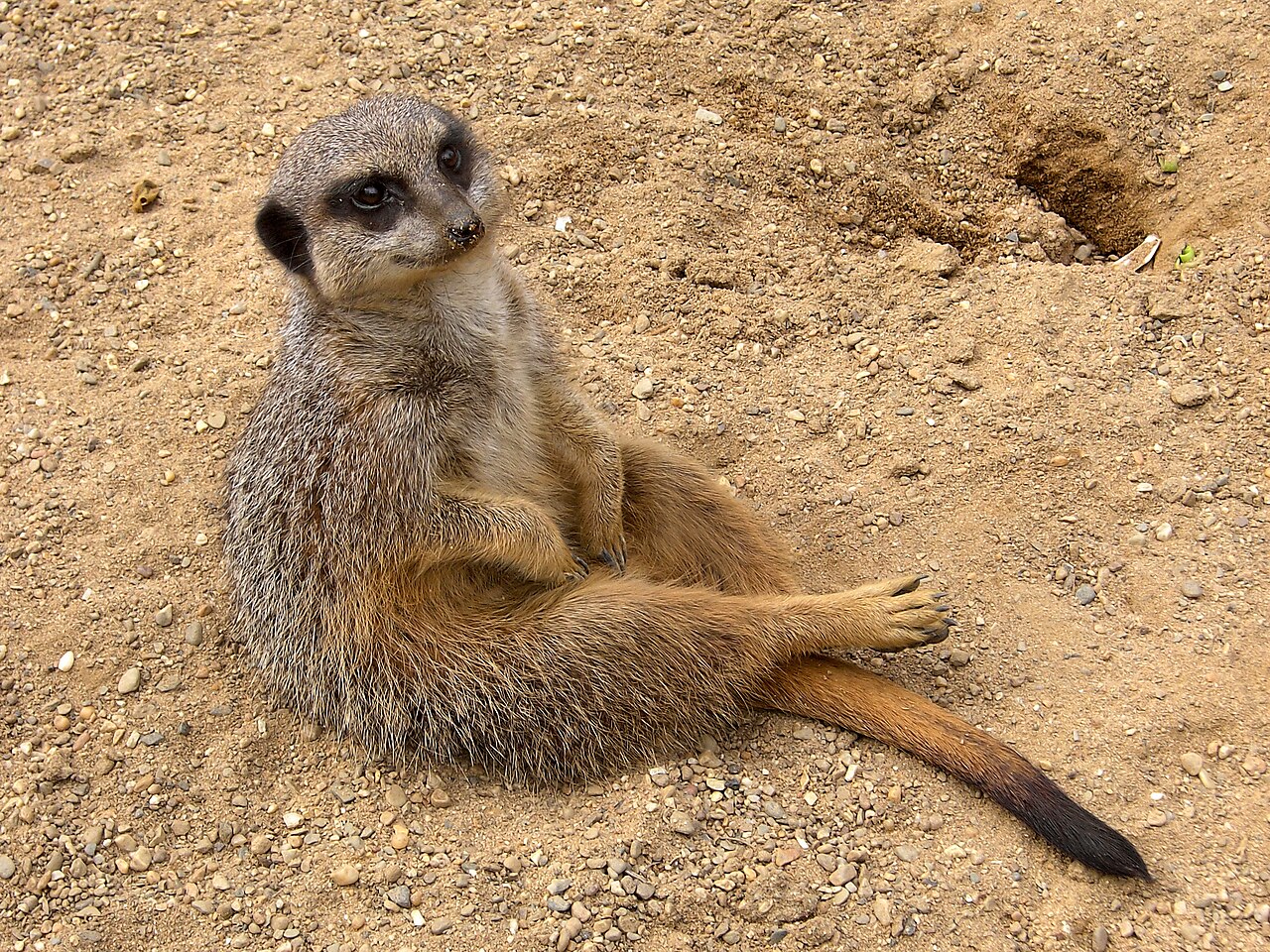
Meerkat standing alert on sandy ground with dark eye patches and black-tipped tail
Hans Hillewaert / Wikimedia Commons / CC BY-SA 4.0
๐ŸŒ Read in Language:

โšก At a Glance

Species profile
Also Known As
Suricate
Diet Category
Omnivore dominated by animal prey
Activity Rhythm
Diurnal, emerging after sunrise to warm up, forage and maintain burrows.
Wild Lifespan
Often five to ten years in the wild; around ten years in managed care
Typical Weight
usually about 0.6โ€“1.0 kg
Conservation Status
LC
๐Ÿ’ก Key Biological Insight: Adults modify the food they give pups as youngsters learn to handle difficult prey, making meerkats a well-studied example of teaching outside humans.

๐ŸŒณ Scientific Taxonomy Hierarchy

The meerkat is the only living species in genus Suricata and belongs to the mongoose family Herpestidae. Several geographic subspecies have been named, but all are members of Suricata suricatta.

KingdomAnimalia
PhylumChordata
ClassMammalia
OrderCarnivora
FamilyHerpestidae
GenusSuricata
SpeciesSuricata suricatta

Distinguishing Anatomical Features

  • โœ“A slender, long-bodied mongoose with sandy-gray fur, dark transverse bands across the back, dark eye patches, a pointed muzzle, small ears, a black-tipped tail and long curved foreclaws.
  • โœ“Long foreclaws excavate prey and burrows
  • โœ“Dark eye patches reduce glare
  • โœ“Closable ears exclude sand while digging
  • โœ“Strong social cooperation spreads risk
  • โœ“Tail braces the body during upright vigilance

๐Ÿ“ Physical Measurements

Total Lengthhead and body about 10โ€“14 in
Body Weightusually about 1.3โ€“2.2 lb
Tail LengthAbout 7โ€“10 in and black-tipped
WingspanNot applicable
Top SpeedNo dependable universal maximumMovement changes with context and conditions.

๐ŸŽจ Appearance & Distinctive Markings

Sandy grayBrownBlack bandsDark eye patches

Skin / Covering: Short insulating fur

Sexual Dimorphism: Sexes look similar and overlap in size, although dominant females may be heavier during breeding.

๐Ÿ—บ๏ธ Geographic Distribution & Habitat

Arid and semi-arid southwestern Africa, from southwestern Angola through Namibia and Botswana into western and central South Africa.

Open dry plains, Kalahari savanna, sparse scrub and grassland with firm soil suitable for extensive burrows.

Country-level distribution map

Native range
FijiTanzaniaWestern SaharaCanadaUnited StatesKazakhstanUzbekistanPapua New GuineaIndonesiaArgentinaChileCongo - KinshasaSomaliaKenyaSudanChadHaitiDominican RepublicRussiaBahamasFalkland IslandsNorwayGreenlandFrench Southern TerritoriesTimor-LesteSouth Africa โ€” Native rangeLesothoMexicoUruguayBrazilBoliviaPeruColombiaPanamaCosta RicaNicaraguaHondurasEl SalvadorGuatemalaBelizeVenezuelaGuyanaSurinameFranceEcuadorPuerto RicoJamaicaCubaZimbabweBotswana โ€” Native rangeNamibia โ€” Native rangeSenegalMaliMauritaniaBeninNigerNigeriaCameroonTogoGhanaCรดte dโ€™IvoireGuineaGuinea-BissauLiberiaSierra LeoneBurkina FasoCentral African RepublicCongo - BrazzavilleGabonEquatorial GuineaZambiaMalawiMozambiqueEswatiniAngola โ€” Native rangeBurundiIsraelLebanonMadagascarPalestinian TerritoriesGambiaTunisiaAlgeriaJordanUnited Arab EmiratesQatarKuwaitIraqOmanVanuatuCambodiaThailandLaosMyanmar (Burma)VietnamNorth KoreaSouth KoreaMongoliaIndiaBangladeshBhutanNepalPakistanAfghanistanTajikistanKyrgyzstanTurkmenistanIranSyriaArmeniaSwedenBelarusUkrainePolandAustriaHungaryMoldovaRomaniaLithuaniaLatviaEstoniaGermanyBulgariaGreeceTรผrkiyeAlbaniaCroatiaSwitzerlandLuxembourgBelgiumNetherlandsPortugalSpainIrelandNew CaledoniaSolomon IslandsNew ZealandAustraliaSri LankaChinaTaiwanItalyDenmarkUnited KingdomIcelandAzerbaijanGeorgiaPhilippinesMalaysiaBruneiSloveniaFinlandSlovakiaCzechiaEritreaJapanParaguayYemenSaudi ArabiaCyprusMoroccoEgyptLibyaEthiopiaDjiboutiUgandaRwandaBosnia & HerzegovinaNorth MacedoniaSerbiaMontenegroKosovoTrinidad & TobagoSouth Sudan
Highlighted countries are recorded profile locations, not precise biological range boundaries.Map boundaries: Natural Earth

๐Ÿ’ก Did You Know?

  • ๐Ÿ’กLong foreclaws excavate prey and burrows
  • ๐Ÿ’กDark eye patches reduce glare
  • ๐Ÿ’กClosable ears exclude sand while digging
  • ๐Ÿ’กStrong social cooperation spreads risk
  • ๐Ÿ’กTail braces the body during upright vigilance

๐ŸŒฟ Conservation Status & Threats

IUCN: LC โ€” Least Concern

โ€œAssessed as Least Concern because the species remains widespread in southern Africa and occurs in protected areas.โ€

Population TrendStable overall
Wild Population EstimateNo precise global total is available; abundance varies with rainfall, prey and local persecution.

โš ๏ธ Major Threats to Meerkat

  • โ€ขLocal habitat conversion
  • โ€ขPersecution near farms
  • โ€ขRoad mortality
  • โ€ขDisease outbreaks
  • โ€ขDrought and climate extremes

๐Ÿ”„ Life Cycle & Reproduction

Wild vs. Captivity Lifespan Comparison

๐ŸŒฟ In the WildOften five to ten years in the wild; around ten years in managed care
๐Ÿ  In Captivity (with veterinary care)Can differ under managed care.
Clutch / Litter SizeUsually two to five pups
Incubation / GestationGestation about 11 weeks
Fledging / WeaningPups are born in a burrow, open their eyes after roughly two weeks and first emerge at about three weeks. Helpers guard them, bring food and gradually introduce live prey-handling challenges. Weaning occurs at about six to nine weeks.
Sexual MaturityAround one year, though social rank controls breeding opportunity
Mating SystemDominant pair produces most offspring; occasional subordinate breeding occurs
Nesting / Den TypeUnderground communal burrow with multiple entrances

๐Ÿฆ… Behavior & Field Ecology

Omnivore dominated by animal prey

๐ŸŒ Ecological Food Web & Relationships: A digging predator of invertebrates and small vertebrates, prey for raptors and carnivores, and a soil-disturbing ecosystem participant. Abandoned burrows can shelter other desert animals.

Social Group SizeCooperative mob with matrilineal dominance
Activity RhythmDiurnal, emerging after sunrise to warm up, forage and maintain burrows.
Feeding StrategyOmnivore dominated by animal prey

๐Ÿฅฉ Primary Prey & Preferred Diet

โœ“ Beetlesโœ“ Termitesโœ“ Grubsโœ“ Scorpionsโœ“ Spidersโœ“ Small reptilesโœ“ Eggsโœ“ Rootsโœ“ Tubersโœ“ Tsama melon

๐Ÿ“ข Communication & Territorial Signals

  • Predator-specific alarm calls
  • Sentinel watch calls
  • Scent marking
  • Grooming and touch

๐Ÿพ Wild Temperament & Traits

โ€ข Alertโ€ข Highly socialโ€ข Territorial

๐Ÿค Human Interaction & Pet Advisory

โš ๏ธ Strictly Wild Species
๐Ÿšซ

Can You Keep a Meerkat as a Pet?

Unsuitable as a household pet because it digs, scent-marks, bites and depends on a complex social group.

Domestication StatusWild and not domesticated
Danger to HumansLow when left undisturbed
Economic & Ecotourism RoleControls many invertebrates, aerates soil and provides a model for research on cooperation, communication and learning.

โš ๏ธ Behavioral Risk Factors & Wildlife Safety

  • Sharp teeth can deliver a defensive bite
  • Wild mammals may transmit infection

๐ŸŒ Ecological Food Web & Relationships

๐Ÿฆ… Natural Predators (4)

Martial EaglePolemaetus bellicosus
JackalLupulella species
Cape CobraNaja nivea
African WildcatFelis lybica

๐Ÿงฌ Related Species (2)

Yellow MongooseCynictis penicillataSouthern African mongoose relative
Banded MongooseMungos mungoHighly social mongoose relative

Meerkat (Suricata suricatta) is a small, intensely social mongoose adapted to dry plains and open scrub. This guide separates well-supported biology from common assumptions and covers identification, range, habitat, diet, behavior, reproduction and conservation.

Identification

A slender, long-bodied mongoose with sandy-gray fur, dark transverse bands across the back, dark eye patches, a pointed muzzle, small ears, a black-tipped tail and long curved foreclaws. Sexes look similar and overlap in size, although dominant females may be heavier during breeding.

Identification should combine body shape, markings, size, voice or movement, and location. One feature by itself can overlap with a related animal, a juvenile, or an individual in unusual light.

Photographs are most useful when they preserve scale and show several diagnostic features. Handling or repositioning a wild meerkat for identification can cause stress and is unnecessary.

Size and physical adaptations

Meerkat typically measures head and body about 25โ€“35 cm and weighs usually about 0.6โ€“1.0 kg. The tail adds roughly 18โ€“25 cm and is used as a brace when standing upright.

Its useful adaptations include long foreclaws excavate prey and burrows, dark eye patches reduce glare, closable ears exclude sand while digging, strong social cooperation spreads risk, tail braces the body during upright vigilance. These traits work together in the animal’s normal setting rather than serving as isolated curiosities.

Published measurements may use different methods, life stages or sample locations. Comparing figures responsibly means checking what was measured rather than selecting the largest number available.

Range and distribution

Arid and semi-arid southwestern Africa, from southwestern Angola through Namibia and Botswana into western and central South Africa. The native range includes Angola, Namibia, Botswana, South Africa.

A country-level map indicates broad distribution, not continuous occupation. Climate, elevation, water, vegetation, prey, breeding sites, barriers and survey effort all affect where records occur.

Records near the edge of the range deserve careful documentation because they may reflect natural movement, improved survey coverage, accidental transport or a genuine distribution change.

Habitat

Open dry plains, Kalahari savanna, sparse scrub and grassland with firm soil suitable for extensive burrows.

A mob rotates among multi-entrance burrow systems that buffer heat and cold and offer escape routes. Animals forage across open ground but remain within reach of cover when danger increases. Protecting a population therefore requires the feeding, shelter and breeding features that make a site usable, along with connections that allow movement.

Microhabitat matters. Shade, soil, current, moisture, shelter or host plants can determine whether a small area is usable even when the surrounding landscape appears suitable.

Diet and feeding

Meerkat is a omnivore dominated by animal prey. Important foods include beetles, termites, grubs, scorpions, spiders, small reptiles, eggs, roots, tubers, tsama melon. Meerkats spread out and dig rapidly for concealed prey, using smell and hearing to locate it. They can handle venomous scorpions by biting or removing the stinger, but are not immune to every toxin. Roots and melons provide moisture when free water is scarce.

Diet changes with age, season, location and food supply. A dramatic prey record does not establish what most individuals eat most of the time; repeated field observations provide a stronger picture.

Feeding opportunities also create risk. An animal focused on prey may be less alert to predators, traffic or people, while contaminated prey can transfer pollutants through the food web.

Behavior and communication

Diurnal, emerging after sunrise to warm up, forage and maintain burrows. Mobs commonly contain about ten to fifteen animals and can grow much larger. A dominant breeding pair produces most pups, while helpers babysit, provision young and join territorial defense. A sentinel climbs to a viewpoint and gives quiet watch calls; alarm calls convey urgency and predator type.

A rich vocal repertoire includes close calls, recruitment calls, growls and graded alarms. Scent marks, posture and grooming maintain relationships and territory. Behavior should be interpreted in context: alarm, courtship, feeding and temperature regulation can produce very different actions from the same animal.

Daily schedules are flexible responses, not rigid rules. Weather, breeding condition, disturbance, tides or food can move activity into a different part of the day.

Reproduction and development

The dominant female suppresses much subordinate reproduction and may evict competing females. In favorable rainy seasons she can produce several litters, supported by helpers throughout the mob. Usually two to five pups undefined

Young animals face different risks and may use different microhabitats or food than adults. Breeding success depends on adult condition, suitable sites and the survival of offspring through vulnerable early stages.

Counts of eggs or young describe reproductive output, not the number expected to reach adulthood. Mortality is normally greatest during eggs, larval or juvenile stages.

Predators and ecological role

A digging predator of invertebrates and small vertebrates, prey for raptors and carnivores, and a soil-disturbing ecosystem participant. Abandoned burrows can shelter other desert animals. Documented or likely predators include Martial Eagle, Jackal, Cape Cobra, African Wildcat.

This animal is both a consumer and a food source. Its influence comes through many repeated interactions, so ecological claims should be based on measured populations rather than assumptions drawn from appearance.

Predator and prey relationships differ among places. A species can be ecologically influential without being abundant everywhere, and its role can change across its range.

Relationship with people

Meerkats attract tourism and research interest but wild mobs should not be fed or habituated. They can carry diseases shared with other mongooses and domestic animals, and their social needs make private keeping harmful and difficult.

Observe quietly from a distance and never reach into a burrow. A frightened meerkat can bite, and habituation to food changes natural behavior. Responsible observation means keeping an appropriate distance, avoiding capture or feeding, protecting habitat and following local wildlife or invasive-species guidance.

Wildlife guidance should come from the responsible local agency because collection rules, reporting requests and appropriate responses differ between native and introduced ranges.

Conservation

Assessed as Least Concern because the species remains widespread in southern Africa and occurs in protected areas. The reported global trend is Stable overall.

Important pressures include local habitat conversion, persecution near farms, road mortality, disease outbreaks, drought and climate extremes. Global status can hide local decline or recovery, so current regional monitoring and habitat management remain necessary.

The most useful conservation action follows the documented pressure. Protecting breeding sites, reducing road deaths or limiting pollutants can require different tools in different populations.

Sources and further reading

โ“ Frequently Asked Questions

Answers to frequently asked questions verified against peer-reviewed zoological research.

An upright meerkat can scan above grass and scrub for predators, often bracing with its tail. The posture is also used while warming in the sun.