
Home/Animals/Aves/Northern Cardinal
Species profileIUCN: LC

Northern Cardinal

Cardinalis cardinalis

A nonmigratory crested songbird whose males and females both sing.

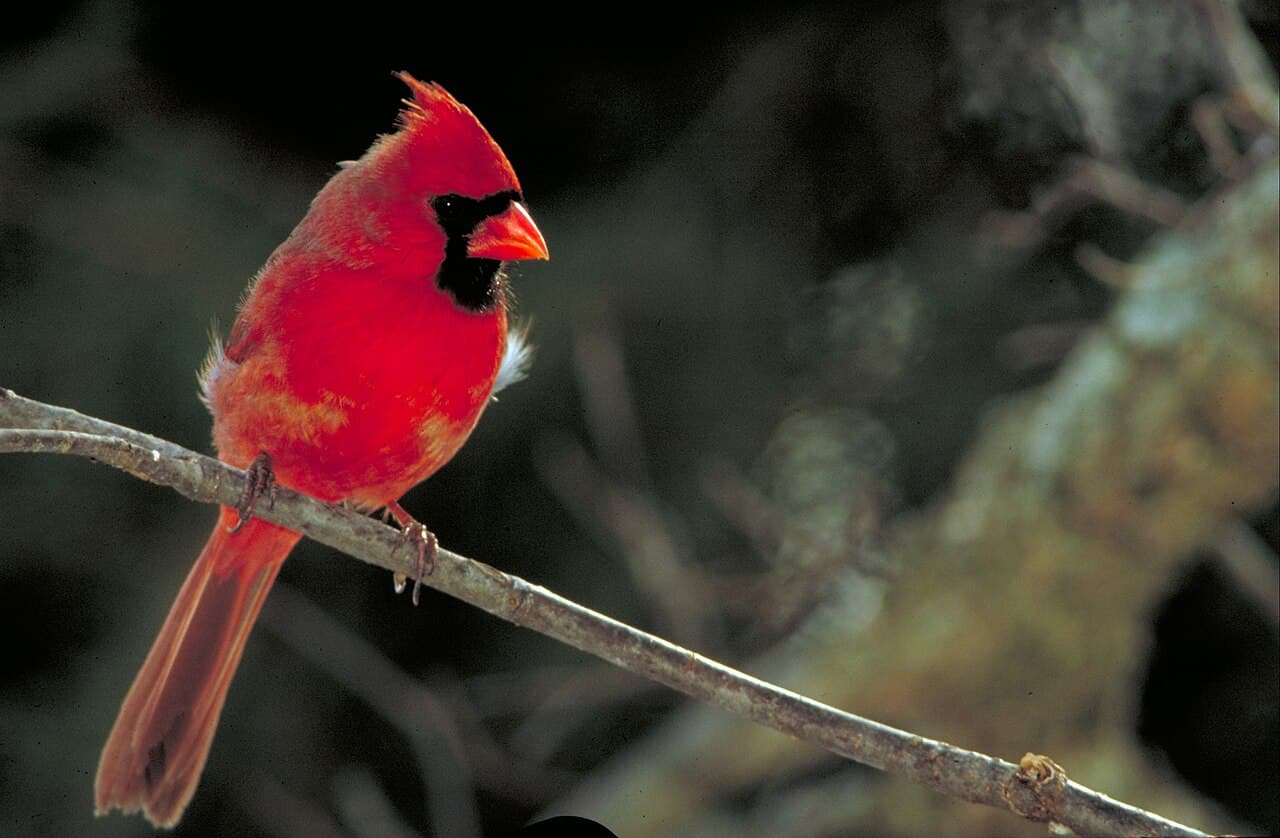
Adult male Northern Cardinal perched on a branch with bright red plumage and black face
Dr. Thomas G. Barnes / U.S. Fish and Wildlife Service / public domain
๐ŸŒ Read in Language:

โšก At a Glance

Species profile
Diet Category
Omnivore dominated by seeds and fruit
Activity Rhythm
Diurnal and active year-round, with song often beginning near dawn.
Wild Lifespan
Most live only a few years, but the longevity record exceeds 15 years
Typical Weight
about 42โ€“48 g
Conservation Status
LC
๐Ÿ’ก Key Biological Insight: Female northern cardinals sing, sometimes from the nest, and a pair may share song phrases used to coordinate breeding behavior.

๐ŸŒณ Scientific Taxonomy Hierarchy

The northern cardinal belongs to family Cardinalidae, which also includes grosbeaks and buntings. Numerous regional subspecies are recognized, including a long-crested western Mexican group sometimes discussed separately.

KingdomAnimalia
PhylumChordata
ClassAves
OrderPasseriformes
FamilyCardinalidae
GenusCardinalis
SpeciesCardinalis cardinalis

Distinguishing Anatomical Features

  • โœ“A medium-sized songbird with a prominent crest, long tail and thick orange-red seed-cracking bill. Adult males are brilliant red with a black face; females are warm buff-brown with red in the crest, wings and tail.
  • โœ“Deep conical bill cracks hard seeds
  • โœ“Crest communicates arousal
  • โœ“Carotenoid pigments create red plumage
  • โœ“Strong legs support ground and shrub foraging
  • โœ“Dense thickets provide nest concealment

๐Ÿ“ Physical Measurements

Total Lengthabout 8.3โ€“9.1 in
Body Weightabout 1.5โ€“1.7 oz
Tail LengthLong and rounded
Wingspanabout 9.8โ€“12.2 in
Top SpeedNo dependable universal maximumMovement changes with context and conditions.

๐ŸŽจ Appearance & Distinctive Markings

Scarlet red in malesBuff brown in femalesBlack faceOrange-red bill

Skin / Covering: Feathers

Sexual Dimorphism: Males are bright red; females are brownish with red highlights. Both sexes have a crest and sing, while juveniles initially have a dark bill.

๐Ÿ—บ๏ธ Geographic Distribution & Habitat

Year-round from southeastern Canada through the eastern and central United States into Mexico and northern Central America, with introduced populations in Hawaii, Bermuda and parts of southern California.

Shrubby woodland edges, hedgerows, regrowing forest, marsh thickets, mesquite, parks, gardens and suburban landscaping.

Country-level distribution map

Native range
FijiTanzaniaWestern SaharaCanada โ€” Native rangeUnited States โ€” Native rangeKazakhstanUzbekistanPapua New GuineaIndonesiaArgentinaChileCongo - KinshasaSomaliaKenyaSudanChadHaitiDominican RepublicRussiaBahamasFalkland IslandsNorwayGreenlandFrench Southern TerritoriesTimor-LesteSouth AfricaLesothoMexico โ€” Native rangeUruguayBrazilBoliviaPeruColombiaPanamaCosta RicaNicaraguaHondurasEl SalvadorGuatemala โ€” Native rangeBelize โ€” Native rangeVenezuelaGuyanaSurinameFranceEcuadorPuerto RicoJamaicaCubaZimbabweBotswanaNamibiaSenegalMaliMauritaniaBeninNigerNigeriaCameroonTogoGhanaCรดte dโ€™IvoireGuineaGuinea-BissauLiberiaSierra LeoneBurkina FasoCentral African RepublicCongo - BrazzavilleGabonEquatorial GuineaZambiaMalawiMozambiqueEswatiniAngolaBurundiIsraelLebanonMadagascarPalestinian TerritoriesGambiaTunisiaAlgeriaJordanUnited Arab EmiratesQatarKuwaitIraqOmanVanuatuCambodiaThailandLaosMyanmar (Burma)VietnamNorth KoreaSouth KoreaMongoliaIndiaBangladeshBhutanNepalPakistanAfghanistanTajikistanKyrgyzstanTurkmenistanIranSyriaArmeniaSwedenBelarusUkrainePolandAustriaHungaryMoldovaRomaniaLithuaniaLatviaEstoniaGermanyBulgariaGreeceTรผrkiyeAlbaniaCroatiaSwitzerlandLuxembourgBelgiumNetherlandsPortugalSpainIrelandNew CaledoniaSolomon IslandsNew ZealandAustraliaSri LankaChinaTaiwanItalyDenmarkUnited KingdomIcelandAzerbaijanGeorgiaPhilippinesMalaysiaBruneiSloveniaFinlandSlovakiaCzechiaEritreaJapanParaguayYemenSaudi ArabiaCyprusMoroccoEgyptLibyaEthiopiaDjiboutiUgandaRwandaBosnia & HerzegovinaNorth MacedoniaSerbiaMontenegroKosovoTrinidad & TobagoSouth Sudan
Highlighted countries are recorded profile locations, not precise biological range boundaries.Map boundaries: Natural Earth

๐Ÿ’ก Did You Know?

  • ๐Ÿ’กDeep conical bill cracks hard seeds
  • ๐Ÿ’กCrest communicates arousal
  • ๐Ÿ’กCarotenoid pigments create red plumage
  • ๐Ÿ’กStrong legs support ground and shrub foraging
  • ๐Ÿ’กDense thickets provide nest concealment

๐ŸŒฟ Conservation Status & Threats

IUCN: LC โ€” Least Concern

โ€œListed as Least Concern and abundant across a broad range. Long-term surveys show modest overall increase, although local hazards still matter.โ€

Population TrendIncreasing overall
Wild Population EstimatePartners in Flight estimates about 130 million breeding birds.

โš ๏ธ Major Threats to Northern Cardinal

  • โ€ขWindow collisions
  • โ€ขOutdoor cats
  • โ€ขPesticides
  • โ€ขLoss of dense nesting shrubs
  • โ€ขVehicle strikes
  • โ€ขFeeder-borne disease

๐Ÿ”„ Life Cycle & Reproduction

Wild vs. Captivity Lifespan Comparison

๐ŸŒฟ In the WildMost live only a few years, but the longevity record exceeds 15 years
๐Ÿ  In Captivity (with veterinary care)Can differ under managed care.
Clutch / Litter SizeUsually two to five eggs
Incubation / GestationAbout 11โ€“13 days, mostly by the female
Fledging / WeaningChicks hatch naked and helpless. Both parents feed them, mainly insects. They leave the nest after about 7โ€“13 days but remain dependent while the female may begin another nesting attempt.
Sexual MaturityUsually breeds the year after hatching
Mating SystemSocially monogamous pair bond through the breeding season, sometimes maintained in winter
Nesting / Den TypeOpen cup of twigs, bark, grasses and rootlets concealed in shrub or vine

๐Ÿฆ… Behavior & Field Ecology

Omnivore dominated by seeds and fruit

๐ŸŒ Ecological Food Web & Relationships: Cardinals disperse seeds, consume insects and provide prey for hawks, snakes and mammals. Their success in edge habitat illustrates how some native species adapt to suburbs while still depending on dense cover.

Social Group SizePairs in breeding season and loose flocks outside it
Activity RhythmDiurnal and active year-round, with song often beginning near dawn.
Feeding StrategyOmnivore dominated by seeds and fruit

๐Ÿฅฉ Primary Prey & Preferred Diet

โœ“ Sunflower seedsโœ“ Grassesโœ“ Sedgesโœ“ Cornโœ“ Wild grapeโœ“ Dogwood fruitโœ“ Blackberryโœ“ Beetlesโœ“ Cricketsโœ“ Caterpillarsโœ“ Spiders

๐Ÿ“ข Communication & Territorial Signals

  • Whistled song
  • Metallic chip call
  • Duets
  • Crest and body posture

๐Ÿพ Wild Temperament & Traits

โ€ข Territorial in breedingโ€ข Nonmigratoryโ€ข Pair-oriented

๐Ÿค Human Interaction & Pet Advisory

โš ๏ธ Strictly Wild Species
๐Ÿšซ

Can You Keep a Northern Cardinal as a Pet?

A protected native songbird in the United States and Canada and not a pet; enjoy it in habitat or at well-maintained feeders.

Domestication StatusWild and not domesticated
Danger to HumansHarmless to people
Economic & Ecotourism RoleSeed disperser, insect predator, garden favorite and widely recognized cultural symbol.

โš ๏ธ Behavioral Risk Factors & Wildlife Safety

  • May peck defensively if handled
  • Repeated window attacks can injure the bird

๐ŸŒ Ecological Food Web & Relationships

๐Ÿฆ… Natural Predators (5)

Cooperโ€™s HawkAccipiter cooperii
Domestic CatFelis catus
Rat SnakePantherophis species
Eastern ChipmunkTamias striatus
Blue JayCyanocitta cristata

๐Ÿงฌ Related Species (2)

PyrrhuloxiaCardinalis sinuatusClosest desert relative
Vermilion CardinalCardinalis phoeniceusSouth American congener

Northern Cardinal (Cardinalis cardinalis) is a familiar seed-eating songbird of thickets, woodland edges, gardens and towns across North America. This guide separates well-supported biology from common assumptions and covers identification, range, habitat, diet, behavior, reproduction and conservation.

Identification

A medium-sized songbird with a prominent crest, long tail and thick orange-red seed-cracking bill. Adult males are brilliant red with a black face; females are warm buff-brown with red in the crest, wings and tail. Males are bright red; females are brownish with red highlights. Both sexes have a crest and sing, while juveniles initially have a dark bill.

Identification should combine body shape, markings, size, voice or movement, and location. One feature by itself can overlap with a related animal, a juvenile, or an individual in unusual light.

Photographs are most useful when they preserve scale and show several diagnostic features. Handling or repositioning a wild northern cardinal for identification can cause stress and is unnecessary.

Size and physical adaptations

Northern Cardinal typically measures about 21โ€“23 cm and weighs about 42โ€“48 g. A fairly large songbird, slightly smaller than an American robin and much heavier-billed than most sparrows.

Its useful adaptations include deep conical bill cracks hard seeds, crest communicates arousal, carotenoid pigments create red plumage, strong legs support ground and shrub foraging, dense thickets provide nest concealment. These traits work together in the animal’s normal setting rather than serving as isolated curiosities.

Published measurements may use different methods, life stages or sample locations. Comparing figures responsibly means checking what was measured rather than selecting the largest number available.

Range and distribution

Year-round from southeastern Canada through the eastern and central United States into Mexico and northern Central America, with introduced populations in Hawaii, Bermuda and parts of southern California. The native range includes Canada, United States, Mexico, Belize, Guatemala.

A country-level map indicates broad distribution, not continuous occupation. Climate, elevation, water, vegetation, prey, breeding sites, barriers and survey effort all affect where records occur.

Records near the edge of the range deserve careful documentation because they may reflect natural movement, improved survey coverage, accidental transport or a genuine distribution change.

Habitat

Shrubby woodland edges, hedgerows, regrowing forest, marsh thickets, mesquite, parks, gardens and suburban landscaping.

Cardinals forage low or on the ground, sing from exposed perches and hide nests in dense foliage. They do not migrate, instead using sheltered thickets and reliable winter food within a permanent range. Protecting a population therefore requires the feeding, shelter and breeding features that make a site usable, along with connections that allow movement.

Microhabitat matters. Shade, soil, current, moisture, shelter or host plants can determine whether a small area is usable even when the surrounding landscape appears suitable.

Diet and feeding

Northern Cardinal is a omnivore dominated by seeds and fruit. Important foods include sunflower seeds, grasses, sedges, corn, wild grape, dogwood fruit, blackberry, beetles, crickets, caterpillars, spiders. The bird holds a seed in its thick bill, crushes the shell and manipulates the kernel with its tongue. Adults eat many fruits and seeds but feed nestlings mostly soft-bodied insects rich in protein.

Diet changes with age, season, location and food supply. A dramatic prey record does not establish what most individuals eat most of the time; repeated field observations provide a stronger picture.

Feeding opportunities also create risk. An animal focused on prey may be less alert to predators, traffic or people, while contaminated prey can transfer pollutants through the food web.

Behavior and communication

Diurnal and active year-round, with song often beginning near dawn. Pairs defend breeding territories with clear whistles and sharp chip calls. Both sexes may attack their reflection, especially in spring, mistaking it for an intruder. Outside breeding, cardinals join flocks and forage with sparrows and other seed-eating birds.

Both sexes sing repeated whistled phrases, and pairs may duet. A metallic chip is the common contact or alarm call; crest position, posture and red plumage add visual signals. Behavior should be interpreted in context: alarm, courtship, feeding and temperature regulation can produce very different actions from the same animal.

Daily schedules are flexible responses, not rigid rules. Weather, breeding condition, disturbance, tides or food can move activity into a different part of the day.

Reproduction and development

The female chooses a concealed fork and does most nest construction while the male may bring material. He feeds her during courtship and incubation and helps provision nestlings. Usually two to five eggs undefined

Young animals face different risks and may use different microhabitats or food than adults. Breeding success depends on adult condition, suitable sites and the survival of offspring through vulnerable early stages.

Counts of eggs or young describe reproductive output, not the number expected to reach adulthood. Mortality is normally greatest during eggs, larval or juvenile stages.

Predators and ecological role

Cardinals disperse seeds, consume insects and provide prey for hawks, snakes and mammals. Their success in edge habitat illustrates how some native species adapt to suburbs while still depending on dense cover. Documented or likely predators include Cooperโ€™s Hawk, Domestic Cat, Rat Snake, Eastern Chipmunk, Blue Jay.

This animal is both a consumer and a food source. Its influence comes through many repeated interactions, so ecological claims should be based on measured populations rather than assumptions drawn from appearance.

Predator and prey relationships differ among places. A species can be ecologically influential without being abundant everywhere, and its role can change across its range.

Relationship with people

Feeders and planted shrubs have helped cardinals expand north, but window collisions, outdoor cats, pesticides and removal of dense undergrowth cause avoidable mortality. Clean feeders reduce disease transmission.

Use collision-resistant window treatments, keep cats indoors, clean feeders regularly and prune only after checking carefully for active nests. Responsible observation means keeping an appropriate distance, avoiding capture or feeding, protecting habitat and following local wildlife or invasive-species guidance.

Wildlife guidance should come from the responsible local agency because collection rules, reporting requests and appropriate responses differ between native and introduced ranges.

Conservation

Listed as Least Concern and abundant across a broad range. Long-term surveys show modest overall increase, although local hazards still matter. The reported global trend is Increasing overall.

Important pressures include window collisions, outdoor cats, pesticides, loss of dense nesting shrubs, vehicle strikes, feeder-borne disease. Global status can hide local decline or recovery, so current regional monitoring and habitat management remain necessary.

The most useful conservation action follows the documented pressure. Protecting breeding sites, reducing road deaths or limiting pollutants can require different tools in different populations.

Sources and further reading

โ“ Frequently Asked Questions

Answers to frequently asked questions verified against peer-reviewed zoological research.

Yes. Females sing clear whistles, sometimes from the nest, and may share song phrases with their mate.