
Home/Animals/Mammalia/Olive Baboon
Species profileIUCN: LC

Olive Baboon

Papio anubis

A wide-ranging African baboon with an olive-gray coat, flexible diet and complex troop life.

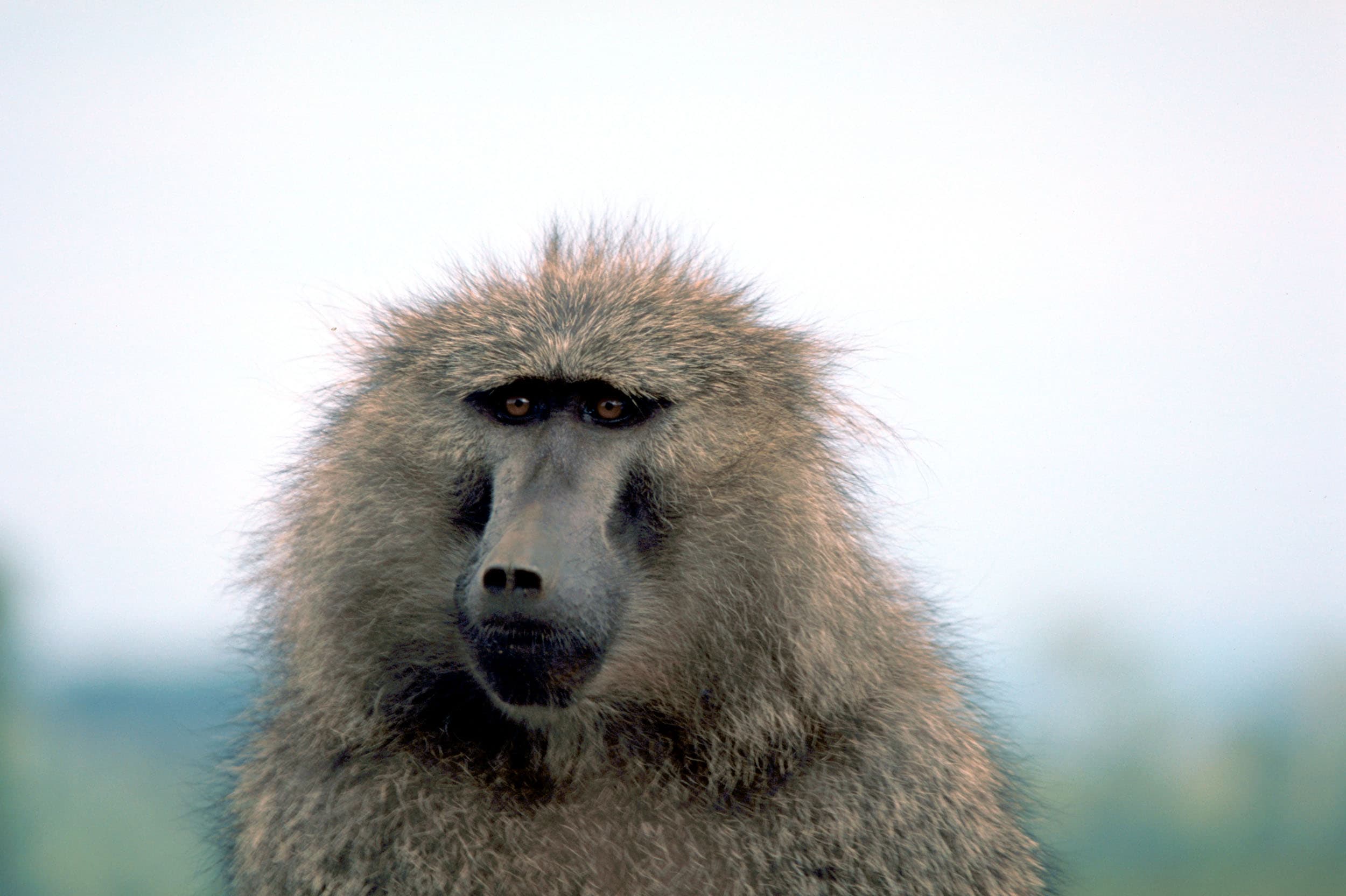
Olive baboon Papio anubis
Gary M. Stolz / U.S. Fish and Wildlife Service / Public Domain
🌐 Read in Language:

⚡ At a Glance

Species profile
Also Known As
Anubis baboon
Diet Category
Omnivore: fruit, seeds, leaves, roots, grasses, insects and small animals
Activity Rhythm
Diurnal; travels and feeds mainly on the ground and sleeps in trees or on cliffs.
Wild Lifespan
Often about 20–30 years where conditions permit
Typical Weight
Typically about 14 kg in adult females and 25 kg in adult males
Conservation Status
LC
💡 Key Biological Insight: It has the broadest geographic distribution of any baboon species and occupies habitats from savanna to rainforest.

🌳 Scientific Taxonomy Hierarchy

The olive baboon is Papio anubis, an Old World monkey in the family Cercopithecidae and one of the recognized species in the genus Papio.

KingdomAnimalia
PhylumChordata
ClassMammalia
OrderPrimates
FamilyCercopithecidae
GenusPapio
SpeciesPapio anubis

Distinguishing Anatomical Features

  • ✓Olive-gray grizzled coat
  • ✓Long dog-like muzzle
  • ✓Dark hairless face
  • ✓Male shoulder mane
  • ✓Tail with a characteristic angled carriage

📏 Physical Measurements

Total Lengthabout 24–30 in head and body
Body Weightabout 31–55 lb
Tail Lengthabout 19–22 in
WingspanNot applicable
Top SpeedNo dependable species-specific maximumAdapted for sustained terrestrial travel and climbing rather than a verified top speed.

🎨 Appearance & Distinctive Markings

Olive grayGrayBlackYellow brown

Skin / Covering: Hair over skin, with a largely hairless dark face

Sexual Dimorphism: Males are larger and heavier, with much larger canine teeth and a developed mane over the head, neck and shoulders.

🗺️ Geographic Distribution & Habitat

Native across a broad belt of sub-Saharan Africa from Mauritania and Mali east to Ethiopia and Somalia and south into central and eastern Africa.

Savanna, grassland, open woodland, scrub, gallery forest, rainforest margins, rocky areas and human-modified landscapes near water and secure sleeping sites.

Country-level distribution map

Native range
FijiTanzania — Native rangeWestern SaharaCanadaUnited StatesKazakhstanUzbekistanPapua New GuineaIndonesiaArgentinaChileCongo - Kinshasa — Native rangeSomalia — Native rangeKenya — Native rangeSudan — Native rangeChad — Native rangeHaitiDominican RepublicRussiaBahamasFalkland IslandsNorwayGreenlandFrench Southern TerritoriesTimor-LesteSouth AfricaLesothoMexicoUruguayBrazilBoliviaPeruColombiaPanamaCosta RicaNicaraguaHondurasEl SalvadorGuatemalaBelizeVenezuelaGuyanaSurinameFranceEcuadorPuerto RicoJamaicaCubaZimbabweBotswanaNamibiaSenegalMali — Native rangeMauritania — Native rangeBenin — Native rangeNiger — Native rangeNigeria — Native rangeCameroon — Native rangeTogo — Native rangeGhana — Native rangeCôte d’Ivoire — Native rangeGuinea — Native rangeGuinea-BissauLiberiaSierra Leone — Native rangeBurkina Faso — Native rangeCentral African Republic — Native rangeCongo - Brazzaville — Native rangeGabonEquatorial GuineaZambiaMalawiMozambiqueEswatiniAngolaBurundi — Native rangeIsraelLebanonMadagascarPalestinian TerritoriesGambiaTunisiaAlgeriaJordanUnited Arab EmiratesQatarKuwaitIraqOmanVanuatuCambodiaThailandLaosMyanmar (Burma)VietnamNorth KoreaSouth KoreaMongoliaIndiaBangladeshBhutanNepalPakistanAfghanistanTajikistanKyrgyzstanTurkmenistanIranSyriaArmeniaSwedenBelarusUkrainePolandAustriaHungaryMoldovaRomaniaLithuaniaLatviaEstoniaGermanyBulgariaGreeceTürkiyeAlbaniaCroatiaSwitzerlandLuxembourgBelgiumNetherlandsPortugalSpainIrelandNew CaledoniaSolomon IslandsNew ZealandAustraliaSri LankaChinaTaiwanItalyDenmarkUnited KingdomIcelandAzerbaijanGeorgiaPhilippinesMalaysiaBruneiSloveniaFinlandSlovakiaCzechiaEritrea — Native rangeJapanParaguayYemenSaudi ArabiaCyprusMoroccoEgyptLibyaEthiopia — Native rangeDjiboutiUganda — Native rangeRwanda — Native rangeBosnia & HerzegovinaNorth MacedoniaSerbiaMontenegroKosovoTrinidad & TobagoSouth Sudan — Native range
Highlighted countries are recorded profile locations, not precise biological range boundaries.Map boundaries: Natural Earth

💡 Did You Know?

  • 💡Strong limbs for long ground travel
  • 💡Grasping hands for handling and digging food
  • 💡Cheek pouches for gathering food quickly
  • 💡Large male canine teeth used in display and defense
  • 💡Flexible omnivorous diet

🌿 Conservation Status & Threats

IUCN: LC — Least Concern

“A widespread and adaptable baboon that remains vulnerable to local habitat loss, hunting, capture and conflict with people.”

Population TrendUnknown
Wild Population EstimateNo dependable global total is available from the cited sources.
CITESAppendix II

⚠️ Major Threats to Olive Baboon

  • •Habitat loss and fragmentation
  • •Hunting and capture
  • •Retaliation over crop damage
  • •Road traffic
  • •Food conditioning around settlements
  • •Loss of sleeping trees and movement corridors

🔄 Life Cycle & Reproduction

Wild vs. Captivity Lifespan Comparison

🌿 In the WildOften about 20–30 years where conditions permit
🏠 In Captivity (with veterinary care)Can exceed wild averages under managed care
Clutch / Litter SizeUsually one infant
Incubation / GestationGestation about six months
Fledging / WeaningNot applicable; infants cling to and ride on their mothers
Sexual MaturityBoth sexes usually mature at roughly four to six years; males reach full size later
Mating SystemPolygynandrous within multi-male, multi-female troops
Nesting / Den TypeNo nest; troops use communal sleeping trees or cliffs

🦅 Behavior & Field Ecology

Omnivore

🌐 Ecological Food Web & Relationships: Olive baboons disperse seeds, disturb soil while digging, consume insects and small animals, and provide prey for large African carnivores.

Social Group SizeMulti-male, multi-female troops that can range from several dozen to more than one hundred animals
Activity RhythmDiurnal; feeds and travels during the day and gathers at secure sleeping sites at night.
Feeding StrategyOmnivore

🥩 Primary Prey & Preferred Diet

✓ Fruit and seeds✓ Leaves and flowers✓ Grasses, roots and bulbs✓ Insects✓ Eggs and small vertebrates

📢 Communication & Territorial Signals

  • Grunts and barks
  • Facial expressions
  • Grooming and touch
  • Postural displays
  • Loud alarm and display calls

🐾 Wild Temperament & Traits

• Social• Alert• Adaptable

🤝 Human Interaction & Pet Advisory

⚠️ Strictly Wild Species
🚫

Can You Keep a Olive Baboon as a Pet?

Not suitable as a pet because it is a powerful, intelligent, highly social wild primate requiring a complex troop and lawful specialist care.

Domestication StatusWild primate; not domesticated.
Danger to HumansPotentially dangerous if fed, cornered or approached closely
Economic & Ecotourism RoleWildlife tourism, ecological research, education and conservation.

⚠️ Behavioral Risk Factors & Wildlife Safety

  • Adult males have large canine teeth
  • Food conditioning can produce bold behavior
  • Close contact can expose people and baboons to disease

🌐 Ecological Food Web & Relationships

🦅 Natural Predators (3)

LeopardPanthera pardus
LionPanthera leo
Spotted HyenaCrocuta crocuta

🧬 Related Species (3)

Guinea BaboonPapio papioWestern relative with a more restricted distribution
Yellow BaboonPapio cynocephalusRelated species that hybridizes with olive baboons in contact zones
Hamadryas BaboonPapio hamadryasRelated species that hybridizes with olive baboons in Ethiopia

Identity and classification

The olive baboon is Papio anubis, a species of Old World monkey in the family Cercopithecidae. It is also called the Anubis baboon, a name inspired by its long, dog-like muzzle. The American Society of Mammalogists’ Mammal Diversity Database recognizes it as a living wild species in the genus Papio. That species-level scope matters because the word “baboon” can refer to several closely related African species whose ranges, appearance, social systems and conservation circumstances are not identical.

Olive baboons belong to a closely related species complex. They meet and interbreed naturally with hamadryas baboons in Ethiopia and with yellow baboons in parts of Kenya and Tanzania. Those hybrid zones do not erase the useful species identity of P. anubis, but they do show that nature does not always follow clean lines on a map. This profile therefore describes the olive baboon itself while noting variation among populations and areas of contact.

Appearance and size

The coat looks olive-gray from a distance because individual hairs carry alternating dark and yellow-brown bands. The face is dark and largely hairless, and the muzzle projects forward. Adult males develop a mane of longer hair around the head, neck and shoulders. Both sexes have a tail whose first section is held upward before the rest angles downward, producing a characteristic broken-looking curve.

Sexual dimorphism is pronounced. Animal Diversity Web reports typical adult masses of about 25 kilograms for males and 14 kilograms for females, with geographic and individual variation. It gives average head-and-body lengths of about 76 centimeters in males and 60 centimeters in females. Males also have much larger canine teeth and a more developed mane. Newborns have black fur, which gradually changes toward the adult olive-gray coat during the first months of life.

Range and habitat

The olive baboon has the broadest distribution of any baboon species. The Mammal Diversity Database records it from a wide belt of sub-Saharan Africa, from Mauritania and Mali east to Ethiopia and Somalia and south through central and eastern Africa to northwestern Tanzania. Its country list includes 25 nations. Distribution within those countries is patchy, and a highlighted country on a broad range map should never be read as proof that the animal occurs everywhere inside its borders.

This adaptability is visible in its habitat use. Olive baboons occupy savannas, grasslands, open woodland, scrub, gallery forest and some rainforest settings. They often need secure night refuges in trees or on cliffs, plus access to water and a shifting supply of plant foods. Some troops also use farmland edges, roadsides and settlements. Their ability to exploit altered landscapes helps explain their wide range, but it can also bring them into direct conflict with people.

Diet and daily life

Olive baboons are flexible omnivores. Fruit, seeds, flowers, leaves, grasses, roots, bulbs and other underground plant parts can all be important. They also eat insects and, when opportunities arise, eggs and small vertebrates. The balance changes with habitat and season. During rainy periods, fresh growth and fruit may be abundant; in dry periods, troops spend more time searching, digging and relying on tougher or more scattered foods.

They are mainly active by day and do much of their traveling and feeding on the ground. Strong limbs support long daily routes, while grasping hands help them handle food and climb. Cheek pouches allow an individual to collect food quickly and process it later. At night, the troop gathers at a sleeping site that offers protection. Individuals remain alert to leopards, lions, spotted hyenas and other potential predators, and adults may coordinate defensive responses.

Social organization and communication

Olive baboons usually live in multi-male, multi-female troops. Females generally remain in their birth group and form lasting maternal kin networks. Males normally leave after reaching maturity and may transfer between troops again later. Rank affects access to food, space and mating opportunities, but daily life is not only competition. Grooming, proximity, coalition support and long-term social bonds help stabilize relationships.

Communication combines voice, posture, facial expression and touch. Grunts can accompany calm movement or friendly contact, while barks and louder calls signal alarm, uncertainty or display. A yawn that exposes the canines may be a threat rather than tiredness. Infants learn the social landscape through play and repeated interaction. Adult friendships, including bonds between males and females, can provide tolerance and protection in a society where alliances matter.

Reproduction and development

Breeding can occur throughout the year. Females advertise reproductive condition with a conspicuous swelling, and a male may form a temporary consort relationship with a fertile female. Wisconsin’s Primate Info Net reports that both sexes reach sexual maturity at roughly four to six years, although males continue growing and may not reach full adult size until later.

Gestation lasts about six months and a single infant is usual. The newborn clings to its mother and later rides on her as the troop travels. Nursing declines over the first year as the youngster eats more solid food and spends increasing time playing with peers. Mothers remain central to development, while other relatives and socially connected adults influence safety and learning. In a female’s natal troop, those family relationships may persist throughout her life.

Ecological role

By consuming fruit and traveling over large areas, olive baboons can disperse seeds away from parent plants. Digging for roots and invertebrates disturbs soil, and their broad diet connects plant and animal food webs. They are also prey for large carnivores. Because troops use forest edges, open ground and river corridors, their ecological effects cross habitat boundaries rather than remaining in a single narrow niche.

Olive baboons are notably intelligent and behaviorally flexible. Those qualities let them remember seasonal resources, evaluate social partners and adjust routes around danger. Flexibility should not be confused with invulnerability. Local populations still depend on sleeping sites, water, safe movement corridors and landscapes capable of supporting large social groups.

Conservation and living with people

The IUCN assessment reported by the Mammal Diversity Database places the olive baboon in Least Concern. Its very broad range and ability to live in varied habitats reduce the immediate risk of global extinction. A global category, however, does not guarantee that every population is stable. Habitat conversion, hunting, capture, road traffic and persecution can cause serious local losses.

Conflict is most likely where baboons obtain crops, garbage or deliberately provided food. Feeding can make them bolder, concentrate animals near people and increase the risk of bites or disease transmission. Secure waste storage, protection of crops, preservation of natural foraging areas and consistent rules against feeding are safer approaches than close contact. Olive baboons are powerful wild primates with complex social needs and are not suitable pets.

Sources

❓ Frequently Asked Questions

Answers to frequently asked questions verified against peer-reviewed zoological research.

They live across a broad belt of sub-Saharan Africa, from parts of western Africa east to Ethiopia and Somalia and south into central and eastern Africa.