
Home/Animals/Mammalia/Orca (Killer Whale)
Species profileIUCN: DD

Orca (Killer Whale)

Orcinus orca

The oceanโ€™s largest dolphin, shaped by family bonds, learned hunting traditions and striking black-and-white markings.

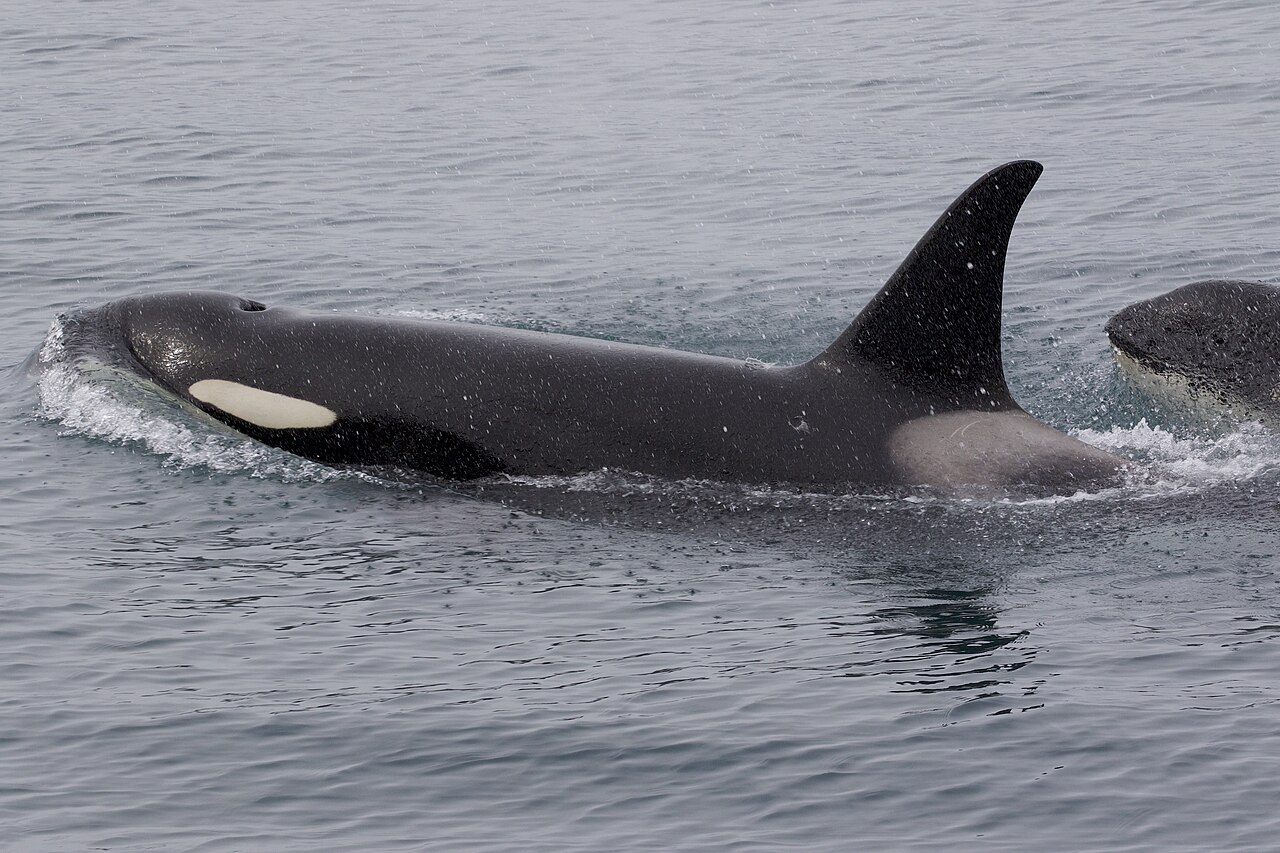
Two wild orcas surfacing together in Resurrection Bay, Alaska
Gregory Smith / Wikimedia Commons / CC BY-SA 2.0
๐ŸŒ Read in Language:

โšก At a Glance

Species profile
Diet Category
Carnivore and apex marine predator
Activity Rhythm
Active day and night, alternating travel, foraging, socializing and short rest periods.
Wild Lifespan
Females often 50โ€“80 years and can reach about 90; males often 30โ€“60 years
Typical Weight
females commonly 1,300โ€“3,600 kg; large males 3,600โ€“5,400 kg and sometimes more
Conservation Status
DD
๐Ÿ’ก Key Biological Insight: Neighboring orca populations may share the same water yet avoid interbreeding, eat different prey and use different call repertoires learned within their families.

๐ŸŒณ Scientific Taxonomy Hierarchy

The orca is the only universally recognized living species in genus Orcinus and the largest member of the dolphin family, Delphinidae. Genetic and ecological research reveals deeply separated lineages; some authorities provisionally recognize resident and Biggโ€™s killer whales as subspecies, while broader species-level revisions remain under scientific review.

KingdomAnimalia
PhylumChordata
ClassMammalia
OrderArtiodactyla
FamilyDelphinidae
GenusOrcinus
SpeciesOrcinus orca

Distinguishing Anatomical Features

  • โœ“A powerful streamlined dolphin with a black back, white belly, white oval eye patches and a gray or white saddle behind the dorsal fin. Adult males develop an exceptionally tall, nearly triangular dorsal fin; females and young have shorter, more curved fins.
  • โœ“Echolocation detects and identifies prey
  • โœ“Blubber insulates in cold water
  • โœ“Conical teeth grip slippery prey
  • โœ“Large brain supports learning and social memory
  • โœ“Powerful tail enables bursts of speed
  • โœ“Countershading breaks up the body outline

๐Ÿ“ Physical Measurements

Total Lengthfemales commonly 16โ€“23 ft; males commonly 20โ€“26 ft, exceptionally about 32 ft
Body Weightfemales commonly 2,900โ€“7,900 lb; large males 7,900โ€“11,900 lb and sometimes more
Tail LengthBroad horizontal flukes with a strong caudal peduncle
WingspanPectoral flippers can exceed 6.5 ft in large males
Top SpeedNo dependable universal maximumMovement changes with context and conditions.

๐ŸŽจ Appearance & Distinctive Markings

BlackWhiteGray saddle patch

Skin / Covering: Smooth skin over thick blubber

Sexual Dimorphism: Adult males are longer and far heavier, with much taller dorsal fins and larger paddle-shaped flippers than adult females.

๐Ÿ—บ๏ธ Geographic Distribution & Habitat

Present in every ocean from polar pack ice to tropical seas. They are most frequently observed in productive colder waters and coastal zones, although offshore groups travel across deep ocean basins.

Continental shelves, fjords, coastal channels, open ocean, island slopes and ice edges wherever suitable prey and safe travel routes occur.

Country-level distribution map

Native range
FijiTanzaniaWestern SaharaCanada โ€” Native rangeUnited States โ€” Native rangeKazakhstanUzbekistanPapua New GuineaIndonesiaArgentina โ€” Native rangeChile โ€” Native rangeCongo - KinshasaSomaliaKenyaSudanChadHaitiDominican RepublicRussia โ€” Native rangeBahamasFalkland IslandsNorway โ€” Native rangeGreenlandFrench Southern TerritoriesTimor-LesteSouth Africa โ€” Native rangeLesothoMexico โ€” Native rangeUruguayBrazilBoliviaPeruColombiaPanamaCosta RicaNicaraguaHondurasEl SalvadorGuatemalaBelizeVenezuelaGuyanaSurinameFranceEcuadorPuerto RicoJamaicaCubaZimbabweBotswanaNamibiaSenegalMaliMauritaniaBeninNigerNigeriaCameroonTogoGhanaCรดte dโ€™IvoireGuineaGuinea-BissauLiberiaSierra LeoneBurkina FasoCentral African RepublicCongo - BrazzavilleGabonEquatorial GuineaZambiaMalawiMozambiqueEswatiniAngolaBurundiIsraelLebanonMadagascarPalestinian TerritoriesGambiaTunisiaAlgeriaJordanUnited Arab EmiratesQatarKuwaitIraqOmanVanuatuCambodiaThailandLaosMyanmar (Burma)VietnamNorth KoreaSouth KoreaMongoliaIndiaBangladeshBhutanNepalPakistanAfghanistanTajikistanKyrgyzstanTurkmenistanIranSyriaArmeniaSwedenBelarusUkrainePolandAustriaHungaryMoldovaRomaniaLithuaniaLatviaEstoniaGermanyBulgariaGreeceTรผrkiyeAlbaniaCroatiaSwitzerlandLuxembourgBelgiumNetherlandsPortugalSpain โ€” Native rangeIrelandNew CaledoniaSolomon IslandsNew Zealand โ€” Native rangeAustralia โ€” Native rangeSri LankaChinaTaiwanItalyDenmarkUnited Kingdom โ€” Native rangeIceland โ€” Native rangeAzerbaijanGeorgiaPhilippinesMalaysiaBruneiSloveniaFinlandSlovakiaCzechiaEritreaJapan โ€” Native rangeParaguayYemenSaudi ArabiaCyprusMoroccoEgyptLibyaEthiopiaDjiboutiUgandaRwandaBosnia & HerzegovinaNorth MacedoniaSerbiaMontenegroKosovoTrinidad & TobagoSouth Sudan
Highlighted countries are recorded profile locations, not precise biological range boundaries.Map boundaries: Natural Earth

๐Ÿ’ก Did You Know?

  • ๐Ÿ’กEcholocation detects and identifies prey
  • ๐Ÿ’กBlubber insulates in cold water
  • ๐Ÿ’กConical teeth grip slippery prey
  • ๐Ÿ’กLarge brain supports learning and social memory
  • ๐Ÿ’กPowerful tail enables bursts of speed
  • ๐Ÿ’กCountershading breaks up the body outline

๐ŸŒฟ Conservation Status & Threats

IUCN: DD โ€” DD

โ€œThe global IUCN assessment is Data Deficient because one worldwide category masks distinct populations with very different status. Some populations are healthy, while the Southern Resident distinct population is endangered in the United States.โ€

Population TrendVaries strongly among populations
Wild Population EstimateNo precise worldwide total exists; estimates are assembled by region and ecotype, and some small populations number only dozens.

โš ๏ธ Major Threats to Orca (Killer Whale)

  • โ€ขPrey depletion
  • โ€ขUnderwater noise
  • โ€ขPersistent chemical contaminants
  • โ€ขFishing-gear entanglement
  • โ€ขOil spills
  • โ€ขVessel disturbance
  • โ€ขClimate-driven food-web change
  • โ€ขLive capture in some regions

๐Ÿ”„ Life Cycle & Reproduction

Wild vs. Captivity Lifespan Comparison

๐ŸŒฟ In the WildFemales often 50โ€“80 years and can reach about 90; males often 30โ€“60 years
๐Ÿ  In Captivity (with veterinary care)Can differ under managed care.
Clutch / Litter SizeOne calf; twins are exceptionally rare
Incubation / GestationGestation roughly 15โ€“18 months
Fledging / WeaningA calf is born tail-first or head-first, surfaces immediately with help and nurses on rich milk. It learns calls, travel routes and prey-handling skills from its mother and relatives and remains socially dependent well beyond weaning.
Sexual MaturityFemales often mature around 10โ€“13 years; males later, around 15 years or more
Mating SystemMating occurs between social groups; long-term pair bonds are not typical
Nesting / Den TypeNo nest; calves are born in water

๐Ÿฆ… Behavior & Field Ecology

Carnivore and apex marine predator

๐ŸŒ Ecological Food Web & Relationships: As apex predators, orcas can alter prey behavior and abundance from fish to great whales. Their ecotype diversity means ecological effects differ sharply by region, and the loss of one population can erase unique hunting culture as well as genes.

Social Group SizeStable matrilineal pods embedded in larger clans and communities
Activity RhythmActive day and night, alternating travel, foraging, socializing and short rest periods.
Feeding StrategyCarnivore and apex marine predator

๐Ÿฅฉ Primary Prey & Preferred Diet

โœ“ Salmonโœ“ Herringโœ“ Tunaโœ“ Sharksโœ“ Raysโœ“ Sealsโœ“ Sea lionsโœ“ Dolphinsโœ“ Other whalesโœ“ Seabirdsโœ“ Squid

๐Ÿ“ข Communication & Territorial Signals

  • Echolocation clicks
  • Pulsed calls
  • Whistles
  • Jaw claps
  • Tail slaps

๐Ÿพ Wild Temperament & Traits

โ€ข Highly socialโ€ข Curiousโ€ข Cooperative predator

๐Ÿค Human Interaction & Pet Advisory

โš ๏ธ Strictly Wild Species
๐Ÿšซ

Can You Keep a Orca (Killer Whale) as a Pet?

A wide-ranging protected marine mammal with complex lifelong social needs, entirely unsuitable for private ownership.

Domestication StatusWild and not domesticated
Danger to HumansVery low risk to people in the wild when respected
Economic & Ecotourism RoleApex predator, indicator of marine food-web health, cultural icon and focus of acoustics, cognition and conservation research.

โš ๏ธ Behavioral Risk Factors & Wildlife Safety

  • Large powerful animals can injure people at close range
  • Vessel crowding disturbs feeding and travel
  • Captive handling has caused fatal incidents

๐ŸŒ Ecological Food Web & Relationships

๐Ÿฆ… Natural Predators (2)

HumansHomo sapiens
OrcaOrcinus orca

๐Ÿงฌ Related Species (3)

Long-Finned Pilot WhaleGlobicephala melasLarge social dolphin relative
False Killer WhalePseudorca crassidensLarge oceanic dolphin relative
Short-Finned Pilot WhaleGlobicephala macrorhynchusWarm-water social relative

Orca (Killer Whale) (Orcinus orca) is a globally distributed toothed whale whose populations specialize in different prey and pass their behavior between generations. This guide separates well-supported biology from common assumptions and covers identification, range, habitat, diet, behavior, reproduction and conservation.

Identification

A powerful streamlined dolphin with a black back, white belly, white oval eye patches and a gray or white saddle behind the dorsal fin. Adult males develop an exceptionally tall, nearly triangular dorsal fin; females and young have shorter, more curved fins. Adult males are longer and far heavier, with much taller dorsal fins and larger paddle-shaped flippers than adult females.

Identification should combine body shape, markings, size, voice or movement, and location. One feature by itself can overlap with a related animal, a juvenile, or an individual in unusual light.

Photographs are most useful when they preserve scale and show several diagnostic features. Handling or repositioning a wild orca (killer whale) for identification can cause stress and is unnecessary.

Size and physical adaptations

Orca (Killer Whale) typically measures females commonly 5โ€“7 m; males commonly 6โ€“8 m, exceptionally about 9.8 m and weighs females commonly 1,300โ€“3,600 kg; large males 3,600โ€“5,400 kg and sometimes more. Size and body proportions vary by sex, age and ecotype; record animals are not typical.

Its useful adaptations include echolocation detects and identifies prey, blubber insulates in cold water, conical teeth grip slippery prey, large brain supports learning and social memory, powerful tail enables bursts of speed, countershading breaks up the body outline. These traits work together in the animal’s normal setting rather than serving as isolated curiosities.

Published measurements may use different methods, life stages or sample locations. Comparing figures responsibly means checking what was measured rather than selecting the largest number available.

Range and distribution

Present in every ocean from polar pack ice to tropical seas. They are most frequently observed in productive colder waters and coastal zones, although offshore groups travel across deep ocean basins. The native range includes United States, Canada, Mexico, Argentina, Chile, South Africa, Norway, Iceland, United Kingdom, Spain, Japan, Russia, New Zealand, Australia, Antarctica.

A country-level map indicates broad distribution, not continuous occupation. Climate, elevation, water, vegetation, prey, breeding sites, barriers and survey effort all affect where records occur.

Records near the edge of the range deserve careful documentation because they may reflect natural movement, improved survey coverage, accidental transport or a genuine distribution change.

Habitat

Continental shelves, fjords, coastal channels, open ocean, island slopes and ice edges wherever suitable prey and safe travel routes occur.

Different ecotypes select habitat according to prey. Fish specialists follow salmon or schooling fish through coastal passages, mammal hunters patrol seal haul-outs and nearshore channels, and Antarctic forms work along ice margins. Offshore whales may range across thousands of kilometres. Protecting a population therefore requires the feeding, shelter and breeding features that make a site usable, along with connections that allow movement.

Microhabitat matters. Shade, soil, current, moisture, shelter or host plants can determine whether a small area is usable even when the surrounding landscape appears suitable.

Diet and feeding

Orca (Killer Whale) is a carnivore and apex marine predator. Important foods include salmon, herring, tuna, sharks, rays, seals, sea lions, dolphins, other whales, seabirds, squid. Diet is culturally specialized rather than uniform. Families coordinate to herd fish, create waves that wash seals from ice, strand briefly on beaches, surround whale calves or handle sharks. Many populations ignore edible prey taken by neighboring ecotypes, evidence that hunting traditions constrain what individuals learn to pursue.

Diet changes with age, season, location and food supply. A dramatic prey record does not establish what most individuals eat most of the time; repeated field observations provide a stronger picture.

Feeding opportunities also create risk. An animal focused on prey may be less alert to predators, traffic or people, while contaminated prey can transfer pollutants through the food web.

Behavior and communication

Active day and night, alternating travel, foraging, socializing and short rest periods. Orcas live in stable, often matrilineal social networks. Sons and daughters may remain with their mother for life. Groups coordinate through learned calls and close positioning, share food and help care for young. Rest occurs in slow synchronized swimming because breathing remains voluntary.

Clicks provide echolocation; whistles and pulsed calls support contact, coordination and identity. Long-associated pods develop distinctive call dialects that calves learn socially, while mammal-hunting groups often reduce vocalization during pursuit to avoid alerting acoustically sensitive prey. Behavior should be interpreted in context: alarm, courtship, feeding and temperature regulation can produce very different actions from the same animal.

Daily schedules are flexible responses, not rigid rules. Weather, breeding condition, disturbance, tides or food can move activity into a different part of the day.

Reproduction and development

Females bear one calf after a long pregnancy and receive assistance from pod members. Reproductive output is slow, and mothers invest for years in milk, protection, food sharing and teaching. One calf; twins are exceptionally rare undefined

Young animals face different risks and may use different microhabitats or food than adults. Breeding success depends on adult condition, suitable sites and the survival of offspring through vulnerable early stages.

Counts of eggs or young describe reproductive output, not the number expected to reach adulthood. Mortality is normally greatest during eggs, larval or juvenile stages.

Predators and ecological role

As apex predators, orcas can alter prey behavior and abundance from fish to great whales. Their ecotype diversity means ecological effects differ sharply by region, and the loss of one population can erase unique hunting culture as well as genes. Documented or likely predators include Humans, Orca.

This animal is both a consumer and a food source. Its influence comes through many repeated interactions, so ecological claims should be based on measured populations rather than assumptions drawn from appearance.

Predator and prey relationships differ among places. A species can be ecologically influential without being abundant everywhere, and its role can change across its range.

Relationship with people

Orcas attract research and wildlife tourism and hold deep cultural importance for many coastal Indigenous peoples. Boats can mask communication and disrupt feeding; contaminants accumulate high in the food web, and depleted prey can cause nutritional stress. Captivity remains controversial because wide-ranging family-centered behavior is difficult to accommodate.

Watch from legal distances, slow down near whales, never chase or feed them, and follow local vessel rules. Wild orcas rarely harm people, but they are enormous predators and should never be approached in the water. Responsible observation means keeping an appropriate distance, avoiding capture or feeding, protecting habitat and following local wildlife or invasive-species guidance.

Wildlife guidance should come from the responsible local agency because collection rules, reporting requests and appropriate responses differ between native and introduced ranges.

Conservation

The global IUCN assessment is Data Deficient because one worldwide category masks distinct populations with very different status. Some populations are healthy, while the Southern Resident distinct population is endangered in the United States. The reported global trend is Varies strongly among populations.

Important pressures include prey depletion, underwater noise, persistent chemical contaminants, fishing-gear entanglement, oil spills, vessel disturbance, climate-driven food-web change, live capture in some regions. Global status can hide local decline or recovery, so current regional monitoring and habitat management remain necessary.

The most useful conservation action follows the documented pressure. Protecting breeding sites, reducing road deaths or limiting pollutants can require different tools in different populations.

Sources and further reading

โ“ Frequently Asked Questions

Answers to frequently asked questions verified against peer-reviewed zoological research.

Orcas are toothed whales and also the largest members of the oceanic dolphin family, so both descriptions are biologically correct.