
Home/Animals/Actinopterygii/Queen Parrotfish
Species profileIUCN: LC

Queen Parrotfish

Scarus vetula

A Caribbean reef grazer with fused beak-like teeth, dramatic color phases and an important role in controlling algae.

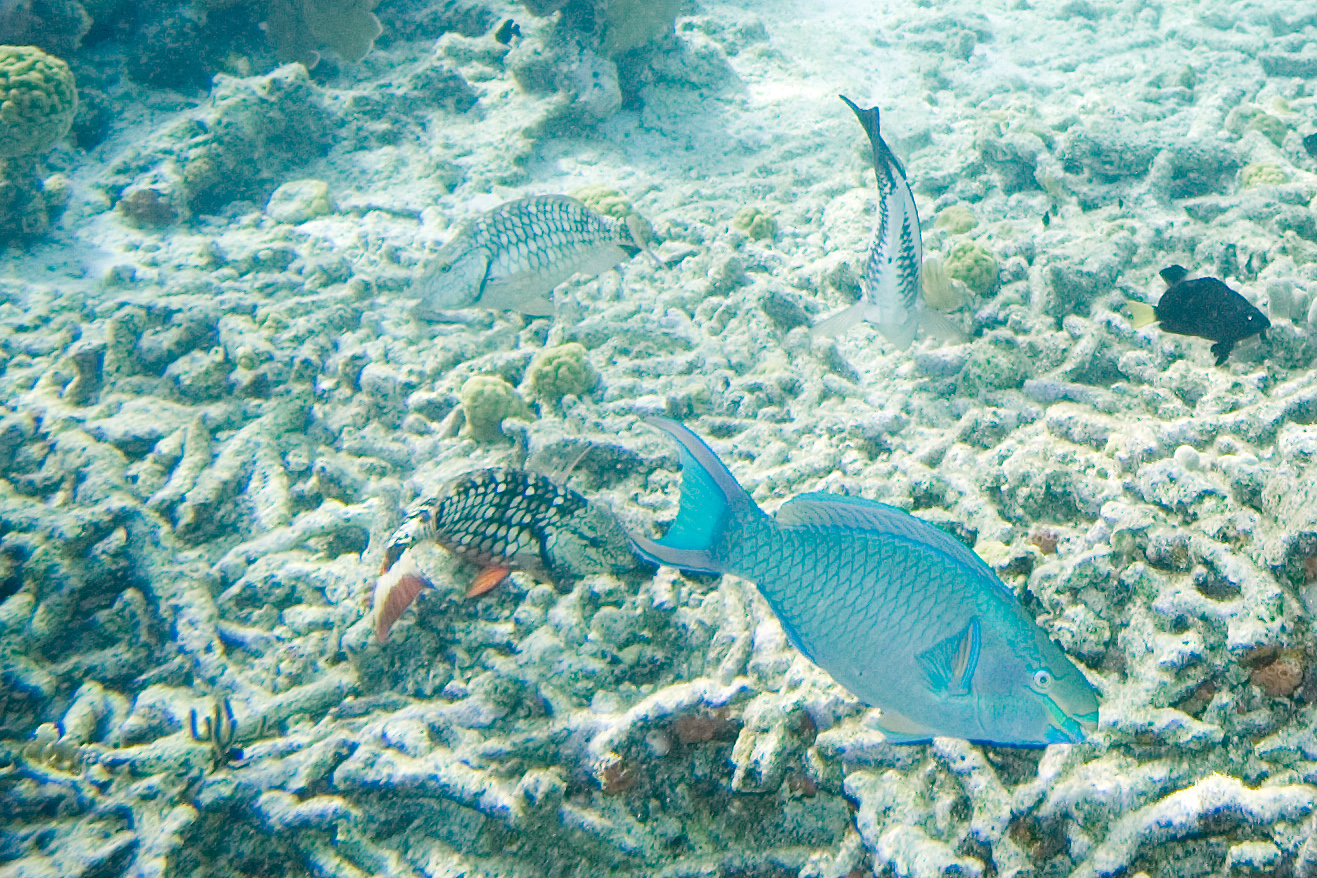
Queen parrotfish swimming above a Caribbean reef, showing its blue-green terminal-phase coloration
Paul Asman and Jill Lenoble / Wikimedia Commons / CC BY 2.0
๐ŸŒ Read in Language:

โšก At a Glance

Species profile
Diet Category
Herbivorous reef scraper
Activity Rhythm
Diurnal, feeding during daylight and resting in reef shelter at night.
Wild Lifespan
Wild lifespan is not represented by one well-established universal estimate
Typical Weight
large adults can approach about 1.5 kg
Conservation Status
LC
๐Ÿ’ก Key Biological Insight: Many queen parrotfish first mature as females and some later become vividly colored terminal-phase males, so color can reflect reproductive phase rather than a separate species.

๐ŸŒณ Scientific Taxonomy Hierarchy

The queen parrotfish is a species in genus Scarus and the wrasse family Labridae, subfamily Scarinae. Older references may treat parrotfishes as a separate family, Scaridae, but current classifications commonly place them within Labridae.

KingdomAnimalia
PhylumChordata
ClassActinopterygii
OrderLabriformes
FamilyLabridae
GenusScarus
SpeciesScarus vetula

Distinguishing Anatomical Features

  • โœ“The body is elongated and compressed, with large scales, a continuous dorsal fin and teeth fused into smooth beak-like plates. Initial-phase adults are dark gray or brown with a broad pale stripe along the lower side. Terminal-phase fish are blue-green with yellow or orange scale centers, blue lines from the mouth toward the eye and pinkish areas on the tail.
  • โœ“Fused dental plates scrape algae from hard surfaces
  • โœ“Pharyngeal teeth grind ingested reef material
  • โœ“Large pectoral fins provide precise reef maneuvering
  • โœ“Color phases signal age and reproductive role
  • โœ“Mucus shelter may reduce scent and parasite exposure at night
  • โœ“Pelagic eggs disperse away from the spawning reef

๐Ÿ“ Physical Measurements

Total Lengthcommonly 12โ€“16 in; maximum reported total length about 20 in
Body Weightlarge adults can approach about 3.3 lb
Tail LengthBluntly rounded to truncate, becoming more colorful in terminal phase
WingspanNot applicable
Top SpeedNo dependable universal maximumMovement changes with context and conditions.

๐ŸŽจ Appearance & Distinctive Markings

Blue greenGray brownWhiteYellowOrangePink

Skin / Covering: Large smooth scales with protective mucus

Sexual Dimorphism: Color phase is more informative than simple male-female appearance. Many individuals begin reproductive life as females; some later change sex and become brightly colored terminal-phase males.

๐Ÿ—บ๏ธ Geographic Distribution & Habitat

Endemic to the western Atlantic, occurring from Bermuda, southern Florida and the Bahamas through the Gulf of Mexico and Caribbean to northern South America. Its distribution follows warm clear water and suitable coral or rocky reef habitat.

Coral reefs and adjacent rocky or rubble habitat, from very shallow water to roughly 70 m, though most sightings occur on accessible shallow reefs.

Country-level distribution map

Native range
FijiTanzaniaWestern SaharaCanadaUnited States โ€” Native rangeKazakhstanUzbekistanPapua New GuineaIndonesiaArgentinaChileCongo - KinshasaSomaliaKenyaSudanChadHaiti โ€” Native rangeDominican Republic โ€” Native rangeRussiaBahamas โ€” Native rangeFalkland IslandsNorwayGreenlandFrench Southern TerritoriesTimor-LesteSouth AfricaLesothoMexico โ€” Native rangeUruguayBrazilBoliviaPeruColombia โ€” Native rangePanama โ€” Native rangeCosta Rica โ€” Native rangeNicaragua โ€” Native rangeHonduras โ€” Native rangeEl SalvadorGuatemala โ€” Native rangeBelize โ€” Native rangeVenezuela โ€” Native rangeGuyanaSurinameFranceEcuadorPuerto Rico โ€” Native rangeJamaica โ€” Native rangeCuba โ€” Native rangeZimbabweBotswanaNamibiaSenegalMaliMauritaniaBeninNigerNigeriaCameroonTogoGhanaCรดte dโ€™IvoireGuineaGuinea-BissauLiberiaSierra LeoneBurkina FasoCentral African RepublicCongo - BrazzavilleGabonEquatorial GuineaZambiaMalawiMozambiqueEswatiniAngolaBurundiIsraelLebanonMadagascarPalestinian TerritoriesGambiaTunisiaAlgeriaJordanUnited Arab EmiratesQatarKuwaitIraqOmanVanuatuCambodiaThailandLaosMyanmar (Burma)VietnamNorth KoreaSouth KoreaMongoliaIndiaBangladeshBhutanNepalPakistanAfghanistanTajikistanKyrgyzstanTurkmenistanIranSyriaArmeniaSwedenBelarusUkrainePolandAustriaHungaryMoldovaRomaniaLithuaniaLatviaEstoniaGermanyBulgariaGreeceTรผrkiyeAlbaniaCroatiaSwitzerlandLuxembourgBelgiumNetherlandsPortugalSpainIrelandNew CaledoniaSolomon IslandsNew ZealandAustraliaSri LankaChinaTaiwanItalyDenmarkUnited KingdomIcelandAzerbaijanGeorgiaPhilippinesMalaysiaBruneiSloveniaFinlandSlovakiaCzechiaEritreaJapanParaguayYemenSaudi ArabiaCyprusMoroccoEgyptLibyaEthiopiaDjiboutiUgandaRwandaBosnia & HerzegovinaNorth MacedoniaSerbiaMontenegroKosovoTrinidad & Tobago โ€” Native rangeSouth Sudan
Highlighted countries are recorded profile locations, not precise biological range boundaries.Map boundaries: Natural Earth

๐Ÿ’ก Did You Know?

  • ๐Ÿ’กFused dental plates scrape algae from hard surfaces
  • ๐Ÿ’กPharyngeal teeth grind ingested reef material
  • ๐Ÿ’กLarge pectoral fins provide precise reef maneuvering
  • ๐Ÿ’กColor phases signal age and reproductive role
  • ๐Ÿ’กMucus shelter may reduce scent and parasite exposure at night
  • ๐Ÿ’กPelagic eggs disperse away from the spawning reef

๐ŸŒฟ Conservation Status & Threats

IUCN: LC โ€” Least Concern

โ€œListed as Least Concern globally because it remains widespread, but fishing pressure and coral-reef degradation can reduce local abundance and the number of large terminal-phase males.โ€

Population TrendGlobal trend is not precisely quantified; local populations vary with fishing and reef condition
Wild Population EstimateNo reliable global population count exists; abundance varies greatly among reefs and management zones.

โš ๏ธ Major Threats to Queen Parrotfish

  • โ€ขCoral-reef degradation
  • โ€ขOverfishing and spearfishing
  • โ€ขLoss of large terminal-phase males
  • โ€ขMarine heatwaves
  • โ€ขPollution and sedimentation

๐Ÿ”„ Life Cycle & Reproduction

Wild vs. Captivity Lifespan Comparison

๐ŸŒฟ In the WildWild lifespan is not represented by one well-established universal estimate
๐Ÿ  In Captivity (with veterinary care)Longevity under managed care varies with expert husbandry.
Clutch / Litter SizeNumerous tiny buoyant eggs released into open water
Incubation / GestationPelagic eggs hatch after brief development that varies with water temperature
Fledging / WeaningJuveniles are striped, with pale and dark lengthwise bands that differ from both adult color phases.
Sexual MaturityRecent life-history studies show regional variation; one universal age or length should not be applied throughout the range
Mating SystemHarem polygyny with pair and occasional group spawning; protogynous sex change occurs
Nesting / Den TypeNo nest; eggs are pelagic

๐Ÿฆ… Behavior & Field Ecology

Herbivorous reef scraper

๐ŸŒ Ecological Food Web & Relationships: By removing algal turf, queen parrotfish help keep reef surfaces available for coral recruitment and change competition among algae, corals and sponges. Grinding and excreting carbonate also contributes fine sediment, although the amount varies with fish size and feeding substrate.

Social Group SizeOften small groups of initial-phase fish associated with a terminal-phase male
Activity RhythmDiurnal, feeding during daylight and resting in reef shelter at night.
Feeding StrategyHerbivorous reef scraper

๐Ÿฅฉ Primary Prey & Preferred Diet

โœ“ Turf algaeโœ“ Crustose coralline algaeโœ“ Cyanobacterial matsโœ“ Small amounts of sponge tissueโœ“ Organic material on dead coral

๐Ÿ“ข Communication & Territorial Signals

  • Color-phase signals
  • Circling courtship
  • Paired ascent
  • Chasing
  • Body orientation

๐Ÿพ Wild Temperament & Traits

โ€ข Active grazerโ€ข Wary of close approachโ€ข Socially flexible

๐Ÿค Human Interaction & Pet Advisory

โš ๏ธ Strictly Wild Species
๐Ÿšซ

Can You Keep a Queen Parrotfish as a Pet?

A large active reef grazer with complex dietary and space needs; it is unsuitable for ordinary home aquariums.

Domestication StatusWild marine fish; not domesticated
Danger to HumansHarmless to people in normal encounters
Economic & Ecotourism RoleControls algal growth, recycles reef carbonate, supports food webs, fisheries and dive tourism.

โš ๏ธ Behavioral Risk Factors & Wildlife Safety

  • Beak-like teeth can injure a hand if a fish is restrained
  • Handling removes protective mucus and stresses the fish

๐ŸŒ Ecological Food Web & Relationships

๐Ÿฆ… Natural Predators (4)

Nassau GrouperEpinephelus striatus
Great BarracudaSphyraena barracuda
Caribbean Reef SharkCarcharhinus perezi
Moray EelsMuraenidae

๐Ÿงฌ Related Species (3)

Princess ParrotfishScarus taeniopterusSmaller Caribbean congener
Striped ParrotfishScarus iseriRelated Caribbean reef grazer
Rainbow ParrotfishScarus guacamaiaMuch larger Caribbean congener

Queen Parrotfish (Scarus vetula) is a reef-associated parrotfish native to the tropical and subtropical western Atlantic. This guide separates well-supported biology from common assumptions and covers identification, range, habitat, diet, behavior, reproduction and conservation.

Identification

The body is elongated and compressed, with large scales, a continuous dorsal fin and teeth fused into smooth beak-like plates. Initial-phase adults are dark gray or brown with a broad pale stripe along the lower side. Terminal-phase fish are blue-green with yellow or orange scale centers, blue lines from the mouth toward the eye and pinkish areas on the tail. Color phase is more informative than simple male-female appearance. Many individuals begin reproductive life as females; some later change sex and become brightly colored terminal-phase males.

Identification should combine body shape, markings, size, voice or movement, and location. One feature by itself can overlap with a related animal, a juvenile, or an individual in unusual light.

Photographs are most useful when they preserve scale and show several diagnostic features. Handling or repositioning a wild queen parrotfish for identification can cause stress and is unnecessary.

Size and physical adaptations

Queen Parrotfish typically measures commonly 30โ€“40 cm; maximum reported total length about 50 cm and weighs large adults can approach about 1.5 kg. Maximum size records describe uncommon large adults; size and color phase should be considered together during identification.

Its useful adaptations include fused dental plates scrape algae from hard surfaces, pharyngeal teeth grind ingested reef material, large pectoral fins provide precise reef maneuvering, color phases signal age and reproductive role, mucus shelter may reduce scent and parasite exposure at night, pelagic eggs disperse away from the spawning reef. These traits work together in the animal’s normal setting rather than serving as isolated curiosities.

Published measurements may use different methods, life stages or sample locations. Comparing figures responsibly means checking what was measured rather than selecting the largest number available.

Range and distribution

Endemic to the western Atlantic, occurring from Bermuda, southern Florida and the Bahamas through the Gulf of Mexico and Caribbean to northern South America. Its distribution follows warm clear water and suitable coral or rocky reef habitat. The native range includes United States, Bermuda, The Bahamas, Mexico, Belize, Cuba, Jamaica, Puerto Rico, the Lesser Antilles, Colombia, Venezuela and the wider Caribbean.

A country-level map indicates broad distribution, not continuous occupation. Climate, elevation, water, vegetation, prey, breeding sites, barriers and survey effort all affect where records occur.

Records near the edge of the range deserve careful documentation because they may reflect natural movement, improved survey coverage, accidental transport or a genuine distribution change.

Habitat

Coral reefs and adjacent rocky or rubble habitat, from very shallow water to roughly 70 m, though most sightings occur on accessible shallow reefs.

Adults forage across hard reef surfaces during the day and retreat to crevices at night. Initial-phase fish often occur in small groups associated with a dominant terminal-phase male, while juveniles use sheltered reef areas with abundant algal food. Protecting a population therefore requires the feeding, shelter and breeding features that make a site usable, along with connections that allow movement.

Microhabitat matters. Shade, soil, current, moisture, shelter or host plants can determine whether a small area is usable even when the surrounding landscape appears suitable.

Diet and feeding

Queen Parrotfish is a herbivorous reef scraper. Important foods include turf algae, crustose coralline algae, cyanobacterial mats, small amounts of sponge tissue, organic material on dead coral. The fish presses its fused dental plates against rock or dead coral and removes algal growth with rapid bites. A second set of crushing teeth in the throat grinds the swallowed mixture. Fine carbonate particles pass through the gut and return to the reef as sediment.

Diet changes with age, season, location and food supply. A dramatic prey record does not establish what most individuals eat most of the time; repeated field observations provide a stronger picture.

Feeding opportunities also create risk. An animal focused on prey may be less alert to predators, traffic or people, while contaminated prey can transfer pollutants through the food web.

Behavior and communication

Diurnal, feeding during daylight and resting in reef shelter at night. Queen parrotfish travel by sculling mainly with their pectoral fins and make repeated feeding passes over reef surfaces. Small social groups commonly contain initial-phase fish and a terminal-phase male. At night an individual wedges into shelter and may surround itself with mucus.

Body color, close following, circling and rapid swimming communicate reproductive condition and territorial intent. During spawning, a pair rises from the bottom before releasing gametes into the water. Behavior should be interpreted in context: alarm, courtship, feeding and temperature regulation can produce very different actions from the same animal.

Daily schedules are flexible responses, not rigid rules. Weather, breeding condition, disturbance, tides or food can move activity into a different part of the day.

Reproduction and development

Spawning occurs in open water, often during morning activity. A terminal-phase male courts females and a pair makes a short ascent while releasing eggs and sperm. Some initial-phase males can also participate in group spawning. Numerous tiny buoyant eggs released into open water Larvae drift in plankton before settling to reef habitat as small juveniles; many mature first in the initial phase, and some later transform into terminal-phase males.

Young animals face different risks and may use different microhabitats or food than adults. Breeding success depends on adult condition, suitable sites and the survival of offspring through vulnerable early stages.

Counts of eggs or young describe reproductive output, not the number expected to reach adulthood. Mortality is normally greatest during eggs, larval or juvenile stages.

Predators and ecological role

By removing algal turf, queen parrotfish help keep reef surfaces available for coral recruitment and change competition among algae, corals and sponges. Grinding and excreting carbonate also contributes fine sediment, although the amount varies with fish size and feeding substrate. Documented or likely predators include Nassau Grouper, Great Barracuda, Caribbean Reef Shark, Moray Eels.

This animal is both a consumer and a food source. Its influence comes through many repeated interactions, so ecological claims should be based on measured populations rather than assumptions drawn from appearance.

Predator and prey relationships differ among places. A species can be ecologically influential without being abundant everywhere, and its role can change across its range.

Relationship with people

The species supports reef tourism and local fisheries. Because large terminal-phase males structure reproduction, size-selective harvest can change sex ratios and social organization. Several Caribbean jurisdictions restrict or prohibit parrotfish harvest to protect grazing on reefs.

Observe without chasing, feeding or touching. Fishers and buyers should follow local parrotfish protections, size limits and marine-reserve rules, which differ among countries and islands. Responsible observation means keeping an appropriate distance, avoiding capture or feeding, protecting habitat and following local wildlife or invasive-species guidance.

Wildlife guidance should come from the responsible local agency because collection rules, reporting requests and appropriate responses differ between native and introduced ranges.

Conservation

Listed as Least Concern globally because it remains widespread, but fishing pressure and coral-reef degradation can reduce local abundance and the number of large terminal-phase males. The reported global trend is Global trend is not precisely quantified; local populations vary with fishing and reef condition.

Important pressures include coral-reef degradation, overfishing and spearfishing, loss of large terminal-phase males, marine heatwaves, pollution and sedimentation. Global status can hide local decline or recovery, so current regional monitoring and habitat management remain necessary.

The most useful conservation action follows the documented pressure. Protecting breeding sites, reducing road deaths or limiting pollutants can require different tools in different populations.

Sources and further reading

โ“ Frequently Asked Questions

Answers to frequently asked questions verified against peer-reviewed zoological research.

They mainly scrape turf algae and other microscopic growth from rock and dead coral, swallowing and grinding some reef material with the food.