
Home/Animals/Insecta/Red-legged Grasshopper
Species profileIUCN: NE

Red-legged Grasshopper

Melanoplus femurrubrum

A widespread North American spur-throated grasshopper recognized by reddish hind tibiae and a taste for many broad-leaved plants.

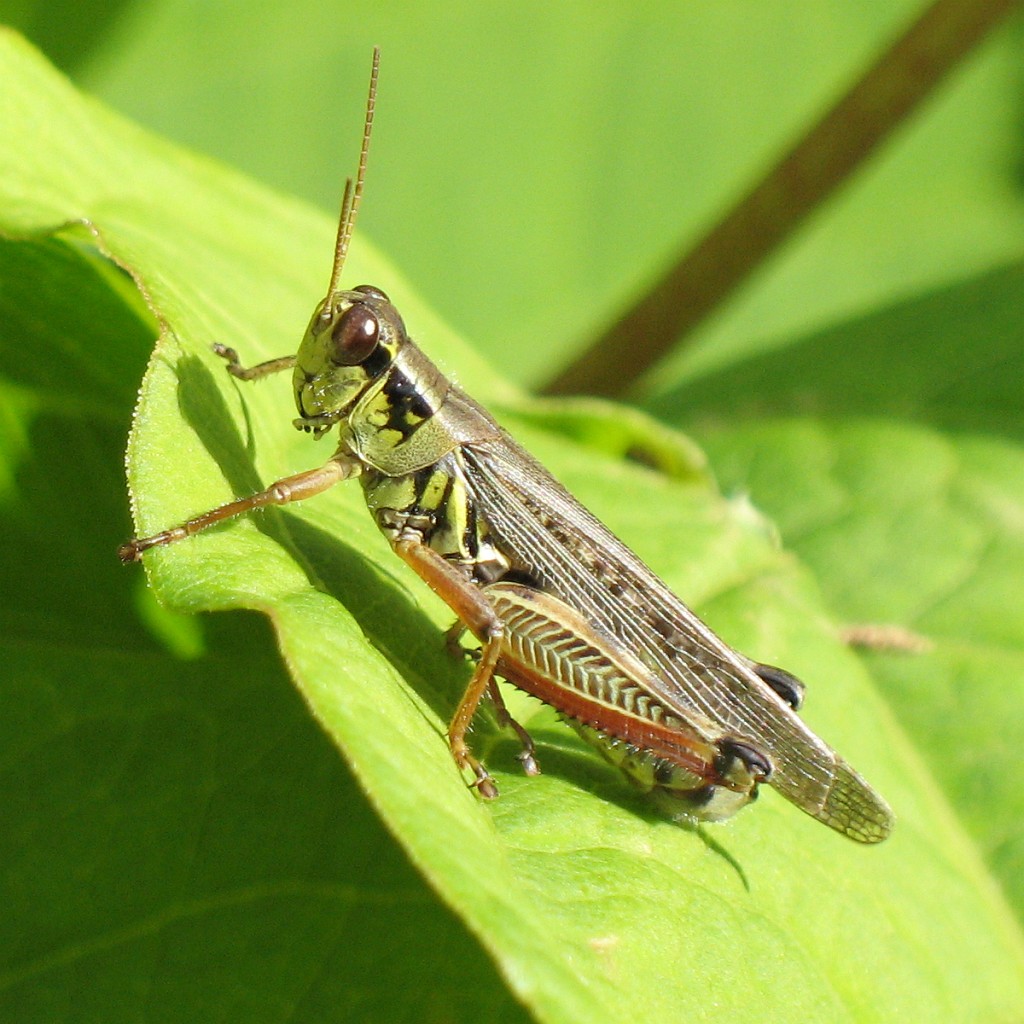
Adult red-legged grasshopper Melanoplus femurrubrum perched on vegetation
Gilles Gonthier / Wikimedia Commons / CC BY 2.0
๐ŸŒ Read in Language:

โšก At a Glance

Species profile
Also Known As
Redlegged grasshopper, garden grasshopper
Diet Category
Generalist herbivore with a preference for broad-leaved plants
Activity Rhythm
Diurnal, especially active during warm sunny weather.
Wild Lifespan
Usually one annual generation; adults die with hard frost
Typical Weight
usually well under 1 g
Conservation Status
NE
๐Ÿ’ก Key Biological Insight: Red-legged grasshoppers usually pass winter as eggs buried in soil, then emerge as wingless nymphs the following growing season.

๐ŸŒณ Scientific Taxonomy Hierarchy

This page covers Melanoplus femurrubrum, the red-legged grasshopper. The migratory grasshopper Melanoplus sanguinipes may also be called red-legged in some sources, but it is a different species.

KingdomAnimalia
PhylumArthropoda
ClassInsecta
OrderOrthoptera
FamilyAcrididae
GenusMelanoplus
SpeciesMelanoplus femurrubrum

Distinguishing Anatomical Features

  • โœ“Adults are medium-sized, usually brown, olive or reddish brown above with a paler yellow underside. The hind tibiae are red, the hind femora are enlarged for jumping, and the forewings usually extend beyond the abdomen. A spur projects from the throat, placing the species among spur-throated grasshoppers. Close examination of terminal structures may be needed to separate it from similar Melanoplus.
  • โœ“Enlarged hind femora power rapid jumps
  • โœ“Wings provide escape and dispersal
  • โœ“Chewing mouthparts process many plant tissues
  • โœ“Camouflaged upper surfaces blend with soil and dry vegetation
  • โœ“Egg pods protect embryos through winter

๐Ÿ“ Physical Measurements

Total Lengthmales about 0.7โ€“0.9 in; females about 0.9โ€“1.2 in
Body Weightusually under 0.04 oz
Tail LengthNo true tail; females have short ovipositor valves
WingspanWings usually extend slightly beyond the abdomen
Top SpeedNo dependable universal maximumMovement changes with context and conditions.

๐ŸŽจ Appearance & Distinctive Markings

BrownOliveReddish brownYellowRedBlack

Skin / Covering: Chitinous exoskeleton

Sexual Dimorphism: Females are larger and more robust, with pointed egg-laying valves at the abdomen tip. Males are smaller and have distinct clasping structures used by specialists for identification.

๐Ÿ—บ๏ธ Geographic Distribution & Habitat

Widespread across much of temperate North America, from southern Canada through the continental United States and into northern Mexico. Local abundance rises in warm, weedy open ground.

Prairies, old fields, roadsides, pastures, crop margins, vacant lots and gardens with abundant herbaceous plants.

Country-level distribution map

Native range
FijiTanzaniaWestern SaharaCanada โ€” Native rangeUnited States โ€” Native rangeKazakhstanUzbekistanPapua New GuineaIndonesiaArgentinaChileCongo - KinshasaSomaliaKenyaSudanChadHaitiDominican RepublicRussiaBahamasFalkland IslandsNorwayGreenlandFrench Southern TerritoriesTimor-LesteSouth AfricaLesothoMexico โ€” Native rangeUruguayBrazilBoliviaPeruColombiaPanamaCosta RicaNicaraguaHondurasEl SalvadorGuatemalaBelizeVenezuelaGuyanaSurinameFranceEcuadorPuerto RicoJamaicaCubaZimbabweBotswanaNamibiaSenegalMaliMauritaniaBeninNigerNigeriaCameroonTogoGhanaCรดte dโ€™IvoireGuineaGuinea-BissauLiberiaSierra LeoneBurkina FasoCentral African RepublicCongo - BrazzavilleGabonEquatorial GuineaZambiaMalawiMozambiqueEswatiniAngolaBurundiIsraelLebanonMadagascarPalestinian TerritoriesGambiaTunisiaAlgeriaJordanUnited Arab EmiratesQatarKuwaitIraqOmanVanuatuCambodiaThailandLaosMyanmar (Burma)VietnamNorth KoreaSouth KoreaMongoliaIndiaBangladeshBhutanNepalPakistanAfghanistanTajikistanKyrgyzstanTurkmenistanIranSyriaArmeniaSwedenBelarusUkrainePolandAustriaHungaryMoldovaRomaniaLithuaniaLatviaEstoniaGermanyBulgariaGreeceTรผrkiyeAlbaniaCroatiaSwitzerlandLuxembourgBelgiumNetherlandsPortugalSpainIrelandNew CaledoniaSolomon IslandsNew ZealandAustraliaSri LankaChinaTaiwanItalyDenmarkUnited KingdomIcelandAzerbaijanGeorgiaPhilippinesMalaysiaBruneiSloveniaFinlandSlovakiaCzechiaEritreaJapanParaguayYemenSaudi ArabiaCyprusMoroccoEgyptLibyaEthiopiaDjiboutiUgandaRwandaBosnia & HerzegovinaNorth MacedoniaSerbiaMontenegroKosovoTrinidad & TobagoSouth Sudan
Highlighted countries are recorded profile locations, not precise biological range boundaries.Map boundaries: Natural Earth

๐Ÿ’ก Did You Know?

  • ๐Ÿ’กEnlarged hind femora power rapid jumps
  • ๐Ÿ’กWings provide escape and dispersal
  • ๐Ÿ’กChewing mouthparts process many plant tissues
  • ๐Ÿ’กCamouflaged upper surfaces blend with soil and dry vegetation
  • ๐Ÿ’กEgg pods protect embryos through winter

๐ŸŒฟ Conservation Status & Threats

IUCN: NE โ€” NE

โ€œMelanoplus femurrubrum has no current global IUCN Red List assessment. It is widespread and often abundant, but a formal global category should not be inferred from pest status.โ€

Population TrendUnknown globally; abundance fluctuates strongly with weather and habitat
Wild Population EstimateNo global estimate; agricultural surveys track local densities.
CITESNot listed by CITES

โš ๏ธ Major Threats to Red-legged Grasshopper

  • โ€ขBroad-spectrum insecticide use
  • โ€ขLoss of diverse field margins
  • โ€ขExtreme drought or flooding of egg beds
  • โ€ขChanges in mowing and grazing
  • โ€ขDecline of native grassland

๐Ÿ”„ Life Cycle & Reproduction

Wild vs. Captivity Lifespan Comparison

๐ŸŒฟ In the WildUsually one annual generation; adults die with hard frost
๐Ÿ  In Captivity (with veterinary care)Laboratory longevity depends on temperature, diet and developmental stage.
Clutch / Litter SizeAbout 15โ€“25 eggs per pod, with several pods possible per female.
Incubation / GestationEggs usually remain dormant through winter and hatch when soil warms in late spring or early summer.
Fledging / WeaningNymphs resemble small wingless adults and feed independently from hatching. Warm temperature and suitable plants control growth rate.
Sexual MaturityUsually reaches adulthood in midsummer after several weeks of nymphal development
Mating SystemMale courts and transfers a spermatophore during pairing
Nesting / Den TypeEgg pods placed below the soil surface

๐Ÿฆ… Behavior & Field Ecology

Generalist herbivore with a preference for broad-leaved plants

๐ŸŒ Ecological Food Web & Relationships: The grasshopper converts plant tissue into food for birds, spiders, robber flies, mammals and other predators. At high density it can remove meaningful forage or damage garden and field crops, while at ordinary density it is part of a diverse grassland food web.

Social Group SizeMostly solitary but may become locally abundant
Activity RhythmDiurnal, especially active during warm sunny weather.
Feeding StrategyGeneralist herbivore with a preference for broad-leaved plants

๐Ÿฅฉ Primary Prey & Preferred Diet

โœ“ Cloversโœ“ Dandelionsโœ“ Plantainโœ“ Goldenrodโœ“ Crop seedlingsโœ“ Grassesโœ“ Garden vegetables

๐Ÿ“ข Communication & Territorial Signals

  • Courtship stridulation
  • Leg and body displays
  • Touch
  • Chemical cues

๐Ÿพ Wild Temperament & Traits

โ€ข Activeโ€ข Skittishโ€ข Non-aggressive to people

๐Ÿค Human Interaction & Pet Advisory

โš ๏ธ Strictly Wild Species
๐Ÿšซ

Can You Keep a Red-legged Grasshopper as a Pet?

Sometimes kept briefly for observation, but it needs fresh varied plants, warmth, ventilation and escape-proof space. Wild collection rules and pesticide exposure should be considered.

Domestication StatusWild and not domesticated
Danger to HumansHarmless to people; economically important only at high density
Economic & Ecotourism RoleMajor prey for wildlife, plant consumer, teaching organism and target of crop-monitoring programs.

โš ๏ธ Behavioral Risk Factors & Wildlife Safety

  • Cannot sting
  • Chewing mouthparts are not a medical hazard
  • Large populations can damage crops and forage

๐ŸŒ Ecological Food Web & Relationships

๐Ÿฆ… Natural Predators (5)

MeadowlarkSturnella
Robber FlyAsilidae
Wolf SpiderLycosidae
Praying MantisMantodea
Small MammalsMammalia

๐Ÿงฌ Related Species (3)

Migratory GrasshopperMelanoplus sanguinipesSimilar widespread crop grasshopper
Differential GrasshopperMelanoplus differentialisLarger species with black chevrons on hind femora
Two-Striped GrasshopperMelanoplus bivittatusLarge grasshopper with paired dorsal stripes

Red-legged Grasshopper (Melanoplus femurrubrum) is a common grassland and garden insect whose powerful hind legs, varied diet and egg-pod life cycle suit disturbed open habitats. This guide separates well-supported biology from common assumptions and covers identification, range, habitat, diet, behavior, reproduction and conservation.

Identification

Adults are medium-sized, usually brown, olive or reddish brown above with a paler yellow underside. The hind tibiae are red, the hind femora are enlarged for jumping, and the forewings usually extend beyond the abdomen. A spur projects from the throat, placing the species among spur-throated grasshoppers. Close examination of terminal structures may be needed to separate it from similar Melanoplus. Females are larger and more robust, with pointed egg-laying valves at the abdomen tip. Males are smaller and have distinct clasping structures used by specialists for identification.

Identification should combine body shape, markings, size, voice or movement, and location. One feature by itself can overlap with a related animal, a juvenile, or an individual in unusual light.

Photographs are most useful when they preserve scale and show several diagnostic features. Handling or repositioning a wild red-legged grasshopper for identification can cause stress and is unnecessary.

Size and physical adaptations

Red-legged Grasshopper typically measures males about 18โ€“24 mm; females about 24โ€“30 mm and weighs usually well under 1 g. Body length changes with sex, region and nutrition. Identification should not rely on size alone.

Its useful adaptations include enlarged hind femora power rapid jumps, wings provide escape and dispersal, chewing mouthparts process many plant tissues, camouflaged upper surfaces blend with soil and dry vegetation, egg pods protect embryos through winter. These traits work together in the animal’s normal setting rather than serving as isolated curiosities.

Published measurements may use different methods, life stages or sample locations. Comparing figures responsibly means checking what was measured rather than selecting the largest number available.

Range and distribution

Widespread across much of temperate North America, from southern Canada through the continental United States and into northern Mexico. Local abundance rises in warm, weedy open ground. The native range includes Canada, United States, Mexico.

A country-level map indicates broad distribution, not continuous occupation. Climate, elevation, water, vegetation, prey, breeding sites, barriers and survey effort all affect where records occur.

Records near the edge of the range deserve careful documentation because they may reflect natural movement, improved survey coverage, accidental transport or a genuine distribution change.

Habitat

Prairies, old fields, roadsides, pastures, crop margins, vacant lots and gardens with abundant herbaceous plants.

Nymphs and adults bask and feed on low vegetation and bare ground. Females choose exposed or lightly vegetated soil for egg laying, while field edges can supply both food and warm development sites. Protecting a population therefore requires the feeding, shelter and breeding features that make a site usable, along with connections that allow movement.

Microhabitat matters. Shade, soil, current, moisture, shelter or host plants can determine whether a small area is usable even when the surrounding landscape appears suitable.

Diet and feeding

Red-legged Grasshopper is a generalist herbivore with a preference for broad-leaved plants. Important foods include clovers, dandelions, plantain, goldenrod, crop seedlings, grasses, garden vegetables. Strong mandibles cut leaves, flowers and tender stems. The species can use many host plants, although a mixed diet often supports better development than a single plant such as alfalfa.

Diet changes with age, season, location and food supply. A dramatic prey record does not establish what most individuals eat most of the time; repeated field observations provide a stronger picture.

Feeding opportunities also create risk. An animal focused on prey may be less alert to predators, traffic or people, while contaminated prey can transfer pollutants through the food web.

Behavior and communication

Diurnal, especially active during warm sunny weather. Individuals bask to raise body temperature, walk and hop among food plants, and launch into short flights when disturbed. Males locate mates in the same open feeding habitat rather than forming true locust swarms.

Males use visual approach, body movements and soft sounds produced by rubbing structures during courtship. Touch and chemical cues help at close range. Behavior should be interpreted in context: alarm, courtship, feeding and temperature regulation can produce very different actions from the same animal.

Daily schedules are flexible responses, not rigid rules. Weather, breeding condition, disturbance, tides or food can move activity into a different part of the day.

Reproduction and development

Adults mate in late summer and early autumn. The female presses her abdomen into soil and surrounds clusters of eggs with a frothy secretion that hardens into a protective pod. About 15โ€“25 eggs per pod, with several pods possible per female. Young pass through about five nymphal instars. Each molt increases size and wing development until the final molt produces a winged adult.

Young animals face different risks and may use different microhabitats or food than adults. Breeding success depends on adult condition, suitable sites and the survival of offspring through vulnerable early stages.

Counts of eggs or young describe reproductive output, not the number expected to reach adulthood. Mortality is normally greatest during eggs, larval or juvenile stages.

Predators and ecological role

The grasshopper converts plant tissue into food for birds, spiders, robber flies, mammals and other predators. At high density it can remove meaningful forage or damage garden and field crops, while at ordinary density it is part of a diverse grassland food web. Documented or likely predators include Meadowlark, Robber Fly, Wolf Spider, Praying Mantis, Small Mammals.

This animal is both a consumer and a food source. Its influence comes through many repeated interactions, so ecological claims should be based on measured populations rather than assumptions drawn from appearance.

Predator and prey relationships differ among places. A species can be ecologically influential without being abundant everywhere, and its role can change across its range.

Relationship with people

Outbreaks can compete with livestock for rangeland forage and damage vegetables, hemp, soybeans and other crops. Integrated management begins with monitoring field edges and protecting natural enemies before using a correctly labeled control.

The species does not sting and is harmless to handle gently, though its legs may scratch. In gardens, use identification and local extension thresholds before considering control, and follow pesticide labels exactly. Responsible observation means keeping an appropriate distance, avoiding capture or feeding, protecting habitat and following local wildlife or invasive-species guidance.

Wildlife guidance should come from the responsible local agency because collection rules, reporting requests and appropriate responses differ between native and introduced ranges.

Conservation

Melanoplus femurrubrum has no current global IUCN Red List assessment. It is widespread and often abundant, but a formal global category should not be inferred from pest status. The reported global trend is Unknown globally; abundance fluctuates strongly with weather and habitat.

Important pressures include broad-spectrum insecticide use, loss of diverse field margins, extreme drought or flooding of egg beds, changes in mowing and grazing, decline of native grassland. Global status can hide local decline or recovery, so current regional monitoring and habitat management remain necessary.

The most useful conservation action follows the documented pressure. Protecting breeding sites, reducing road deaths or limiting pollutants can require different tools in different populations.

Sources and further reading

โ“ Frequently Asked Questions

Answers to frequently asked questions verified against peer-reviewed zoological research.

The species covered here is Melanoplus femurrubrum. Some sources also use a similar common name for Melanoplus sanguinipes, a different species.