
Home/Animals/Reptilia/Sea Turtle
Animal group

Sea Turtle

Chelonioidea

Ocean-going turtles that migrate between feeding grounds and nesting beaches.

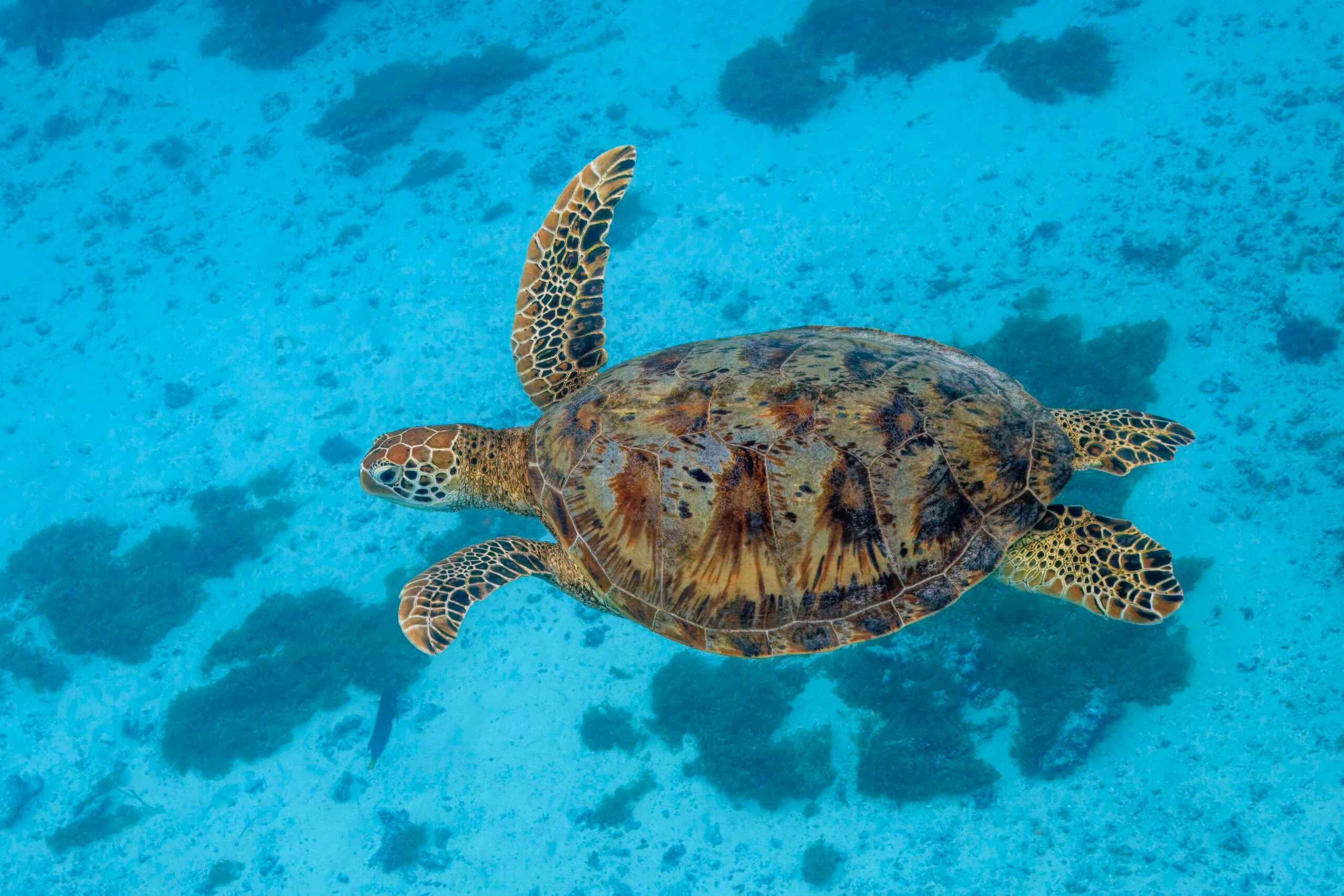
Green sea turtle swimming above a tropical reef at Moorea
Licensed Wikimedia Commons contributors
🌐 Read in Language:

⚡ At a Glance

Animal group
Also Known As
Marine turtle; chelonian
Diet Category
Species-specific diets range from seagrass and algae to jellyfish, sponges and shellfish
Activity Rhythm
Mostly active swimmers, with daily and seasonal patterns varying by species and life stage
Wild Lifespan
Often several decades; reliable maximums differ by species and are difficult to measure
Typical Weight
Roughly 35–700 kg across living species, with substantial variation by sex and population
Conservation Status
Varies by species
💡 Key Biological Insight: Some leatherbacks cross entire ocean basins and may travel about 10,000 miles in a year between feeding and nesting areas.

🌳 Scientific Taxonomy Hierarchy

Sea turtles are the seven living marine turtle species in the superfamily Chelonioidea. They belong to two families: six hard-shelled species in Cheloniidae and the leatherback in Dermochelyidae. This page treats them as a group and does not assign one species-level conservation category.

KingdomAnimalia
PhylumChordata
ClassReptilia
OrderTestudines
FamilyCheloniidae and Dermochelyidae
GenusSeven living genera
SpeciesSeven living species

Distinguishing Anatomical Features

  • ✓Streamlined marine body
  • ✓Forelimbs modified into long flippers
  • ✓Shell flattened for efficient swimming
  • ✓Air-breathing lungs
  • ✓Salt glands near the eyes
  • ✓Females return to land to nest

📏 Physical Measurements

Total LengthAdult shell length roughly 2–6 ft across species
Body WeightRoughly 77–1,540 lb across living species
Tail LengthShort, usually longer in mature males
WingspanNot applicable
Top SpeedNo dependable universal maximumCruising and burst speeds vary by species, age, current and method of measurement.

🎨 Appearance & Distinctive Markings

OliveBrownGrayBlackCreamYellowReddish brown

Skin / Covering: Scales and keratinized shell covering; the leatherback has leathery skin over a flexible shell

Sexual Dimorphism: Adult males usually have longer, thicker tails and longer foreclaws than females, but reliable identification depends on species and maturity.

🗺️ Geographic Distribution & Habitat

Sea turtles occur across tropical and subtropical oceans, with some foraging ranges extending into temperate waters. Highlighted countries are representative nesting and foraging jurisdictions, not an exhaustive ocean range.

Open ocean, continental shelves, coral reefs, seagrass meadows, estuaries and sandy nesting beaches.

Country-level distribution map

Native range
FijiTanzaniaWestern SaharaCanadaUnited States — Native rangeKazakhstanUzbekistanPapua New GuineaIndonesia — Native rangeArgentinaChileCongo - KinshasaSomaliaKenyaSudanChadHaitiDominican RepublicRussiaBahamasFalkland IslandsNorwayGreenlandFrench Southern TerritoriesTimor-LesteSouth Africa — Native rangeLesothoMexico — Native rangeUruguayBrazil — Native rangeBoliviaPeruColombiaPanamaCosta Rica — Native rangeNicaraguaHondurasEl SalvadorGuatemalaBelizeVenezuelaGuyanaSurinameFranceEcuador — Native rangePuerto RicoJamaicaCubaZimbabweBotswanaNamibiaSenegalMaliMauritaniaBeninNigerNigeriaCameroonTogoGhanaCôte d’IvoireGuineaGuinea-BissauLiberiaSierra LeoneBurkina FasoCentral African RepublicCongo - BrazzavilleGabonEquatorial GuineaZambiaMalawiMozambiqueEswatiniAngolaBurundiIsraelLebanonMadagascarPalestinian TerritoriesGambiaTunisiaAlgeriaJordanUnited Arab EmiratesQatarKuwaitIraqOmanVanuatuCambodiaThailandLaosMyanmar (Burma)VietnamNorth KoreaSouth KoreaMongoliaIndia — Native rangeBangladeshBhutanNepalPakistanAfghanistanTajikistanKyrgyzstanTurkmenistanIranSyriaArmeniaSwedenBelarusUkrainePolandAustriaHungaryMoldovaRomaniaLithuaniaLatviaEstoniaGermanyBulgariaGreece — Native rangeTürkiyeAlbaniaCroatiaSwitzerlandLuxembourgBelgiumNetherlandsPortugalSpainIrelandNew CaledoniaSolomon IslandsNew ZealandAustralia — Native rangeSri LankaChinaTaiwanItalyDenmarkUnited KingdomIcelandAzerbaijanGeorgiaPhilippinesMalaysiaBruneiSloveniaFinlandSlovakiaCzechiaEritreaJapan — Native rangeParaguayYemenSaudi ArabiaCyprusMoroccoEgyptLibyaEthiopiaDjiboutiUgandaRwandaBosnia & HerzegovinaNorth MacedoniaSerbiaMontenegroKosovoTrinidad & TobagoSouth Sudan
Highlighted countries are recorded profile locations, not precise biological range boundaries.Map boundaries: Natural Earth

💡 Did You Know?

  • 💡Powerful foreflippers
  • 💡Streamlined shell
  • 💡Salt-excreting glands
  • 💡Long breath-hold capacity
  • 💡Magnetic navigation cues
  • 💡Countershaded coloration

🌿 Conservation Status & Threats

No single assessment recorded

“This is a group profile. Each of the seven living species has its own conservation assessment, and some regional populations are managed separately.”

CITESAll sea turtle species are listed in CITES Appendix I, with international commercial trade generally prohibited.

⚠️ Major Threats to Sea Turtle

  • •Incidental capture in fishing gear
  • •Loss and disturbance of nesting beaches
  • •Plastic ingestion and marine debris
  • •Boat strikes
  • •Illegal harvest of turtles and eggs
  • •Climate-driven changes in beach temperature and sea level

🔄 Life Cycle & Reproduction

Wild vs. Captivity Lifespan Comparison

🌿 In the WildOften several decades; exact maximums are difficult to establish
🏠 In Captivity (with veterinary care)Varies and is not a dependable guide to wild longevity
Clutch / Litter SizeOften about 50–150 eggs, depending on species and female
Incubation / GestationUsually about 45–75 days, influenced strongly by sand temperature and moisture
Fledging / WeaningNot applicable; hatchlings emerge from sand and move toward the sea
Sexual MaturityUsually reached after decades, with age varying by species and population
Mating SystemInternal fertilization
Nesting / Den TypeEgg chamber dug by the female on a sandy beach

🦅 Behavior & Field Ecology

Species-specific herbivore, omnivore or carnivore

🌐 Ecological Food Web & Relationships: Sea turtles connect beaches, seagrass beds, reefs and open-ocean food webs. Grazing, predation and nutrient transfer can influence marine communities and nesting beaches.

Social Group SizeUsually solitary, with temporary aggregations at feeding or nesting sites
Activity RhythmShaped by species, life stage, tides, temperature and prey availability
Feeding StrategySpecies-specific herbivore, omnivore or carnivore

🥩 Primary Prey & Preferred Diet

✓ Seagrasses✓ Algae✓ Jellyfish✓ Sponges✓ Crabs and mollusks✓ Other marine invertebrates

📢 Communication & Territorial Signals

  • Touch during courtship
  • Visual orientation
  • Chemical cues
  • Environmental and geomagnetic cues

🐾 Wild Temperament & Traits

• Migratory• Strong-swimming• Air-breathing• Generally non-aggressive when undisturbed

🤝 Human Interaction & Pet Advisory

⚠️ Strictly Wild Species
🚫

Can You Keep a Sea Turtle as a Pet?

Not suitable as pets. Sea turtles are protected wildlife with specialized marine, dietary and migratory needs.

Domestication StatusWild animals with no domestication history
Danger to HumansLow when observed at a respectful distance
Economic & Ecotourism RoleEcotourism, healthy marine ecosystems, research and coastal cultural heritage.

⚠️ Behavioral Risk Factors & Wildlife Safety

  • Large turtles can bite when stressed
  • Approaching nesting females can cause disturbance
  • Flash photography and lights can disorient turtles
  • Handling hatchlings can interfere with natural orientation

🌐 Ecological Food Web & Relationships

Species in this group

  • Green turtle — Chelonia mydas
  • Loggerhead — Caretta caretta
  • Hawksbill — Eretmochelys imbricata
  • Leatherback — Dermochelys coriacea
  • Flatback — Natator depressus
  • Olive ridley — Lepidochelys olivacea
  • Kemp's ridley — Lepidochelys kempii

🦅 Natural Predators (4)

Ghost crabsOcypodinae
SharksSelachimorpha
SeabirdsAves
HumansHomo sapiens

🧬 Related Species (3)

Common snapping turtleChelydra serpentinaFreshwater turtle relative within Testudines
Aldabra giant tortoiseAldabrachelys giganteaLand-dwelling tortoise relative within Testudines
Pig-nosed turtleCarettochelys insculptaFreshwater turtle with paddle-like limbs

Sea turtles are seven living species of marine turtle whose bodies are shaped for long-distance swimming. Six belong to the hard-shelled family Cheloniidae, while the leatherback forms the only living species of Dermochelyidae. They occupy tropical and subtropical seas worldwide, and some travel into temperate water to feed. This group profile describes shared biology while keeping species differences explicit: diet, body size, migration routes and conservation status vary greatly among green, loggerhead, hawksbill, leatherback, flatback, olive ridley and Kemp’s ridley turtles.

Seven species share an ocean-going body plan

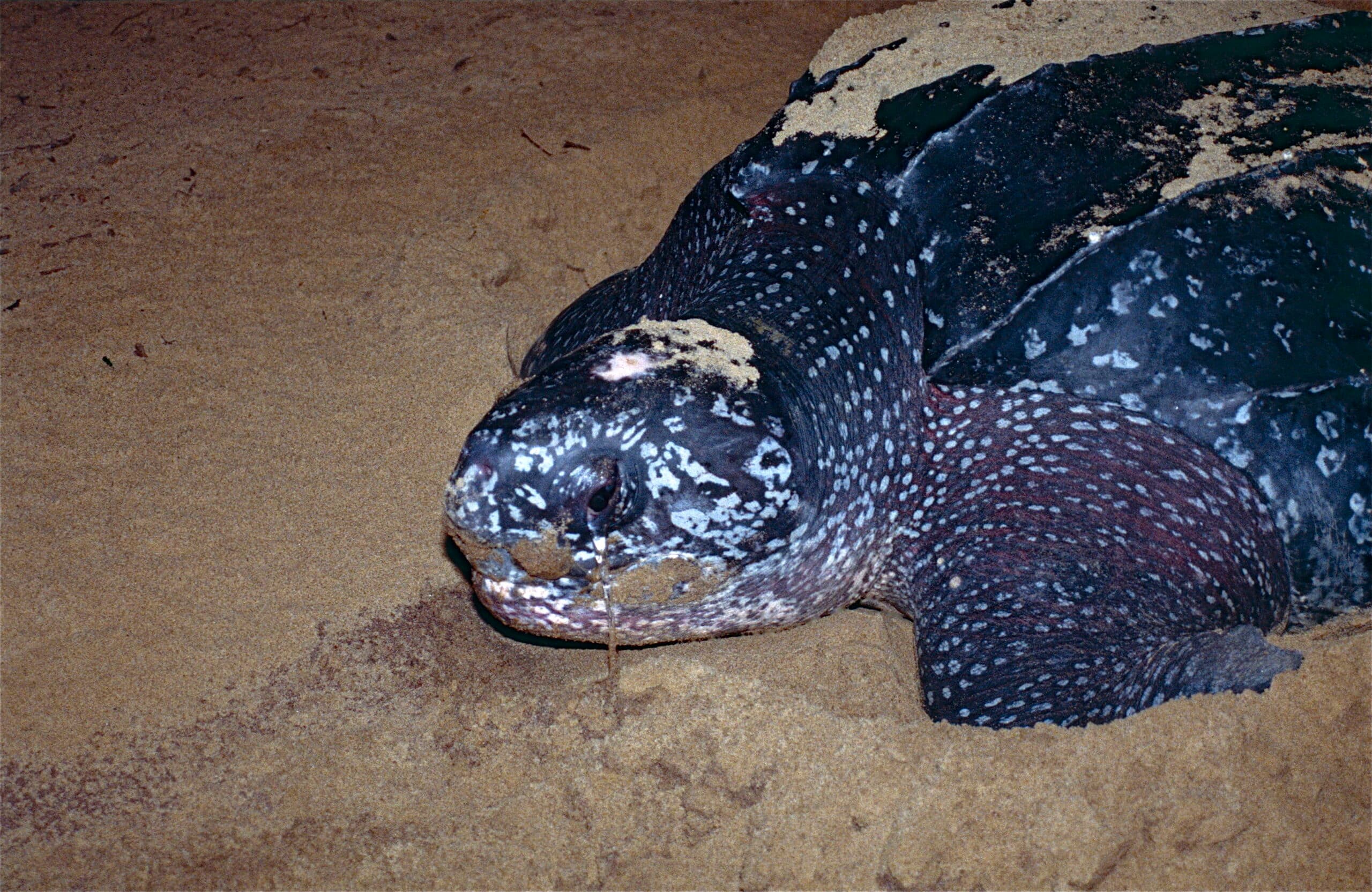
Sea turtles belong to order Testudines and superfamily Chelonioidea. Their forelimbs have become long flippers that generate thrust, while shorter rear flippers steer and help females dig nests. A streamlined shell reduces drag. Unlike land tortoises, sea turtles cannot pull their heads and flippers completely inside the shell. The leatherback differs most visibly: instead of a hard shell covered by scutes, it has a flexible, leathery covering over a framework of small bones and seven raised ridges.

Species identification depends on shell shape, head proportions and the number and arrangement of scutes. Adult size ranges from the relatively small ridleys to the enormous leatherback. Group-wide measurements can therefore mislead. NOAA Fisheries notes that sea turtles are air-breathing reptiles adapted to the ocean, but adult females still return to land to lay eggs. Males generally remain at sea after entering the water as hatchlings.

Life unfolds across beaches, currents and feeding grounds

A female crawls above the high-tide line, digs a chamber with her rear flippers, deposits a clutch of flexible-shelled eggs and covers the nest before returning to the sea. Incubation usually lasts roughly six to ten weeks, depending on species and nest conditions. Sand temperature affects development and helps determine hatchling sex. Newly emerged turtles usually move toward the brightest open horizon, which on an undeveloped beach leads toward the ocean.

The first years are difficult to observe. Young turtles may travel with currents and use floating algae as food and shelter before recruiting to coastal feeding areas. Juveniles and adults can show strong fidelity to particular foraging grounds. When mature, many females migrate hundreds or thousands of kilometres between feeding areas and nesting beaches. Research on natal homing indicates that magnetic and other environmental cues help them return to the region where they hatched. The evidence behind this navigation is examined in Why Sea Turtles Return to Nesting Beaches.

Diets differ sharply among species and life stages

There is no single sea-turtle diet. Adult green turtles in many populations graze seagrass and algae, although juveniles eat more animal material. Hawksbills use a narrow beak to reach sponges and other reef prey. Loggerheads crush hard-shelled crabs and mollusks with powerful jaws. Leatherbacks specialize on jellyfish and other soft-bodied drifting animals. Ridleys eat varied invertebrates, while flatbacks feed on animals living over continental-shelf habitats.

These choices connect sea turtles to several ecosystems. Grazing can influence seagrass growth, hawksbill feeding can alter competition on reefs, and eggs carry marine nutrients onto beaches. Turtles also become prey: eggs and hatchlings are eaten by crabs, birds, fish and mammals, while large sharks can attack older turtles. Their ecological role changes with age because a hatchling in an ocean current uses different food and habitat from a coastal adult.

Migration links distant habitats and nations

Sea turtles cross jurisdictional boundaries repeatedly. A turtle may hatch in one country, feed in the waters of another and migrate through the high seas. NOAA reports that leatherbacks can travel 10,000 miles or more in a year. Other species also make long seasonal journeys, though routes differ among populations. Ocean currents, water temperature, prey and breeding condition all influence movement.

Long migrations create conservation challenges because protection at one beach cannot remove threats encountered elsewhere. Productive feeding grounds, resting areas, mating sites, migration corridors and nesting beaches must all remain usable. International agreements, shared monitoring and compatible fishery measures are therefore essential. A country-level map can only summarize the broad global distribution; it cannot show the precise ocean routes or population boundaries that researchers track.

Breeding strategies range from solitary nesting to arribadas

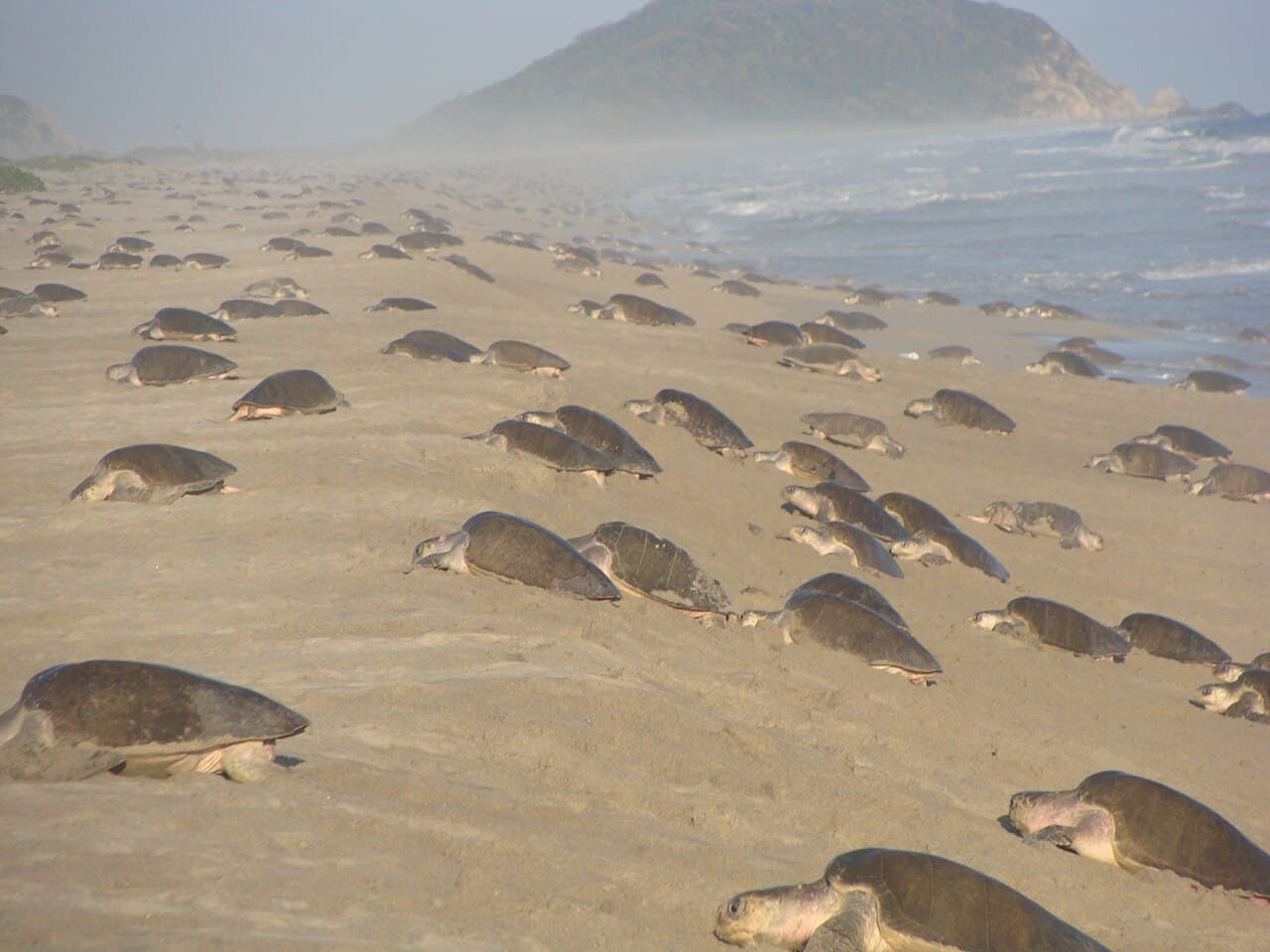
Most females nest alone at night, but olive and Kemp’s ridleys can gather in mass nesting events called arribadas. One female may lay several clutches during a season, then skip one or more years before nesting again. Clutch size often approaches one hundred eggs, with meaningful differences among species and individuals. Few hatchlings survive to adulthood, and reaching maturity can take decades.

Nest temperature affects both incubation speed and sex ratio. Warmer nests tend to produce more females, while cooler nests tend to produce more males, although thresholds differ. Excessive heat can kill embryos. Rising seas, stronger storms and beach erosion can flood or remove nesting habitat. Artificial lighting can draw hatchlings inland, and beach furniture or vehicles can obstruct both nesting females and young turtles moving toward the water.

Fishing and coastal development drive major threats

Accidental capture in fishing gear is a leading threat. Turtles can drown in trawls, become hooked on longlines or entangled in nets and lines. Turtle excluder devices provide an escape opening in some trawl fisheries, while circle hooks, bait changes, time-area closures and illuminated nets can reduce certain forms of bycatch. Effectiveness depends on correct use, fishery type and local conditions.

Other pressures include direct harvest of adults and eggs, vessel strikes, plastic ingestion, entanglement in marine debris, oil pollution and loss of nesting or feeding habitat. Climate change compounds several risks by warming sand, altering currents and prey, raising sea level and increasing erosion. Conservation status must be assessed by species and, in some cases, by regional population. A recovery in one nesting population does not mean that every sea turtle is secure.

Responsible observation protects turtles and nests

People should watch sea turtles from a respectful distance and follow local wildlife rules. Flash photography, bright lights, touching, feeding or blocking a turtle’s route can disrupt natural behaviour. Boats should slow in known turtle areas, and anglers should never pull a hooked turtle by the line. Stranded, injured or entangled animals should be reported to the responsible wildlife network rather than handled without training.

On nesting beaches, visitors can use turtle-friendly lighting, remove obstacles and fill holes before leaving. Choosing fisheries that use proven bycatch-reduction measures and reducing lost plastic and fishing line also helps. Sea turtles are protected wildlife, not pets: their migrations, specialized diets, immense adult space needs and long lifespans cannot be met in a private home.

Sources

❓ Frequently Asked Questions

Answers to frequently asked questions verified against peer-reviewed zoological research.

Seven living species are recognized: green, loggerhead, hawksbill, leatherback, flatback, olive ridley and Kemp's ridley turtles.