
Home/Animals/Aves/Secretary Bird
Species profileIUCN: EN

Secretary Bird

Sagittarius serpentarius

A long-legged African raptor that hunts on foot and dispatches prey with rapid, powerful kicks.

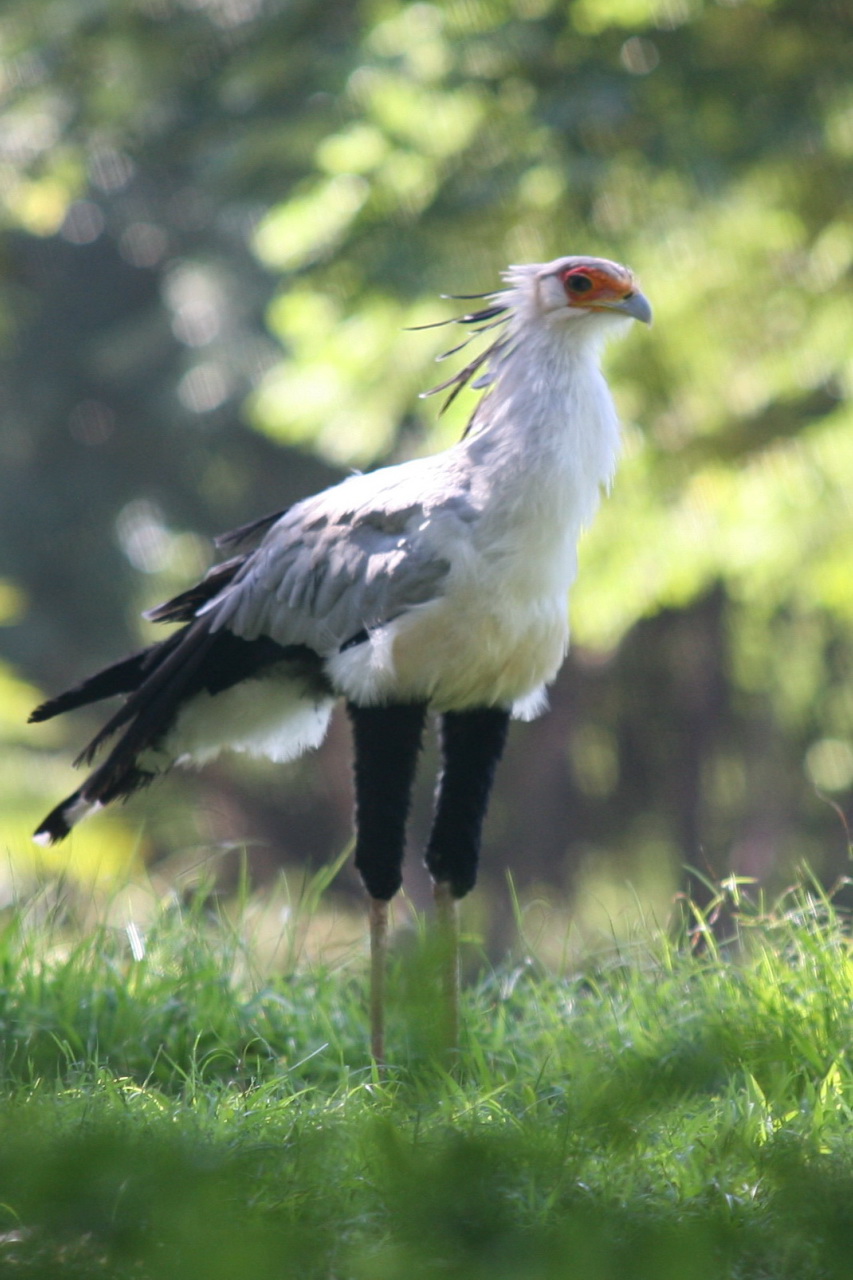
A Secretary Bird standing upright with long legs, gray plumage and a black feather crest
Carl Clifford / Wikimedia Commons / CC BY 2.0
🌐 Read in Language:

⚡ At a Glance

Species profile
Also Known As
Secretarybird
Diet Category
Carnivorous raptor
Activity Rhythm
Diurnal, walking and hunting through daylight before roosting in trees.
Wild Lifespan
Wild longevity is poorly documented; managed birds may live around 15–20 years
Typical Weight
Roughly 2.3–4.3 kg
Conservation Status
EN
💡 Key Biological Insight: High-speed measurements show that a Secretary Bird can strike prey with several times its own body weight in force while keeping its head beyond biting range.

🌳 Scientific Taxonomy Hierarchy

Sagittarius serpentarius is a full species and the only living member of both genus Sagittarius and family Sagittariidae. Modern classifications place it in Accipitriformes with eagles, hawks and Old World vultures. It is a raptor adapted to terrestrial hunting, not a crane or bustard.

KingdomAnimalia
PhylumChordata
ClassAves
OrderAccipitriformes
FamilySagittariidae
GenusSagittarius
SpeciesSagittarius serpentarius

Distinguishing Anatomical Features

  • ✓A very tall raptor with long bare pinkish legs, gray body plumage, black flight feathers and thighs, a short hooked bill and an erectile crest of black-tipped feathers. Bare facial skin changes from yellow-orange toward red with excitement. The tail has two greatly elongated central feathers. In flight, long broad wings and projecting legs distinguish it from most large African birds.
  • ✓Very long legs support ground hunting
  • ✓Strong kicks stun or kill dangerous prey
  • ✓Thick scales help protect lower legs
  • ✓Broad wings support soaring between feeding areas
  • ✓Hooked bill tears vertebrate prey
  • ✓Crest and tail feathers amplify visual display
  • ✓Acute vision detects movement in grass
  • ✓Short toes provide a stable striking platform

📏 Physical Measurements

Total LengthAbout 3.6–4.9 ft
Body WeightAbout 5.1–9.5 lb
Tail LengthLong, with two extended central feathers
WingspanAbout 6.2–6.9 ft
Top SpeedNo dependable universal maximumMovement changes with context and conditions.

🎨 Appearance & Distinctive Markings

Pale grayBlack wingsBlack thighsWhite underwingOrange-red faceBlackWhiteOrangeRed

Skin / Covering: Feathers with bare scaled lower legs and facial skin

Sexual Dimorphism: The sexes look alike. Males average slightly larger and may have longer crest and central tail feathers, but size overlap makes field sexing unreliable.

🗺️ Geographic Distribution & Habitat

Widely but increasingly sparsely distributed across open country in sub-Saharan Africa, from the Sahel and Horn south through eastern Africa to South Africa. It is absent from dense equatorial rainforest and the most barren parts of major deserts.

Open savanna, grassland, lightly wooded plains, semi-desert, agricultural pasture and recently burned veld with grass short enough for walking and prey detection.

Country-level distribution map

Native range
FijiTanzania — Native rangeWestern SaharaCanadaUnited StatesKazakhstanUzbekistanPapua New GuineaIndonesiaArgentinaChileCongo - KinshasaSomalia — Native rangeKenya — Native rangeSudan — Native rangeChad — Native rangeHaitiDominican RepublicRussiaBahamasFalkland IslandsNorwayGreenlandFrench Southern TerritoriesTimor-LesteSouth Africa — Native rangeLesotho — Native rangeMexicoUruguayBrazilBoliviaPeruColombiaPanamaCosta RicaNicaraguaHondurasEl SalvadorGuatemalaBelizeVenezuelaGuyanaSurinameFranceEcuadorPuerto RicoJamaicaCubaZimbabwe — Native rangeBotswana — Native rangeNamibia — Native rangeSenegal — Native rangeMali — Native rangeMauritania — Native rangeBenin — Native rangeNiger — Native rangeNigeria — Native rangeCameroon — Native rangeTogo — Native rangeGhana — Native rangeCôte d’IvoireGuineaGuinea-BissauLiberiaSierra LeoneBurkina Faso — Native rangeCentral African Republic — Native rangeCongo - BrazzavilleGabonEquatorial GuineaZambia — Native rangeMalawi — Native rangeMozambique — Native rangeEswatini — Native rangeAngola — Native rangeBurundi — Native rangeIsraelLebanonMadagascarPalestinian TerritoriesGambia — Native rangeTunisiaAlgeriaJordanUnited Arab EmiratesQatarKuwaitIraqOmanVanuatuCambodiaThailandLaosMyanmar (Burma)VietnamNorth KoreaSouth KoreaMongoliaIndiaBangladeshBhutanNepalPakistanAfghanistanTajikistanKyrgyzstanTurkmenistanIranSyriaArmeniaSwedenBelarusUkrainePolandAustriaHungaryMoldovaRomaniaLithuaniaLatviaEstoniaGermanyBulgariaGreeceTürkiyeAlbaniaCroatiaSwitzerlandLuxembourgBelgiumNetherlandsPortugalSpainIrelandNew CaledoniaSolomon IslandsNew ZealandAustraliaSri LankaChinaTaiwanItalyDenmarkUnited KingdomIcelandAzerbaijanGeorgiaPhilippinesMalaysiaBruneiSloveniaFinlandSlovakiaCzechiaEritrea — Native rangeJapanParaguayYemenSaudi ArabiaCyprusMoroccoEgyptLibyaEthiopia — Native rangeDjibouti — Native rangeUganda — Native rangeRwanda — Native rangeBosnia & HerzegovinaNorth MacedoniaSerbiaMontenegroKosovoTrinidad & TobagoSouth Sudan — Native range
Highlighted countries are recorded profile locations, not precise biological range boundaries.Map boundaries: Natural Earth

💡 Did You Know?

  • 💡Very long legs support ground hunting
  • 💡Strong kicks stun or kill dangerous prey
  • 💡Thick scales help protect lower legs
  • 💡Broad wings support soaring between feeding areas
  • 💡Hooked bill tears vertebrate prey
  • 💡Crest and tail feathers amplify visual display
  • 💡Acute vision detects movement in grass
  • 💡Short toes provide a stable striking platform

🌿 Conservation Status & Threats

IUCN: EN — Endangered

“The IUCN lists the Secretary Bird as Endangered following rapid declines across much of its range. Loss and degradation of open habitat, disturbance, fire, poisoning, collisions and electrocution all contribute, and the bird’s large territory makes fragmented landscapes difficult to use.”

Population Trend📉 Decreasing
Wild Population EstimateThe global population is uncertain and scattered across a very large range; regional monitoring shows substantial declines
CITESCITES Appendix II

⚠️ Major Threats to Secretary Bird

  • •Grassland conversion
  • •Overgrazing and woody encroachment
  • •Frequent intense fire
  • •Collision and electrocution
  • •Poisoning
  • •Nest disturbance
  • •Loss of large trees

🔄 Life Cycle & Reproduction

Wild vs. Captivity Lifespan Comparison

🌿 In the WildWild longevity is poorly documented; managed birds may live around 15–20 years
🏠 In Captivity (with veterinary care)Accredited facilities provide large open aviaries, long walking routes, elevated nests, whole-prey diets and protected social spaces.
Clutch / Litter SizeUsually 1–3 eggs
Incubation / GestationAbout 42–46 days, mainly by the female
Fledging / WeaningDowny nestlings that fledge at roughly 10–12 weeks
Sexual MaturitySeveral years before full adult breeding
Mating SystemSocially monogamous pairs
Nesting / Den TypeLarge flat stick platform in a low tree crown

🦅 Behavior & Field Ecology

Carnivorous raptor

🌐 Ecological Food Web & Relationships: Secretary Birds remove insects, rodents and other small vertebrates from open ecosystems and connect ground-level prey with the raptor food web. Their large territories make them sensitive to broad landscape changes. Suitable grazing can maintain open hunting ground, while excessive stocking, fencing, woody encroachment and loss of nesting trees reduce habitat quality.

Social Group SizePairs and family groups; often hunts singly or together
Activity RhythmDiurnal, walking and hunting through daylight before roosting in trees.
Feeding StrategyCarnivorous raptor

🥩 Primary Prey & Preferred Diet

✓ Large insects✓ Rodents✓ Lizards✓ Snakes✓ Amphibians✓ Small birds✓ Bird eggs✓ Young hares✓ Tortoises

📢 Communication & Territorial Signals

  • Deep croaks
  • Growling calls
  • Chick begging
  • Crest raising
  • Facial color
  • Aerial display

🐾 Wild Temperament & Traits

• Alert• Territorial near nests• Persistent hunter• Pair bonded• Generally avoids people

🤝 Human Interaction & Pet Advisory

⚠️ Strictly Wild Species
🚫

Can You Keep a Secretary Bird as a Pet?

A Secretary Bird is a protected wild raptor, not a pet. It needs extensive walking habitat, flight space, specialized whole-prey nutrition, social choice and expert veterinary care.

Domestication StatusWild raptor; never domesticated
Danger to HumansLow at respectful distance; powerful defensive kicks at close range
Economic & Ecotourism RoleControl of rodents and insects, African cultural symbolism, tourism, environmental education and research on raptor locomotion.

⚠️ Behavioral Risk Factors & Wildlife Safety

  • Forceful kicks
  • Sharp bill
  • Nest defense
  • Roadside collision risk
  • Stress from pursuit

🌐 Ecological Food Web & Relationships

🦅 Natural Predators (4)

HumanHomo sapiens
Martial EaglePolemaetus bellicosus
Large CarnivoresCarnivora
CorvidsCorvidae

🧬 Related Species (4)

BateleurTerathopius ecaudatusRelated African accipitriform raptor
African Harrier-HawkPolyboroides typusRelated long-legged African raptor
Black-chested Snake EagleCircaetus pectoralisAfrican raptor that also hunts reptiles
Martial EaglePolemaetus bellicosusLarge savanna eagle

Secretary Bird (Sagittarius serpentarius) is the sole living species in family Sagittariidae. Although it can soar strongly, it spends much of each day striding through open African grassland. Its crane-like legs, eagle-like body, black crest and elongated central tail feathers create one of the most distinctive silhouettes among birds of prey. This guide separates well-supported biology from common assumptions and covers identification, range, habitat, diet, behavior, reproduction and conservation.

Identification

A very tall raptor with long bare pinkish legs, gray body plumage, black flight feathers and thighs, a short hooked bill and an erectile crest of black-tipped feathers. Bare facial skin changes from yellow-orange toward red with excitement. The tail has two greatly elongated central feathers. In flight, long broad wings and projecting legs distinguish it from most large African birds. The sexes look alike. Males average slightly larger and may have longer crest and central tail feathers, but size overlap makes field sexing unreliable.

Identification should combine body shape, markings, size, voice or movement, and location. One feature by itself can overlap with a related animal, a juvenile, or an individual in unusual light.

Photographs are most useful when they preserve scale and show several diagnostic features. Handling or repositioning a wild secretary bird for identification can cause stress and is unnecessary.

Size and physical adaptations

Secretary Bird typically measures About 1.1–1.5 m from head to tail and weighs Roughly 2.3–4.3 kg. Standing height is commonly around 1.2 m, while the elongated tail adds substantially to total length.

Its useful adaptations include very long legs support ground hunting, strong kicks stun or kill dangerous prey, thick scales help protect lower legs, broad wings support soaring between feeding areas, hooked bill tears vertebrate prey, crest and tail feathers amplify visual display, acute vision detects movement in grass, short toes provide a stable striking platform. These traits work together in the animal’s normal setting rather than serving as isolated curiosities.

Published measurements may use different methods, life stages or sample locations. Comparing figures responsibly means checking what was measured rather than selecting the largest number available.

Range and distribution

Widely but increasingly sparsely distributed across open country in sub-Saharan Africa, from the Sahel and Horn south through eastern Africa to South Africa. It is absent from dense equatorial rainforest and the most barren parts of major deserts. The native range includes South Africa, Namibia, Botswana, Zimbabwe, Mozambique, Eswatini, Lesotho, Angola, Zambia, Malawi, Tanzania, Kenya, Uganda, Ethiopia, Somalia, South Sudan, Sudan, Chad, Niger, Mali, Senegal, Burkina Faso, Cameroon.

A country-level map indicates broad distribution, not continuous occupation. Climate, elevation, water, vegetation, prey, breeding sites, barriers and survey effort all affect where records occur.

Records near the edge of the range deserve careful documentation because they may reflect natural movement, improved survey coverage, accidental transport or a genuine distribution change.

Habitat

Open savanna, grassland, lightly wooded plains, semi-desert, agricultural pasture and recently burned veld with grass short enough for walking and prey detection.

Pairs need extensive open foraging ground and scattered sturdy trees for nesting and night roosting. They avoid very dense vegetation, where long legs and visual hunting are less effective. Fire can temporarily improve prey visibility, but frequent intense burning or conversion to cropland removes nesting and feeding habitat. Protecting a population therefore requires the feeding, shelter and breeding features that make a site usable, along with connections that allow movement.

Microhabitat matters. Shade, soil, current, moisture, shelter or host plants can determine whether a small area is usable even when the surrounding landscape appears suitable.

Diet and feeding

Secretary Bird is a carnivorous raptor. Important foods include large insects, rodents, lizards, snakes, amphibians, small birds, bird eggs, young hares, tortoises. A Secretary Bird may walk many kilometers in a day, watching the ground and stamping vegetation to flush prey. It seizes small animals with the bill and uses rapid downward kicks against larger or dangerous prey. Snakes are famous quarry but do not dominate every diet; insects and small mammals can be much more frequent.

Diet changes with age, season, location and food supply. A dramatic prey record does not establish what most individuals eat most of the time; repeated field observations provide a stronger picture.

Feeding opportunities also create risk. An animal focused on prey may be less alert to predators, traffic or people, while contaminated prey can transfer pollutants through the food web.

Behavior and communication

Diurnal, walking and hunting through daylight before roosting in trees. Pairs or family groups patrol large territories on foot. When disturbed they usually run before taking flight, then use broad wings to climb and soar. Courtship combines high circling flights, pendulum-like dives, croaking calls and ground displays. Adults defend the nest area but may share rich feeding areas loosely with other birds.

Adults are usually quiet but give deep croaking or growling calls during courtship and near the nest. Visual signals include raised crest feathers, colored facial skin, wing postures and aerial chases. Chicks begin with soft begging squeals that become louder as hunger increases. Behavior should be interpreted in context: alarm, courtship, feeding and temperature regulation can produce very different actions from the same animal.

Daily schedules are flexible responses, not rigid rules. Weather, breeding condition, disturbance, tides or food can move activity into a different part of the day.

Reproduction and development

Secretary Birds form long-term pairs and build a broad stick nest in the crown of a low, often thorny tree. Both adults contribute material, and nests may be reused and enlarged. Breeding timing follows rainfall and prey conditions rather than a single continent-wide month. Usually 1–3 eggs Both parents feed the nestlings, first by regurgitation and later with larger prey. Siblings hatch at intervals, so food shortages can create strong size differences. Young remain in the nest for roughly two to three months, then practice walking and hunting while still receiving parental support.

Young animals face different risks and may use different microhabitats or food than adults. Breeding success depends on adult condition, suitable sites and the survival of offspring through vulnerable early stages.

Counts of eggs or young describe reproductive output, not the number expected to reach adulthood. Mortality is normally greatest during eggs, larval or juvenile stages.

Predators and ecological role

Secretary Birds remove insects, rodents and other small vertebrates from open ecosystems and connect ground-level prey with the raptor food web. Their large territories make them sensitive to broad landscape changes. Suitable grazing can maintain open hunting ground, while excessive stocking, fencing, woody encroachment and loss of nesting trees reduce habitat quality. Documented or likely predators include Human, Martial Eagle, Large Carnivores, Corvids.

This animal is both a consumer and a food source. Its influence comes through many repeated interactions, so ecological claims should be based on measured populations rather than assumptions drawn from appearance.

Predator and prey relationships differ among places. A species can be ecologically influential without being abundant everywhere, and its role can change across its range.

Relationship with people

The Secretary Bird appears on the coats of arms of Sudan and South Africa and is celebrated for controlling snakes and agricultural pests. Roads, power lines, fences and reservoir troughs create collision or drowning risks. Protection requires large connected grasslands, safe infrastructure and undisturbed nesting trees on both reserves and working farms.

The bird normally avoids people, but its kicks are powerful enough to injure. Never corner, chase or approach a nest. Give walking birds an open escape route, keep dogs controlled and report injured or entangled birds to wildlife authorities. Responsible observation means keeping an appropriate distance, avoiding capture or feeding, protecting habitat and following local wildlife or invasive-species guidance.

Wildlife guidance should come from the responsible local agency because collection rules, reporting requests and appropriate responses differ between native and introduced ranges.

Conservation

The IUCN lists the Secretary Bird as Endangered following rapid declines across much of its range. Loss and degradation of open habitat, disturbance, fire, poisoning, collisions and electrocution all contribute, and the bird’s large territory makes fragmented landscapes difficult to use. The reported global trend is Decreasing.

Important pressures include grassland conversion, overgrazing and woody encroachment, frequent intense fire, collision and electrocution, poisoning, nest disturbance, loss of large trees. Global status can hide local decline or recovery, so current regional monitoring and habitat management remain necessary.

The most useful conservation action follows the documented pressure. Protecting breeding sites, reducing road deaths or limiting pollutants can require different tools in different populations.

Sources and further reading

❓ Frequently Asked Questions

Answers to frequently asked questions verified against peer-reviewed zoological research.

The exact origin is debated. A popular explanation compares the black crest feathers to quill pens once tucked behind a clerk’s ear.