
Home/Animals/Amphibia/Tiger Salamander
Species profileIUCN: LC

Tiger Salamander

Ambystoma tigrinum

A secretive mole salamander that spends most of the year underground and returns to fishless ponds to breed.

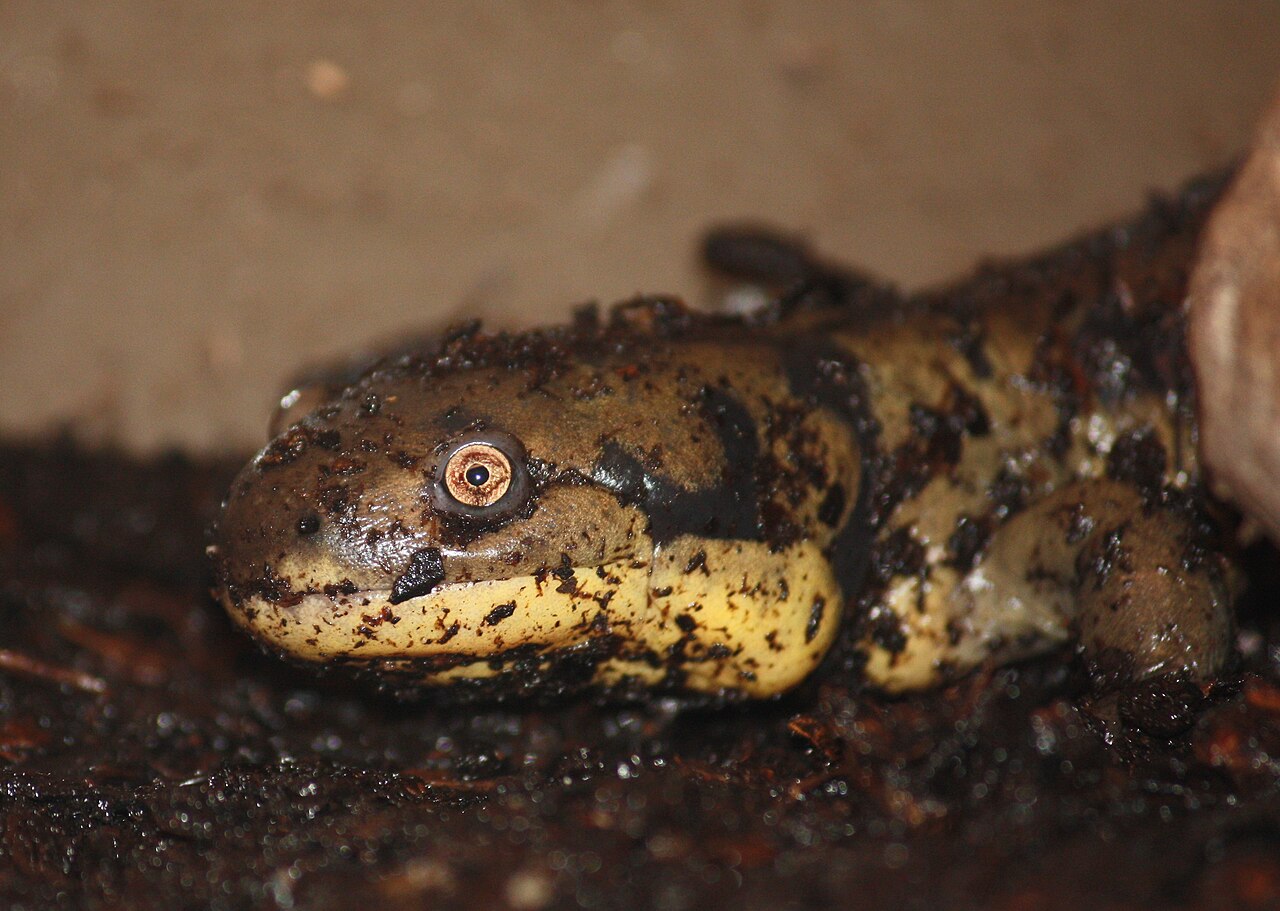
Eastern tiger salamander showing a broad head and irregular yellow markings on a dark body
Ltshears / Wikimedia Commons / CC BY-SA 3.0
๐ŸŒ Read in Language:

โšก At a Glance

Species profile
Also Known As
Eastern tiger salamander
Diet Category
Carnivore
Activity Rhythm
Mostly nocturnal and subterranean; surface activity peaks during rain and breeding migration.
Wild Lifespan
Potentially more than a decade, but wild survival varies strongly among populations
Typical Weight
highly variable; no dependable species-wide adult range used here
Conservation Status
LC
๐Ÿ’ก Key Biological Insight: An adult may remain hidden in a mammal or crayfish burrow for most of the year, surfacing on warm rainy nights to feed or migrate.

๐ŸŒณ Scientific Taxonomy Hierarchy

This is the eastern tiger salamander, Ambystoma tigrinum, in family Ambystomatidae. Several western forms once treated as its subspecies are now commonly recognized within other species, especially Ambystoma mavortium, so their ranges and status should not be merged uncritically.

KingdomAnimalia
PhylumChordata
ClassAmphibia
OrderCaudata
FamilyAmbystomatidae
GenusAmbystoma
SpeciesAmbystoma tigrinum

Distinguishing Anatomical Features

  • โœ“Adults have a broad head, small eyes, rounded snout, sturdy legs, a thick body and a long laterally compressed tail. Irregular yellow, tan or olive spots and blotches contrast with a black or dark brown ground color, but pattern varies widely. Aquatic larvae have feathery external gills and a tail fin.
  • โœ“Powerful limbs and body for burrowing
  • โœ“Moist glandular skin supports gas exchange
  • โœ“External-gilled larvae live in ponds
  • โœ“Wide mouth takes diverse animal prey
  • โœ“Seasonal migration links uplands and wetlands
  • โœ“Some populations can retain larval aquatic traits

๐Ÿ“ Physical Measurements

Total Lengthusually about 7โ€“13 in
Body Weighthighly variable; no dependable species-wide adult range used here
Tail LengthLong and laterally compressed, especially in aquatic stages
WingspanNot applicable
Top SpeedNo dependable universal maximumMovement changes with context and conditions.

๐ŸŽจ Appearance & Distinctive Markings

BlackDark brownYellowOliveTanOliveTan

Skin / Covering: Smooth moist glandular skin

Sexual Dimorphism: The sexes look similar. During breeding, males often have a longer, more compressed tail and swollen vent; females carrying eggs develop a fuller abdomen.

๐Ÿ—บ๏ธ Geographic Distribution & Habitat

Occurs in separated populations across central and eastern North America. Because taxonomy of the broader tiger-salamander complex has changed, locality records should be checked against current regional field guides.

Grassland, prairie, open woodland, forest edge, marsh margin and agricultural landscapes with friable soil, underground refuges and nearby seasonal or permanent fishless ponds.

Country-level distribution map

Native range
FijiTanzaniaWestern SaharaCanada โ€” Native rangeUnited States โ€” Native rangeKazakhstanUzbekistanPapua New GuineaIndonesiaArgentinaChileCongo - KinshasaSomaliaKenyaSudanChadHaitiDominican RepublicRussiaBahamasFalkland IslandsNorwayGreenlandFrench Southern TerritoriesTimor-LesteSouth AfricaLesothoMexicoUruguayBrazilBoliviaPeruColombiaPanamaCosta RicaNicaraguaHondurasEl SalvadorGuatemalaBelizeVenezuelaGuyanaSurinameFranceEcuadorPuerto RicoJamaicaCubaZimbabweBotswanaNamibiaSenegalMaliMauritaniaBeninNigerNigeriaCameroonTogoGhanaCรดte dโ€™IvoireGuineaGuinea-BissauLiberiaSierra LeoneBurkina FasoCentral African RepublicCongo - BrazzavilleGabonEquatorial GuineaZambiaMalawiMozambiqueEswatiniAngolaBurundiIsraelLebanonMadagascarPalestinian TerritoriesGambiaTunisiaAlgeriaJordanUnited Arab EmiratesQatarKuwaitIraqOmanVanuatuCambodiaThailandLaosMyanmar (Burma)VietnamNorth KoreaSouth KoreaMongoliaIndiaBangladeshBhutanNepalPakistanAfghanistanTajikistanKyrgyzstanTurkmenistanIranSyriaArmeniaSwedenBelarusUkrainePolandAustriaHungaryMoldovaRomaniaLithuaniaLatviaEstoniaGermanyBulgariaGreeceTรผrkiyeAlbaniaCroatiaSwitzerlandLuxembourgBelgiumNetherlandsPortugalSpainIrelandNew CaledoniaSolomon IslandsNew ZealandAustraliaSri LankaChinaTaiwanItalyDenmarkUnited KingdomIcelandAzerbaijanGeorgiaPhilippinesMalaysiaBruneiSloveniaFinlandSlovakiaCzechiaEritreaJapanParaguayYemenSaudi ArabiaCyprusMoroccoEgyptLibyaEthiopiaDjiboutiUgandaRwandaBosnia & HerzegovinaNorth MacedoniaSerbiaMontenegroKosovoTrinidad & TobagoSouth Sudan
Highlighted countries are recorded profile locations, not precise biological range boundaries.Map boundaries: Natural Earth

Recorded Native Countries & Territories:

๐Ÿ’ก Did You Know?

  • ๐Ÿ’กPowerful limbs and body for burrowing
  • ๐Ÿ’กMoist glandular skin supports gas exchange
  • ๐Ÿ’กExternal-gilled larvae live in ponds
  • ๐Ÿ’กWide mouth takes diverse animal prey
  • ๐Ÿ’กSeasonal migration links uplands and wetlands
  • ๐Ÿ’กSome populations can retain larval aquatic traits

๐ŸŒฟ Conservation Status & Threats

IUCN: LC โ€” Least Concern

โ€œThe species is widely treated as Least Concern globally, but many local populations are isolated and vulnerable to pond loss, fish introduction, roads, disease and destruction of surrounding burrow habitat.โ€

Population TrendVariable by region; local declines can occur even where the species remains widespread
Wild Population EstimateNo reliable total population estimate exists.

โš ๏ธ Major Threats to Tiger Salamander

  • โ€ขLoss and alteration of breeding ponds
  • โ€ขFish stocking
  • โ€ขRoad mortality during migration
  • โ€ขUpland habitat conversion and soil disturbance
  • โ€ขPesticide exposure
  • โ€ขEmerging amphibian disease

๐Ÿ”„ Life Cycle & Reproduction

Wild vs. Captivity Lifespan Comparison

๐ŸŒฟ In the WildPotentially more than a decade, but wild survival varies strongly among populations
๐Ÿ  In Captivity (with veterinary care)Can live for many years under expert care, but captive figures do not describe wild survival.
Clutch / Litter SizeHundreds of eggs may be produced, often distributed in small groups
Incubation / GestationEggs commonly hatch in roughly 19โ€“50 days depending on temperature and site
Fledging / WeaningAquatic larvae are independent predators; metamorphs leave the pond and seek moist underground refuge.
Sexual MaturityOften reached after several years, varying with climate and growth
Mating SystemMultiple courtship encounters; no parental care after egg laying
Nesting / Den TypeEggs attached underwater in fishless or low-fish ponds

๐Ÿฆ… Behavior & Field Ecology

Carnivore

๐ŸŒ Ecological Food Web & Relationships: Tiger salamanders connect temporary ponds with surrounding uplands. Larvae consume aquatic invertebrates and small vertebrates, while adults regulate soil-surface prey. Eggs, larvae and adults feed insects, snakes, birds and mammals, and migrations transfer nutrients across the shoreline.

Social Group SizeMostly solitary except during breeding concentrations
Activity RhythmMostly nocturnal and subterranean; surface activity peaks during rain and breeding migration.
Feeding StrategyCarnivore

๐Ÿฅฉ Primary Prey & Preferred Diet

โœ“ Earthwormsโœ“ Beetles and other insectsโœ“ Slugs and snailsโœ“ Spidersโœ“ Small amphibiansโœ“ Occasional small vertebratesโœ“ Aquatic crustaceans and insect larvae

๐Ÿ“ข Communication & Territorial Signals

  • Chemical cues
  • Touch and nudging
  • Body movement
  • Substrate vibration

๐Ÿพ Wild Temperament & Traits

โ€ข Secretiveโ€ข Solitaryโ€ข Opportunistic predatorโ€ข Defensive when handled

๐Ÿค Human Interaction & Pet Advisory

โš ๏ธ Strictly Wild Species
๐Ÿšซ

Can You Keep a Tiger Salamander as a Pet?

Wild collection may be restricted and removes breeding adults. Specialized moisture, temperature, diet and biosecurity needs make observation in nature the responsible choice.

Domestication StatusWild amphibian; not domesticated
Danger to HumansVery low to people; skin secretions and wildlife-associated microbes require sensible hygiene
Economic & Ecotourism RolePredator of invertebrates, prey for wetland wildlife, indicator of connected pond-upland habitat and focus of amphibian conservation.

โš ๏ธ Behavioral Risk Factors & Wildlife Safety

  • Defensive skin secretions may irritate
  • Handling damages permeable skin
  • Amphibians can carry Salmonella

๐ŸŒ Ecological Food Web & Relationships

๐Ÿฆ… Natural Predators (5)

Garter SnakeThamnophis spp.
Great Blue HeronArdea herodias
American BadgerTaxidea taxus
RaccoonProcyon lotor
Predatory FishMultiple species

๐Ÿงฌ Related Species (3)

Western Tiger SalamanderAmbystoma mavortiumClose western relative formerly included within a broad tiger-salamander concept
Spotted SalamanderAmbystoma maculatumRelated eastern mole salamander
Marbled SalamanderAmbystoma opacumRelated species that breeds in autumn

Tiger Salamander (Ambystoma tigrinum) is a large, heavy-bodied North American mole salamander with yellow or olive markings scattered across a dark background. This guide separates well-supported biology from common assumptions and covers identification, range, habitat, diet, behavior, reproduction and conservation.

Identification

Adults have a broad head, small eyes, rounded snout, sturdy legs, a thick body and a long laterally compressed tail. Irregular yellow, tan or olive spots and blotches contrast with a black or dark brown ground color, but pattern varies widely. Aquatic larvae have feathery external gills and a tail fin. The sexes look similar. During breeding, males often have a longer, more compressed tail and swollen vent; females carrying eggs develop a fuller abdomen.

Identification should combine body shape, markings, size, voice or movement, and location. One feature by itself can overlap with a related animal, a juvenile, or an individual in unusual light.

Photographs are most useful when they preserve scale and show several diagnostic features. Handling or repositioning a wild tiger salamander for identification can cause stress and is unnecessary.

Size and physical adaptations

Tiger Salamander typically measures usually about 17โ€“33 cm and weighs highly variable; no dependable species-wide adult range used here. Age, sex, locality and whether an individual metamorphoses or remains aquatic all affect size. Older sources may combine measurements from now-separated western taxa.

Its useful adaptations include powerful limbs and body for burrowing, moist glandular skin supports gas exchange, external-gilled larvae live in ponds, wide mouth takes diverse animal prey, seasonal migration links uplands and wetlands, some populations can retain larval aquatic traits. These traits work together in the animal’s normal setting rather than serving as isolated curiosities.

Published measurements may use different methods, life stages or sample locations. Comparing figures responsibly means checking what was measured rather than selecting the largest number available.

Range and distribution

Occurs in separated populations across central and eastern North America. Because taxonomy of the broader tiger-salamander complex has changed, locality records should be checked against current regional field guides. The native range includes United States, Canada.

A country-level map indicates broad distribution, not continuous occupation. Climate, elevation, water, vegetation, prey, breeding sites, barriers and survey effort all affect where records occur.

Records near the edge of the range deserve careful documentation because they may reflect natural movement, improved survey coverage, accidental transport or a genuine distribution change.

Habitat

Grassland, prairie, open woodland, forest edge, marsh margin and agricultural landscapes with friable soil, underground refuges and nearby seasonal or permanent fishless ponds.

Adults live mainly below ground in self-made retreats or burrows excavated by mammals and crayfish. Breeding requires calm water long enough for eggs and larvae to develop; ponds without predatory fish generally provide the safest nursery habitat. Protecting a population therefore requires the feeding, shelter and breeding features that make a site usable, along with connections that allow movement.

Microhabitat matters. Shade, soil, current, moisture, shelter or host plants can determine whether a small area is usable even when the surrounding landscape appears suitable.

Diet and feeding

Tiger Salamander is a carnivore. Important foods include earthworms, beetles and other insects, slugs and snails, spiders, small amphibians, occasional small vertebrates, aquatic crustaceans and insect larvae. Adults emerge in moist conditions and seize moving prey with a wide mouth. Aquatic larvae begin with small invertebrates and take larger prey as they grow, including tadpoles or smaller salamander larvae. Cannibalism can occur where food or space is limited.

Diet changes with age, season, location and food supply. A dramatic prey record does not establish what most individuals eat most of the time; repeated field observations provide a stronger picture.

Feeding opportunities also create risk. An animal focused on prey may be less alert to predators, traffic or people, while contaminated prey can transfer pollutants through the food web.

Behavior and communication

Mostly nocturnal and subterranean; surface activity peaks during rain and breeding migration. Outside breeding, individuals are largely solitary and hidden. Warm rain and thawing ground trigger directed movement toward ponds. Adults can travel across roads, fields and forest edges, then return to upland burrows after breeding.

Courtship is mainly tactile and chemical. A male nudges and guides a female before depositing a spermatophore, which she picks up with the cloaca. Adults also detect prey and habitat through scent and vibration. Behavior should be interpreted in context: alarm, courtship, feeding and temperature regulation can produce very different actions from the same animal.

Daily schedules are flexible responses, not rigid rules. Weather, breeding condition, disturbance, tides or food can move activity into a different part of the day.

Reproduction and development

Adults migrate to ponds from late winter into spring, often at night after rain. Males arrive and court females underwater, depositing spermatophores for internal pickup. Females attach eggs singly or in small clusters to submerged vegetation or debris. Hundreds of eggs may be produced, often distributed in small groups Aquatic larvae breathe with external gills and hunt small pond animals. Most transform after roughly two and a half to five months, losing the gills and tail fin before moving onto land; timing varies with water persistence, temperature and food.

Young animals face different risks and may use different microhabitats or food than adults. Breeding success depends on adult condition, suitable sites and the survival of offspring through vulnerable early stages.

Counts of eggs or young describe reproductive output, not the number expected to reach adulthood. Mortality is normally greatest during eggs, larval or juvenile stages.

Predators and ecological role

Tiger salamanders connect temporary ponds with surrounding uplands. Larvae consume aquatic invertebrates and small vertebrates, while adults regulate soil-surface prey. Eggs, larvae and adults feed insects, snakes, birds and mammals, and migrations transfer nutrients across the shoreline. Documented or likely predators include Garter Snake, Great Blue Heron, American Badger, Raccoon, Predatory Fish.

This animal is both a consumer and a food source. Its influence comes through many repeated interactions, so ecological claims should be based on measured populations rather than assumptions drawn from appearance.

Predator and prey relationships differ among places. A species can be ecologically influential without being abundant everywhere, and its role can change across its range.

Relationship with people

Roads between upland burrows and breeding ponds can kill large numbers during mass migrations. Pond drainage, fish stocking, plowing, soil compaction, pesticides and disease can remove different parts of the speciesโ€™ two-habitat life cycle. Community road-crossing programs and protection of both ponds and surrounding uplands improve survival.

Do not handle a wild salamander unless necessary for an approved rescue. Amphibian skin absorbs salts, lotions and chemicals, and its defensive secretions can irritate eyes or mouth. Keep vehicles slow on rainy migration nights and never release bait or captive amphibians. Responsible observation means keeping an appropriate distance, avoiding capture or feeding, protecting habitat and following local wildlife or invasive-species guidance.

Wildlife guidance should come from the responsible local agency because collection rules, reporting requests and appropriate responses differ between native and introduced ranges.

Conservation

The species is widely treated as Least Concern globally, but many local populations are isolated and vulnerable to pond loss, fish introduction, roads, disease and destruction of surrounding burrow habitat. The reported global trend is Variable by region; local declines can occur even where the species remains widespread.

Important pressures include loss and alteration of breeding ponds, fish stocking, road mortality during migration, upland habitat conversion and soil disturbance, pesticide exposure, emerging amphibian disease. Global status can hide local decline or recovery, so current regional monitoring and habitat management remain necessary.

The most useful conservation action follows the documented pressure. Protecting breeding sites, reducing road deaths or limiting pollutants can require different tools in different populations.

Sources and further reading

โ“ Frequently Asked Questions

Answers to frequently asked questions verified against peer-reviewed zoological research.

Adults spend most of the year in underground burrows in grassland, woodland and other uplands near seasonal or permanent breeding ponds.