
Home/Animals/Aves/Wild Turkey
Species profileIUCN: LC

Wild Turkey

Meleagris gallopavo

A powerful ground-foraging bird whose forest recovery became a landmark wildlife-restoration success.

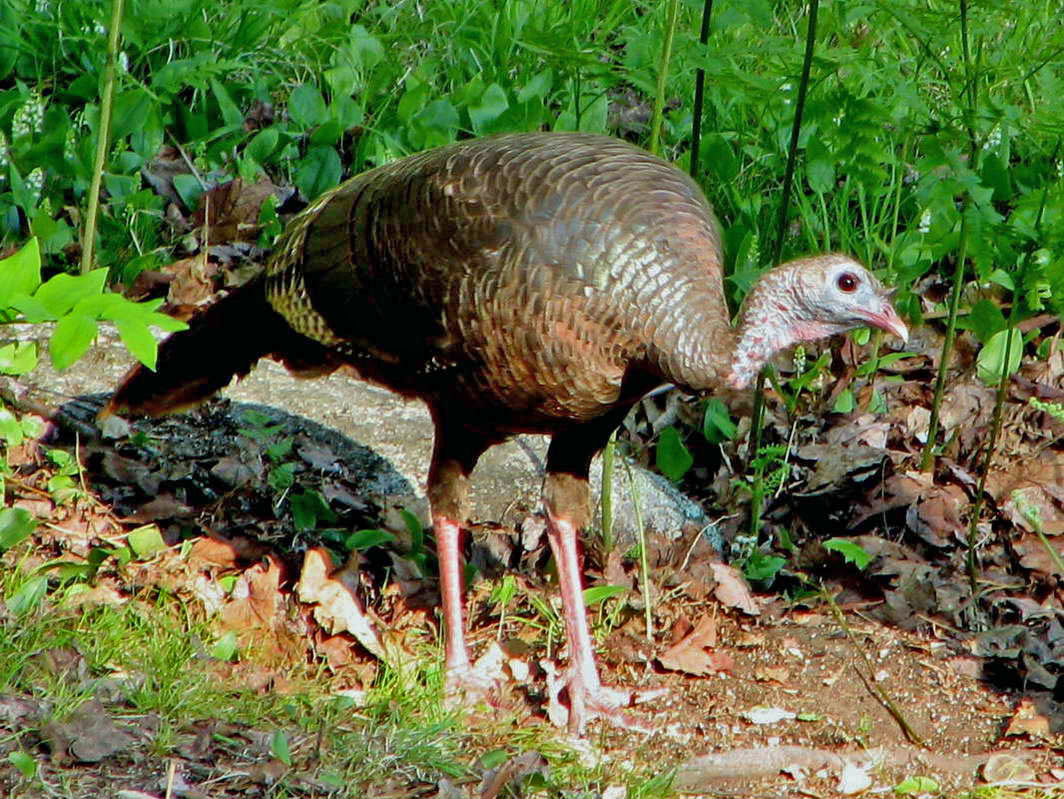
Adult wild turkey standing in open woodland, showing dark iridescent plumage and a bare red head
DickDaniels / Wikimedia Commons / CC BY-SA 3.0
๐ŸŒ Read in Language:

โšก At a Glance

Species profile
Also Known As
Turkey, wild turkey, gobbler, hen
Diet Category
Omnivore
Activity Rhythm
Diurnal; roosts in trees from dusk until dawn.
Wild Lifespan
Many die young; birds surviving early hazards can live several years
Typical Weight
about 2.5โ€“10.8 kg
Conservation Status
LC
๐Ÿ’ก Key Biological Insight: Wild turkeys spend most of the day on the ground yet can launch into strong flight and roost high in trees at night.

๐ŸŒณ Scientific Taxonomy Hierarchy

The wild turkey is one of two living turkey species and belongs to the pheasant family Phasianidae. This profile covers the wild species, not domestic breeds descended from it.

KingdomAnimalia
PhylumChordata
ClassAves
OrderGalliformes
FamilyPhasianidae
GenusMeleagris
SpeciesMeleagris gallopavo

Distinguishing Anatomical Features

  • โœ“A wild turkey is a very large, long-legged bird with a small bare head, long neck, broad rounded wings and a wide tail. Plumage looks dark from a distance but reflects bronze, green and copper. White barring crosses the wings, while tail-tip color varies among regional populations.
  • โœ“Strong feet scratch through leaf litter
  • โœ“Broad wings provide rapid escape flight
  • โœ“Tree roosting reduces nighttime risk
  • โœ“Iridescent plumage and bare skin support display
  • โœ“Excellent vision detects distant movement
  • โœ“Grit in the muscular gizzard helps process hard foods

๐Ÿ“ Physical Measurements

Total Lengthabout 43โ€“45 in
Body Weightabout 5.5โ€“23.8 lb
Tail LengthBroad fan-shaped tail; no separate standard length used here
Wingspanabout 49โ€“57 in
Top SpeedNo dependable universal maximumMovement changes with context and conditions.

๐ŸŽจ Appearance & Distinctive Markings

Dark brownBronzeCopperGreenBlackWhiteRedBlue

Skin / Covering: Feathers with bare skin on the head and neck

Sexual Dimorphism: Adult males are much larger and darker than females and usually carry a breast beard, leg spurs and more colorful bare head and neck skin. Females are browner and better camouflaged for ground nesting.

๐Ÿ—บ๏ธ Geographic Distribution & Habitat

Native across much of the United States, southern Canada and Mexico. Restoration greatly expanded occupied range after severe historical losses; introduced populations also occur outside North America.

Mature deciduous, mixed and open woodland interspersed with fields, clearings, pasture, shrub cover and dependable roost trees.

Country-level distribution map

Native rangeIntroduced range
FijiTanzaniaWestern SaharaCanada โ€” Native rangeUnited States โ€” Native rangeKazakhstanUzbekistanPapua New GuineaIndonesiaArgentinaChileCongo - KinshasaSomaliaKenyaSudanChadHaitiDominican RepublicRussiaBahamasFalkland IslandsNorwayGreenlandFrench Southern TerritoriesTimor-LesteSouth AfricaLesothoMexico โ€” Native rangeUruguayBrazilBoliviaPeruColombiaPanamaCosta RicaNicaraguaHondurasEl SalvadorGuatemalaBelizeVenezuelaGuyanaSurinameFranceEcuadorPuerto RicoJamaicaCubaZimbabweBotswanaNamibiaSenegalMaliMauritaniaBeninNigerNigeriaCameroonTogoGhanaCรดte dโ€™IvoireGuineaGuinea-BissauLiberiaSierra LeoneBurkina FasoCentral African RepublicCongo - BrazzavilleGabonEquatorial GuineaZambiaMalawiMozambiqueEswatiniAngolaBurundiIsraelLebanonMadagascarPalestinian TerritoriesGambiaTunisiaAlgeriaJordanUnited Arab EmiratesQatarKuwaitIraqOmanVanuatuCambodiaThailandLaosMyanmar (Burma)VietnamNorth KoreaSouth KoreaMongoliaIndiaBangladeshBhutanNepalPakistanAfghanistanTajikistanKyrgyzstanTurkmenistanIranSyriaArmeniaSwedenBelarusUkrainePolandAustriaHungaryMoldovaRomaniaLithuaniaLatviaEstoniaGermanyBulgariaGreeceTรผrkiyeAlbaniaCroatiaSwitzerlandLuxembourgBelgiumNetherlandsPortugalSpainIrelandNew CaledoniaSolomon IslandsNew Zealand โ€” Introduced rangeAustraliaSri LankaChinaTaiwanItalyDenmarkUnited KingdomIcelandAzerbaijanGeorgiaPhilippinesMalaysiaBruneiSloveniaFinlandSlovakiaCzechiaEritreaJapanParaguayYemenSaudi ArabiaCyprusMoroccoEgyptLibyaEthiopiaDjiboutiUgandaRwandaBosnia & HerzegovinaNorth MacedoniaSerbiaMontenegroKosovoTrinidad & TobagoSouth Sudan
Highlighted countries are recorded profile locations, not precise biological range boundaries.Map boundaries: Natural Earth

๐Ÿ’ก Did You Know?

  • ๐Ÿ’กStrong feet scratch through leaf litter
  • ๐Ÿ’กBroad wings provide rapid escape flight
  • ๐Ÿ’กTree roosting reduces nighttime risk
  • ๐Ÿ’กIridescent plumage and bare skin support display
  • ๐Ÿ’กExcellent vision detects distant movement
  • ๐Ÿ’กGrit in the muscular gizzard helps process hard foods

๐ŸŒฟ Conservation Status & Threats

IUCN: LC โ€” Least Concern

โ€œThe wild turkey is assessed as Least Concern and is widespread. Regional populations still depend on suitable habitat, responsible harvest, disease surveillance and successful nesting and brood rearing.โ€

Population TrendStable to increasing over the long term after major twentieth-century restoration, with regional fluctuations
Wild Population EstimatePartners in Flight has estimated several million breeding birds; exact abundance changes by region and year.

โš ๏ธ Major Threats to Wild Turkey

  • โ€ขHabitat fragmentation and loss of diverse forest openings
  • โ€ขPoor nesting or brood cover
  • โ€ขDisease and parasites
  • โ€ขVehicle collisions
  • โ€ขUnsustainable local harvest
  • โ€ขSevere weather during nesting

๐Ÿ”„ Life Cycle & Reproduction

Wild vs. Captivity Lifespan Comparison

๐ŸŒฟ In the WildMany die young; birds surviving early hazards can live several years
๐Ÿ  In Captivity (with veterinary care)Managed lifespan varies and is not directly comparable with wild survival.
Clutch / Litter SizeUsually about 10โ€“12 eggs; documented range roughly 4โ€“17
Incubation / GestationAbout 25โ€“31 days
Fledging / WeaningPrecocial poults walk soon after hatching and remain with the hen through their first season.
Sexual MaturityUsually capable of breeding in the following spring
Mating SystemPolygynous; displaying males may mate with multiple hens
Nesting / Den TypeShallow leaf-lined scrape on the ground under vegetation or woody cover

๐Ÿฆ… Behavior & Field Ecology

Omnivore

๐ŸŒ Ecological Food Web & Relationships: Wild turkeys disperse seeds, consume large quantities of mast and invertebrates, disturb leaf litter while foraging and transfer nutrients between forest and openings. Eggs, poults and adults feed a broad predator community.

Social Group SizeSex- and age-based flocks outside nesting, with hens leading broods
Activity RhythmDiurnal; roosts in trees from dusk until dawn.
Feeding StrategyOmnivore

๐Ÿฅฉ Primary Prey & Preferred Diet

โœ“ Acorns and other nutsโœ“ Seedsโœ“ Berries and fruitsโœ“ Leaves and budsโœ“ Grasses and sedgesโœ“ Insectsโœ“ Snailsโœ“ Occasional small vertebrates

๐Ÿ“ข Communication & Territorial Signals

  • Gobble
  • Cluck
  • Yelp
  • Purr
  • Alarm call
  • Visual strut

๐Ÿพ Wild Temperament & Traits

โ€ข Alertโ€ข Socialโ€ข Waryโ€ข Assertive during breeding

๐Ÿค Human Interaction & Pet Advisory

โš ๏ธ Strictly Wild Species
๐Ÿšซ

Can You Keep a Wild Turkey as a Pet?

Wild turkeys are regulated wildlife with strong social, ranging and habitat needs; they are unsuitable as pets.

Domestication StatusThe wild species is the ancestor of domestic turkey breeds, but wild birds remain free-living wildlife.
Danger to HumansUsually low, but habituated or breeding birds can peck, spur or charge
Economic & Ecotourism RoleGame management, cultural traditions, nature tourism, seed dispersal and a celebrated example of wildlife restoration.

โš ๏ธ Behavioral Risk Factors & Wildlife Safety

  • Sharp leg spurs on males
  • Powerful wings and beak
  • Traffic risk when flocks cross roads

๐ŸŒ Ecological Food Web & Relationships

๐Ÿฆ… Natural Predators (5)

CoyoteCanis latrans
BobcatLynx rufus
RaccoonProcyon lotor
Great Horned OwlBubo virginianus
HumansHomo sapiens

๐Ÿงฌ Related Species (3)

Ocellated TurkeyMeleagris ocellataThe only other living turkey species
Ring-necked PheasantPhasianus colchicusFellow member of Phasianidae
Ruffed GrouseBonasa umbellusRelated North American galliform

Wild Turkey (Meleagris gallopavo) is a large North American game bird adapted to walking, scratching, short explosive flight and life in forests broken by openings. This guide separates well-supported biology from common assumptions and covers identification, range, habitat, diet, behavior, reproduction and conservation.

Identification

A wild turkey is a very large, long-legged bird with a small bare head, long neck, broad rounded wings and a wide tail. Plumage looks dark from a distance but reflects bronze, green and copper. White barring crosses the wings, while tail-tip color varies among regional populations. Adult males are much larger and darker than females and usually carry a breast beard, leg spurs and more colorful bare head and neck skin. Females are browner and better camouflaged for ground nesting.

Identification should combine body shape, markings, size, voice or movement, and location. One feature by itself can overlap with a related animal, a juvenile, or an individual in unusual light.

Photographs are most useful when they preserve scale and show several diagnostic features. Handling or repositioning a wild wild turkey for identification can cause stress and is unnecessary.

Size and physical adaptations

Wild Turkey typically measures about 110โ€“115 cm and weighs about 2.5โ€“10.8 kg. Males occupy the upper end of the mass range; sex, subspecies, season and nutritional condition create substantial variation.

Its useful adaptations include strong feet scratch through leaf litter, broad wings provide rapid escape flight, tree roosting reduces nighttime risk, iridescent plumage and bare skin support display, excellent vision detects distant movement, grit in the muscular gizzard helps process hard foods. These traits work together in the animal’s normal setting rather than serving as isolated curiosities.

Published measurements may use different methods, life stages or sample locations. Comparing figures responsibly means checking what was measured rather than selecting the largest number available.

Range and distribution

Native across much of the United States, southern Canada and Mexico. Restoration greatly expanded occupied range after severe historical losses; introduced populations also occur outside North America. The native range includes United States, Canada, Mexico.

A country-level map indicates broad distribution, not continuous occupation. Climate, elevation, water, vegetation, prey, breeding sites, barriers and survey effort all affect where records occur.

Records near the edge of the range deserve careful documentation because they may reflect natural movement, improved survey coverage, accidental transport or a genuine distribution change.

Habitat

Mature deciduous, mixed and open woodland interspersed with fields, clearings, pasture, shrub cover and dependable roost trees.

Turkeys feed on the ground in woods and openings, shelter in dense cover, nest in shallow ground scrapes and fly into trees to roost. A productive landscape supplies mast, insects, nesting cover, brood habitat and connected escape cover. Protecting a population therefore requires the feeding, shelter and breeding features that make a site usable, along with connections that allow movement.

Microhabitat matters. Shade, soil, current, moisture, shelter or host plants can determine whether a small area is usable even when the surrounding landscape appears suitable.

Diet and feeding

Wild Turkey is a omnivore. Important foods include acorns and other nuts, seeds, berries and fruits, leaves and buds, grasses and sedges, insects, snails, occasional small vertebrates. Flocks walk slowly and rake leaves aside with powerful feet. Plant foods dominate much of the year, while growing poults depend heavily on protein-rich insects. Seasonal mast crops can strongly influence winter survival and movement.

Diet changes with age, season, location and food supply. A dramatic prey record does not establish what most individuals eat most of the time; repeated field observations provide a stronger picture.

Feeding opportunities also create risk. An animal focused on prey may be less alert to predators, traffic or people, while contaminated prey can transfer pollutants through the food web.

Behavior and communication

Diurnal; roosts in trees from dusk until dawn. Wild turkeys usually travel and feed in social groups whose composition changes with sex and season. They walk and run readily, fly strongly for short distances and may swim when forced. Males strut, fan the tail, lower the wings and gobble during courtship.

Gobbling advertises a male to females and rivals over long distances. Clucks, yelps, purrs, alarm calls, posture, feather position and changing head color carry information at closer range. Behavior should be interpreted in context: alarm, courtship, feeding and temperature regulation can produce very different actions from the same animal.

Daily schedules are flexible responses, not rigid rules. Weather, breeding condition, disturbance, tides or food can move activity into a different part of the day.

Reproduction and development

Males display to several females and provide no parental care. A hen selects a concealed ground site, lays one egg most days and begins continuous incubation after the clutch is complete. Usually about 10โ€“12 eggs; documented range roughly 4โ€“17 Down-covered poults leave the nest within about a day and follow the hen. They feed themselves while she guides, broods and defends them. Young gain flight ability early and family groups may merge later in summer.

Young animals face different risks and may use different microhabitats or food than adults. Breeding success depends on adult condition, suitable sites and the survival of offspring through vulnerable early stages.

Counts of eggs or young describe reproductive output, not the number expected to reach adulthood. Mortality is normally greatest during eggs, larval or juvenile stages.

Predators and ecological role

Wild turkeys disperse seeds, consume large quantities of mast and invertebrates, disturb leaf litter while foraging and transfer nutrients between forest and openings. Eggs, poults and adults feed a broad predator community. Documented or likely predators include Coyote, Bobcat, Raccoon, Great Horned Owl, Humans.

This animal is both a consumer and a food source. Its influence comes through many repeated interactions, so ecological claims should be based on measured populations rather than assumptions drawn from appearance.

Predator and prey relationships differ among places. A species can be ecologically influential without being abundant everywhere, and its role can change across its range.

Relationship with people

Indigenous peoples domesticated turkeys in the Americas long before European contact. Unregulated hunting and forest clearing drove dramatic declines, but habitat management, hunting regulation and translocation of wild-caught birds restored the species across much of its former range. It remains culturally and economically important.

Observe from a distance, never feed flocks and do not corner or chase them. Secure attractants around homes. During breeding season, avoid approaching a strutting male; local wildlife agencies can advise on persistent conflict. Responsible observation means keeping an appropriate distance, avoiding capture or feeding, protecting habitat and following local wildlife or invasive-species guidance.

Wildlife guidance should come from the responsible local agency because collection rules, reporting requests and appropriate responses differ between native and introduced ranges.

Conservation

The wild turkey is assessed as Least Concern and is widespread. Regional populations still depend on suitable habitat, responsible harvest, disease surveillance and successful nesting and brood rearing. The reported global trend is Stable to increasing over the long term after major twentieth-century restoration, with regional fluctuations.

Important pressures include habitat fragmentation and loss of diverse forest openings, poor nesting or brood cover, disease and parasites, vehicle collisions, unsustainable local harvest, severe weather during nesting. Global status can hide local decline or recovery, so current regional monitoring and habitat management remain necessary.

The most useful conservation action follows the documented pressure. Protecting breeding sites, reducing road deaths or limiting pollutants can require different tools in different populations.

Sources and further reading

โ“ Frequently Asked Questions

Answers to frequently asked questions verified against peer-reviewed zoological research.

Yes. They spend much of the day walking and running but can launch into strong short-distance flight and routinely fly into trees to roost.