
Animal group

Turtle

Testudines

An ancient reptile order whose ribs, vertebrae and dermal bones form an integrated shell.

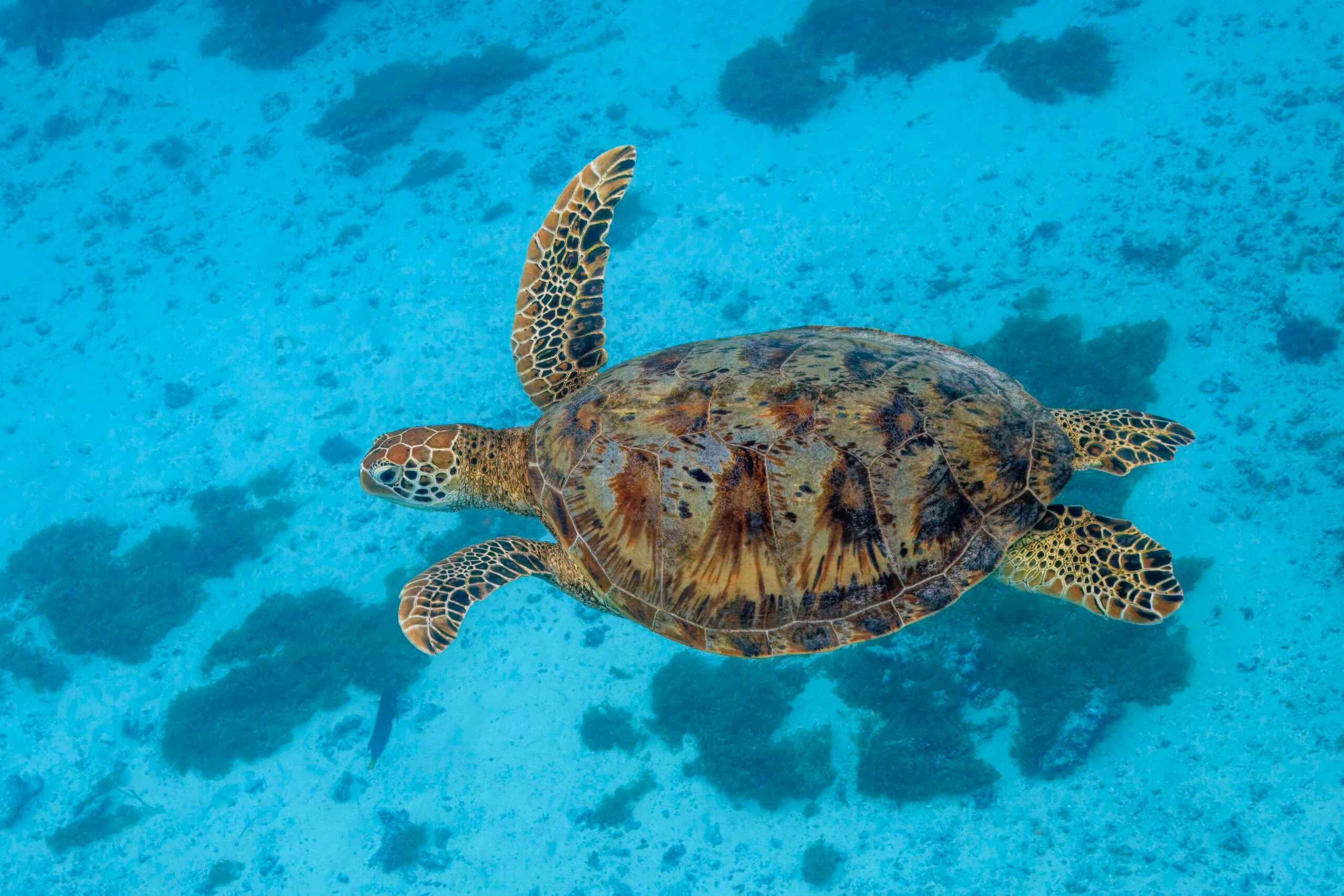
Green sea turtle swimming above a tropical reef at Moorea
Charles J. Sharp, CC BY-SA 4.0; representative green sea turtle. Display resized and cropped.
๐ŸŒ Read in Language:

โšก At a Glance

Animal group
Also Known As
Chelonians; tortoises; terrapins
Diet Category
Herbivore, omnivore or carnivore depending on species
Activity Rhythm
Mostly diurnal or crepuscular, with timing shaped by temperature, rainfall, tides and nesting season.
Wild Lifespan
Commonly decades; some large tortoises can exceed 100 years
Typical Weight
under 150 g in the smallest species to more than 500 kg in the largest leatherbacks
Conservation Status
Varies by species
๐Ÿ’ก Key Biological Insight: A turtle cannot leave its shell because the ribs and backbone are structurally incorporated into it.

๐ŸŒณ Scientific Taxonomy Hierarchy

Living turtles form the order Testudines and two major lineages: Cryptodira, whose necks retract mainly backward, and Pleurodira, whose necks bend sideways beneath the shell margin. The order includes sea turtles, tortoises, softshells, snapping turtles, pond turtles and many other families. Group-level facts must preserve the enormous biological differences among its 364 recognized modern species.

KingdomAnimalia
PhylumChordata
ClassReptilia
OrderTestudines
FamilyMultiple living families
GenusMany genera
Species364 modern species recognized in the 2025 Turtle Taxonomy Working Group checklist

Distinguishing Anatomical Features

  • โœ“Every turtle has a shell integrated with the skeleton. The upper carapace connects to the lower plastron along the sides, and the ribs and vertebrae contribute to this structure. Species differ in shell height, scutes or leathery covering, neck retraction, feet, flippers, head pattern and habitat. A shell is living tissue with bone, nerves and blood supply, not a detachable house.
  • โœ“A shell formed from fused skeletal and dermal elements
  • โœ“A keratin beak instead of teeth
  • โœ“Ectothermic physiology that lowers energy requirements
  • โœ“Strong limbs modified for walking, digging or swimming
  • โœ“Long breath-holding ability in aquatic species
  • โœ“Magnetic, visual and chemical orientation in migratory species

๐Ÿ“ Physical Measurements

Total Lengthabout 3 in shell length to more than 6.5 ft total length
Body Weightunder 5 oz to more than 1,100 lb
Tail LengthShort to moderately long depending on lineage and sex
WingspanNot applicable
Top SpeedNo dependable universal maximumMovement changes with context and conditions.

๐ŸŽจ Appearance & Distinctive Markings

BrownBlackOliveGrayGreenYellowOrangeRedCream

Skin / Covering: Dry scales on exposed skin; bony shell covered by scutes or leathery skin

Sexual Dimorphism: Sex differences depend on species. Males may have longer tails, concave plastra, different eye color or smaller adult bodies, while females are larger in many egg-laying species. No single feature sexes every turtle reliably.

๐Ÿ—บ๏ธ Geographic Distribution & Habitat

Turtles occur naturally on every continent except Antarctica and in tropical, subtropical and temperate oceans. Species richness is greatest in warm freshwater regions, while marine turtles cross entire ocean basins and tortoises occupy selected continental and island habitats. No individual species approaches the combined range shown.

Oceans, rivers, lakes, marshes, forests, grasslands, deserts, scrublands and islands, depending on species.

Country-level distribution map

Native range
FijiTanzania โ€” Native rangeWestern SaharaCanada โ€” Native rangeUnited States โ€” Native rangeKazakhstanUzbekistanPapua New Guinea โ€” Native rangeIndonesia โ€” Native rangeArgentina โ€” Native rangeChile โ€” Native rangeCongo - Kinshasa โ€” Native rangeSomaliaKenya โ€” Native rangeSudanChadHaitiDominican RepublicRussiaBahamasFalkland IslandsNorwayGreenlandFrench Southern TerritoriesTimor-LesteSouth Africa โ€” Native rangeLesothoMexico โ€” Native rangeUruguay โ€” Native rangeBrazil โ€” Native rangeBolivia โ€” Native rangePeru โ€” Native rangeColombia โ€” Native rangePanama โ€” Native rangeCosta Rica โ€” Native rangeNicaragua โ€” Native rangeHonduras โ€” Native rangeEl Salvador โ€” Native rangeGuatemala โ€” Native rangeBelize โ€” Native rangeVenezuela โ€” Native rangeGuyana โ€” Native rangeSuriname โ€” Native rangeFrance โ€” Native rangeEcuador โ€” Native rangePuerto RicoJamaicaCubaZimbabwe โ€” Native rangeBotswana โ€” Native rangeNamibia โ€” Native rangeSenegal โ€” Native rangeMaliMauritaniaBenin โ€” Native rangeNigerNigeria โ€” Native rangeCameroon โ€” Native rangeTogo โ€” Native rangeGhana โ€” Native rangeCรดte dโ€™Ivoire โ€” Native rangeGuinea โ€” Native rangeGuinea-BissauLiberia โ€” Native rangeSierra Leone โ€” Native rangeBurkina FasoCentral African RepublicCongo - Brazzaville โ€” Native rangeGabon โ€” Native rangeEquatorial GuineaZambiaMalawiMozambique โ€” Native rangeEswatiniAngolaBurundiIsraelLebanonMadagascar โ€” Native rangePalestinian TerritoriesGambia โ€” Native rangeTunisia โ€” Native rangeAlgeria โ€” Native rangeJordanUnited Arab EmiratesQatarKuwaitIraqOmanVanuatuCambodia โ€” Native rangeThailand โ€” Native rangeLaos โ€” Native rangeMyanmar (Burma) โ€” Native rangeVietnam โ€” Native rangeNorth KoreaSouth Korea โ€” Native rangeMongoliaIndia โ€” Native rangeBangladesh โ€” Native rangeBhutanNepal โ€” Native rangePakistan โ€” Native rangeAfghanistanTajikistanKyrgyzstanTurkmenistanIranSyriaArmeniaSwedenBelarusUkrainePolandAustriaHungaryMoldovaRomania โ€” Native rangeLithuaniaLatviaEstoniaGermanyBulgaria โ€” Native rangeGreece โ€” Native rangeTรผrkiye โ€” Native rangeAlbania โ€” Native rangeCroatia โ€” Native rangeSwitzerlandLuxembourgBelgiumNetherlandsPortugal โ€” Native rangeSpain โ€” Native rangeIrelandNew CaledoniaSolomon IslandsNew Zealand โ€” Native rangeAustralia โ€” Native rangeSri Lanka โ€” Native rangeChina โ€” Native rangeTaiwan โ€” Native rangeItaly โ€” Native rangeDenmarkUnited Kingdom โ€” Native rangeIcelandAzerbaijanGeorgiaPhilippines โ€” Native rangeMalaysia โ€” Native rangeBrunei โ€” Native rangeSlovenia โ€” Native rangeFinlandSlovakiaCzechiaEritreaJapan โ€” Native rangeParaguay โ€” Native rangeYemenSaudi ArabiaCyprusMorocco โ€” Native rangeEgypt โ€” Native rangeLibya โ€” Native rangeEthiopiaDjiboutiUganda โ€” Native rangeRwandaBosnia & HerzegovinaNorth Macedonia โ€” Native rangeSerbiaMontenegro โ€” Native rangeKosovoTrinidad & TobagoSouth Sudan
Highlighted countries are recorded profile locations, not precise biological range boundaries.Map boundaries: Natural Earth

๐Ÿ’ก Did You Know?

  • ๐Ÿ’กA shell formed from fused skeletal and dermal elements
  • ๐Ÿ’กA keratin beak instead of teeth
  • ๐Ÿ’กEctothermic physiology that lowers energy requirements
  • ๐Ÿ’กStrong limbs modified for walking, digging or swimming
  • ๐Ÿ’กLong breath-holding ability in aquatic species
  • ๐Ÿ’กMagnetic, visual and chemical orientation in migratory species

๐ŸŒฟ Conservation Status & Threats

No single assessment recorded

โ€œThe order Testudines has no single IUCN category. Each species requires its own assessment, and the IUCN specialist group documents severe risk in many freshwater turtles, tortoises and sea turtles. A group profile must not label all turtles Least Concern.โ€

CITESMany species are listed in CITES Appendices I, II or III; listings must be checked by species

โš ๏ธ Major Threats to Turtle

  • โ€ขHabitat loss and wetland drainage
  • โ€ขIllegal pet and food trade
  • โ€ขFishing bycatch and ghost gear
  • โ€ขRoad mortality
  • โ€ขNest predation amplified by human land use
  • โ€ขPollution and plastic ingestion
  • โ€ขClimate change and altered nesting temperatures

๐Ÿ”„ Life Cycle & Reproduction

Wild vs. Captivity Lifespan Comparison

๐ŸŒฟ In the WildCommonly decades; some large tortoises can exceed 100 years
๐Ÿ  In Captivity (with veterinary care)Longevity and welfare depend on correct heat, ultraviolet light, diet, space, water quality and veterinary care.
Clutch / Litter SizeFrom one or two eggs to more than 100 depending on species and female size
Incubation / GestationSeveral weeks to many months depending on species, nest temperature and moisture
Fledging / WeaningIndependent hatchlings with small but fully formed shells
Sexual MaturityA few years in small species to several decades in large tortoises and sea turtles
Mating SystemInternal fertilization; females of many species can store viable sperm
Nesting / Den TypeA chamber excavated in soil, sand or decaying vegetation on land

๐Ÿฆ… Behavior & Field Ecology

Herbivore, omnivore or carnivore depending on species

๐ŸŒ Ecological Food Web & Relationships: Turtles move seeds, graze vegetation, consume carrion and invertebrates, create burrows and transfer nutrients between aquatic and terrestrial habitats. Eggs and hatchlings feed many predators, while large adults can shape plant communities or benthic feeding grounds.

Social Group SizeOften solitary, with seasonal gatherings at basking, feeding, mating or nesting sites
Activity RhythmMostly diurnal or crepuscular, with timing shaped by temperature, rainfall, tides and nesting season.
Feeding StrategyHerbivore, omnivore or carnivore depending on species

๐Ÿฅฉ Primary Prey & Preferred Diet

โœ“ Aquatic plants and algaeโœ“ Leaves, grasses, fruits and fungiโœ“ Insects, mollusks and crustaceansโœ“ Fish and carrionโœ“ Jellyfish and sponges in specialist sea turtles

๐Ÿ“ข Communication & Territorial Signals

  • Visual displays
  • Chemical cues
  • Touch and vibration
  • Low-frequency sounds

๐Ÿพ Wild Temperament & Traits

โ€ข Usually waryโ€ข Often solitaryโ€ข Defensive when restrainedโ€ข Social at shared resources in some species

๐Ÿค Human Interaction & Pet Advisory

โš ๏ธ Strictly Wild Species
๐Ÿšซ

Can You Keep a Turtle as a Pet?

Only captive-bred, legally obtained species with appropriate long-term care are suitable. Many turtles live for decades, outgrow small tanks and require costly lighting, filtration, diet and veterinary care.

Domestication StatusWild animals; captive breeding has not produced true domestication
Danger to HumansUsually low, with meaningful bite and infection risk when handled
Economic & Ecotourism RoleSeed dispersal, grazing, carrion removal, nutrient transfer, tourism, cultural meaning and scientific research.

โš ๏ธ Behavioral Risk Factors & Wildlife Safety

  • Powerful jaws in snapping turtles and large softshells
  • Wild reptiles may carry Salmonella
  • Roadside rescue can expose people to traffic
  • Handling and relocation can injure or disorient the turtle

๐ŸŒ Ecological Food Web & Relationships

Species in this group

  • โ€”
  • โ€”
  • โ€”
  • โ€”
  • โ€”
  • โ€”
  • โ€”
  • โ€”
  • โ€”

๐Ÿฆ… Natural Predators (5)

RaccoonsProcyon lotor
JaguarsPanthera onca
SharksSelachimorpha
Monitor lizardsVaranus
HumansHomo sapiens

๐Ÿงฌ Related Species (4)

CrocodiliansCrocodyliaLiving archosaurs that share distant reptile ancestry
Lizards and snakesSquamataThe most species-rich living reptile order
TuataraSphenodon punctatusOnly living rhynchocephalian
BirdsAvesLiving dinosaurs within the reptile evolutionary tree

Turtle (Testudines) is any living member of the reptile order Testudines. The Turtle Taxonomy Working Groupโ€™s 2025 checklist recognizes 364 modern species, including living and recently extinct forms since 1500. โ€œTortoiseโ€ usually refers to terrestrial turtles and โ€œterrapinโ€ to certain freshwater or brackish species, but all belong to the same order. This guide separates well-supported biology from common assumptions and covers identification, range, habitat, diet, behavior, reproduction and conservation.

Identification

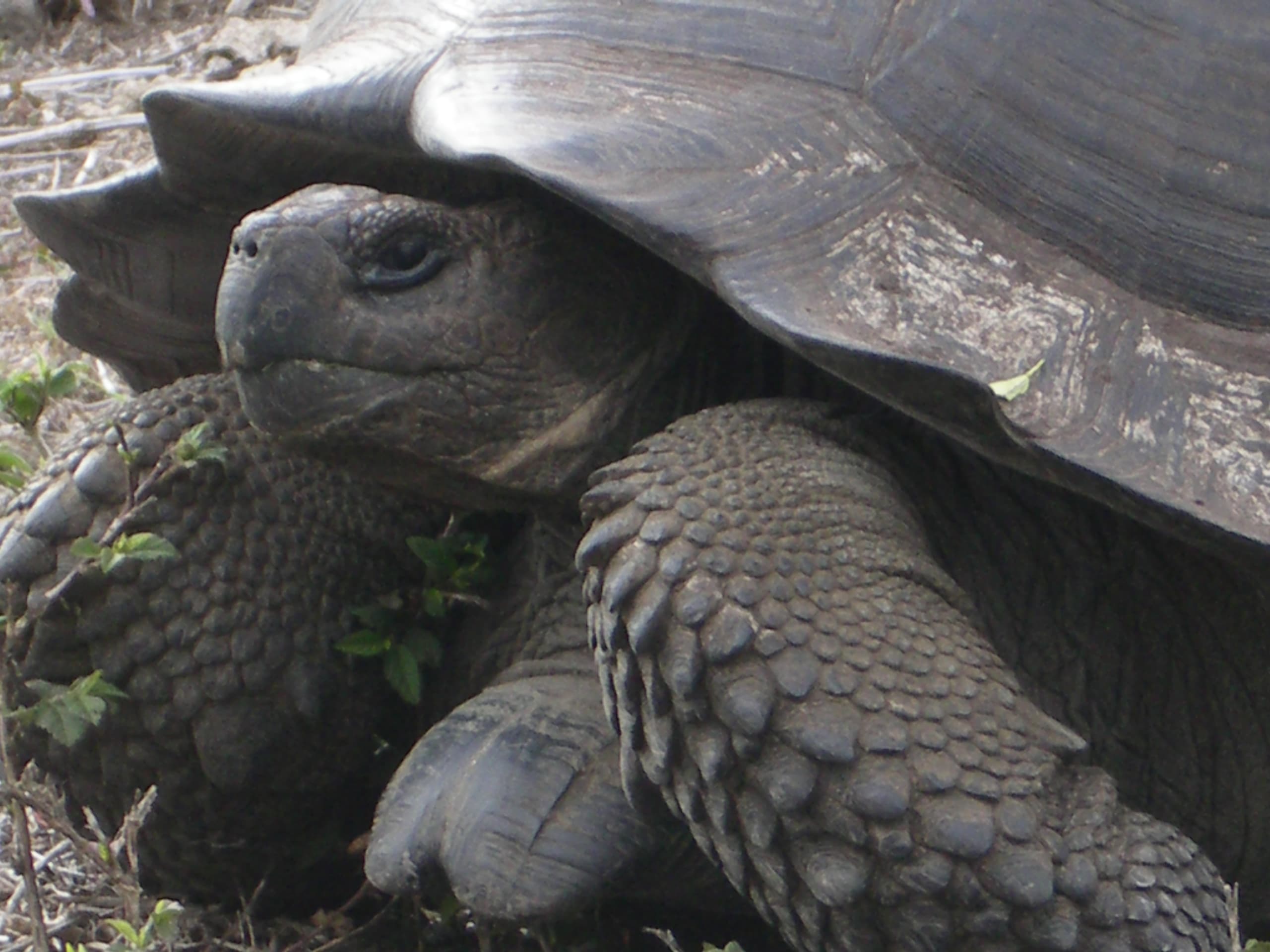
Every turtle has a shell integrated with the skeleton. The upper carapace connects to the lower plastron along the sides, and the ribs and vertebrae contribute to this structure. Species differ in shell height, scutes or leathery covering, neck retraction, feet, flippers, head pattern and habitat. A shell is living tissue with bone, nerves and blood supply, not a detachable house. Sex differences depend on species. Males may have longer tails, concave plastra, different eye color or smaller adult bodies, while females are larger in many egg-laying species. No single feature sexes every turtle reliably.

Identification should combine body shape, markings, size, voice or movement, and location. One feature by itself can overlap with a related animal, a juvenile, or an individual in unusual light.

Photographs are most useful when they preserve scale and show several diagnostic features. Handling or repositioning a wild turtle for identification can cause stress and is unnecessary.

Size and physical adaptations

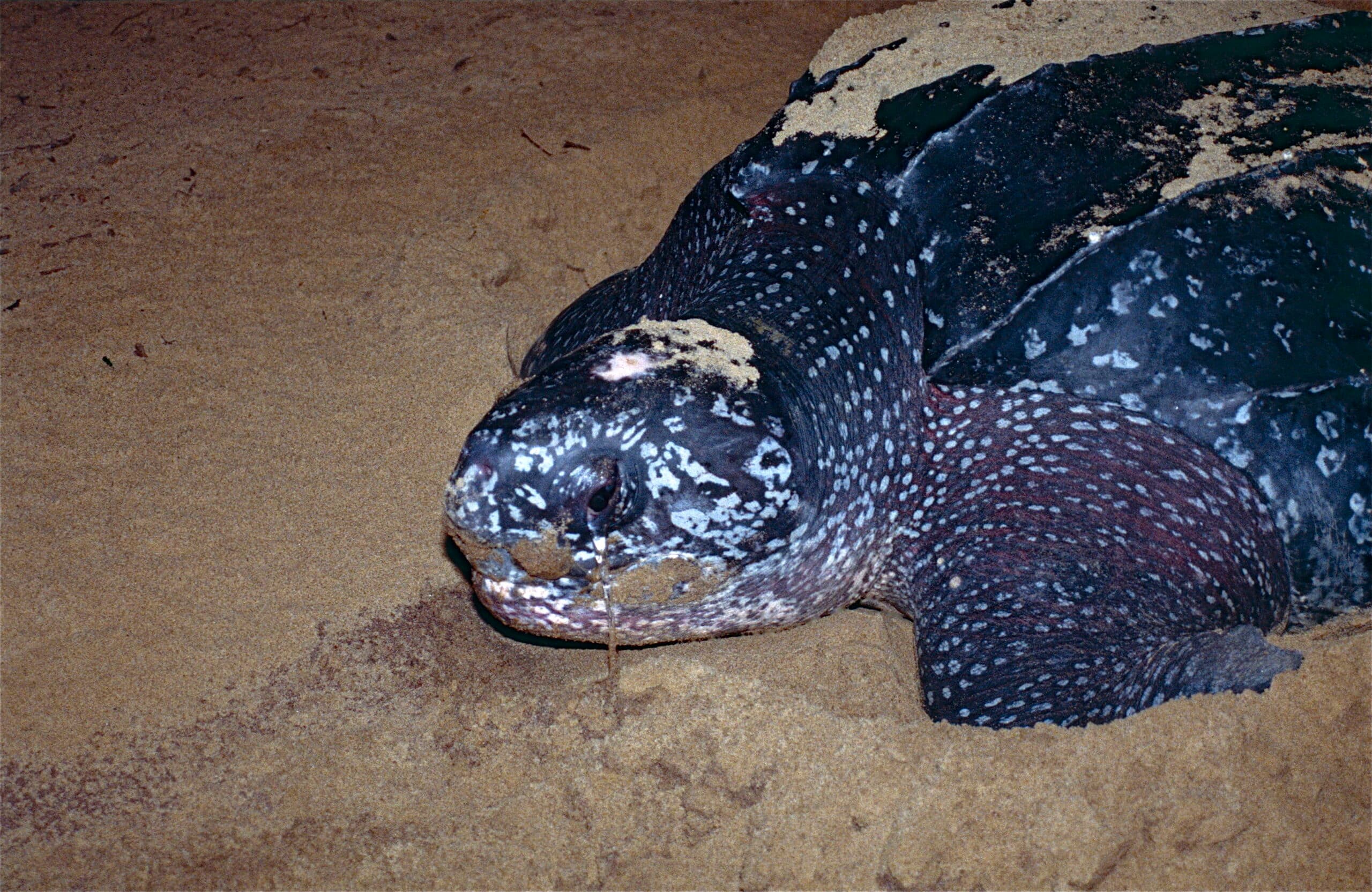
Turtle typically measures about 8 cm shell length in the smallest living species to more than 2 m total length in a leatherback and weighs under 150 g in the smallest species to more than 500 kg in the largest leatherbacks. These order-level endpoints combine tiny terrestrial tortoises, freshwater turtles and giant oceanic leatherbacks; each species has a much narrower range.

Its useful adaptations include a shell formed from fused skeletal and dermal elements, a keratin beak instead of teeth, ectothermic physiology that lowers energy requirements, strong limbs modified for walking, digging or swimming, long breath-holding ability in aquatic species, magnetic, visual and chemical orientation in migratory species. These traits work together in the animal’s normal setting rather than serving as isolated curiosities.

Published measurements may use different methods, life stages or sample locations. Comparing figures responsibly means checking what was measured rather than selecting the largest number available.

Range and distribution

Turtles occur naturally on every continent except Antarctica and in tropical, subtropical and temperate oceans. Species richness is greatest in warm freshwater regions, while marine turtles cross entire ocean basins and tortoises occupy selected continental and island habitats. No individual species approaches the combined range shown. The native range includes Every continent except Antarctica, Fresh waters across tropical and temperate regions, Tropical and subtropical oceans, Oceanic and continental islands.

A country-level map indicates broad distribution, not continuous occupation. Climate, elevation, water, vegetation, prey, breeding sites, barriers and survey effort all affect where records occur.

Records near the edge of the range deserve careful documentation because they may reflect natural movement, improved survey coverage, accidental transport or a genuine distribution change.

Habitat

Oceans, rivers, lakes, marshes, forests, grasslands, deserts, scrublands and islands, depending on species.

Aquatic species need feeding areas, basking or breathing access and secure nesting ground. Terrestrial species depend on shelter, seasonal foods, thermal refuges and soils suitable for nesting. Roads, dams, seawalls and urban development can break the connections among these essential places. Protecting a population therefore requires the feeding, shelter and breeding features that make a site usable, along with connections that allow movement.

Microhabitat matters. Shade, soil, current, moisture, shelter or host plants can determine whether a small area is usable even when the surrounding landscape appears suitable.

Diet and feeding

Turtle is a herbivore, omnivore or carnivore depending on species. Important foods include aquatic plants and algae, leaves, grasses, fruits and fungi, insects, mollusks and crustaceans, fish and carrion, jellyfish and sponges in specialist sea turtles. Turtles use a sharp keratin beak to crop, crush or tear food. Diet can change with age: some juveniles need more animal protein while adults become more herbivorous. Sea turtles include highly specialized feeders, whereas many freshwater turtles take whatever seasonal plant and animal foods are available.

Diet changes with age, season, location and food supply. A dramatic prey record does not establish what most individuals eat most of the time; repeated field observations provide a stronger picture.

Feeding opportunities also create risk. An animal focused on prey may be less alert to predators, traffic or people, while contaminated prey can transfer pollutants through the food web.

Behavior and communication

Mostly diurnal or crepuscular, with timing shaped by temperature, rainfall, tides and nesting season. Turtles regulate body temperature by basking, seeking shade, changing water depth or entering burrows. Many freshwater turtles return to favored basking sites, tortoises remember food and shelter routes, and sea turtles conduct long migrations between feeding areas and nesting beaches.

Turtles use visual posture, touch, vibration and chemical signals. They are not universally silent: adults and hatchlings of several species produce low-frequency sounds. Courtship signals range from head movements and foreclaw vibration to following, biting or shell contact. Behavior should be interpreted in context: alarm, courtship, feeding and temperature regulation can produce very different actions from the same animal.

Daily schedules are flexible responses, not rigid rules. Weather, breeding condition, disturbance, tides or food can move activity into a different part of the day.

Reproduction and development

All living turtles lay eggs on land, including fully marine species. A female digs a nest, deposits eggs and covers them. Parental attendance after laying is uncommon, although nest-site choice strongly affects temperature, moisture and survival. In many turtles, incubation temperature influences hatchling sex. From one or two eggs to more than 100 depending on species and female size Hatchlings use a temporary egg tooth to open the shell and usually dig out without adult help. Growth continues through life but slows after maturity. Survival is often lowest in eggs and young, so long-lived adults are especially important to population stability.

Young animals face different risks and may use different microhabitats or food than adults. Breeding success depends on adult condition, suitable sites and the survival of offspring through vulnerable early stages.

Counts of eggs or young describe reproductive output, not the number expected to reach adulthood. Mortality is normally greatest during eggs, larval or juvenile stages.

Predators and ecological role

Turtles move seeds, graze vegetation, consume carrion and invertebrates, create burrows and transfer nutrients between aquatic and terrestrial habitats. Eggs and hatchlings feed many predators, while large adults can shape plant communities or benthic feeding grounds. Documented or likely predators include Raccoons, Jaguars, Sharks, Monitor lizards, Humans.

This animal is both a consumer and a food source. Its influence comes through many repeated interactions, so ecological claims should be based on measured populations rather than assumptions drawn from appearance.

Predator and prey relationships differ among places. A species can be ecologically influential without being abundant everywhere, and its role can change across its range.

Relationship with people

People keep, harvest, revere and trade turtles, and human activity now shapes their survival. Wild turtles should not be removed for pets or released outside their native range. Roadside animals may need help only when it is safe and lawful; move a non-dangerous turtle in the direction it was already traveling, without relocating it far away.

Most turtles avoid people, but snapping turtles and large softshells can bite hard when threatened. Sea turtles, nesting females and wild tortoises should be watched from a respectful distance. Wash hands after contact because reptiles can carry Salmonella even when healthy. Responsible observation means keeping an appropriate distance, avoiding capture or feeding, protecting habitat and following local wildlife or invasive-species guidance.

Wildlife guidance should come from the responsible local agency because collection rules, reporting requests and appropriate responses differ between native and introduced ranges.

Conservation

The order Testudines has no single IUCN category. Each species requires its own assessment, and the IUCN specialist group documents severe risk in many freshwater turtles, tortoises and sea turtles. A group profile must not label all turtles Least Concern. The reported global trend is No single order-wide trend; many assessed species are declining while some protected populations are recovering.

Important pressures include habitat loss and wetland drainage, illegal pet and food trade, fishing bycatch and ghost gear, road mortality, nest predation amplified by human land use, pollution and plastic ingestion, climate change and altered nesting temperatures. Global status can hide local decline or recovery, so current regional monitoring and habitat management remain necessary.

The most useful conservation action follows the documented pressure. Protecting breeding sites, reducing road deaths or limiting pollutants can require different tools in different populations.

Sources and further reading

โ“ Frequently Asked Questions

Answers to frequently asked questions verified against peer-reviewed zoological research.

The 2025 Turtle Taxonomy Working Group checklist recognizes 364 modern species, including living and recently extinct species recorded since 1500.