
Home/Animals/Aves/Ural Owl
Species profileIUCN: LC

Ural Owl

Strix uralensis

A long-tailed forest owl whose breeding success rises and falls with the abundance of voles.

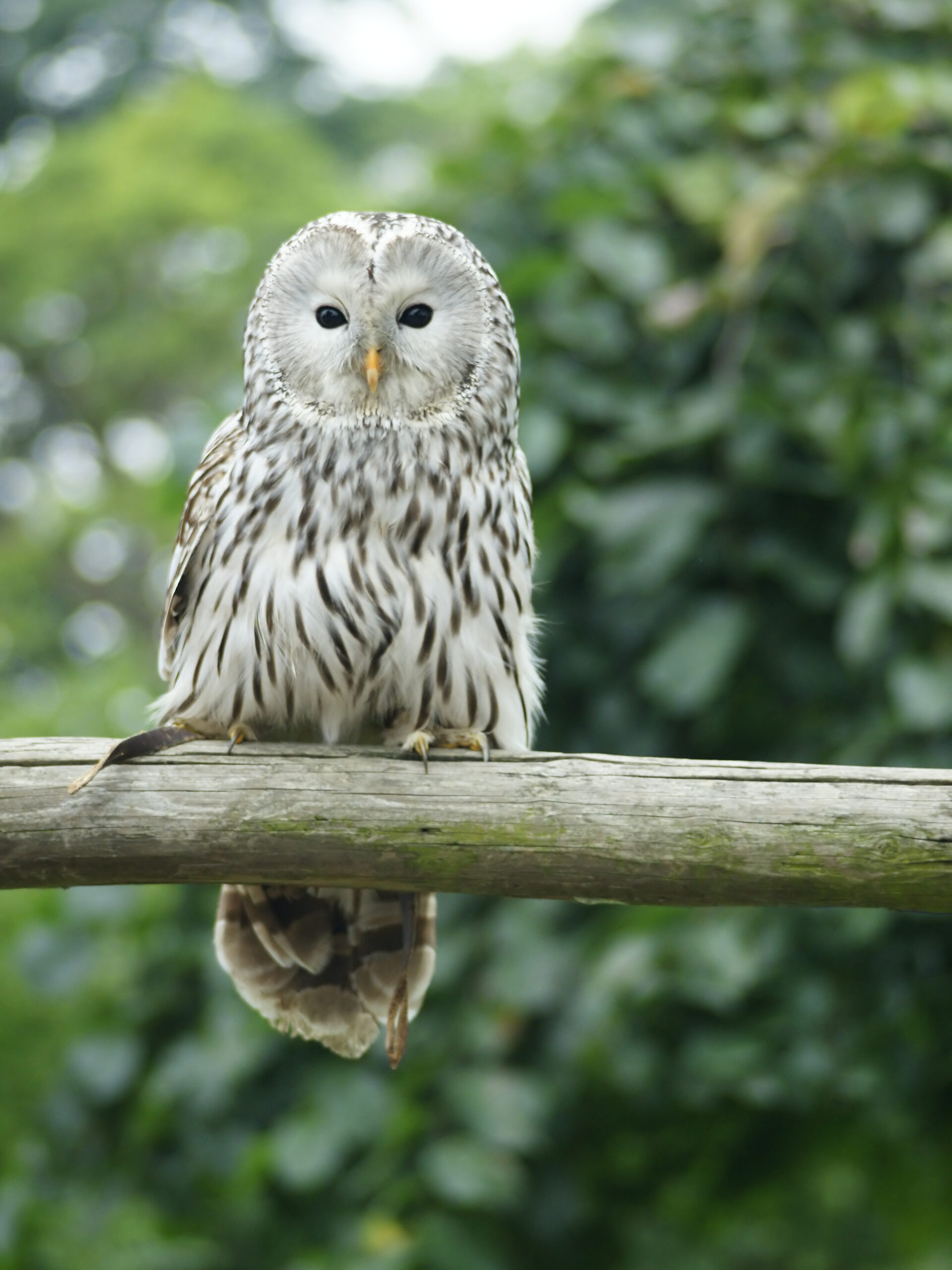
Ural owl perched upright, showing pale streaked plumage, round facial disc and dark eyes
Hans Hillewaert / Wikimedia Commons / CC BY-SA 3.0
๐ŸŒ Read in Language:

โšก At a Glance

Species profile
Also Known As
Long-tailed wood owl
Diet Category
Carnivore
Activity Rhythm
Mainly nocturnal and crepuscular, sometimes active by day.
Wild Lifespan
Wild birds may survive around a decade or longer, but annual survival varies with prey and hazards
Typical Weight
males about 400โ€“800 g; females about 600โ€“1,200 g in Japanese reference populations
Conservation Status
LC
๐Ÿ’ก Key Biological Insight: A female defending a nest can strike a human-sized intruder with her talons, so researchers use helmets and keep careful distance.

๐ŸŒณ Scientific Taxonomy Hierarchy

The Ural owl belongs to the typical owl family Strigidae and the woodland-owl genus Strix. Geographic forms vary in shade and size across its extensive Palearctic range.

KingdomAnimalia
PhylumChordata
ClassAves
OrderStrigiformes
FamilyStrigidae
GenusStrix
SpeciesStrix uralensis

Distinguishing Anatomical Features

  • โœ“The facial disc is pale gray or buff with a darker rim, the eyes are small and black, and the yellow bill projects from a pale face. Long brown streaks run down the whitish underparts. Broad rounded wings and a long barred tail create a distinctive flight silhouette.
  • โœ“Soft fringed flight feathers reduce sound
  • โœ“Asymmetrical ear openings help locate prey
  • โœ“Large forward-facing eyes gather dim light
  • โœ“Long tail improves maneuvering among trees
  • โœ“Strong talons seize mammals beneath vegetation
  • โœ“Broad facial disc channels sound toward the ears

๐Ÿ“ Physical Measurements

Total Lengthroughly 20โ€“24 in
Body Weightmales about 14โ€“28 oz; females about 21โ€“42 oz
Tail LengthLong and wedge-shaped with dark crossbars
Wingspanabout 43โ€“53 in
Top SpeedNo dependable universal maximumMovement changes with context and conditions.

๐ŸŽจ Appearance & Distinctive Markings

Pale grayWhiteBrownBlackBuff

Skin / Covering: Soft insulating feathers

Sexual Dimorphism: Females average larger and heavier than males, but plumage is similar. Northern populations are often paler than southern and Japanese populations.

๐Ÿ—บ๏ธ Geographic Distribution & Habitat

Resident in a broad but uneven belt from Scandinavia and central-eastern Europe across Russia and northern Asia to Korea and Japan. Reintroductions and nest-box programs have restored or supported some central European populations.

Mature boreal, mixed and temperate forest with openings for hunting, abundant small mammals and large cavities, broken trunks or old raptor nests for breeding.

Country-level distribution map

Native range
FijiTanzaniaWestern SaharaCanadaUnited StatesKazakhstan โ€” Native rangeUzbekistanPapua New GuineaIndonesiaArgentinaChileCongo - KinshasaSomaliaKenyaSudanChadHaitiDominican RepublicRussia โ€” Native rangeBahamasFalkland IslandsNorway โ€” Native rangeGreenlandFrench Southern TerritoriesTimor-LesteSouth AfricaLesothoMexicoUruguayBrazilBoliviaPeruColombiaPanamaCosta RicaNicaraguaHondurasEl SalvadorGuatemalaBelizeVenezuelaGuyanaSurinameFranceEcuadorPuerto RicoJamaicaCubaZimbabweBotswanaNamibiaSenegalMaliMauritaniaBeninNigerNigeriaCameroonTogoGhanaCรดte dโ€™IvoireGuineaGuinea-BissauLiberiaSierra LeoneBurkina FasoCentral African RepublicCongo - BrazzavilleGabonEquatorial GuineaZambiaMalawiMozambiqueEswatiniAngolaBurundiIsraelLebanonMadagascarPalestinian TerritoriesGambiaTunisiaAlgeriaJordanUnited Arab EmiratesQatarKuwaitIraqOmanVanuatuCambodiaThailandLaosMyanmar (Burma)VietnamNorth Korea โ€” Native rangeSouth Korea โ€” Native rangeMongolia โ€” Native rangeIndiaBangladeshBhutanNepalPakistanAfghanistanTajikistanKyrgyzstanTurkmenistanIranSyriaArmeniaSweden โ€” Native rangeBelarus โ€” Native rangeUkraine โ€” Native rangePoland โ€” Native rangeAustriaHungaryMoldovaRomania โ€” Native rangeLithuania โ€” Native rangeLatvia โ€” Native rangeEstonia โ€” Native rangeGermanyBulgaria โ€” Native rangeGreeceTรผrkiyeAlbaniaCroatia โ€” Native rangeSwitzerlandLuxembourgBelgiumNetherlandsPortugalSpainIrelandNew CaledoniaSolomon IslandsNew ZealandAustraliaSri LankaChina โ€” Native rangeTaiwanItalyDenmarkUnited KingdomIcelandAzerbaijanGeorgiaPhilippinesMalaysiaBruneiSlovenia โ€” Native rangeFinland โ€” Native rangeSlovakia โ€” Native rangeCzechiaEritreaJapan โ€” Native rangeParaguayYemenSaudi ArabiaCyprusMoroccoEgyptLibyaEthiopiaDjiboutiUgandaRwandaBosnia & Herzegovina โ€” Native rangeNorth MacedoniaSerbia โ€” Native rangeMontenegroKosovoTrinidad & TobagoSouth Sudan
Highlighted countries are recorded profile locations, not precise biological range boundaries.Map boundaries: Natural Earth

๐Ÿ’ก Did You Know?

  • ๐Ÿ’กSoft fringed flight feathers reduce sound
  • ๐Ÿ’กAsymmetrical ear openings help locate prey
  • ๐Ÿ’กLarge forward-facing eyes gather dim light
  • ๐Ÿ’กLong tail improves maneuvering among trees
  • ๐Ÿ’กStrong talons seize mammals beneath vegetation
  • ๐Ÿ’กBroad facial disc channels sound toward the ears

๐ŸŒฟ Conservation Status & Threats

IUCN: LC โ€” Least Concern

โ€œListed as Least Concern globally and widespread, with an increasing European breeding estimate in the 2021 European Red List. Local populations can still decline when mature forest, cavities and prey are lost.โ€

Population TrendStable overall, with expansion or recovery in parts of Europe and local declines elsewhere
Wild Population EstimateEurope was estimated at roughly 160,000โ€“263,000 breeding pairs in the 2021 European Red List; the wider Asian population is less precisely known.
CITESCITES Appendix II

โš ๏ธ Major Threats to Ural Owl

  • โ€ขLoss of mature cavity trees
  • โ€ขIntensive even-aged forestry
  • โ€ขDeclines in rodent prey
  • โ€ขRoad and wire collisions
  • โ€ขNest disturbance
  • โ€ขSecondary poisoning from rodenticides

๐Ÿ”„ Life Cycle & Reproduction

Wild vs. Captivity Lifespan Comparison

๐ŸŒฟ In the WildWild birds may survive around a decade or longer, but annual survival varies with prey and hazards
๐Ÿ  In Captivity (with veterinary care)Managed longevity differs from wild survival and is not used as a species-wide expectation.
Clutch / Litter SizeUsually 2โ€“4 eggs; clutch size changes with prey supply
Incubation / GestationAbout one month
Fledging / WeaningDowny chicks become mobile branchers before full independence and are guarded vigorously.
Sexual MaturityCommonly breeds after reaching adult plumage, with timing affected by territory and prey
Mating SystemLong-term socially monogamous pair bond
Nesting / Den TypeLarge natural cavity, broken stump, old raptor nest or nest box

๐Ÿฆ… Behavior & Field Ecology

Carnivore

๐ŸŒ Ecological Food Web & Relationships: As a major predator of voles and other small mammals, the Ural owl responds strongly to rodent cycles. In peak vole years more pairs breed and raise larger broods; after a crash, breeding output and juvenile survival fall. It also competes with and sometimes preys on smaller forest owls.

Social Group SizeSolitary or paired; family group during fledging
Activity RhythmMainly nocturnal and crepuscular, sometimes active by day.
Feeding StrategyCarnivore

๐Ÿฅฉ Primary Prey & Preferred Diet

โœ“ Volesโœ“ Miceโœ“ Shrewsโœ“ Ratsโœ“ Small birdsโœ“ Frogsโœ“ Occasional hares and larger prey

๐Ÿ“ข Communication & Territorial Signals

  • Deep paired hoot
  • Bark
  • Yap
  • Alarm call
  • Bill snap

๐Ÿพ Wild Temperament & Traits

โ€ข Secretive away from nestsโ€ข Territorialโ€ข Bold in nest defenseโ€ข Patient ambush hunter

๐Ÿค Human Interaction & Pet Advisory

โš ๏ธ Strictly Wild Species
๐Ÿšซ

Can You Keep a Ural Owl as a Pet?

A protected raptor with expansive territory, live-prey behavior and specialized welfare needs; it is not a pet.

Domestication StatusWild owl; not domesticated
Danger to HumansLow away from nests; high defensive intensity close to eggs or young
Economic & Ecotourism RoleControls small-mammal populations, indicates structurally diverse forest and supports conservation education and ecotourism.

โš ๏ธ Behavioral Risk Factors & Wildlife Safety

  • Powerful sharp talons
  • Silent approach
  • Aggressive nest defense

๐ŸŒ Ecological Food Web & Relationships

๐Ÿฆ… Natural Predators (5)

Eurasian Eagle-OwlBubo bubo
Northern GoshawkAccipiter gentilis
Pine MartenMartes martes
Red FoxVulpes vulpes
HumansHomo sapiens

๐Ÿงฌ Related Species (3)

Tawny OwlStrix alucoSmaller European woodland relative
Barred OwlStrix variaSimilar North American Strix owl
Great Gray OwlStrix nebulosaLarger northern forest relative

Ural Owl (Strix uralensis) is a large, round-headed Eurasian woodland owl with dark eyes, no ear tufts and a conspicuously long, wedge-shaped tail. This guide separates well-supported biology from common assumptions and covers identification, range, habitat, diet, behavior, reproduction and conservation.

Identification

The facial disc is pale gray or buff with a darker rim, the eyes are small and black, and the yellow bill projects from a pale face. Long brown streaks run down the whitish underparts. Broad rounded wings and a long barred tail create a distinctive flight silhouette. Females average larger and heavier than males, but plumage is similar. Northern populations are often paler than southern and Japanese populations.

Identification should combine body shape, markings, size, voice or movement, and location. One feature by itself can overlap with a related animal, a juvenile, or an individual in unusual light.

Photographs are most useful when they preserve scale and show several diagnostic features. Handling or repositioning a wild ural owl for identification can cause stress and is unnecessary.

Size and physical adaptations

Ural Owl typically measures roughly 50โ€“62 cm and weighs males about 400โ€“800 g; females about 600โ€“1,200 g in Japanese reference populations. Measurements vary among subspecies and regions; females are usually the larger sex.

Its useful adaptations include soft fringed flight feathers reduce sound, asymmetrical ear openings help locate prey, large forward-facing eyes gather dim light, long tail improves maneuvering among trees, strong talons seize mammals beneath vegetation, broad facial disc channels sound toward the ears. These traits work together in the animal’s normal setting rather than serving as isolated curiosities.

Published measurements may use different methods, life stages or sample locations. Comparing figures responsibly means checking what was measured rather than selecting the largest number available.

Range and distribution

Resident in a broad but uneven belt from Scandinavia and central-eastern Europe across Russia and northern Asia to Korea and Japan. Reintroductions and nest-box programs have restored or supported some central European populations. The native range includes Norway, Sweden, Finland, Estonia, Latvia, Lithuania, Poland, Belarus, Ukraine, Romania, Slovakia, Slovenia, Croatia, Bosnia and Herzegovina, Serbia, Bulgaria, Russia, Kazakhstan, Mongolia, China, North Korea, South Korea, Japan.

A country-level map indicates broad distribution, not continuous occupation. Climate, elevation, water, vegetation, prey, breeding sites, barriers and survey effort all affect where records occur.

Records near the edge of the range deserve careful documentation because they may reflect natural movement, improved survey coverage, accidental transport or a genuine distribution change.

Habitat

Mature boreal, mixed and temperate forest with openings for hunting, abundant small mammals and large cavities, broken trunks or old raptor nests for breeding.

Pairs hold large territories year-round. Hunting edges, clearings and young forest can provide rodents, while older trees supply roosts and nest cavities. A landscape containing both structures is more useful than uniform forest of one age. Protecting a population therefore requires the feeding, shelter and breeding features that make a site usable, along with connections that allow movement.

Microhabitat matters. Shade, soil, current, moisture, shelter or host plants can determine whether a small area is usable even when the surrounding landscape appears suitable.

Diet and feeding

Ural Owl is a carnivore. Important foods include voles, mice, shrews, rats, small birds, frogs, occasional hares and larger prey. The owl watches from a perch or flies low through woodland, using acute hearing to detect prey under grass, leaves or snow. Small mammals dominate in many areas, but birds and frogs become more important where rodent numbers fall.

Diet changes with age, season, location and food supply. A dramatic prey record does not establish what most individuals eat most of the time; repeated field observations provide a stronger picture.

Feeding opportunities also create risk. An animal focused on prey may be less alert to predators, traffic or people, while contaminated prey can transfer pollutants through the food web.

Behavior and communication

Mainly nocturnal and crepuscular, sometimes active by day. Ural owls are generally resident and often use the same territory for years. They fly quietly between hunting perches, swallow small prey whole and later cast pellets containing indigestible fur, feathers and bone. Adults become conspicuously defensive near eggs or young.

A resonant two-part hoot carries through forest during territory and pair communication. Both sexes also use barking, yapping and harsher alarm calls, while bill snapping warns close intruders. Behavior should be interpreted in context: alarm, courtship, feeding and temperature regulation can produce very different actions from the same animal.

Daily schedules are flexible responses, not rigid rules. Weather, breeding condition, disturbance, tides or food can move activity into a different part of the day.

Reproduction and development

Established pairs court from autumn into spring. A female lays in a large tree cavity, hollow stump, old raptor nest or purpose-built nest box. She incubates while the male brings food, and both provision the growing family after hatching. Usually 2โ€“4 eggs; clutch size changes with prey supply The female broods small chicks while the male delivers prey. Young leave the nest at roughly four to five weeks before they can fly perfectly and remain dependent in nearby branches as the parents continue feeding them.

Young animals face different risks and may use different microhabitats or food than adults. Breeding success depends on adult condition, suitable sites and the survival of offspring through vulnerable early stages.

Counts of eggs or young describe reproductive output, not the number expected to reach adulthood. Mortality is normally greatest during eggs, larval or juvenile stages.

Predators and ecological role

As a major predator of voles and other small mammals, the Ural owl responds strongly to rodent cycles. In peak vole years more pairs breed and raise larger broods; after a crash, breeding output and juvenile survival fall. It also competes with and sometimes preys on smaller forest owls. Documented or likely predators include Eurasian Eagle-Owl, Northern Goshawk, Pine Marten, Red Fox, Humans.

This animal is both a consumer and a food source. Its influence comes through many repeated interactions, so ecological claims should be based on measured populations rather than assumptions drawn from appearance.

Predator and prey relationships differ among places. A species can be ecologically influential without being abundant everywhere, and its role can change across its range.

Relationship with people

Forestry that removes old hollow trees reduces natural nest sites, while nest boxes can support pairs where feeding habitat remains suitable. Vehicle collisions, power lines and disturbance near nests cause local mortality. Reintroduction programs have returned the species to parts of central Europe after historical disappearance.

Never approach an occupied nest or fledgling. A defending adult may attack the head without prolonged warning. Watch from established paths with binoculars, obey seasonal closures and let trained ringers or wildlife staff handle birds. Responsible observation means keeping an appropriate distance, avoiding capture or feeding, protecting habitat and following local wildlife or invasive-species guidance.

Wildlife guidance should come from the responsible local agency because collection rules, reporting requests and appropriate responses differ between native and introduced ranges.

Conservation

Listed as Least Concern globally and widespread, with an increasing European breeding estimate in the 2021 European Red List. Local populations can still decline when mature forest, cavities and prey are lost. The reported global trend is Stable overall, with expansion or recovery in parts of Europe and local declines elsewhere.

Important pressures include loss of mature cavity trees, intensive even-aged forestry, declines in rodent prey, road and wire collisions, nest disturbance, secondary poisoning from rodenticides. Global status can hide local decline or recovery, so current regional monitoring and habitat management remain necessary.

The most useful conservation action follows the documented pressure. Protecting breeding sites, reducing road deaths or limiting pollutants can require different tools in different populations.

Sources and further reading

โ“ Frequently Asked Questions

Answers to frequently asked questions verified against peer-reviewed zoological research.

They occupy mature boreal, mixed and temperate forests from Scandinavia and eastern Europe across northern Asia to Korea and Japan.