
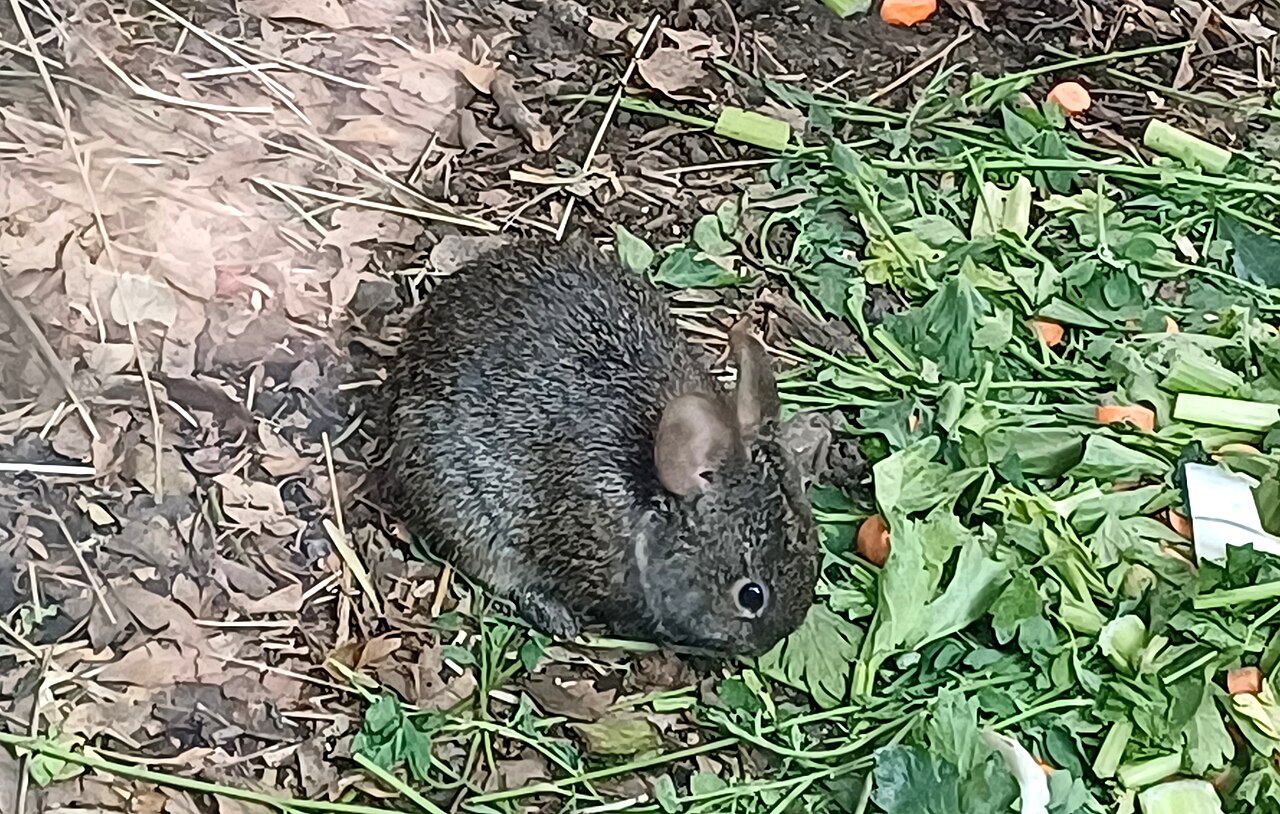
Volcano Rabbit (Romerolagus diazi) is an Endangered rabbit endemic to the high volcanic belt of central Mexico and the sole living species in the genus Romerolagus. This guide separates well-supported biology from common assumptions and covers identification, range, habitat, diet, behavior, reproduction and conservation.
Identification
This compact rabbit has very short rounded ears, short legs, a barely visible tail and dense grizzled yellow-brown to dark brown fur. Black-tipped hairs darken the back and sides, while the underside is buff or pale gray. Its silhouette can resemble a pika more than a long-eared cottontail. Females average heavier than males, reversing the slight male-biased size pattern seen in many mammals.
Identification should combine body shape, markings, size, voice or movement, and location. One feature by itself can overlap with a related animal, a juvenile, or an individual in unusual light.
Photographs are most useful when they preserve scale and show several diagnostic features. Handling or repositioning a wild volcano rabbit for identification can cause stress and is unnecessary.
Size and physical adaptations
Volcano Rabbit typically measures about 23–31 cm head–body and weighs roughly 386–600 g; females average about 536 g and males about 417 g in one dataset. It is among the world’s smallest rabbits, with regional and individual variation in adult mass.
Its useful adaptations include short limbs slip through dense bunchgrass, small rounded ears reduce exposed surface area in cold uplands, cryptic grizzled coat blends with volcanic soil and dry grass, burrows provide shelter from weather and predators, high-pitched calls warn nearby rabbits, continual tooth growth processes abrasive grasses. These traits work together in the animal’s normal setting rather than serving as isolated curiosities.
Published measurements may use different methods, life stages or sample locations. Comparing figures responsibly means checking what was measured rather than selecting the largest number available.
Range and distribution
Endemic to less than about 400 square kilometres of fragmented habitat in the Trans-Mexican Volcanic Belt, principally around Popocatépetl, Iztaccíhuatl, El Pelado and Tláloc in the mountains surrounding Mexico City. The native range includes Mexico.
A country-level map indicates broad distribution, not continuous occupation. Climate, elevation, water, vegetation, prey, breeding sites, barriers and survey effort all affect where records occur.
Records near the edge of the range deserve careful documentation because they may reflect natural movement, improved survey coverage, accidental transport or a genuine distribution change.
Habitat
Subalpine zacatón bunchgrass within pine, fir and alder forest mosaics, usually about 2,800–4,250 m above sea level on cool volcanic slopes.
Rabbits depend on tall, dense native bunchgrasses for food, concealment and tunnel-like runways. They rest in shallow forms or burrows, sometimes using networks among rocks and grass roots. Patches with continuous grass cover support more latrines and signs than grazed or burned-open ground. Protecting a population therefore requires the feeding, shelter and breeding features that make a site usable, along with connections that allow movement.
Microhabitat matters. Shade, soil, current, moisture, shelter or host plants can determine whether a small area is usable even when the surrounding landscape appears suitable.
Diet and feeding
Volcano Rabbit is a specialist herbivore. Important foods include zacatón bunchgrasses, young grass shoots, leaves, bark, twigs, cultivated plants at habitat edges. Volcano rabbits clip grasses close to cover and may browse leaves, bark and tender shoots when seasonal growth changes. Like other rabbits, they practice cecotrophy, re-ingesting nutrient-rich soft feces so microbial fermentation products pass through the digestive tract a second time.
Diet changes with age, season, location and food supply. A dramatic prey record does not establish what most individuals eat most of the time; repeated field observations provide a stronger picture.
Feeding opportunities also create risk. An animal focused on prey may be less alert to predators, traffic or people, while contaminated prey can transfer pollutants through the food web.
Behavior and communication
Most active around dawn, dusk and at night, with daytime activity possible under fog, cloud or low disturbance. Individuals travel through grass runways and return repeatedly to communal latrines that researchers use to detect populations. They may live in small groups and communicate with short, high calls. When threatened they freeze in cover or dash into thick zacatón rather than relying on long open-country sprints.
High-pitched calls warn companions, while scent from glands, urine and communal latrines identifies occupied areas. Ear and body postures provide close-range visual signals, and mothers use scent and touch with dependent young. Behavior should be interpreted in context: alarm, courtship, feeding and temperature regulation can produce very different actions from the same animal.
Daily schedules are flexible responses, not rigid rules. Weather, breeding condition, disturbance, tides or food can move activity into a different part of the day.
Reproduction and development
Breeding occurs through much of the year but peaks during spring and early summer when fresh vegetation is abundant. Females are induced ovulators and can produce several small litters in a favorable year. 1–4 young, often 2 Newborns are altricial, with closed eyes, folded ears and fine brown fur. They remain concealed in a lined nest, grow rapidly on rich milk and may be weaned at about three weeks, although survival depends on dense cover around the natal site.
Young animals face different risks and may use different microhabitats or food than adults. Breeding success depends on adult condition, suitable sites and the survival of offspring through vulnerable early stages.
Counts of eggs or young describe reproductive output, not the number expected to reach adulthood. Mortality is normally greatest during eggs, larval or juvenile stages.
Predators and ecological role
The rabbit clips and recycles high-elevation grasses, deposits concentrated nutrients at latrines and provides prey for coyotes, bobcats, weasels, raptors and snakes. Its dependence on intact zacatón makes it an indicator for a mountain ecosystem that also stores water and soil above one of the world’s largest urban regions. Documented or likely predators include Coyote, Bobcat, Long-tailed Weasel, Red-tailed Hawk, Rattlesnakes, Domestic Dog.
This animal is both a consumer and a food source. Its influence comes through many repeated interactions, so ecological claims should be based on measured populations rather than assumptions drawn from appearance.
Predator and prey relationships differ among places. A species can be ecologically influential without being abundant everywhere, and its role can change across its range.
Relationship with people
Agriculture, settlements, roads, livestock grazing, logging and repeated burning fragment the rabbit’s narrow grassland range. Local residents and protected-area staff can safeguard populations by maintaining native zacatón, controlling damaging grazing, preventing human-caused fires and keeping dogs from roaming in habitat.
The volcano rabbit poses no meaningful danger to people. Observe quietly from established trails, never chase or handle an animal, keep dogs leashed and avoid trampling grass tunnels or latrines. Report suspected poaching or fire to local protected-area authorities. Responsible observation means keeping an appropriate distance, avoiding capture or feeding, protecting habitat and following local wildlife or invasive-species guidance.
Wildlife guidance should come from the responsible local agency because collection rules, reporting requests and appropriate responses differ between native and introduced ranges.
Conservation
IUCN lists the volcano rabbit as Endangered. Its remaining habitat is small, discontinuous and still declining through land conversion, urban expansion, grazing, fire, logging and illegal hunting. The reported global trend is Decreasing.
Important pressures include conversion to agriculture and settlements, urban expansion and roads, livestock grazing, frequent or severe fires, logging and grass cutting, illegal hunting, free-ranging dogs, climate-driven habitat shifts. Global status can hide local decline or recovery, so current regional monitoring and habitat management remain necessary.
The most useful conservation action follows the documented pressure. Protecting breeding sites, reducing road deaths or limiting pollutants can require different tools in different populations.