
Home/Animals/Mammalia/Wood Bison
Species profileIUCN: NT

Wood Bison

Bison bison athabascae

The northern, heavy-bodied subspecies of American bison, restored to parts of Canada and Alaska after a historic collapse.

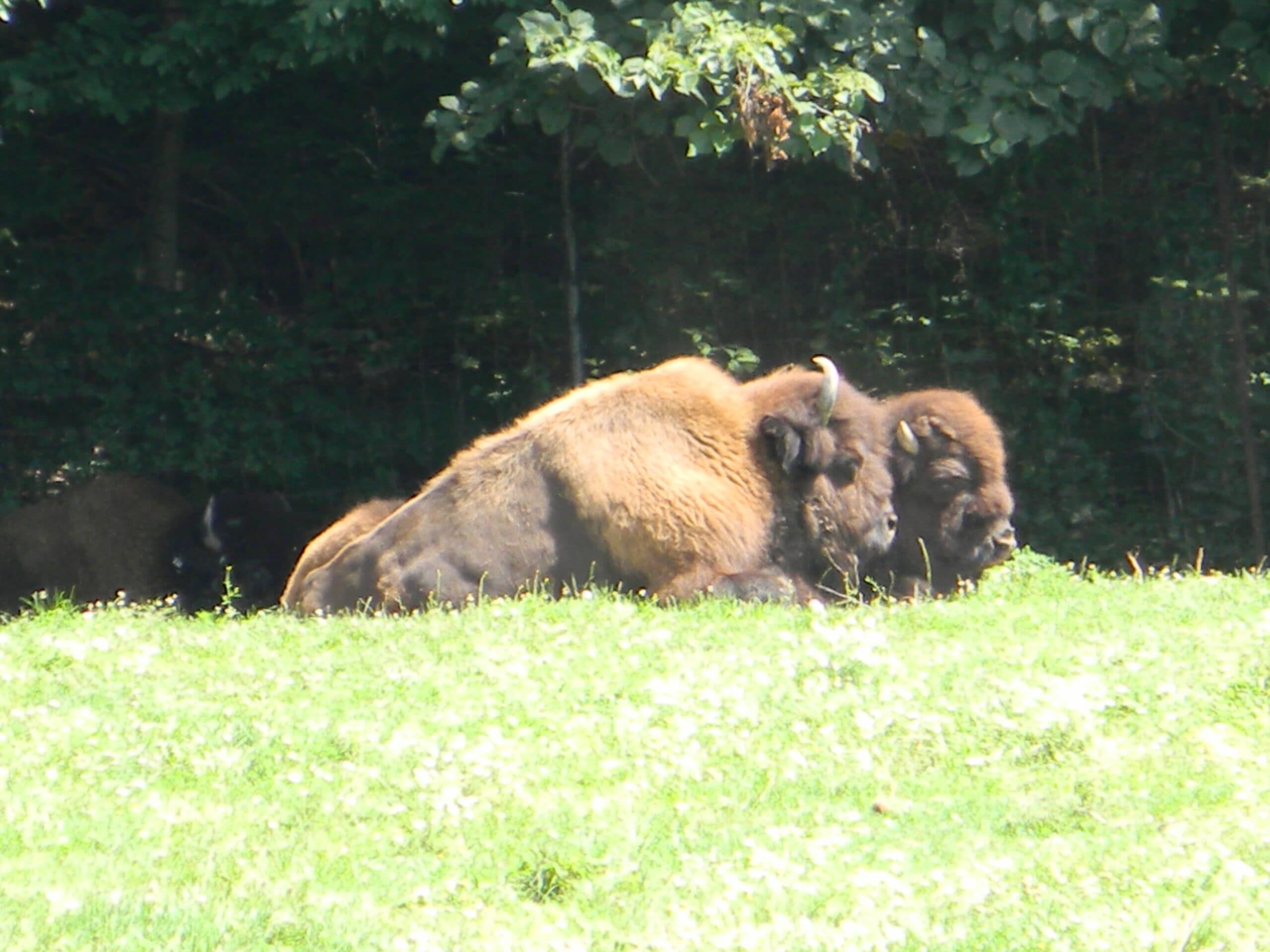
Canadian wood bison Bison bison athabascae standing in a grassy enclosure
Laslovarga / Wikimedia Commons / CC BY-SA 3.0
๐ŸŒ Read in Language:

โšก At a Glance

Species profile
Also Known As
Wood buffalo, mountain bison
Diet Category
Herbivore and ruminant grazer
Activity Rhythm
Active in repeated feeding and resting periods by day and night.
Wild Lifespan
Often around two decades in the wild, with substantial variation
Typical Weight
adult males about 350โ€“1,000 kg
Conservation Status
NT
๐Ÿ’ก Key Biological Insight: Wood bison are the largest native terrestrial mammals in Canada and among the heaviest land mammals in North America.

๐ŸŒณ Scientific Taxonomy Hierarchy

Wood bison are the subspecies Bison bison athabascae within the species Bison bison and family Bovidae. Canada and the United States recognize wood bison as a distinct conservation unit; this profile does not transfer every measurement or management rule from plains bison.

KingdomAnimalia
PhylumChordata
ClassMammalia
OrderArtiodactyla
FamilyBovidae
GenusBison
SpeciesBison bison athabascae

Distinguishing Anatomical Features

  • โœ“Wood bison have a massive head, dark brown coat, long shaggy hair on the shoulders and forelegs, a high shoulder hump whose highest point lies forward of the front legs, and relatively reduced leg chaps compared with plains bison. Both sexes carry horns, but adult bulls are much larger and more heavily built.
  • โœ“Dense winter coat insulates in severe cold
  • โœ“Broad hooves support travel over snow and wet ground
  • โœ“Powerful neck and shoulders sweep snow from forage
  • โœ“Ruminant digestion extracts energy from coarse plants
  • โœ“Seasonal movements track available sedges and grasses

๐Ÿ“ Physical Measurements

Total Lengthadult males about 10.0โ€“12.5 ft
Body Weightadult males about 770โ€“2,205 lb
Tail LengthShort tail ending in a dark tuft
WingspanNot applicable
Top SpeedNo dependable universal maximumMovement changes with context and conditions.

๐ŸŽจ Appearance & Distinctive Markings

Dark brownBlack-brownTanGray-brown

Skin / Covering: Dense seasonal fur

Sexual Dimorphism: Adult bulls are substantially larger than cows and develop thicker horns, heavier forequarters and more pronounced shoulder musculature.

๐Ÿ—บ๏ธ Geographic Distribution & Habitat

The historic range covered much of the boreal interior of western and northern Canada and reached Alaska. Today free-ranging herds occur mainly in British Columbia, Alberta, Manitoba, the Northwest Territories and Yukon, with restored populations in Alaska.

Boreal forest mosaics containing open meadows, sedge wetlands, river flats, grasslands and woodland cover.

Country-level distribution map

Native range
FijiTanzaniaWestern SaharaCanada โ€” Native rangeUnited States โ€” Native rangeKazakhstanUzbekistanPapua New GuineaIndonesiaArgentinaChileCongo - KinshasaSomaliaKenyaSudanChadHaitiDominican RepublicRussiaBahamasFalkland IslandsNorwayGreenlandFrench Southern TerritoriesTimor-LesteSouth AfricaLesothoMexicoUruguayBrazilBoliviaPeruColombiaPanamaCosta RicaNicaraguaHondurasEl SalvadorGuatemalaBelizeVenezuelaGuyanaSurinameFranceEcuadorPuerto RicoJamaicaCubaZimbabweBotswanaNamibiaSenegalMaliMauritaniaBeninNigerNigeriaCameroonTogoGhanaCรดte dโ€™IvoireGuineaGuinea-BissauLiberiaSierra LeoneBurkina FasoCentral African RepublicCongo - BrazzavilleGabonEquatorial GuineaZambiaMalawiMozambiqueEswatiniAngolaBurundiIsraelLebanonMadagascarPalestinian TerritoriesGambiaTunisiaAlgeriaJordanUnited Arab EmiratesQatarKuwaitIraqOmanVanuatuCambodiaThailandLaosMyanmar (Burma)VietnamNorth KoreaSouth KoreaMongoliaIndiaBangladeshBhutanNepalPakistanAfghanistanTajikistanKyrgyzstanTurkmenistanIranSyriaArmeniaSwedenBelarusUkrainePolandAustriaHungaryMoldovaRomaniaLithuaniaLatviaEstoniaGermanyBulgariaGreeceTรผrkiyeAlbaniaCroatiaSwitzerlandLuxembourgBelgiumNetherlandsPortugalSpainIrelandNew CaledoniaSolomon IslandsNew ZealandAustraliaSri LankaChinaTaiwanItalyDenmarkUnited KingdomIcelandAzerbaijanGeorgiaPhilippinesMalaysiaBruneiSloveniaFinlandSlovakiaCzechiaEritreaJapanParaguayYemenSaudi ArabiaCyprusMoroccoEgyptLibyaEthiopiaDjiboutiUgandaRwandaBosnia & HerzegovinaNorth MacedoniaSerbiaMontenegroKosovoTrinidad & TobagoSouth Sudan
Highlighted countries are recorded profile locations, not precise biological range boundaries.Map boundaries: Natural Earth

Recorded Native Countries & Territories:

๐Ÿ’ก Did You Know?

  • ๐Ÿ’กDense winter coat insulates in severe cold
  • ๐Ÿ’กBroad hooves support travel over snow and wet ground
  • ๐Ÿ’กPowerful neck and shoulders sweep snow from forage
  • ๐Ÿ’กRuminant digestion extracts energy from coarse plants
  • ๐Ÿ’กSeasonal movements track available sedges and grasses

๐ŸŒฟ Conservation Status & Threats

IUCN: NT โ€” Near Threatened

โ€œThe IUCN Near Threatened category applies to American bison as a species, not to wood bison as a separately assessed subspecies. In Canada, wood bison are listed as Threatened under the federal Species at Risk Act, while COSEWIC assessed them as Special Concern in 2013.โ€

Population TrendRecovery from historic lows, with major differences among isolated herds
Wild Population EstimateCanadaโ€™s 2018 recovery strategy cited about 8,587 free-ranging wood bison based on 2010โ€“2016 estimates; current herd totals require newer regional surveys.
CITESAmerican bison are listed in CITES Appendix II for certain international trade controls

โš ๏ธ Major Threats to Wood Bison

  • โ€ขBovine tuberculosis and brucellosis
  • โ€ขHabitat fragmentation
  • โ€ขHybridization with plains or domestic bison
  • โ€ขSmall isolated herds
  • โ€ขAnthrax outbreaks
  • โ€ขSevere winters and drowning
  • โ€ขRoad mortality
  • โ€ขIndustrial development
  • โ€ขLoss of genetic diversity

๐Ÿ”„ Life Cycle & Reproduction

Wild vs. Captivity Lifespan Comparison

๐ŸŒฟ In the WildOften around two decades in the wild, with substantial variation
๐Ÿ  In Captivity (with veterinary care)Managed conservation herds can live longer with veterinary support.
Clutch / Litter SizeUsually one calf
Incubation / GestationGestation about nine months
Fledging / WeaningCalves are mobile shortly after birth and stay close to their mothers.
Sexual MaturityFemales may first breed at about two to three years; timing depends on nutrition and condition
Mating SystemPolygynous during a seasonal rut
Nesting / Den TypeNo nest; cow selects a quiet calving area

๐Ÿฆ… Behavior & Field Ecology

Herbivore and ruminant grazer

๐ŸŒ Ecological Food Web & Relationships: By grazing, trampling, wallowing and moving nutrients, wood bison shape northern grasslands and wetlands. Their carcasses support scavengers, and calves or weakened adults can be important prey for wolves and bears.

Social Group SizeCow-calf herds, bachelor groups and more solitary mature bulls outside the rut
Activity RhythmActive in repeated feeding and resting periods by day and night.
Feeding StrategyHerbivore and ruminant grazer

๐Ÿฅฉ Primary Prey & Preferred Diet

โœ“ Sedgesโœ“ Grassesโœ“ Rushesโœ“ Willow leavesโœ“ Other herbaceous plants

๐Ÿ“ข Communication & Territorial Signals

  • Bellows
  • Grunts
  • Scent cues
  • Head and body displays
  • Horn-to-horn contests

๐Ÿพ Wild Temperament & Traits

โ€ข Socialโ€ข Waryโ€ข Potentially aggressive when threatened

๐Ÿค Human Interaction & Pet Advisory

โš ๏ธ Strictly Wild Species
๐Ÿšซ

Can You Keep a Wood Bison as a Pet?

Not suitable as a pet. Wood bison require large managed landscapes, specialized fencing, herd management and wildlife or livestock permits.

Domestication StatusWild subspecies; some bison are ranched, but free-ranging recovery herds are managed as wildlife.
Danger to HumansHigh risk at close range
Economic & Ecotourism RoleCultural continuity, northern ecosystem function, conservation, tourism, carefully regulated harvest and scientific research.

โš ๏ธ Behavioral Risk Factors & Wildlife Safety

  • Adults are extremely large and fast
  • Cows defend calves
  • Bulls become more aggressive during the rut
  • Road encounters can cause severe collisions

๐ŸŒ Ecological Food Web & Relationships

๐Ÿฆ… Natural Predators (3)

Gray WolfCanis lupus
Grizzly BearUrsus arctos
Black BearUrsus americanus

๐Ÿงฌ Related Species (3)

Plains BisonBison bison bisonThe other recognized American bison subspecies
American BisonBison bisonSpecies containing wood and plains bison
European BisonBison bonasusClosest living bison relative outside North America

Wood Bison (Bison bison athabascae) are the northern subspecies of American bison, distinguished from plains bison by a taller, more forward shoulder hump, darker woolly coat and other differences in body shape and pelage. This guide separates well-supported biology from common assumptions and covers identification, range, habitat, diet, behavior, reproduction and conservation.

Identification

Wood bison have a massive head, dark brown coat, long shaggy hair on the shoulders and forelegs, a high shoulder hump whose highest point lies forward of the front legs, and relatively reduced leg chaps compared with plains bison. Both sexes carry horns, but adult bulls are much larger and more heavily built. Adult bulls are substantially larger than cows and develop thicker horns, heavier forequarters and more pronounced shoulder musculature.

Identification should combine body shape, markings, size, voice or movement, and location. One feature by itself can overlap with a related animal, a juvenile, or an individual in unusual light.

Photographs are most useful when they preserve scale and show several diagnostic features. Handling or repositioning a wild wood bison for identification can cause stress and is unnecessary.

Size and physical adaptations

Wood Bison typically measures adult males about 3.04โ€“3.8 m and weighs adult males about 350โ€“1,000 kg. These official figures describe adult males; females and younger animals are smaller, and mass changes with age and condition.

Its useful adaptations include dense winter coat insulates in severe cold, broad hooves support travel over snow and wet ground, powerful neck and shoulders sweep snow from forage, ruminant digestion extracts energy from coarse plants, seasonal movements track available sedges and grasses. These traits work together in the animal’s normal setting rather than serving as isolated curiosities.

Published measurements may use different methods, life stages or sample locations. Comparing figures responsibly means checking what was measured rather than selecting the largest number available.

Range and distribution

The historic range covered much of the boreal interior of western and northern Canada and reached Alaska. Today free-ranging herds occur mainly in British Columbia, Alberta, Manitoba, the Northwest Territories and Yukon, with restored populations in Alaska. The native range includes Canada, United States (reintroduced in Alaska).

A country-level map indicates broad distribution, not continuous occupation. Climate, elevation, water, vegetation, prey, breeding sites, barriers and survey effort all affect where records occur.

Records near the edge of the range deserve careful documentation because they may reflect natural movement, improved survey coverage, accidental transport or a genuine distribution change.

Habitat

Boreal forest mosaics containing open meadows, sedge wetlands, river flats, grasslands and woodland cover.

Herds move among graminoid-rich openings and sheltered forest. In winter they use windswept or shallow-snow areas and can sweep snow aside with the muzzle and forequarters to reach sedges and grasses. Protecting a population therefore requires the feeding, shelter and breeding features that make a site usable, along with connections that allow movement.

Microhabitat matters. Shade, soil, current, moisture, shelter or host plants can determine whether a small area is usable even when the surrounding landscape appears suitable.

Diet and feeding

Wood Bison is a herbivore and ruminant grazer. Important foods include sedges, grasses, rushes, willow leaves, other herbaceous plants. Wood bison graze heavily in open wetlands and meadows, then ruminate plant material through a multi-chambered stomach. Seasonal diet and habitat use shift with snow, plant growth, water and local availability.

Diet changes with age, season, location and food supply. A dramatic prey record does not establish what most individuals eat most of the time; repeated field observations provide a stronger picture.

Feeding opportunities also create risk. An animal focused on prey may be less alert to predators, traffic or people, while contaminated prey can transfer pollutants through the food web.

Behavior and communication

Active in repeated feeding and resting periods by day and night. Cows, calves and young animals form herds, while mature bulls may remain apart outside the breeding season. Herd size and movement change with season, forage, insects, predators and disturbance.

Wood bison communicate through posture, scent, grunts and bellows. During the rut, bulls display, bellow, wallow and may spar or fight for access to receptive cows. Behavior should be interpreted in context: alarm, courtship, feeding and temperature regulation can produce very different actions from the same animal.

Daily schedules are flexible responses, not rigid rules. Weather, breeding condition, disturbance, tides or food can move activity into a different part of the day.

Reproduction and development

Mating peaks in midsummer. After a gestation of roughly nine months, a cow normally gives birth to one calf in spring, when new plant growth improves nutrition. Usually one calf Calves can stand and follow the mother soon after birth, nurse for months and begin grazing while still dependent. Young remain within protective cow-calf groups.

Young animals face different risks and may use different microhabitats or food than adults. Breeding success depends on adult condition, suitable sites and the survival of offspring through vulnerable early stages.

Counts of eggs or young describe reproductive output, not the number expected to reach adulthood. Mortality is normally greatest during eggs, larval or juvenile stages.

Predators and ecological role

By grazing, trampling, wallowing and moving nutrients, wood bison shape northern grasslands and wetlands. Their carcasses support scavengers, and calves or weakened adults can be important prey for wolves and bears. Documented or likely predators include Gray Wolf, Grizzly Bear, Black Bear.

This animal is both a consumer and a food source. Its influence comes through many repeated interactions, so ecological claims should be based on measured populations rather than assumptions drawn from appearance.

Predator and prey relationships differ among places. A species can be ecologically influential without being abundant everywhere, and its role can change across its range.

Relationship with people

Wood bison have deep cultural, nutritional and spiritual importance for Indigenous peoples. Modern recovery depends on collaboration among Indigenous governments and communities, public agencies and conservation herds, while carefully managing harvest, roads, livestock disease and land use.

Remain well beyond the distance required by parks and local agencies, never approach for a photograph, keep dogs controlled and use a vehicle as shelter where advised. Bison can run quickly and may charge when crowded. Responsible observation means keeping an appropriate distance, avoiding capture or feeding, protecting habitat and following local wildlife or invasive-species guidance.

Wildlife guidance should come from the responsible local agency because collection rules, reporting requests and appropriate responses differ between native and introduced ranges.

Conservation

The IUCN Near Threatened category applies to American bison as a species, not to wood bison as a separately assessed subspecies. In Canada, wood bison are listed as Threatened under the federal Species at Risk Act, while COSEWIC assessed them as Special Concern in 2013. The reported global trend is Recovery from historic lows, with major differences among isolated herds.

Important pressures include bovine tuberculosis and brucellosis, habitat fragmentation, hybridization with plains or domestic bison, small isolated herds, anthrax outbreaks, severe winters and drowning, road mortality, industrial development, loss of genetic diversity. Global status can hide local decline or recovery, so current regional monitoring and habitat management remain necessary.

The most useful conservation action follows the documented pressure. Protecting breeding sites, reducing road deaths or limiting pollutants can require different tools in different populations.

Sources and further reading

โ“ Frequently Asked Questions

Answers to frequently asked questions verified against peer-reviewed zoological research.

Wood bison are a northern subspecies with a taller forward-peaked shoulder hump, darker woolly coat, different cape and leg-hair patterns, and on average a heavier build.