
Home/Animals/Aves/Wood Duck
Species profileIUCN: LC

Wood Duck

Aix sponsa

A brilliantly patterned North American perching duck that nests in tree cavities beside wooded wetlands.

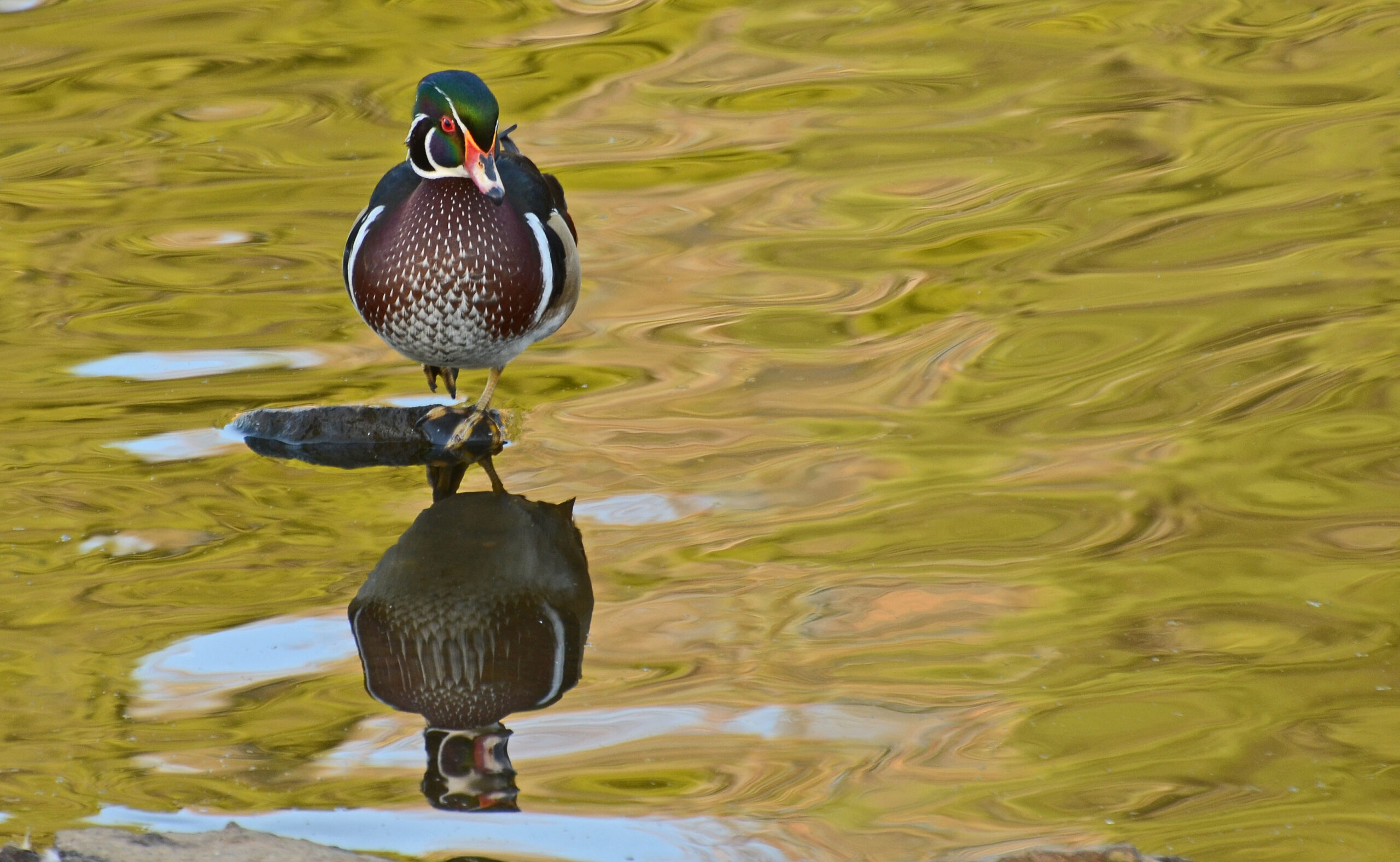
Front view of a breeding male wood duck Aix sponsa on water
Valis55 / Wikimedia Commons / CC BY-SA 3.0
๐ŸŒ Read in Language:

โšก At a Glance

Species profile
Also Known As
Carolina duck, summer duck, swamp duck
Diet Category
Omnivore with a strongly plant-based diet
Activity Rhythm
Mostly diurnal and crepuscular, with migration and feeding schedules shaped by weather and disturbance.
Wild Lifespan
Most live much shorter lives, but the longevity record exceeds 22 years
Typical Weight
about 0.5โ€“1 kg
Conservation Status
LC
๐Ÿ’ก Key Biological Insight: Newly hatched ducklings leap from nest cavities, sometimes more than 15 metres above the ground, after their mother calls from below.

๐ŸŒณ Scientific Taxonomy Hierarchy

The wood duck is the species Aix sponsa in the waterfowl family Anatidae and order Anseriformes. It shares the genus Aix with the Mandarin duck, but the two are separate species native to different continents.

KingdomAnimalia
PhylumChordata
ClassAves
OrderAnseriformes
FamilyAnatidae
GenusAix
SpeciesAix sponsa

Distinguishing Anatomical Features

  • โœ“Breeding males have an iridescent green crested head crossed by bold white lines, red eyes and bill, chestnut breast and buff sides. Females are warm gray-brown with a pale teardrop around the eye and a blue wing patch edged in white. Both sexes show a boxy crested head, slim neck, broad tail and compact wings.
  • โœ“Strong claws grip bark and branches
  • โœ“Short broad wings aid flight through trees
  • โœ“Ducklings use clawed feet to climb inside cavities
  • โœ“Broad bill gathers seeds and aquatic food
  • โœ“Dense waterproof plumage insulates in wetlands

๐Ÿ“ Physical Measurements

Total Length18โ€“22 in
Body Weightabout 1โ€“2 lb
Tail LengthLong and broad for a duck
Wingspan26โ€“29 in
Top SpeedNo dependable universal maximumMovement changes with context and conditions.

๐ŸŽจ Appearance & Distinctive Markings

GreenChestnutBrownWhiteBlackBluePurpleBuffGrayRed

Skin / Covering: Waterproof feathers and down

Sexual Dimorphism: Adult males in breeding plumage are much brighter than females. Females, juveniles and eclipse-plumage males are browner, but males retain distinctive eye and bill colors.

๐Ÿ—บ๏ธ Geographic Distribution & Habitat

Wood ducks breed across much of southern Canada and the United States, with the largest continuous distribution in the east. Northern birds migrate south for winter, while many birds in the southern United States remain year-round; winter range reaches Mexico and parts of the Caribbean.

Bottomland hardwood forest, wooded swamps, freshwater marshes, beaver ponds, quiet streams, creeks and small lakes with trees or dense emergent cover.

Country-level distribution map

Native range
FijiTanzaniaWestern SaharaCanada โ€” Native rangeUnited States โ€” Native rangeKazakhstanUzbekistanPapua New GuineaIndonesiaArgentinaChileCongo - KinshasaSomaliaKenyaSudanChadHaitiDominican RepublicRussiaBahamasFalkland IslandsNorwayGreenlandFrench Southern TerritoriesTimor-LesteSouth AfricaLesothoMexico โ€” Native rangeUruguayBrazilBoliviaPeruColombiaPanamaCosta RicaNicaraguaHondurasEl SalvadorGuatemalaBelizeVenezuelaGuyanaSurinameFranceEcuadorPuerto RicoJamaicaCuba โ€” Native rangeZimbabweBotswanaNamibiaSenegalMaliMauritaniaBeninNigerNigeriaCameroonTogoGhanaCรดte dโ€™IvoireGuineaGuinea-BissauLiberiaSierra LeoneBurkina FasoCentral African RepublicCongo - BrazzavilleGabonEquatorial GuineaZambiaMalawiMozambiqueEswatiniAngolaBurundiIsraelLebanonMadagascarPalestinian TerritoriesGambiaTunisiaAlgeriaJordanUnited Arab EmiratesQatarKuwaitIraqOmanVanuatuCambodiaThailandLaosMyanmar (Burma)VietnamNorth KoreaSouth KoreaMongoliaIndiaBangladeshBhutanNepalPakistanAfghanistanTajikistanKyrgyzstanTurkmenistanIranSyriaArmeniaSwedenBelarusUkrainePolandAustriaHungaryMoldovaRomaniaLithuaniaLatviaEstoniaGermanyBulgariaGreeceTรผrkiyeAlbaniaCroatiaSwitzerlandLuxembourgBelgiumNetherlandsPortugalSpainIrelandNew CaledoniaSolomon IslandsNew ZealandAustraliaSri LankaChinaTaiwanItalyDenmarkUnited KingdomIcelandAzerbaijanGeorgiaPhilippinesMalaysiaBruneiSloveniaFinlandSlovakiaCzechiaEritreaJapanParaguayYemenSaudi ArabiaCyprusMoroccoEgyptLibyaEthiopiaDjiboutiUgandaRwandaBosnia & HerzegovinaNorth MacedoniaSerbiaMontenegroKosovoTrinidad & TobagoSouth Sudan
Highlighted countries are recorded profile locations, not precise biological range boundaries.Map boundaries: Natural Earth

๐Ÿ’ก Did You Know?

  • ๐Ÿ’กStrong claws grip bark and branches
  • ๐Ÿ’กShort broad wings aid flight through trees
  • ๐Ÿ’กDucklings use clawed feet to climb inside cavities
  • ๐Ÿ’กBroad bill gathers seeds and aquatic food
  • ๐Ÿ’กDense waterproof plumage insulates in wetlands

๐ŸŒฟ Conservation Status & Threats

IUCN: LC โ€” Least Concern

โ€œThe IUCN Red List classifies the wood duck as Least Concern. North American populations recovered strongly after historic declines, but suitable wooded wetlands and safe nesting cavities remain important.โ€

Population TrendIncreasing over recent long-term North American survey periods
Wild Population EstimatePartners in Flight estimated about 4.6 million breeding birds in its 2020 assessment; estimates change with survey method and year.
CITESProtected under the U.S. Migratory Bird Treaty Act and related international agreements

โš ๏ธ Major Threats to Wood Duck

  • โ€ขLoss of wooded wetlands
  • โ€ขRemoval of large cavity trees
  • โ€ขPoorly designed or unguarded nest boxes
  • โ€ขLead and other wetland contamination
  • โ€ขVehicle collisions
  • โ€ขOverharvest where regulations are ignored
  • โ€ขExtreme weather and flooding

๐Ÿ”„ Life Cycle & Reproduction

Wild vs. Captivity Lifespan Comparison

๐ŸŒฟ In the WildMost live much shorter lives, but the longevity record exceeds 22 years
๐Ÿ  In Captivity (with veterinary care)Can live longer under expert managed care, though wild biology should guide welfare.
Clutch / Litter SizeUsually 6โ€“16 eggs, although nests with eggs from multiple females can contain more
Incubation / GestationAbout 28โ€“37 days
Fledging / WeaningYoung fledge at roughly 56โ€“70 days.
Sexual MaturityUsually breeds at one year of age
Mating SystemSeasonally monogamous pair bond
Nesting / Den TypeNatural tree cavity or artificial nest box lined with wood debris and down

๐Ÿฆ… Behavior & Field Ecology

Omnivore with a strongly plant-based diet

๐ŸŒ Ecological Food Web & Relationships: Wood ducks move seeds and consume aquatic invertebrates while linking forest and wetland food webs. Their dependence on cavities makes them sensitive to the loss of old trees, and successful nest-box programs show how targeted habitat management can aid recovery.

Social Group SizePairs in the breeding season and small flocks outside it
Activity RhythmMostly diurnal and crepuscular, with migration and feeding schedules shaped by weather and disturbance.
Feeding StrategyOmnivore with a strongly plant-based diet

๐Ÿฅฉ Primary Prey & Preferred Diet

โœ“ Acornsโœ“ Wetland plant seedsโœ“ Duckweedโœ“ Wild fruitsโœ“ Waste grainโœ“ Aquatic insectsโœ“ Beetlesโœ“ Snails

๐Ÿ“ข Communication & Territorial Signals

  • Female alarm whistle
  • Male rising squeak
  • Courtship postures
  • Mutual preening

๐Ÿพ Wild Temperament & Traits

โ€ข Waryโ€ข Agileโ€ข Social outside nesting

๐Ÿค Human Interaction & Pet Advisory

โš ๏ธ Strictly Wild Species
๐Ÿšซ

Can You Keep a Wood Duck as a Pet?

Wild wood ducks are not pets. Captive possession is regulated, and their social, flight, water and seasonal needs require licensed expert care.

Domestication StatusWild species; captive ornamental populations do not make it domesticated.
Danger to HumansLow risk to people
Economic & Ecotourism RoleWetland biodiversity, birdwatching, regulated hunting, education and cavity-nesting research.

โš ๏ธ Behavioral Risk Factors & Wildlife Safety

  • Wild birds may defend themselves if handled
  • Disturbance can separate broods or expose nests
  • Wetland edges present water and footing hazards

๐ŸŒ Ecological Food Web & Relationships

๐Ÿฆ… Natural Predators (4)

RaccoonProcyon lotor
Rat SnakePantherophis spp.
Snapping TurtleChelydra serpentina
RaptorAccipitridae

๐Ÿงฌ Related Species (3)

Mandarin DuckAix galericulataAsian sister species in the same genus
MallardAnas platyrhynchosWidespread dabbling duck that often shares wetlands
Hooded MerganserLophodytes cucullatusAnother North American cavity-nesting duck

Wood Duck (Aix sponsa) are medium-sized North American ducks adapted to wooded swamps, streams and beaver ponds, where their strong claws, short broad wings and cavity-nesting behavior set them apart from many open-water ducks. This guide separates well-supported biology from common assumptions and covers identification, range, habitat, diet, behavior, reproduction and conservation.

Identification

Breeding males have an iridescent green crested head crossed by bold white lines, red eyes and bill, chestnut breast and buff sides. Females are warm gray-brown with a pale teardrop around the eye and a blue wing patch edged in white. Both sexes show a boxy crested head, slim neck, broad tail and compact wings. Adult males in breeding plumage are much brighter than females. Females, juveniles and eclipse-plumage males are browner, but males retain distinctive eye and bill colors.

Identification should combine body shape, markings, size, voice or movement, and location. One feature by itself can overlap with a related animal, a juvenile, or an individual in unusual light.

Photographs are most useful when they preserve scale and show several diagnostic features. Handling or repositioning a wild wood duck for identification can cause stress and is unnecessary.

Size and physical adaptations

Wood Duck typically measures 47โ€“55 cm and weighs about 0.5โ€“1 kg. Sex, age, season and body condition account for much of the reported range.

Its useful adaptations include strong claws grip bark and branches, short broad wings aid flight through trees, ducklings use clawed feet to climb inside cavities, broad bill gathers seeds and aquatic food, dense waterproof plumage insulates in wetlands. These traits work together in the animal’s normal setting rather than serving as isolated curiosities.

Published measurements may use different methods, life stages or sample locations. Comparing figures responsibly means checking what was measured rather than selecting the largest number available.

Range and distribution

Wood ducks breed across much of southern Canada and the United States, with the largest continuous distribution in the east. Northern birds migrate south for winter, while many birds in the southern United States remain year-round; winter range reaches Mexico and parts of the Caribbean. The native range includes Canada, United States, Mexico, Cuba.

A country-level map indicates broad distribution, not continuous occupation. Climate, elevation, water, vegetation, prey, breeding sites, barriers and survey effort all affect where records occur.

Records near the edge of the range deserve careful documentation because they may reflect natural movement, improved survey coverage, accidental transport or a genuine distribution change.

Habitat

Bottomland hardwood forest, wooded swamps, freshwater marshes, beaver ponds, quiet streams, creeks and small lakes with trees or dense emergent cover.

Wood ducks favor shallow water broken by logs, shrubs and aquatic vegetation. They nest in natural tree holes or suitable boxes, often near water but sometimes more than a kilometre away. Protecting a population therefore requires the feeding, shelter and breeding features that make a site usable, along with connections that allow movement.

Microhabitat matters. Shade, soil, current, moisture, shelter or host plants can determine whether a small area is usable even when the surrounding landscape appears suitable.

Diet and feeding

Wood Duck is a omnivore with a strongly plant-based diet. Important foods include acorns, wetland plant seeds, duckweed, wild fruits, waste grain, aquatic insects, beetles, snails. Adults dabble at the surface, tip forward, make short shallow dives and forage on land beneath trees. Plant material commonly dominates the diet, while ducklings rely more heavily on protein-rich invertebrates.

Diet changes with age, season, location and food supply. A dramatic prey record does not establish what most individuals eat most of the time; repeated field observations provide a stronger picture.

Feeding opportunities also create risk. An animal focused on prey may be less alert to predators, traffic or people, while contaminated prey can transfer pollutants through the food web.

Behavior and communication

Mostly diurnal and crepuscular, with migration and feeding schedules shaped by weather and disturbance. Wood ducks perch readily on branches and fly swiftly through forest openings. They often occur in pairs or small groups, becoming more social during migration and winter.

Females give a loud rising two-part whistle when alarmed or taking flight, while males produce thinner squeaky calls. Courtship includes ritualized swimming, drinking, preening and raised-wing displays. Behavior should be interpreted in context: alarm, courtship, feeding and temperature regulation can produce very different actions from the same animal.

Daily schedules are flexible responses, not rigid rules. Weather, breeding condition, disturbance, tides or food can move activity into a different part of the day.

Reproduction and development

Pairs form during fall and winter. The female selects a cavity, lines it with breast down and incubates the eggs; the male usually departs before hatching. Within about a day of hatching, she calls the ducklings out and leads them to water. Usually 6โ€“16 eggs, although nests with eggs from multiple females can contain more Ducklings hatch alert and down-covered. They climb to the entrance, jump to the ground or water, then feed themselves while following and sheltering with the female.

Young animals face different risks and may use different microhabitats or food than adults. Breeding success depends on adult condition, suitable sites and the survival of offspring through vulnerable early stages.

Counts of eggs or young describe reproductive output, not the number expected to reach adulthood. Mortality is normally greatest during eggs, larval or juvenile stages.

Predators and ecological role

Wood ducks move seeds and consume aquatic invertebrates while linking forest and wetland food webs. Their dependence on cavities makes them sensitive to the loss of old trees, and successful nest-box programs show how targeted habitat management can aid recovery. Documented or likely predators include Raccoon, Rat Snake, Snapping Turtle, Raptor.

This animal is both a consumer and a food source. Its influence comes through many repeated interactions, so ecological claims should be based on measured populations rather than assumptions drawn from appearance.

Predator and prey relationships differ among places. A species can be ecologically influential without being abundant everywhere, and its role can change across its range.

Relationship with people

Wood ducks were depleted by market hunting and loss of nesting timber in the nineteenth century, then recovered through hunting regulation, wetland protection and widespread nest-box programs. They remain an important game bird and a familiar focus of community conservation.

Watch from a distance, avoid approaching active cavities and keep pets away from broods. Nest boxes should follow regional dimensions, predator-guard and maintenance guidance rather than being placed densely without monitoring. Responsible observation means keeping an appropriate distance, avoiding capture or feeding, protecting habitat and following local wildlife or invasive-species guidance.

Wildlife guidance should come from the responsible local agency because collection rules, reporting requests and appropriate responses differ between native and introduced ranges.

Conservation

The IUCN Red List classifies the wood duck as Least Concern. North American populations recovered strongly after historic declines, but suitable wooded wetlands and safe nesting cavities remain important. The reported global trend is Increasing over recent long-term North American survey periods.

Important pressures include loss of wooded wetlands, removal of large cavity trees, poorly designed or unguarded nest boxes, lead and other wetland contamination, vehicle collisions, overharvest where regulations are ignored, extreme weather and flooding. Global status can hide local decline or recovery, so current regional monitoring and habitat management remain necessary.

The most useful conservation action follows the documented pressure. Protecting breeding sites, reducing road deaths or limiting pollutants can require different tools in different populations.

Sources and further reading

โ“ Frequently Asked Questions

Answers to frequently asked questions verified against peer-reviewed zoological research.

They live around wooded wetlands, perch on branches and nest in tree cavities or nest boxes rather than building open ground nests like many ducks.