
Species profileIUCN: LC

Wood Frog

Lithobates sylvaticus

A northern forest frog capable of surviving winter with much of its body water frozen.

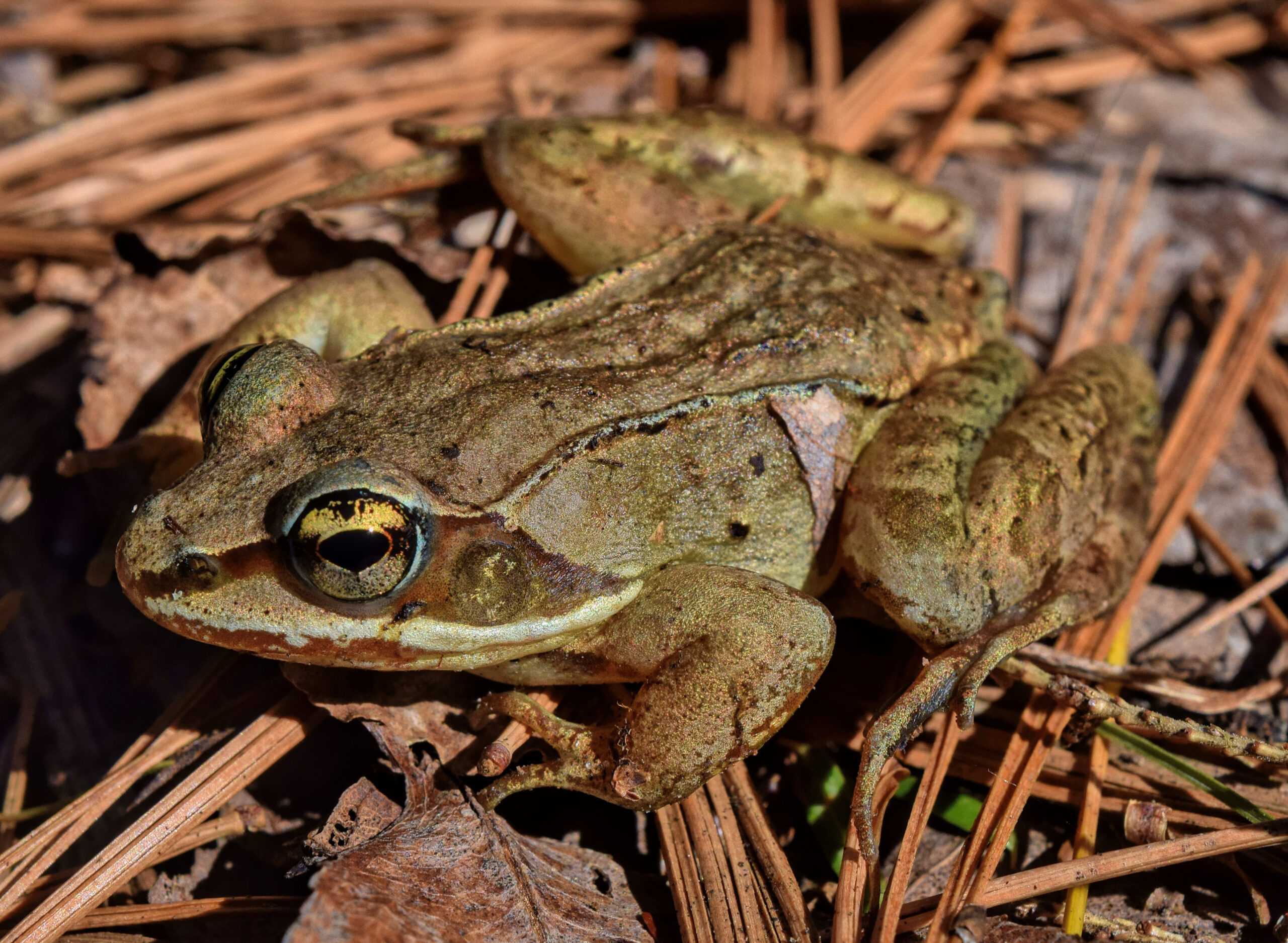
Brown wood frog with dark eye mask on forest vegetation
The Cosmonaut / Wikimedia Commons / CC BY-SA 2.5 Canada
๐ŸŒ Read in Language:

โšก At a Glance

Species profile
Diet Category
Insectivore
Activity Rhythm
Mostly active in cool moist conditions; dormant in winter
Wild Lifespan
Usually 4โ€“5 years, sometimes longer
Typical Weight
Commonly about 8โ€“18 g
Conservation Status
LC
๐Ÿ’ก Key Biological Insight: Glucose helps protect cells during freezing

๐ŸŒณ Scientific Taxonomy Hierarchy

The wood frog is a true frog in family Ranidae, also widely published under the scientific name Rana sylvatica.

KingdomAnimalia
PhylumChordata
ClassAmphibia
OrderAnura
FamilyRanidae
GenusLithobates
SpeciesLithobates sylvaticus

Distinguishing Anatomical Features

  • โœ“Small tan to reddish-brown frog with a dark mask behind each eye, pale upper lip, ridges along the back and a white belly.
  • โœ“Glucose helps protect cells during freezing
  • โœ“Can survive partial body freezing
  • โœ“Dark eye mask aids identification
  • โœ“Rapid larval growth fits temporary pools

๐Ÿ“ Physical Measurements

Total LengthAbout 1.4โ€“3 in
Body WeightAbout 0.3โ€“0.6 oz
Tail LengthSee total length
WingspanNot applicable

๐ŸŽจ Appearance & Distinctive Markings

BrownTanReddish brownDark brown

Skin / Covering: Fur

Sexual Dimorphism: Females average larger; breeding males develop swollen thumbs for gripping during amplexus.

๐Ÿ—บ๏ธ Geographic Distribution & Habitat

Across Alaska and most of Canada, extending south through the northeastern United States and along the Appalachian region.

Moist woodland and tundra near temporary fish-free pools used for explosive spring breeding; adults spend much of the year on land.

Country-level distribution map

Native range
FijiTanzaniaWestern SaharaCanada โ€” Native rangeUnited States โ€” Native rangeKazakhstanUzbekistanPapua New GuineaIndonesiaArgentinaChileCongo - KinshasaSomaliaKenyaSudanChadHaitiDominican RepublicRussiaBahamasFalkland IslandsNorwayGreenlandFrench Southern TerritoriesTimor-LesteSouth AfricaLesothoMexicoUruguayBrazilBoliviaPeruColombiaPanamaCosta RicaNicaraguaHondurasEl SalvadorGuatemalaBelizeVenezuelaGuyanaSurinameFranceEcuadorPuerto RicoJamaicaCubaZimbabweBotswanaNamibiaSenegalMaliMauritaniaBeninNigerNigeriaCameroonTogoGhanaCรดte dโ€™IvoireGuineaGuinea-BissauLiberiaSierra LeoneBurkina FasoCentral African RepublicCongo - BrazzavilleGabonEquatorial GuineaZambiaMalawiMozambiqueEswatiniAngolaBurundiIsraelLebanonMadagascarPalestinian TerritoriesGambiaTunisiaAlgeriaJordanUnited Arab EmiratesQatarKuwaitIraqOmanVanuatuCambodiaThailandLaosMyanmar (Burma)VietnamNorth KoreaSouth KoreaMongoliaIndiaBangladeshBhutanNepalPakistanAfghanistanTajikistanKyrgyzstanTurkmenistanIranSyriaArmeniaSwedenBelarusUkrainePolandAustriaHungaryMoldovaRomaniaLithuaniaLatviaEstoniaGermanyBulgariaGreeceTรผrkiyeAlbaniaCroatiaSwitzerlandLuxembourgBelgiumNetherlandsPortugalSpainIrelandNew CaledoniaSolomon IslandsNew ZealandAustraliaSri LankaChinaTaiwanItalyDenmarkUnited KingdomIcelandAzerbaijanGeorgiaPhilippinesMalaysiaBruneiSloveniaFinlandSlovakiaCzechiaEritreaJapanParaguayYemenSaudi ArabiaCyprusMoroccoEgyptLibyaEthiopiaDjiboutiUgandaRwandaBosnia & HerzegovinaNorth MacedoniaSerbiaMontenegroKosovoTrinidad & TobagoSouth Sudan
Highlighted countries are recorded profile locations, not precise biological range boundaries.Map boundaries: Natural Earth

Recorded Native Countries & Territories:

๐Ÿ’ก Did You Know?

  • ๐Ÿ’กGlucose helps protect cells during freezing
  • ๐Ÿ’กCan survive partial body freezing
  • ๐Ÿ’กDark eye mask aids identification
  • ๐Ÿ’กRapid larval growth fits temporary pools

๐ŸŒฟ Conservation Status & Threats

IUCN: LC โ€” Least Concern

โ€œLeast Concern globally, although local populations depend on intact forests and fish-free seasonal wetlands.โ€

Population Trend๐Ÿ“ˆ Stable
Wild Population EstimateNo single dependable current total is presented here.

โš ๏ธ Major Threats to Wood Frog

  • โ€ขLoss of seasonal pools
  • โ€ขForest fragmentation
  • โ€ขRoad mortality during breeding migration
  • โ€ขPollution and climate change

๐Ÿ”„ Life Cycle & Reproduction

Wild vs. Captivity Lifespan Comparison

๐ŸŒฟ In the WildUsually 4โ€“5 years, sometimes longer
๐Ÿ  In Captivity (with veterinary care)Can differ under managed care.
Clutch / Litter SizeAbout 1,000โ€“3,000 eggs in a gelatinous mass
Incubation / GestationEggs hatch in roughly 9โ€“30 days depending on temperature
Fledging / WeaningYoung become independent after a species-specific period of parental care.
Sexual MaturityOften 1โ€“3 years
Mating SystemSpecies-specific courtship and mating
Nesting / Den TypeEgg masses attached to submerged vegetation in shallow pools

๐Ÿฆ… Behavior & Field Ecology

Insectivore

๐ŸŒ Ecological Food Web & Relationships: Consumer and prey within its native food web.

Social Group SizeMostly solitary outside dense breeding gatherings
Activity RhythmMostly active in cool moist conditions; dormant in winter
Feeding StrategyInsectivore

๐Ÿฅฉ Primary Prey & Preferred Diet

โœ“ Insectsโœ“ Spidersโœ“ Slugsโœ“ Other small invertebrates

๐Ÿ“ข Communication & Territorial Signals

  • Vocal signals
  • Posture
  • Scent or visual cues

๐Ÿพ Wild Temperament & Traits

โ€ข Alertโ€ข Wildโ€ข Adapted to its habitat

๐Ÿค Human Interaction & Pet Advisory

โš ๏ธ Strictly Wild Species
๐Ÿšซ

Can You Keep a Wood Frog as a Pet?

Not suitable as a pet.

Domestication StatusWild and not domesticated
Danger to HumansAvoid close contact
Economic & Ecotourism RoleEcological, educational and wildlife-viewing value.

โš ๏ธ Behavioral Risk Factors & Wildlife Safety

  • Wild animals may defend themselves when cornered

๐ŸŒ Ecological Food Web & Relationships

๐Ÿฆ… Natural Predators (3)

Garter SnakesThamnophis
Wading BirdsArdeidae
Aquatic InsectsDytiscidae

๐Ÿงฌ Related Species (2)

Northern Leopard FrogLithobates pipiensRelated ranid frog
Pickerel FrogLithobates palustrisSpotted woodland relative

Wood Frog (Lithobates sylvaticus) is a northern forest frog capable of surviving winter with much of its body water frozen. This evidence-based guide covers identification, range, habitat, diet, behaviour, reproduction and conservation without repeating the FAQ block shown elsewhere on the page.

Taxonomy and identification

Wood Frog (Lithobates sylvaticus) is a northern forest frog capable of surviving winter with much of its body water frozen. The wood frog is a true frog in family Ranidae, also widely published under the scientific name Rana sylvatica. This distinction matters because names and appearances can hide important biological relationships. A reliable profile begins with the animal’s actual taxonomic scope rather than treating every familiar label as a separate species.

Key field marks include small tan to reddish-brown frog with a dark mask behind each eye, pale upper lip, ridges along the back and a white belly. Females average larger; breeding males develop swollen thumbs for gripping during amplexus. Together, these traits are more useful for identification than colour alone, because age, season, light and geographic variation can all change how an individual looks.

Size and colour

Typical measurements are About 3.5โ€“7.6 cm (About 1.4โ€“3 in), with a weight of Commonly about 8โ€“18 g (About 0.3โ€“0.6 oz). Body size varies with sex, age, season, food and location, so these figures describe a practical range rather than a limit that every individual must fit.

Its physical design reflects the demands of its way of life. Important adaptations include glucose helps protect cells during freezing, can survive partial body freezing, dark eye mask aids identification, rapid larval growth fits temporary pools. Each reduces the cost of moving, feeding or surviving in the conditions this animal regularly experiences.

North American range

Across Alaska and most of Canada, extending south through the northeastern United States and along the Appalachian region. Recorded native locations include United States, Canada. Distribution maps show broad presence, but they should not be read as proof that the animal occupies every place inside a shaded country or region.

Local occurrence depends on usable habitat, prey or food, shelter, breeding sites and safe connections between them. Populations may therefore be common in one valley, island or watershed and absent from apparently similar areas nearby.

Forest and seasonal-pool habitat

Moist woodland and tundra near temporary fish-free pools used for explosive spring breeding; adults spend much of the year on land. Habitat quality depends on structure as well as climate: animals need places to feed, hide, rest and reproduce, and those features may change over short distances.

Seasonal conditions alter how the habitat is used. Food peaks, snow or ice, drought, flooding and human disturbance can shift daily movements. Protecting a species consequently requires more than preserving a point on a map; the working ecological system around it must remain intact.

Diet and food web

Wood Frog is a insectivore. Important foods include insects, spiders, slugs, other small invertebrates. Availability changes through the year, and individuals adjust where and how long they forage rather than following one fixed menu.

Feeding also connects this animal to the wider ecosystem. By consuming, moving or storing food and by becoming prey itself, it transfers energy through its community. Diet evidence should come from field observations and analysed remains, not from dramatic isolated records.

Activity and migration

Activity is described as mostly active in cool moist conditions; dormant in winter. Typical behaviour includes breeds in explosive spring choruses, hides in leaf litter, overwinters beneath shallow forest debris. These actions help individuals find resources, warn others, maintain space or reduce exposure to predators.

Mostly solitary outside dense breeding gatherings Communication may involve posture, scent, touch and calls. What appears simple from a distance often carries precise information about identity, alarm, breeding condition or ownership of a site.

Freeze tolerance

Egg masses attached to submerged vegetation in shallow pools provides shelter from weather and enemies. The location and structure of that refuge can be as important as food, especially when young are immobile or when adults must conserve energy.

Repeated use of paths, dens, nests or colony sites makes them vulnerable to disturbance. Observers should keep their distance, avoid blocking access and never handle young or alter a shelter to obtain a photograph.

Eggs and tadpoles

Breeding occurs very early spring, often as ice leaves temporary pools. About 1,000โ€“3,000 eggs in a gelatinous mass are produced after eggs hatch in roughly 9โ€“30 days depending on temperature. Young depend on parental protection and food while their movement, insulation and foraging skills develop.

Sexual maturity is reached often 1โ€“3 years. Reproductive success depends on adult condition and local resources, so a population can contain visible adults yet decline when too few young survive to replace them.

Predators and threats

Natural pressures include predation, severe weather, competition and variable food. Known predators or major sources of mortality include Garter Snakes, Wading Birds, Aquatic Insects. Avoidance, camouflage, shelter and vigilance reduce risk but cannot remove it.

Human activity can add faster pressures. Roads, pollution, disturbance, habitat conversion and altered food webs may act together, which is why local monitoring often reveals problems that a broad global category cannot show.

Wetland conservation

Least Concern globally, although local populations depend on intact forests and fish-free seasonal wetlands. The reported population trend is Stable. Major concerns include loss of seasonal pools, forest fragmentation, road mortality during breeding migration, pollution and climate change. Conservation decisions should use the species’ current assessment and local evidence.

Effective protection retains habitat connections, breeding and resting sites, and dependable food. It also reduces preventable mortality and measures results over time. Responsible wildlife viewing supports that work when people keep distance, follow local rules and avoid feeding wild animals.

Sources and further reading

โ“ Frequently Asked Questions

Answers to frequently asked questions verified against peer-reviewed zoological research.

Yes. A wood frog can survive with a substantial share of its body water frozen while glucose and other physiological changes protect cells.