
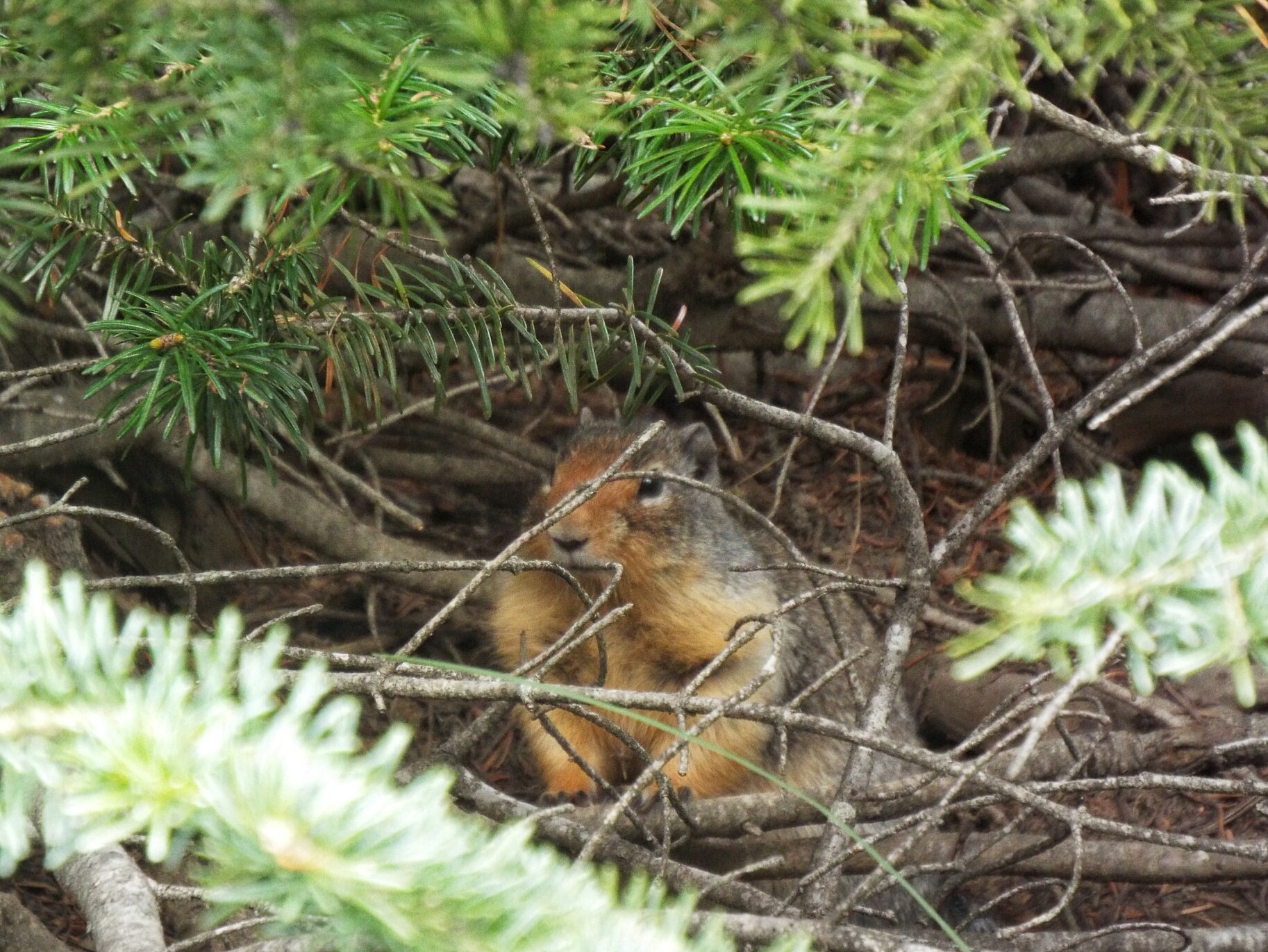
Yellow-bellied Marmot (Marmota flaviventris) is a large ground squirrel of western North America. It lives where grassy feeding areas meet rock piles, cliffs or boulder fields, using deep burrows for safety, rearing young and a hibernation that can last eight months. This guide separates well-supported biology from common assumptions and covers identification, range, habitat, diet, behavior, reproduction and conservation.
Identification
A yellow-bellied marmot has a heavy body, broad head, small rounded ears, strong digging feet and a densely furred tail. Coarse guard hairs create a grizzled brown or reddish-brown back. The throat, chest and belly are buff, yellow or orange-russet, and a pale patch often shows between the eyes. Color varies across the range, but the animal is never normally glossy black like some neighboring marmot forms. Adult males are longer and substantially heavier than females. Seasonal weight change can be greater than the difference between the sexes because every animal fattens before hibernation.
Identification should combine body shape, markings, size, voice or movement, and location. One feature by itself can overlap with a related animal, a juvenile, or an individual in unusual light.
Photographs are most useful when they preserve scale and show several diagnostic features. Handling or repositioning a wild yellow-bellied marmot for identification can cause stress and is unnecessary.
Size and physical adaptations
Yellow-bellied Marmot typically measures 47–70 cm including a 13–22 cm tail and weighs about 1.6–5.2 kg, lowest after hibernation and highest in late summer. Males average larger, and animals in productive mountain meadows tend to be heavier than those in dry lowland habitat.
Its useful adaptations include true hibernation sharply reduces energy use, dense underfur insulates in cold mountain climates, powerful forefeet and claws excavate burrows, large fat stores fuel winter survival, sharp incisors crop tough vegetation, alarm whistles warn nearby colony members. These traits work together in the animal’s normal setting rather than serving as isolated curiosities.
Published measurements may use different methods, life stages or sample locations. Comparing figures responsibly means checking what was measured rather than selecting the largest number available.
Range and distribution
Western North America from south-central British Columbia and southern Alberta through the Rocky Mountains, Great Basin, Cascades and Sierra Nevada to parts of California, Nevada, Utah, northern New Mexico and adjacent western states. Southern populations generally occur at higher elevations. The native range includes Canada, United States.
A country-level map indicates broad distribution, not continuous occupation. Climate, elevation, water, vegetation, prey, breeding sites, barriers and survey effort all affect where records occur.
Records near the edge of the range deserve careful documentation because they may reflect natural movement, improved survey coverage, accidental transport or a genuine distribution change.
Habitat
Open montane meadows, alpine tundra, sagebrush, semi-desert, forest openings and canyon grassland with nearby talus, cliffs or large rocks.
The key arrangement is food beside shelter. Marmots graze in open vegetation but remain within a quick run of a burrow or rock crevice. Rocks stabilize tunnels, provide lookout posts and absorb solar heat for basking. A colony may maintain sleeping chambers, nursery rooms, escape holes and a deeper hibernaculum lined with dry plants. At high elevations, a deep snowpack insulates the ground even when air temperatures plunge. Protecting a population therefore requires the feeding, shelter and breeding features that make a site usable, along with connections that allow movement.
Microhabitat matters. Shade, soil, current, moisture, shelter or host plants can determine whether a small area is usable even when the surrounding landscape appears suitable.
Diet and feeding
Yellow-bellied Marmot is a primarily herbivorous grazer and browser. Important foods include grasses, forbs and wildflowers, leaves and stems, seeds, fruits, occasional insects, rare bird eggs. Marmots clip tender grasses and broad-leaved plants with chisel-like incisors, then grind them with high-crowned cheek teeth. Spring growth supplies water and protein after hibernation. Later they shift toward flowers, seeds and drying plants while rapidly laying down fat. Feeding peaks in the cooler morning and late afternoon. They do not cache enough food for winter; stored body fat is their principal fuel for months underground.
Diet changes with age, season, location and food supply. A dramatic prey record does not establish what most individuals eat most of the time; repeated field observations provide a stronger picture.
Feeding opportunities also create risk. An animal focused on prey may be less alert to predators, traffic or people, while contaminated prey can transfer pollutants through the food web.
Behavior and communication
Diurnal, especially active in morning and late afternoon; inactive underground through winter. A marmot alternates short feeding trips with scanning from a rock, grooming, social contact and resting in the burrow. Heat and dry vegetation can push it underground at midday, and some populations briefly estivate during severe summer drought. At the first sign of a coyote, eagle or person, a sentinel gives a piercing whistle and animals sprint for cover. Males defend access to females and may wave the tail during an aggressive encounter.
Whistles vary with urgency and can alert relatives and neighbors. A scream accompanies extreme fear or excitement, while tooth chatter warns at close range. Marmots also use scent from cheek and anal glands, nose-to-nose greetings, grooming and body posture to recognize group members and negotiate dominance. Behavior should be interpreted in context: alarm, courtship, feeding and temperature regulation can produce very different actions from the same animal.
Daily schedules are flexible responses, not rigid rules. Weather, breeding condition, disturbance, tides or food can move activity into a different part of the day.
Reproduction and development
Mating occurs soon after adults emerge, when snow may still cover much of the meadow. A resident male may associate with several adult females. Because pregnancy and lactation begin while fat reserves are low, a female’s condition and the length of the growing season strongly influence whether she breeds. In harsh sites females often reproduce every other year rather than annually. Usually 3–8 pups, often averaging about 4–5 Pups are born underground blind, nearly naked and dependent. They remain in the nursery for several weeks, emerging in early summer as small furred juveniles. The family shares alarm information and access to shelter. Many yearlings, especially males, disperse from their birth colony; this exposed journey is one of the most dangerous life stages.
Young animals face different risks and may use different microhabitats or food than adults. Breeding success depends on adult condition, suitable sites and the survival of offspring through vulnerable early stages.
Counts of eggs or young describe reproductive output, not the number expected to reach adulthood. Mortality is normally greatest during eggs, larval or juvenile stages.
Predators and ecological role
Burrowing mixes soil, improves water infiltration and creates shelter later used by insects, reptiles and small mammals. Grazing changes plant growth and moves seeds and nutrients around meadows. Marmots are also substantial prey for coyotes, eagles, bears and other mountain predators. Their timing of emergence and reproduction tracks snowmelt, making long-term colonies useful for studying how climate shifts affect alpine food webs. Documented or likely predators include Coyote, Golden Eagle, American Badger, Bobcat, Grizzly Bear, Red Fox.
This animal is both a consumer and a food source. Its influence comes through many repeated interactions, so ecological claims should be based on measured populations rather than assumptions drawn from appearance.
Predator and prey relationships differ among places. A species can be ecologically influential without being abundant everywhere, and its role can change across its range.
Relationship with people
Marmots are popular wildlife-watch subjects, but food rewards teach them to approach roads, camps and vehicles. They may chew hoses, insulation and wiring or burrow near structures. The safe response is prevention: store food, close openings with appropriate barriers, protect vehicles in known problem areas and never use poison in a shared ecosystem. Like other wild rodents, marmots and their fleas can carry plague in parts of the West, so carcasses and sick animals should be reported rather than handled.
Watch from a distance, keep food secured and never feed or touch a marmot. A cornered animal can bite, and fleas can transmit disease. Keep pets leashed away from colonies. If a marmot enters a vehicle or building, contact park staff or a humane wildlife professional instead of grabbing it. Seek medical advice after any bite or direct contact with a sick animal. Responsible observation means keeping an appropriate distance, avoiding capture or feeding, protecting habitat and following local wildlife or invasive-species guidance.
Wildlife guidance should come from the responsible local agency because collection rules, reporting requests and appropriate responses differ between native and introduced ranges.
Conservation
The IUCN lists the Yellow-bellied Marmot as Least Concern. It is widespread and no range-wide major threat is recognized, although individual colonies can disappear through development, persecution, disease, drought or changes in snow and plant growth. The reported global trend is Generally stable at the species level, with local increases and declines.
Important pressures include local habitat development, road mortality, deliberate killing near property, plague outbreaks, severe drought, climate-driven changes in snow and plant timing, human food conditioning. Global status can hide local decline or recovery, so current regional monitoring and habitat management remain necessary.
The most useful conservation action follows the documented pressure. Protecting breeding sites, reducing road deaths or limiting pollutants can require different tools in different populations.