
Scottish Fold
Scottish Fold care guide covering temperament, accessible enrichment, grooming, feeding, osteochondrodysplasia, pain monitoring and responsible adoption.
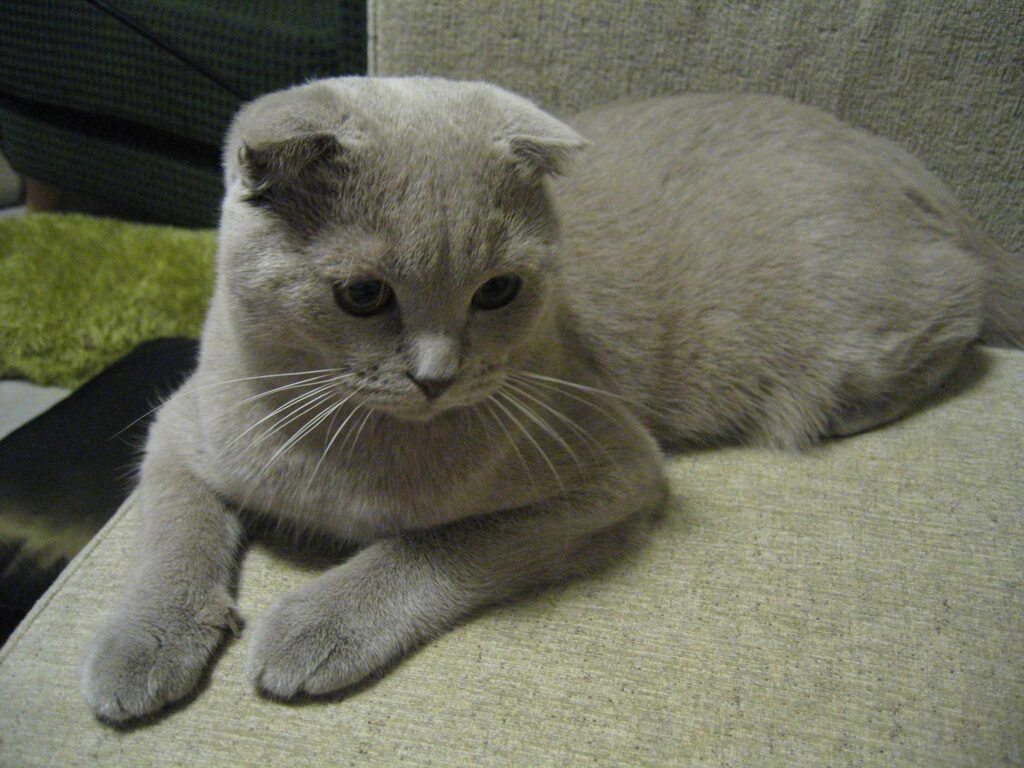
Is a Scottish Fold right for your home?
The Scottish Fold is a medium-sized domestic cat recognized by ears that fold forward and downward. That appearance comes from a cartilage-and-bone mutation, not from harmless ear shape alone. Anyone considering this breed should begin with welfare rather than looks. An existing Scottish Fold can be a warm, engaging companion and deserves excellent lifelong care, but prospective owners should understand the risk of painful joint disease before adopting. Rescue or rehoming is the most responsible route because it gives a cat a home without creating demand for more kittens carrying the mutation.
Personality varies by individual. Breed descriptions often call Folds affectionate, observant, and people-oriented, yet no registry description can predict one cat’s confidence, activity, or tolerance of handling. Meet the cat more than once when possible, ask for veterinary records, and notice how the cat walks, jumps, uses its tail, and reacts to gentle movement. A suitable home offers quiet retreat, daily play, stable routines, and prompt veterinary care if mobility changes.
Temperament and household fit
The International Cat Association describes Scottish Folds as intelligent, inquisitive, loyal, and generally compatible with children and other pets after careful introductions. Treat those as broad tendencies. Some individuals seek laps and follow people from room to room; others prefer nearby perches and shorter interactions. Children should learn to let the cat approach, support the whole body when lifting is unavoidable, and never pull the tail or press folded ears.
Introduce resident animals gradually through scent exchange, separate rooms, and short calm meetings. Give each cat its own food, water, sleeping places, scratchers, and litter resources; a useful starting point is one litter box per cat plus one extra in separate locations. A Scottish Fold with joint discomfort may have less patience for chasing or rough play, so supervise interaction and preserve easy escape routes. Changes such as hiding, irritability, reduced grooming, or avoiding stairs can be signs of pain rather than bad behavior.
Exercise, enrichment, and accessible spaces
Daily movement supports weight control, muscle strength, and mental health, but activity must suit the individual cat. Offer several short play sessions with low-impact wand toys, rolling toys, food puzzles, and scent games. Let the cat choose the pace and stop before fatigue. Never force the breed’s well-known upright sitting posture for a photo. That posture is not a health test, and a cat that sits unusually may be shifting weight away from uncomfortable joints.
Make the home easy to navigate. Use wide, stable steps or ramps to favorite furniture, low-entry litter trays, nonslip rugs on smooth floors, and warm padded beds. Place food and water where the cat does not need to jump. Secure windows and balconies, anchor climbing furniture, and keep strings or feather toys out of reach when play ends. If outdoor time is offered, use a secure catio or calmly trained harness rather than free roaming. Ask a veterinarian or rehabilitation professional for a tailored exercise plan if stiffness, lameness, or reduced range of motion appears.
Coat, ears, teeth, and routine care
Scottish Folds occur in shorthaired and longhaired forms. Brush a short coat about weekly and a longer coat several times a week, adjusting for shedding and tangles. Keep sessions brief and reward cooperation. While grooming, look for dandruff, mats, sore areas, overgrown nails, and places the cat has stopped cleaning. Poor grooming over the back or hindquarters can be an early clue that bending hurts.
Folded ears still need gentle observation, but do not insert swabs or routinely apply cleaner without veterinary advice. Seek care for odor, discharge, redness, head shaking, or pain. Trim nail tips as needed and provide stable horizontal and vertical scratchers. Build toward daily tooth brushing with cat-safe toothpaste; human toothpaste is unsafe. Routine veterinary examinations, vaccination, parasite prevention based on local risk, microchipping, and neutering or spaying should be planned with the cat’s clinician.
Feeding and weight management
Feed a complete and balanced diet for the cat’s life stage and health status. Measure portions, count treats in the daily total, and review body condition with a veterinarian. Extra weight increases load on painful joints, while unexplained weight loss can signal illness. Food puzzles can provide gentle activity, but use easy versions if paw or ankle movement is limited. Fresh water should be available in more than one quiet location.
Do not start joint supplements, pain medicines, raw diets, or homemade recipes without professional guidance. Many human painkillers are toxic to cats, and supplements vary in evidence and quality. A veterinarian can assess appetite, weight, kidney and heart health, dental comfort, and mobility together. Sudden refusal to eat, difficulty reaching the bowl, vomiting, increased thirst, or rapid weight change needs prompt attention.
The folded-ear mutation and joint disease
The same genetic change that folds the ears can affect cartilage and bone throughout the body. A 2016 study indexed by PubMed identified a dominant variant in TRPV4 associated with the folded-ear trait and osteochondrodysplasia, including abnormalities of the limbs and tail and progressive joint damage. Severity and age of onset vary. Cats with two copies of the variant have historically shown particularly severe disease, but a cat with one copy is not guaranteed to remain free of skeletal problems.
Watch for a thick or inflexible tail, shortened or misshapen limbs, stiff walking, reluctance to jump, limping, swollen joints, reduced play, sensitivity when touched, or difficulty entering the litter box. Cats often hide pain. The Governing Council of the Cat Fancy does not recognize the breed and cites osteochondrodysplasia as a serious health problem. This welfare concern is why this guide recommends adoption or rehoming rather than purchasing a newly bred Fold.
Veterinary planning and pain support
Arrange a veterinary examination soon after adoption and share all available pedigree, genetic, imaging, and treatment records. The clinician may assess gait, joint range, tail flexibility, muscle condition, and pain responses, then recommend radiographs or other tests when findings warrant them. The open-access research on Scottish Fold osteochondrodysplasia and the TRPV4 variant shows that outward signs and radiographic changes do not always progress identically, so an apparently comfortable young cat still benefits from ongoing monitoring.
Treatment is individual and may include weight management, environmental changes, carefully prescribed pain relief, rehabilitation, or other veterinary interventions. Never manipulate a stiff tail or force a sore joint to test it. Keep a simple mobility diary with videos of walking, jumping, grooming, and litter-box use; these records can help a veterinarian detect change between visits. Emergency care is appropriate if the cat cannot stand, cries in pain, drags a limb, has trouble breathing, or stops eating.
Adoption, rehoming, and lifelong welfare
Ask shelters and rescues about mobility, previous imaging, medications, litter habits, handling preferences, and whether the cat has lived with children or animals. Be wary of anyone who dismisses the mutation as cosmetic, guarantees that a folded-ear kitten cannot develop joint disease, or promotes extreme features. Confirm that the adoption agreement explains known medical needs and offers a return route if placement fails.
Prepare one quiet starter room with a low-entry litter box, food, water, hiding choices, a scratcher, toys, and a supportive bed. Expand access at the cat’s pace. Budget for routine and potentially long-term orthopedic care, and arrange reliable care during travel. A Scottish Fold already here can enjoy a good life when caregivers notice subtle pain, keep the cat lean, adapt the home, and value comfort over appearance or social-media poses.
Frequently asked questions
Do all Scottish Fold cats have joint disease?
The folded ears mark a cartilage-and-bone mutation associated with osteochondrodysplasia, but severity and timing vary. Every folded-ear cat deserves lifelong mobility monitoring even if it currently appears comfortable.
What signs of pain should I watch for?
Look for stiffness, limping, less jumping or play, hiding, irritability, poor grooming, trouble using the litter box, swollen joints, or a thick inflexible tail, and report changes promptly to a veterinarian.
How should a Scottish Fold exercise?
Use several short, low-impact play sessions at the cat’s chosen pace, with nonslip footing, easy routes, food puzzles, and ramps or steps where needed. Stop if movement becomes stiff or reluctant.
How often does a Scottish Fold need grooming?
Brush shorthaired cats about weekly and longhaired cats several times a week. Adjust to the individual coat and use grooming time to notice skin, nail, ear, dental, or mobility changes.
What is the most responsible way to get a Scottish Fold?
Adopt or rehome an existing cat through a shelter, rescue, or transparent private placement. This meets a cat’s need for a home without encouraging production of more cats carrying the harmful mutation.
Authoritative sources
- Gandolfi et al.: A dominant TRPV4 variant underlies osteochondrodysplasia in Scottish Fold cats
- Journal of Feline Medicine and Surgery: Genetic and radiographic evaluation of Scottish Fold osteochondrodysplasia
- Governing Council of the Cat Fancy: Unrecognised breeds and welfare concerns
- The International Cat Association: Scottish Fold Longhair