
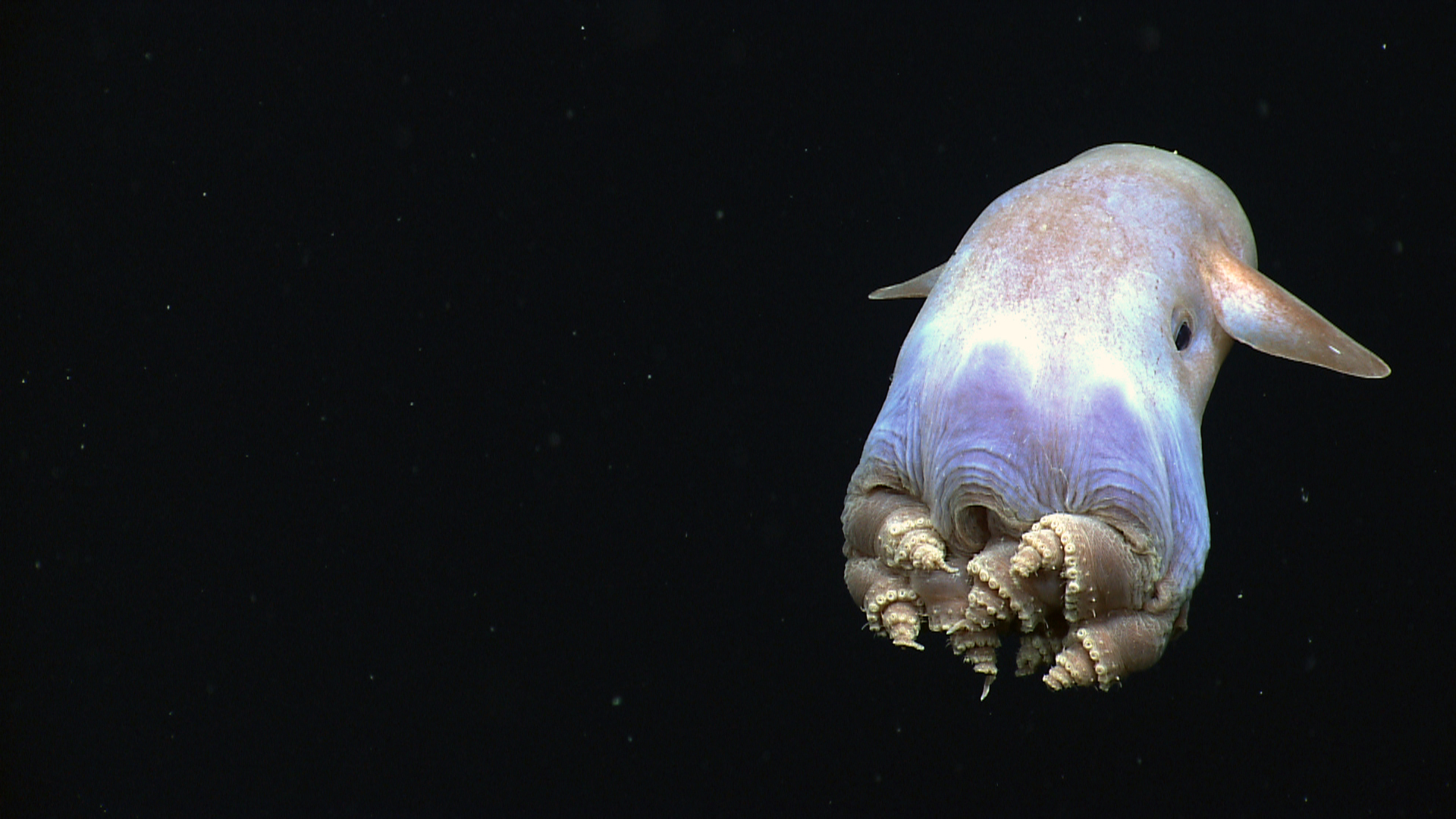
Dumbo Octopus (Grimpoteuthis) is a group of deep-sea finned octopuses named for the ear-like fins that propel them above the ocean floor. This evidence-based guide covers identification, range, habitat, diet, behaviour, reproduction and conservation without repeating the FAQ block shown elsewhere on the page.
Genus and identification
Dumbo Octopus (Grimpoteuthis) is a group of deep-sea finned octopuses named for the ear-like fins that propel them above the ocean floor. Dumbo octopus usually refers to species in genus Grimpoteuthis, a group of cirrate octopuses in family Opisthoteuthidae. This distinction matters because names and appearances can hide important biological relationships. A reliable profile begins with the animal’s actual taxonomic scope rather than treating every familiar label as a separate species.
Key field marks include soft rounded body with two large lateral fins, eight webbed arms, a single row of suckers and finger-like cirri beside the suckers. Females and males differ internally and in reproductive arm structures; size patterns vary. Together, these traits are more useful for identification than colour alone, because age, season, light and geographic variation can all change how an individual looks.
Size and soft anatomy
Typical measurements are Many are about 20–30 cm; size differs among species (Often about 8–12 in), with a weight of Poorly documented and species-specific (Poorly documented). Body size varies with sex, age, season, food and location, so these figures describe a practical range rather than a limit that every individual must fit.
Its physical design reflects the demands of its way of life. Important adaptations include fins provide efficient low-energy swimming, webbed arms steer and envelop prey, gelatinous body tolerates pressure, reduced metabolism suits scarce food. Each reduces the cost of moving, feeding or surviving in the conditions this animal regularly experiences.
Global deep-sea range
Species occur in deep oceans around the world, including the Atlantic and Pacific, generally on or above continental slopes and abyssal seafloor. Recorded native locations include International waters, United States, Canada, Japan, New Zealand, Australia. Distribution maps show broad presence, but they should not be read as proof that the animal occupies every place inside a shaded country or region.
Local occurrence depends on usable habitat, prey or food, shelter, breeding sites and safe connections between them. Populations may therefore be common in one valley, island or watershed and absent from apparently similar areas nearby.
Depth, cold and pressure
Cold, dark deep-sea slopes and plains, commonly around 3,000–4,000 m, with some records shallower or substantially deeper. Habitat quality depends on structure as well as climate: animals need places to feed, hide, rest and reproduce, and those features may change over short distances.
Seasonal conditions alter how the habitat is used. Food peaks, snow or ice, drought, flooding and human disturbance can shift daily movements. Protecting a species consequently requires more than preserving a point on a map; the working ecological system around it must remain intact.
Diet and feeding
Dumbo Octopus is a deep-sea carnivore. Important foods include polychaete worms, amphipods, isopods, small crustaceans, snails. Availability changes through the year, and individuals adjust where and how long they forage rather than following one fixed menu.
Feeding also connects this animal to the wider ecosystem. By consuming, moving or storing food and by becoming prey itself, it transfers energy through its community. Diet evidence should come from field observations and analysed remains, not from dramatic isolated records.
Fin-powered movement
Activity is described as moves and feeds in perpetual darkness. Typical behaviour includes hovers just above seabed, swims by fins and web pulses, swallows small prey whole. These actions help individuals find resources, warn others, maintain space or reduce exposure to predators.
Solitary Communication may involve posture, scent, touch and calls. What appears simple from a distance often carries precise information about identity, alarm, breeding condition or ownership of a site.
Sensory and pressure adaptations
Large eggs attached to hard seafloor objects or deep-sea coral provides shelter from weather and enemies. The location and structure of that refuge can be as important as food, especially when young are immobile or when adults must conserve energy.
Repeated use of paths, dens, nests or colony sites makes them vulnerable to disturbance. Observers should keep their distance, avoid blocking access and never handle young or alter a shelter to obtain a photograph.
Eggs and reproduction
Breeding occurs probably not restricted to one season. Eggs laid individually over an extended period are produced after embryonic development is slow in cold deep water. Young depend on parental protection and food while their movement, insulation and foraging skills develop.
Sexual maturity is reached poorly known. Reproductive success depends on adult condition and local resources, so a population can contain visible adults yet decline when too few young survive to replace them.
Predators and deep-sea ecology
Natural pressures include predation, severe weather, competition and variable food. Known predators or major sources of mortality include Deep-sea Fish, Marine Mammals. Avoidance, camouflage, shelter and vigilance reduce risk but cannot remove it.
Human activity can add faster pressures. Roads, pollution, disturbance, habitat conversion and altered food webs may act together, which is why local monitoring often reveals problems that a broad global category cannot show.
Knowledge gaps and threats
There is no single IUCN category for the genus; most species are poorly known because their deep habitats are difficult to sample. The reported population trend is not applicable to the colour form. Major concerns include deep-sea mining, bottom fishing, climate-driven ocean change, plastic and chemical pollution. Conservation decisions should use the species’ current assessment and local evidence.
Effective protection retains habitat connections, breeding and resting sites, and dependable food. It also reduces preventable mortality and measures results over time. Responsible wildlife viewing supports that work when people keep distance, follow local rules and avoid feeding wild animals.
Dumbo Octopuses use fins in deep water, while the related Giant Pacific Octopus crawls and jets through shallower North Pacific habitats.