
Animal group

Caiman

Caimaninae

Six living crocodilian species adapted to New World freshwater habitats.

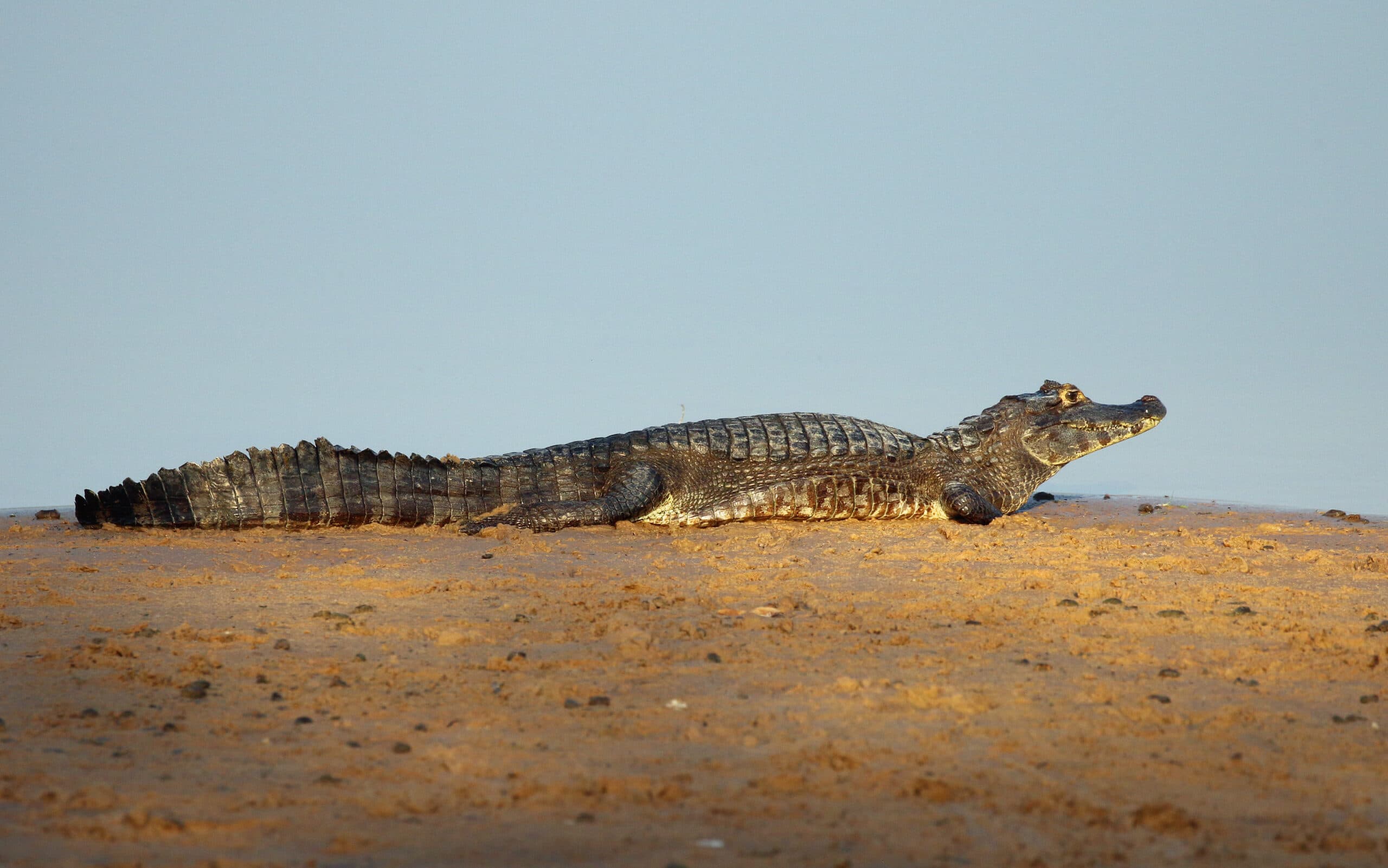
Yacare caiman resting on a sandy bank in the Pantanal, Brazil
Charles J. Sharp / Wikimedia Commons / CC BY-SA 4.0; photograph shows a Yacare caiman
🌐 Read in Language:

⚡ At a Glance

Animal group
Also Known As
Caimán, jacaré, yacaré
Diet Category
Carnivore
Activity Rhythm
Varies by species and season
Wild Lifespan
Varies by species
Typical Weight
Varies widely by species
Conservation Status
Varies by species
💡 Key Biological Insight: Only three of the six living caiman species belong to the genus Caiman.

🌳 Scientific Taxonomy Hierarchy

Caimans are the six living members of subfamily Caimaninae in the alligator family. They belong to three genera: Caiman, Melanosuchus and Paleosuchus.

KingdomAnimalia
PhylumChordata
ClassReptilia
OrderCrocodylia
FamilyAlligatoridae

Distinguishing Anatomical Features

  • ✓Armored semiaquatic crocodilians in the alligator family
  • ✓Native primarily to Central and South America
  • ✓Adult size and snout shape vary substantially among species

📏 Physical Measurements

Total LengthAbout 4–16.4 ft across living species

🎨 Appearance & Distinctive Markings

BrownGrayBlackOliveTanYellow

Skin / Covering: Scales reinforced by bony osteoderms

Sexual Dimorphism: Males generally grow larger than females, with the difference varying by species.

🗺️ Geographic Distribution & Habitat

Found in 21 Countries

Caimans occupy rivers, lakes, marshes, seasonally flooded forests and smaller forest waterways across Central and South America. Introduced spectacled caiman populations occur outside the native range.

Country-level distribution map

Native rangeIntroduced range
FijiTanzaniaWestern SaharaCanadaUnited States — Introduced rangeKazakhstanUzbekistanPapua New GuineaIndonesiaArgentina — Native rangeChileCongo - KinshasaSomaliaKenyaSudanChadHaitiDominican RepublicRussiaBahamasFalkland IslandsNorwayGreenlandFrench Southern TerritoriesTimor-LesteSouth AfricaLesothoMexico — Native rangeUruguay — Native rangeBrazil — Native rangeBolivia — Native rangePeru — Native rangeColombia — Native rangePanama — Native rangeCosta Rica — Native rangeNicaragua — Native rangeHonduras — Native rangeEl Salvador — Native rangeGuatemala — Native rangeBelize — Native rangeVenezuela — Native rangeGuyana — Native rangeSuriname — Native rangeFranceEcuador — Native rangePuerto Rico — Introduced rangeJamaicaCuba — Introduced rangeZimbabweBotswanaNamibiaSenegalMaliMauritaniaBeninNigerNigeriaCameroonTogoGhanaCôte d’IvoireGuineaGuinea-BissauLiberiaSierra LeoneBurkina FasoCentral African RepublicCongo - BrazzavilleGabonEquatorial GuineaZambiaMalawiMozambiqueEswatiniAngolaBurundiIsraelLebanonMadagascarPalestinian TerritoriesGambiaTunisiaAlgeriaJordanUnited Arab EmiratesQatarKuwaitIraqOmanVanuatuCambodiaThailandLaosMyanmar (Burma)VietnamNorth KoreaSouth KoreaMongoliaIndiaBangladeshBhutanNepalPakistanAfghanistanTajikistanKyrgyzstanTurkmenistanIranSyriaArmeniaSwedenBelarusUkrainePolandAustriaHungaryMoldovaRomaniaLithuaniaLatviaEstoniaGermanyBulgariaGreeceTürkiyeAlbaniaCroatiaSwitzerlandLuxembourgBelgiumNetherlandsPortugalSpainIrelandNew CaledoniaSolomon IslandsNew ZealandAustraliaSri LankaChinaTaiwanItalyDenmarkUnited KingdomIcelandAzerbaijanGeorgiaPhilippinesMalaysiaBruneiSloveniaFinlandSlovakiaCzechiaEritreaJapanParaguay — Native rangeYemenSaudi ArabiaCyprusMoroccoEgyptLibyaEthiopiaDjiboutiUgandaRwandaBosnia & HerzegovinaNorth MacedoniaSerbiaMontenegroKosovoTrinidad & Tobago — Native rangeSouth Sudan
Highlighted countries are recorded profile locations, not precise biological range boundaries.Map boundaries: Natural Earth

💡 Did You Know?

  • 💡A transparent third eyelid protects the eye underwater.
  • 💡Valves help close the ears and nostrils during submersion.

🌿 Conservation Status & Threats

No single assessment recorded

“Caimaninae has no single species-level conservation category; each of the six living species must be assessed separately.”

⚠️ Major Threats to Caiman

  • •Wetland loss and alteration
  • •Water pollution
  • •Hunting pressure in some species and regions

🔄 Life Cycle & Reproduction

Wild vs. Captivity Lifespan Comparison

🌿 In the WildVaries by species
Clutch / Litter SizeVaries by species
Incubation / GestationVaries by species and nest conditions
Sexual MaturityVaries by species and growth rate
Mating SystemVaries by species
Nesting / Den TypeVegetation or soil mound, depending on species and habitat

🦅 Behavior & Field Ecology

Carnivore

🌐 Ecological Food Web & Relationships: Freshwater predators that connect aquatic and shoreline food webs.

Social Group SizeUsually solitary or loosely aggregated
Activity RhythmVaries with temperature, season and species
Feeding StrategyCarnivore

🥩 Primary Prey & Preferred Diet

✓ Fish✓ Crustaceans✓ Mollusks✓ Insects✓ Other vertebrate prey depending on body size

📢 Communication & Territorial Signals

  • Bellows
  • Hatchling contact and distress calls

🤝 Human Interaction & Pet Advisory

⚠️ Strictly Wild Species
🚫

Can You Keep a Caiman as a Pet?

Unsuitable as household pets

Domestication StatusWild
Danger to HumansVaries by species and body size

⚠️ Behavioral Risk Factors & Wildlife Safety

  • All caimans are wild predators; large individuals can seriously injure people or pets.

🌐 Ecological Food Web & Relationships

Species in this group

  • Spectacled Caiman — Caiman crocodilus
  • Yacare Caiman — Caiman yacare
  • Broad-snouted Caiman — Caiman latirostris
  • Black Caiman — Melanosuchus niger
  • Cuvier's Dwarf Caiman — Paleosuchus palpebrosus
  • Smooth-fronted Caiman — Paleosuchus trigonatus

🧬 Related Species (1)

AlligatorAlligatorSame family: Alligatoridae

A caiman is a crocodilian belonging to the alligator family, Alligatoridae. The name covers several species, from dwarf caimans to the much larger black caiman. It does not identify one animal with a single size, range or scientific name. San Diego Zoo Wildlife Alliance; Crocodiles of the World species directory.

To understand a caiman fact, start with the species. A measurement describing a male black caiman would give a very misleading impression of a Cuvier’s dwarf caiman.

What are the different types of caiman?

The following six living species are listed by Crocodiles of the World. Notice that only three belong to the genus Caiman; the other three belong to Melanosuchus or Paleosuchus.

Common name Scientific name
Spectacled caiman Caiman crocodilus
Yacare caiman Caiman yacare
Broad-snouted caiman Caiman latirostris
Black caiman Melanosuchus niger
Cuvier’s dwarf caiman Paleosuchus palpebrosus
Smooth-fronted caiman, also called Schneider’s dwarf caiman Paleosuchus trigonatus

Source: Crocodiles of the World. A common name and a genus name are not interchangeable: “caiman” in everyday language is broader than Caiman in scientific classification.

How big do caimans get?

Three examples show why a single “caiman size” is not useful:

  • Cuvier’s dwarf caiman: males commonly reach around 1.6 m (5.2 ft), with females smaller. The zoo’s account also notes unusually large males exceeding 2 m in populations around the Pantanal. A typical size should not be mistaken for an absolute limit. Dwarf caiman profile.
  • Spectacled caiman: males reach around 2 m (6.6 ft), while females are usually around 1.4 m (4.6 ft). Spectacled caiman profile.
  • Black caiman: adult males average around 4 m (13.1 ft) in the zoo’s account. This is a large predator, not a dwarf crocodilian. Black caiman profile.

Where do caimans live?

The spectacled caiman is native across much of Central America and northern South America, with some Caribbean occurrences. It has also been introduced elsewhere. Native range and introduced range should be shown separately on a distribution map. University of Michigan’s Animal Diversity Web.

Habitat differs between species. Black caimans inhabit Amazon Basin rivers, lakes and flooded wetlands. Cuvier’s dwarf caimans occur in forest waterways and flooded forest, including flowing streams. A muddy open lake is therefore only one of several possible caiman habitats. Black caiman habitat; Dwarf caiman habitat.

Are there caimans in Florida?

Yes. Florida’s wildlife agency identifies an established, nonnative population of common or spectacled caimans in the southeastern part of the state. These animals use freshwater canals and lakes. Their presence does not make them native Florida wildlife, and it does not mean all six caiman species occur there. FWC caiman account.

What do caimans eat?

Spectacled caimans take a wide variety of animal prey. Smaller individuals can eat insects and crustaceans; larger animals can handle fish and other vertebrates. The menu changes with body size and the food available in the habitat. Spectacled caiman diet.

Fish are important prey for black caimans, including adults. Large individuals also capture birds, turtles and mammals. Dwarf caimans feed on animals such as fish, crustaceans, mollusks and amphibians. Being a predator does not mean every caiman specializes in large mammals. Black caiman diet; Dwarf caiman diet.

How do caimans reproduce?

In spectacled caimans, females build nests using vegetation and leaf litter. The eggs develop within the nest, and incubation temperature influences the sex of the young. Adults can guard nests and help hatchlings emerge. Young caimans still have to find their own food and face predators despite parental protection. These observations describe spectacled caimans; exact clutch sizes and breeding dates should be checked for each species and location. Animal Diversity Web.

How is a caiman different from a crocodile?

Caimans and true crocodiles are members of different families within the crocodilian order. Caimans share Alligatoridae with alligators; true crocodiles belong to Crocodylidae. Snout shape alone is not a universal identification test because shapes vary within these groups. San Diego Zoo Wildlife Alliance.

A useful clue for the spectacled caiman is the bony ridge between its eyes—the feature behind its common name. Identify that feature from a photograph or a safe viewing position, not by moving closer. Spectacled caiman profile.

What threatens caimans?

The answer varies with species and location. Dwarf caimans face habitat damage and pollution, while black caimans suffered heavy historical hunting for their skins. Conservation information should distinguish those histories from present-day local conditions. One population figure or threat label cannot describe the entire group. Dwarf caiman threats; Black caiman history.

Frequently asked questions

Are caimans dangerous?

They can be. Even spectacled caimans can injure people or pets. Small size compared with a large crocodile is not a reason to handle, corner or approach one. Animal Diversity Web.

What is the smallest caiman?

Cuvier’s dwarf caiman is generally recognized as the smallest living crocodilian species. Adult size still varies, and exceptional individuals can exceed commonly quoted lengths. Crocodiles of the World.

Is a black caiman a different animal from a spectacled caiman?

Yes. They are separate species in different genera, as the scientific names in the table show. “Black caiman” does not simply mean a dark-colored spectacled caiman.

Caimans belong to the alligator family; compare this multi-species group with the species-level American Alligator and larger Black Caiman.

❓ Frequently Asked Questions

Answers to frequently asked questions verified against peer-reviewed zoological research.

Six living species are recognized across the genera Caiman, Melanosuchus and Paleosuchus.