
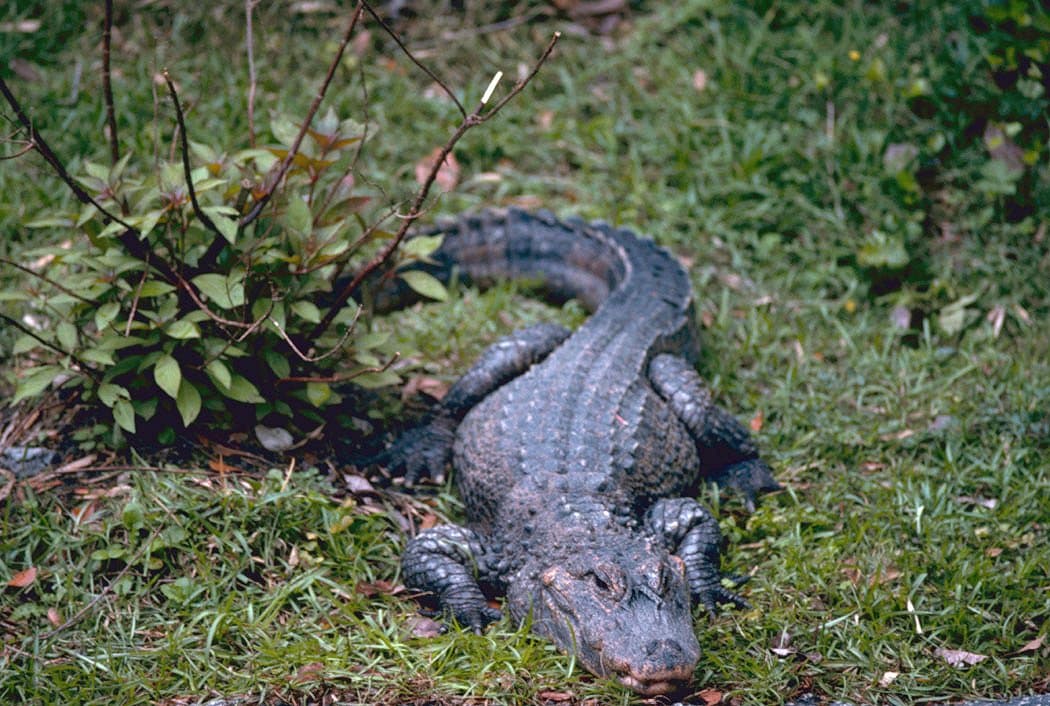
The Chinese alligator (Alligator sinensis) is a small crocodilian native to eastern China. It belongs to the same genus as the American alligator, but has its own habitat, anatomy and conservation needs. Its small adult size does not make it a young American alligator. See the Alligator overview for the wider group.
Size and identification
Chinese alligators usually reach about 1.5 metres (5 feet). Their body armor includes bony plates on the belly and upper eyelids, features that help distinguish them from American alligators. The head is relatively robust and the snout slightly upturned. Smithsonian species profile.
Adult measurements need context. A maximum recorded length is not a typical length, and a photograph of an unidentified small alligator is not enough to establish species. The scientific name, location and visible anatomical features together make a stronger identification.
Habitat: wetlands and underground shelter
The species is associated with slow freshwater habitats in the lower Yangtze region. Ponds, marshes and suitable banks provide both feeding areas and places to shelter. Chinese alligators excavate burrows with multiple chambers and spend cold periods underground. Their lives depend on the surrounding land as well as the water itself. Smithsonian.
Diet and daily activity
Food includes snails, crustaceans, insects and fish, with other small animals taken when available. Blunt teeth help process hard-shelled prey. Activity varies with season and conditions; a simple “always nocturnal” label misses basking and seasonal changes. Smithsonian.
Reproduction and the first months of life
Animal Diversity Web describes early-summer mating, followed by nests constructed from vegetation and mud. It reports clutches of roughly 10–40 eggs and about 70 days of incubation. Those ranges should be read as biological variation, not a fixed schedule for every nest. Nest temperature influences the sex of hatchlings. University of Michigan, Animal Diversity Web.
Egg count and surviving offspring are different measures. A clutch describes the eggs a female lays; it does not establish how many hatch or reach maturity. A useful life-cycle account keeps those stages separate instead of labeling an egg count as a number of babies born.
How long can Chinese alligators live?
Individuals can reach 70 years in human care, according to the Smithsonian. That is a captive longevity figure. This profile does not convert it into an average wild lifespan or assign an unsupported wild lifespan number to the fact card. Smithsonian.
Conservation: why population figures need a date
The Chinese alligator is Critically Endangered. Captive breeding and releases are central to its conservation, but the number in breeding centres is not the number surviving independently in natural habitat. WCS describes reintroduction work that evaluates release sites and follows captive-reared animals returned to the wild. Wildlife Conservation Society.
A 2025 study in Oryx examined local knowledge and land use around the National Chinese Alligator Reserve. Its interviews indicated continuing pressure associated with agricultural landscapes and water use. The study provides evidence about threats and community experience; it is not a nationwide census. Lau and colleagues, 2025.
For that reason, this profile avoids presenting an undated “animals left” counter. A meaningful population number needs a survey year, geographical coverage and a clear statement of whether released animals, naturally reproducing animals or captive stocks were counted. Reintroduction success and continuing habitat pressure can coexist.
Chinese alligator versus American alligator
The most useful comparison begins with two separate scientific names: A. sinensis and A. mississippiensis. They share a genus, but facts should not transfer automatically between them. In particular, a large American alligator’s size, a Chinese alligator’s captive longevity and a group-level conservation statement cannot be combined into one representative animal.
Frequently asked questions
Is the Chinese alligator a crocodile?
It is a crocodilian, the broader group, and an alligator within the family Alligatoridae. “True crocodiles” belong to another family. The Alligator overview explains the distinction.
Does captive breeding mean the species is safe?
No. Breeding is one part of recovery. Suitable habitat and survival after release also matter; a large captive population does not by itself establish a secure wild population. WCS reintroduction work.
The Chinese Alligator is smaller and more endangered than its North American relative, the American Alligator.