
Bengal
Bengal cat care guide covering temperament, exercise, enrichment, feeding, grooming, health screening, legal considerations, and family compatibility.
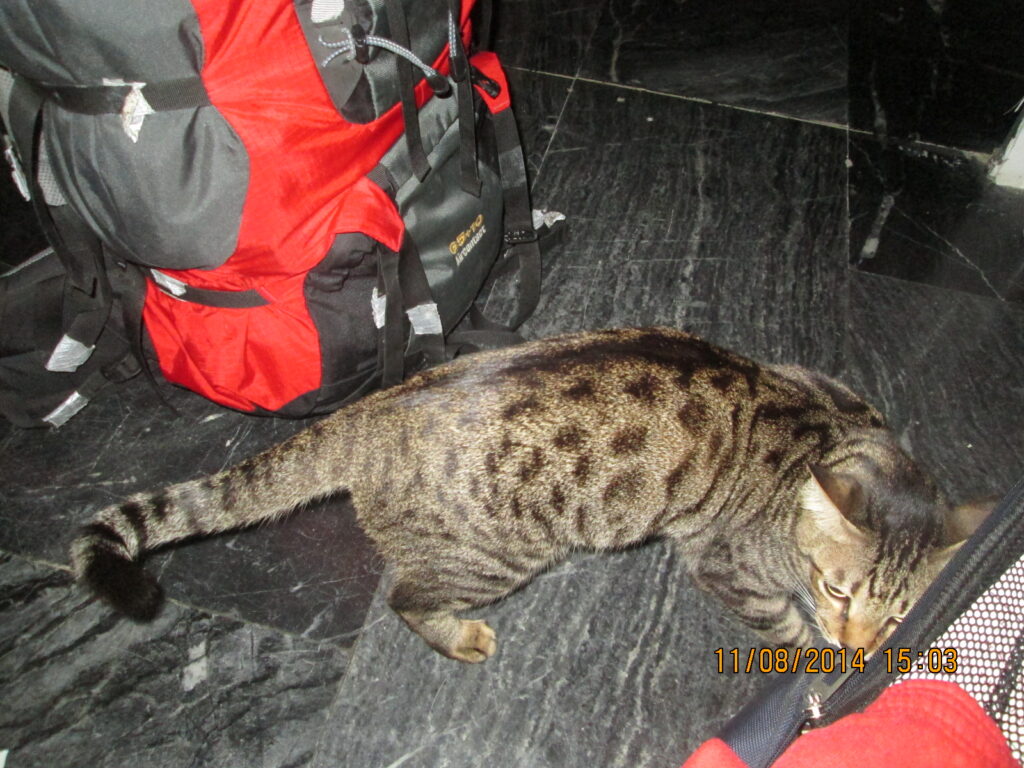
The Bengal is an athletic domestic cat breed known for a spotted or marbled coat, muscular build, and intense curiosity. Modern registered Bengals are bred Bengal-to-Bengal, although the breed’s history includes the Asian leopard cat. Their striking appearance attracts attention, but a suitable home must be prepared for high activity, climbing, interactive play, training, and secure management.
Is a Bengal right for you?
Bengals often thrive with people who enjoy an active, highly interactive cat. Many investigate cupboards, climb high surfaces, learn routines quickly, and demand shared play. A quiet decorative pet is an unrealistic expectation. Without sufficient outlets, some may vocalize, disturb other pets, damage objects, or develop repetitive behavior.
Prospective owners should also check local rules. Early-generation hybrids and sometimes later generations may be restricted by national, regional, municipal, housing, or insurance policies. Confirm legality and documentation before acquiring a cat, and do not assume every spotted cat has wild ancestry.
Size, lifespan, coat, and appearance
| Trait | Typical Bengal |
|---|---|
| Adult weight | Females often 6–12 lb; males often 9–15 lb |
| Maturity | Generally reaches full size around age two |
| Life expectancy | Often 12–20 years, depending on genetics, environment, and care |
| Coat | Short, dense, soft, spotted with rosettes or marbled |
| Build | Muscular, balanced, agile, and medium to large |
Recognized colors include brown, silver, and several snow forms under registry terminology. “Glitter” describes a light-reflecting quality present in some coats and is not a health requirement. Pedigree records establish breed identity; markings alone do not prove that a cat is a Bengal.
Temperament and family compatibility
Bengals are often confident, curious, social, and communicative, although individual temperament varies. Many follow people, participate in household activity, and learn games. Some are more reserved or sensitive. Breed labels never guarantee affection, lap sitting, or comfort with children.
They can live successfully with respectful older children and compatible pets after gradual introductions. Fast movement can trigger chase, and vigorous play may overwhelm timid animals. Provide each pet separate food, litter, resting places, and escape routes. Rabbits, birds, rodents, reptiles, and fish need secure enclosures because prey interest remains possible.
Exercise, climbing, and enrichment
Plan several interactive play sessions each day using wand toys, rolling toys, tunnels, and controlled retrieve. Add food puzzles, scent searches, clicker training, and safe objects to investigate. Rotate toys, and store strings or feathers after supervised use.
Provide tall, sturdy cat trees, shelves, scratching posts, and safe landing zones. Anchor furniture that could tip. A cat wheel may suit some Bengals after gradual reward-based introduction, but it does not replace social play or exploration. Schedule calm periods so the cat learns to settle as well as act.
Many Bengals show interest in running water. Secure toilets, aquariums, washers, baths, and cleaning products. Outdoor access is safest in a catio or on a harness after indoor training. Free roaming creates risks from vehicles, fights, toxins, theft, and wildlife conflict.
Training and household management
Reward-based training can teach carrier entry, recall, stationing, harness skills, cooperative nail care, and redirection from counters or doors. Short sessions with small rewards work well. Punishment, spray bottles, or startling devices can create fear and do not meet the underlying need for activity.
Use secure latches on food cupboards and windows. Reward appropriate climbing and scratching near the locations the cat chooses. If nighttime activity disrupts sleep, increase evening play followed by a meal and keep a predictable routine rather than confining the cat without enrichment.
Persistent over-grooming, tail chasing, aggression, house soiling, or extreme vocalization needs veterinary assessment before being treated as a training problem. Pain, urinary disease, skin disease, and anxiety can change behavior.
Feeding and healthy weight
Feed a complete and balanced cat food appropriate for life stage and health. High activity does not justify an unbalanced raw or homemade diet. Raw animal products can carry pathogens and may be nutritionally incomplete; homemade diets require formulation by a qualified veterinary nutritionist.
Measure meals, count training rewards, and monitor body condition. Ribs should be easy to feel under a light covering and a waist should be visible from above. Track weight and adjust portions with veterinary guidance when growth, neuter status, activity, or health changes.
Fresh water should always be available. Wet food can add dietary moisture, while some cats drink more from wide bowls or fountains. Changes in thirst, appetite, or weight warrant veterinary attention.
Grooming, teeth, nails, and litter care
The short coat generally needs weekly brushing to remove loose hair and inspect skin. Grooming requirements increase during shedding or with skin disease. Sudden thinning, itching, odor, or excessive licking needs assessment rather than repeated bathing.
Trim nails, provide multiple scratchers, and brush teeth with cat toothpaste. Bad breath, drooling, bleeding gums, or difficulty eating needs veterinary care. Use reward-based handling and stop before the cat struggles.
Provide one roomy litter box per cat plus one extra in separate quiet locations. Scoop daily. High-energy cats may avoid boxes blocked by another pet, and sudden elimination changes can signal urinary or digestive disease. Straining to urinate is an emergency.
Health screening and veterinary care
Responsible Bengal breeding programs should document relevant screening and family history. UC Davis offers DNA testing for Bengal progressive retinal atrophy, an autosomal recessive condition that can cause progressive blindness, and pyruvate kinase deficiency testing is also available. DNA results address only the variants tested and do not replace eye examinations or other veterinary assessment.
Ask about cardiac screening for hypertrophic cardiomyopathy, patellar evaluation, and conditions known in the breeder’s lines. Screening lowers risk without guaranteeing lifelong health. Routine care includes examinations, vaccination based on exposure, parasite prevention, dental care, and lean body condition.
Seek urgent help for open-mouth or difficult breathing, collapse, sudden hind-leg weakness, seizures, inability to urinate, severe injury, or suspected poisoning. Vision changes, repeated vomiting, reduced appetite, or abrupt behavior change also deserve prompt assessment.
Reproduction, neutering, and legal responsibilities
Breeding requires mature registered cats with stable behavior, appropriate health results, compatible pedigrees, and resources for pregnancy, birth, emergencies, kitten social development, screening homes, and lifelong return support. Breeding should not reintroduce wild cats into pet lines.
Discuss spaying or neutering with a veterinarian based on health and pregnancy prevention. Securely separate intact males and females whenever mating is possible. Check local ownership, generation, licensing, identification, breeding, housing, and import rules before obtaining a Bengal.
Declawing removes part of each toe and should not be a routine answer to scratching. Provide suitable scratchers, nail care, environmental design, and training instead.
Choosing a kitten or rescue Bengal
A responsible breeder should explain pedigree generation, legal requirements, temperament, health tests, social development, vaccination, contract terms, and return policy. Buyers should see where kittens are raised and meet appropriate relatives. Avoid sellers promoting wildness, exaggerated size, guaranteed temperament, or immediate shipping without screening the home.
Bengals and spotted mixes also enter shelters and breed rescues. Ask what pedigree evidence exists rather than relying on markings. Review activity, handling, other pets, door-dashing, litter habits, and time alone. An adult cat with established behavior may be easier to match.
Common questions
Are Bengal cats good family pets?
They can thrive with active families that provide daily enrichment and supervise children, but their intensity and chase behavior may not suit every household.
How much exercise does a Bengal cat need?
Most need several daily sessions of interactive play, climbing, exploration, and mental work, with exact needs varying by age, health, and personality.
Do Bengal cats like water?
Many investigate running water, but interest varies. Always secure baths, toilets, aquariums, and appliances to prevent accidents.
Are Bengal cats hypoallergenic?
No. Allergens come mainly from saliva and skin secretions, and no cat breed is reliably allergen-free.
Are Bengal cats legal everywhere?
No. Rules can depend on jurisdiction and generation, so check current local laws, housing terms, and insurance conditions before acquisition.
The Siamese guide provides a useful comparison for vocal behavior and social needs, while the Savannah Cat guide covers another athletic spotted cat with distinct ancestry and legal considerations.
Sources and image credit
- The International Cat Association: Bengal breed profile
- Governing Council of the Cat Fancy: Bengal breed information
- UC Davis Veterinary Genetics Laboratory: Bengal progressive retinal atrophy
- Featured photograph by Rudolph.A.furtado via Wikimedia Commons, dedicated to the public domain under CC0 1.0. Image may be cropped for presentation.
