
Maine Coon
Maine Coon care guide covering size, temperament, feeding, grooming, enrichment, litter boxes, health screening, kittens, and family suitability.
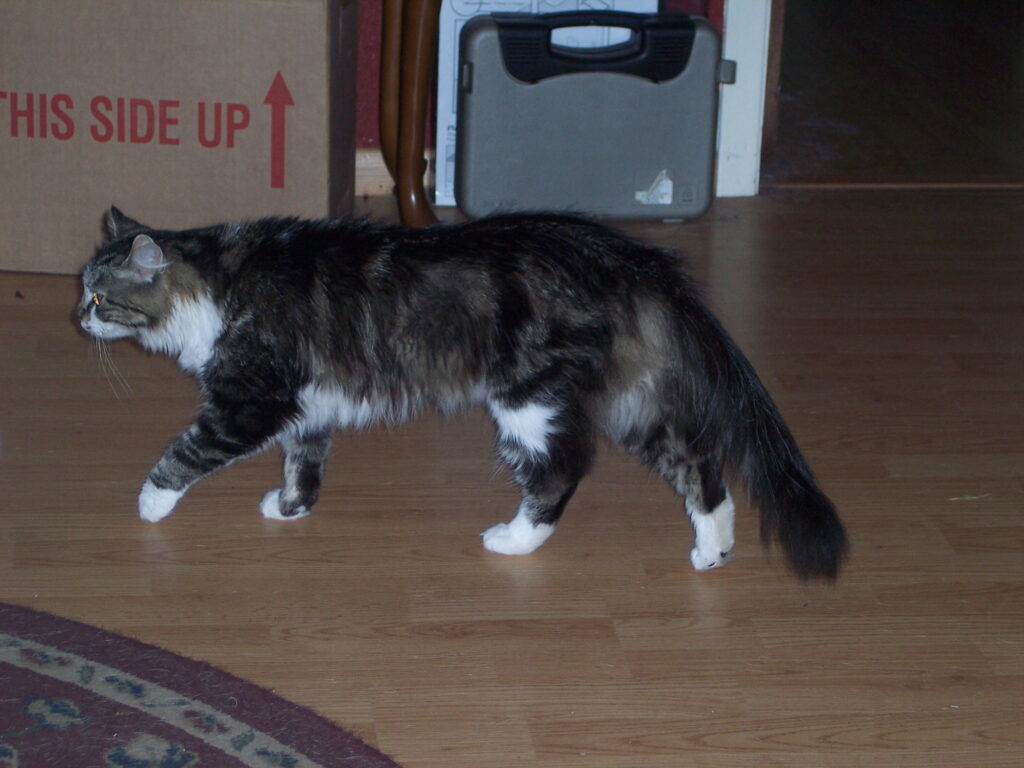
The Maine Coon is a large, slow-maturing domestic cat known for a shaggy coat, substantial frame, bushy tail, and friendly but usually undemanding personality. This North American breed can be an engaging family companion, but its size and coat make thoughtful feeding, grooming, enrichment, and health screening especially important.
Is a Maine Coon right for you?
A Maine Coon may suit someone who wants a social cat that tends to stay near people without demanding constant handling. Many follow their owners between rooms, investigate household activity, and retain playful habits well into adulthood. Individual personality still matters: some enjoy laps and carrying, while others prefer companionship at arm’s length.
Prospective owners should plan for a physically large cat rather than choosing the breed for appearance alone. A Maine Coon needs sturdy climbing furniture, a generously sized litter box, a secure carrier, regular coat care, and enough room to move comfortably. Food and veterinary costs can also be higher than for a smaller cat.
Maine Coon size, lifespan, and appearance
| Trait | Typical Maine Coon |
|---|---|
| Adult weight | Females often 12–15 lb; males commonly around 18–22 lb, with healthy individuals outside these ranges |
| Maturity | Often three to five years before full adult development |
| Life expectancy | Commonly 12.5 years or longer, with substantial individual variation |
| Coat | Semi-long, uneven shag with a lighter shoulder coat and fuller ruff, belly, and tail |
| Activity | Moderate; playful and interested in interactive games |
The breed has a broad chest, rectangular body, strong legs, large tufted paws, prominent ears, and a long tail. Maine Coons occur in many colors and patterns. Brown tabby is familiar, but coat color does not identify purity or predict personality. A long coat, ear tufts, and a large body are also found in mixed-breed cats; reliable breed identification requires pedigree records rather than appearance alone.
Temperament and family compatibility
Breed organizations describe the Maine Coon as gentle, friendly, and good-natured. Many live well with respectful children, cat-friendly dogs, and other cats when introductions are gradual. No breed label guarantees compatibility, so match the individual cat’s history and confidence to the household.
Teach children to let a cat move away, avoid pulling the tail or coat, and never disturb eating, sleeping, or litter-box use. Provide elevated resting places and at least one quiet retreat that other pets and children cannot crowd. A cat that hides, freezes, swats, or avoids resources may need more distance and a slower introduction.
Exercise and indoor enrichment
Maine Coons are often playful without being constantly frantic. Schedule two or more short interactive sessions daily using wand toys, rolling toys, food puzzles, or retrieve games. Rotate toys to preserve novelty and finish hunting-style play with a small food reward when appropriate.
Use a tall, stable cat tree rated for the cat’s adult weight. Add horizontal and vertical scratchers, window perches, tunnels, and shelves with safe landing spaces. Because the breed is heavy, lightweight furniture that tips or flexes is unsuitable. Check wall anchors, platforms, and scratching posts regularly.
Outdoor access is safest in a secure catio, enclosed garden, or properly fitted harness after gradual training. Free roaming exposes any cat to vehicles, disease, fights, toxins, and wildlife predation. Indoor enrichment should continue even when supervised outdoor time is available.
Feeding a Maine Coon
Feed a complete and balanced cat food appropriate for the animal’s life stage. Cats require animal-derived nutrients, including taurine, and homemade diets should be formulated by a qualified veterinary nutritionist. A large frame does not justify unlimited food.
Measure portions, count treats, and assess body condition under the coat. You should be able to feel the ribs beneath a light covering and see a waist when looking from above. Regular weigh-ins help detect gradual gain that thick fur can conceal. Ask a veterinarian to set an appropriate target if the cat is growing, neutered, inactive, or managing a medical condition.
Fresh water should always be available. Some cats drink more readily from wide bowls or fountains positioned away from food and litter boxes. Wet food can contribute dietary moisture, but the best feeding plan depends on the individual cat’s health, preferences, and total calorie needs.
Grooming and coat care
Comb the coat at least once or twice a week; cats with a cottony or mat-prone texture may need attention more often. Concentrate on the armpits, belly, chest, trousers, and area behind the ears. Start with brief, rewarded sessions so grooming remains comfortable rather than becoming a wrestling match.
Never cut close to the skin with scissors because thin cat skin can pull into a mat. Ask a veterinarian or experienced feline groomer to remove tight mats safely. Routine care also includes nail trimming, dental hygiene with cat-safe products, and checking the ears and skin. Sudden greasiness, dandruff, matting, or reduced self-grooming can indicate pain or illness.
Litter boxes and equipment for a large cat
Many standard litter trays are too small for an adult Maine Coon. Choose an uncovered box long enough for the cat to turn without touching the sides; large storage-style trays can work when the entry height is suitable. Provide one box per cat plus one extra, distribute them across separate locations, and scoop at least daily.
A hard-sided carrier should support the cat’s weight and allow comfortable turning. Leave it open in the home with bedding and treats so it becomes familiar. Food bowls, beds, doors, and hiding places should also accommodate the adult cat rather than only the kitten brought home.
Maine Coon health concerns
Maine Coons can develop diseases seen in all cats as well as inherited conditions of concern in the breed. These include hypertrophic cardiomyopathy (HCM), hip dysplasia, spinal muscular atrophy, and pyruvate kinase deficiency. HCM causes abnormal thickening of heart muscle, but affected cats do not always show early outward signs.
A DNA result for one known HCM mutation does not replace a veterinary cardiac evaluation or guarantee that a cat is free from every form of heart disease. The International Cat Association recommends that breeding cats be assessed with echocardiography as well as relevant genetic testing. Responsible breeders should provide verifiable results rather than saying only that their cats are “health tested.”
Seek urgent veterinary care for open-mouth breathing, labored breathing, collapse, sudden weakness or paralysis of the hind limbs, or severe pain. Arrange a prompt examination for persistent limping, reduced jumping, weight change, poor appetite, or altered behavior. Routine veterinary visits, parasite prevention appropriate to local risk, dental care, and maintaining lean body condition remain important throughout life.
Choosing a Maine Coon kitten or rescue
A responsible breeder should discuss temperament, socialization, vaccination, pedigree, and breed-relevant screening for both parents. Kittens should be raised in a clean home environment, remain with their mother and littermates for an appropriate period, and be comfortable with ordinary handling and household experiences. Avoid sellers who advertise extreme size as the main goal, refuse documentation, or offer immediate shipping with little interest in the home.
Adult Maine Coons and longhaired mixes also enter rescue. Ask what is actually known about pedigree rather than relying on a visual label. For adoption decisions, the cat’s health, observed behavior, grooming tolerance, and household compatibility matter more than whether it meets a breed standard.
Common questions
How big does a Maine Coon get?
Males are often substantially larger than females, but weight alone does not prove breed identity. A healthy adult’s ideal weight depends on frame and body condition, so a veterinarian should assess the individual rather than aiming for a record-breaking number.
Are Maine Coons hypoallergenic?
No. Allergens are associated with saliva, skin secretions, and dander rather than coat length alone. Anyone with allergies should spend time around the individual cat and consult an allergy professional before adoption.
Do Maine Coons need daily brushing?
Some do. Many coats remain manageable with thorough combing two or three times weekly, while softer, denser coats can mat without daily attention. Check problem areas frequently and adjust the schedule to the individual.
Can Maine Coons live in apartments?
Yes, provided the home has large, stable climbing and scratching structures, suitable litter boxes, daily interactive play, and enough usable vertical and floor space. Enrichment and resource quality matter more than the address.
Do all Maine Coons like water?
No. Some investigate taps or play with water, but this is an individual preference rather than a care requirement. Never force a cat to swim or bathe for entertainment.
For another large, people-oriented cat with a soft coat, compare the grooming and health considerations in the Ragdoll guide.
Sources and image credit
- The International Cat Association: Maine Coon breed profile
- Cat Fanciers’ Association: Maine Coon Cat
- VCA Animal Hospitals: heart disease in cats
- Featured photograph by Hollakr via Wikimedia Commons, released into the public domain. Image cropped for presentation.
