
Ragdoll
Ragdoll cat care guide covering size, temperament, enrichment, feeding, grooming, HCM screening, safe handling, and family compatibility.
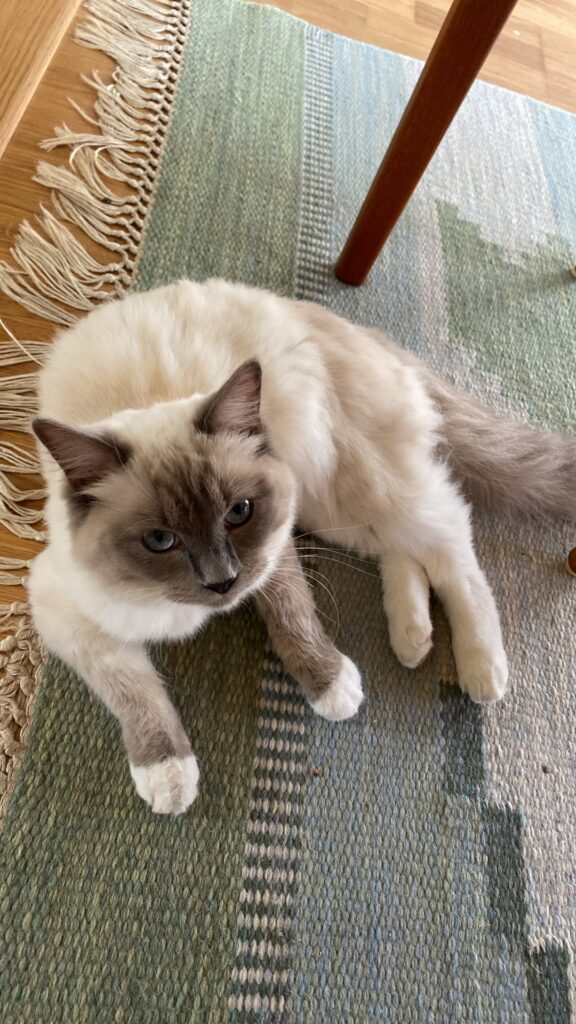
The Ragdoll is a large, blue-eyed, pointed cat breed with a semi-long silky coat and a reputation for calm companionship. Developed in California during the 1960s, the breed matures slowly and can become much larger than an average domestic cat. Many Ragdolls enjoy following people and joining quiet household activities, but the name does not mean every individual likes being carried or will relax in anyone’s arms.
Is a Ragdoll right for you?
A Ragdoll may suit someone seeking a social indoor companion with moderate rather than relentless activity. Many greet their people, sleep nearby, and enjoy wand toys or retrieve games. They still need daily play, climbing, scratching, and attention. A quiet reputation should never justify leaving a cat without enrichment for long periods.
Prospective owners should plan for a physically large cat. Sturdy climbing furniture, an oversized litter box, a secure carrier, and appropriately sized beds matter. Food, grooming, and veterinary costs may also exceed those of a smaller cat. No responsible breeder can guarantee that a kitten will become a lap cat or go limp when handled.
Size, lifespan, and appearance
| Trait | Typical Ragdoll |
|---|---|
| Adult weight | Females often 10–15 lb; males commonly 15–20 lb, with individual variation |
| Maturity | Full size may take up to four years; coat and color develop gradually |
| Life expectancy | Many live into their mid or high teens, depending on genetics and care |
| Coat | Moderately long, soft, with abundant guard hairs and limited woolly undercoat |
| Eyes | Blue in the pedigree breed standard |
Ragdolls have darker points on the ears, mask, legs, and tail with a lighter body. Recognized patterns include colorpoint, mitted, and bicolor, while registries vary in details. Kittens are born pale and gain point color over time because the colorpoint pattern responds to temperature. A blue-eyed pointed cat is not automatically a Ragdoll; pedigree records establish breed identity.
Temperament and family compatibility
Breed organizations describe Ragdolls as affectionate, relaxed, and sociable. Many live successfully with respectful children, friendly dogs, and other cats after gradual introductions. Individual history, health, and personality remain more predictive than a breed label, so assess the actual cat rather than assuming unlimited tolerance.
Adults should supervise children and teach them to let the cat move away. Never drape, dress, or carry a cat that is trying to escape. Provide elevated resting places and at least one quiet retreat. Introduce pets through scent exchange, barriers, and brief supervised meetings, and slow down if either animal hides, stares, blocks resources, or becomes tense.
Exercise and indoor enrichment
Ragdolls are often moderately active, but kittens and young adults can be lively. Schedule several short play sessions with wand toys, rolling toys, tunnels, and safe objects to retrieve. Food puzzles, clicker training, and scent searches add mental work. Adjust portions when treats are used for training.
Choose a tall, stable cat tree rated for adult weight. Add strong scratchers, wide shelves, and safe landing areas. Because a heavy cat can tip lightweight furniture, check anchors and platforms regularly. Do not assume calmness means poor climbing ability; secure screens, balconies, cupboards, string, lilies, medication, and toxic household products.
Outdoor access is safest in a catio, enclosed garden, or on a harness after gradual training. Free roaming creates risks from vehicles, fights, disease, toxins, theft, and wildlife. Keep identification and microchip details current even for an indoor-only cat.
Feeding and healthy weight
Feed a complete and balanced cat food appropriate for age and health. A large frame does not justify unrestricted portions, and growth should be steady rather than forced. Homemade diets require formulation by a qualified veterinary nutritionist because cats need specific nutrients, including taurine.
Measure meals and monitor body condition beneath the coat. You should be able to feel the ribs beneath a light covering and see a waist from above. Ragdolls may have a normal lower abdominal pad, but it should not be confused with obesity. Record weight over time and ask a veterinarian to set a target for growing, neutered, inactive, or medically affected cats.
Fresh water should always be available. Some cats drink more from wide bowls or fountains positioned away from food and litter. Wet food can add dietary moisture, but the best feeding plan depends on the individual.
Grooming and routine care
Comb the coat thoroughly at least once or twice each week and more during seasonal shedding. Concentrate behind the ears, under the legs, around the ruff, belly, and trousers. A metal comb helps detect tangles near the skin that a surface brush may miss. Coat texture varies, so some individuals need more frequent care.
Never cut close mats with scissors because cat skin can pull into them. A veterinarian or experienced feline groomer can remove tight mats safely. Trim nails, provide scratching surfaces, and use cat-safe dental care. Sudden matting, greasiness, or reduced self-grooming can indicate pain, dental disease, obesity, or illness.
Provide one large litter box per cat plus one extra, distributed in separate quiet places. Scoop daily. A box should allow the adult cat to turn without touching the sides. Elimination changes require veterinary assessment because urinary disease, arthritis, constipation, and stress can all affect litter habits.
Training and safe handling
Reward-based training can teach carrier entry, recall, stationing, nail care, and cooperative handling. Leave a sturdy carrier open with bedding and treats so it becomes familiar. Support the chest and hindquarters when lifting, and put the cat down before struggling begins.
“Floppy” branding can encourage unsafe handling. No cat should be passed around, held upside down, or prevented from leaving to prove a breed trait. Watch ears, tail, body tension, pupils, and attempts to turn away. Respecting small warnings helps prevent fear and scratches.
Health screening and veterinary care
Hypertrophic cardiomyopathy (HCM), an abnormal thickening of heart muscle, is an inherited concern in Ragdolls. A DNA test exists for one breed-associated variant, but a negative result does not rule out every cause of HCM and does not replace veterinary examination or cardiac imaging when indicated. Responsible breeding programs combine genetic information with appropriate health assessment.
Ask for verifiable results for both parents and discuss family history, kidney health, blood type, and longevity. “Health tested” should be supported by named records. Screening reduces risk without guaranteeing lifelong health. Routine examinations, dental care, vaccination based on local risk, parasite prevention, and lean body condition remain essential.
Seek urgent care for open-mouth breathing, labored breathing, collapse, sudden hind-leg weakness or paralysis, inability to urinate, seizures, or suspected poisoning. Arrange prompt assessment for weight change, reduced jumping, persistent vomiting, poor appetite, coughing, or behavior change.
Reproduction, neutering, and responsible ownership
Breeding should involve mature pedigree cats with stable temperament, documented relevant health results, and a plan for every kitten. Pregnancy, birth, and neonatal care can require emergency treatment. Raising kittens also involves hygiene, vaccination, nutrition, records, and careful social development.
Discuss spaying or neutering with a veterinarian using the cat’s health and pregnancy-prevention needs. Intact cats may call, spray, roam, or attempt escape, and accidental mating can occur quickly. Securely separate intact males and females whenever pregnancy is possible.
Check local rules for licensing, identification, breeding, and housing. Responsible ownership includes safe confinement, daily care, veterinary treatment, and arrangements during travel or illness. Declawing removes part of each toe and should not be used as a routine solution to scratching; provide suitable scratchers and training instead.
Choosing a kitten or rescue Ragdoll
A responsible breeder should discuss temperament, pedigree, HCM testing, socialization, vaccination, and contract terms; show where kittens are raised; and remain available after purchase. Avoid sellers who promise giant size, perfect calmness, allergy-free coats, or immediate shipping without screening the home.
Ragdolls and pointed longhaired mixes also enter shelters and breed rescues. Ask what is actually known about pedigree. For matching, observed health, confidence, grooming tolerance, and compatibility matter more than visual resemblance.
Common questions
Do all Ragdolls go limp when held?
No. Some relax during handling, while others prefer four paws on a surface. Individual consent and secure support matter more than the breed’s name.
How big do Ragdoll cats get?
Females often weigh about 10–15 pounds and males 15–20 pounds, but healthy weight depends on frame and body condition rather than a target number.
Are Ragdolls hypoallergenic?
No. Allergens come from saliva, skin secretions, and dander, and coat length or shedding level cannot make a cat allergen-free.
Do Ragdolls need much grooming?
Most need thorough combing once or twice weekly, with extra attention during shedding or wherever the coat tangles.
Can Ragdolls live indoors?
Yes. A secure indoor home with climbing, scratching, daily play, social contact, and optional enclosed outdoor access can meet their needs.
People comparing larger companion cats may also review the Maine Coon guide for differences in coat, activity, and screening.
Sources and image credit
- The International Cat Association: Ragdoll breed profile
- Cat Fanciers’ Association: Ragdoll breed information and standard
- UC Davis Veterinary Genetics Laboratory: Ragdoll HCM test
- Featured photograph by Berikande via Wikimedia Commons, dedicated to the public domain under CC0 1.0. Image may be cropped for presentation.
