
Norwegian Forest Cat
Norwegian Forest Cat care guide covering temperament, exercise, grooming, feeding, training, health screening and responsible adoption.
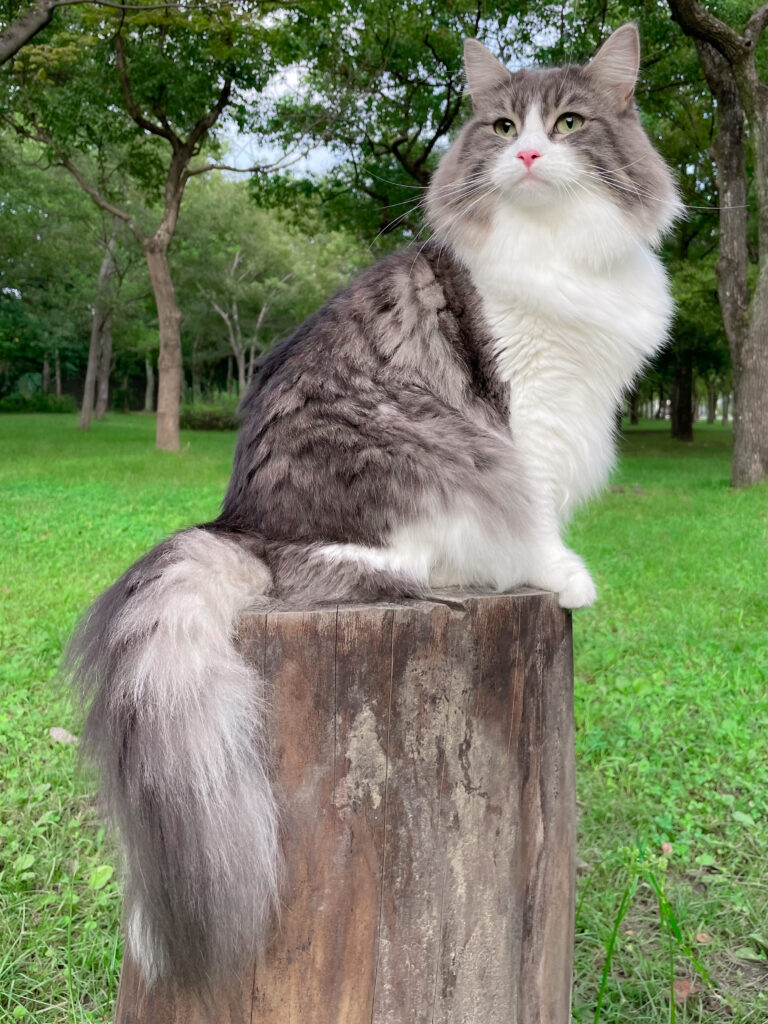
The Norwegian Forest Cat is a large, athletic longhaired breed developed in Scandinavia. Its triangular head, straight profile, powerful hindquarters and seasonal double coat distinguish it from other fluffy cats. Breed registries describe these cats as intelligent, mild-mannered and interactive, but an individual cat’s personality still depends on genetics, early socialization, health and experience. This guide explains the daily work behind the dramatic coat and confident climbing ability, so families can judge whether the breed fits their home. For a near-hairless breed with very different skin and temperature-care needs, compare the Sphynx guide.
Temperament and household fit
Many Norwegian Forest Cats enjoy staying near their people without demanding constant carrying. They often follow household activity, investigate shelves and windows, and choose when to settle beside someone. TICA describes the breed as playful, loving and adaptable; that does not guarantee that every cat will be a lap cat or welcome every visitor. Let a new cat approach at its own pace and provide a quiet room during the first days.
A calm introduction is essential when children or other pets share the home. Children should sit on the floor, offer a toy, and avoid pulling the tail or lifting the cat without support. Introduce another cat through scent swapping and a closed door before brief supervised meetings. Dogs should remain leashed initially and must never chase. Separate feeding stations, resting sites and litter boxes reduce competition even after the animals appear comfortable.
Exercise, play and enrichment
This is a strong climbing breed, so useful exercise is three-dimensional. A tall, stable cat tree, wall shelves with safe landing space, sturdy scratching posts and window perches provide choices that furniture alone cannot. Check that climbing structures cannot tip under the weight of a large adult. Keep breakable objects away from launch routes, secure window screens and remove cords that could snag a paw.
Offer several short interactive play sessions rather than expecting the cat to exercise alone. Wand toys can imitate prey moving behind a box or over a low obstacle. Food puzzles, treat searches and rotating toys add mental work. End vigorous play with a small meal or treat when appropriate. Laser toys should finish on a physical toy the cat can catch, and string or feather toys should be stored after use because swallowed material can obstruct the digestive tract.
Coat, claws and routine grooming
The coat combines a dense undercoat with longer water-resistant guard hairs. CFA notes that regular combing helps prevent tangles, while the spring shed needs extra attention. Use a stainless-steel comb to reach the undercoat gently, working in small sections around the ruff, armpits, belly and hind-leg furnishings. Never pull through a tight mat. A groomer or veterinary team can remove severe mats without cutting the skin, which is thin and easy to injure.
Frequent brushing also removes loose fur before the cat swallows it. Merck Veterinary Manual notes that longhaired cats have greater hairball risk and that brushing can reduce swallowed hair. Repeated vomiting, reduced appetite, constipation or lethargy should not be dismissed as “just a hairball.” Check ears and teeth regularly, trim only the clear claw tip, and introduce every procedure with brief sessions and rewards. Bathing is rarely routine; the water-repellent coat can take a long time to wet and dry.
Feeding and healthy weight
Feed a complete and balanced cat food matched to the cat’s life stage. Merck advises choosing food with a nutritional adequacy statement and reminds owners that cats require animal-derived nutrients, including taurine. Measure portions rather than keeping an endlessly full bowl, then adjust with the veterinarian as growth, neuter status, activity and body condition change. Treats should remain a small part of the daily calories.
A heavy coat can hide weight gain or loss, so look and feel. Ribs should be palpable under a light covering, with a visible waist when viewed from above. Record weight monthly at home if possible. Provide fresh water in several quiet locations; some cats drink more readily from wide bowls or fountains. Sudden thirst, appetite change, difficulty chewing, vomiting or unexplained weight change warrants a veterinary visit.
Training, litter boxes and indoor safety
Reward-based training suits an observant, food-motivated cat. A marker word or clicker can teach recall, carrier entry, nail-trim cooperation and stepping onto a scale. Keep sessions short and stop while the cat is still engaged. Never use spray bottles, shouting or physical punishment; these approaches create fear without teaching the desired alternative.
Provide at least one litter box per cat plus one extra, distributed in separate accessible locations. Large cats need boxes long enough to turn and dig comfortably. Scoop daily and avoid abruptly changing litter. A sudden house-soiling problem may signal pain, urinary disease, conflict or an unsuitable box and deserves prompt investigation. Indoor living, a secure catio or supervised harness time protects the cat from traffic, toxins, predators and infectious disease while also protecting wildlife.
Health screening and preventive care
Choose a breeder or rescue that shares veterinary records and answers direct health questions. CFA reports that hypertrophic cardiomyopathy and glycogen storage disease type IV have occurred in the breed and that responsible breeders test breeding cats. Ask which tests were performed, request the actual results, and discuss their meaning with an independent veterinarian. A DNA result for one disorder does not replace physical examinations or screening for other disease.
Hypertrophic cardiomyopathy thickens the heart muscle and may progress without obvious early signs. Cornell identifies echocardiography as the diagnostic standard for feline cardiomyopathy. Rapid or labored breathing, collapse, or sudden painful hind-limb weakness is an emergency. Preventive care should also cover vaccines appropriate to risk, parasite control, dental health, microchipping and regular examinations. Keep the cat at a lean body condition and report changes in breathing, movement, grooming or appetite early.
Choosing responsibly and planning for life
Norwegian Forest Cats mature slowly; TICA and CFA say full development can take about five years. A kitten therefore needs a long-term plan, not just kitten supplies. Budget for quality food, large climbing furniture, grooming tools, annual care, emergency treatment and pet sitting. Confirm housing rules before adoption and identify who will care for the cat during travel or illness.
Meet the kitten’s mother when possible and observe whether the cats are alert, clean and comfortable around people. Avoid sellers who will not provide records, breed continuously without screening, or promise that a cat can never become ill. Rescue groups sometimes receive breed cats or similar longhaired mixes; a pedigree is less important than an honest health and behavior assessment. The right placement gives the cat safe vertical territory, daily play, gentle grooming and dependable veterinary care for its entire life.
Frequently asked questions
How much exercise does a Norwegian Forest Cat need?
Plan several short play sessions every day plus safe climbing, scratching and food-puzzle opportunities. Adjust intensity for age, health and interest.
Can a Norwegian Forest Cat live in an apartment?
Yes, when the apartment provides stable vertical territory, daily interactive play, clean litter boxes, secure windows and enough quiet resting space.
How often should a Norwegian Forest Cat be groomed?
Comb regularly and increase frequency during the heavy spring shed. Check the ruff, armpits, belly and hind legs where tangles may hide.
What health tests should breeders complete?
Ask for documented screening relevant to the breed, including discussion of HCM and DNA testing for glycogen storage disease type IV, then review results with your veterinarian.
Are Norwegian Forest Cats hypoallergenic?
No cat breed is reliably hypoallergenic. Allergens come from saliva and skin secretions as well as fur, so sensitive people should spend time with the individual cat before adoption.