
Russian Blue
Russian Blue cat care guide covering temperament, play, feeding, weight control, grooming, preventive health, litter boxes, and family compatibility.
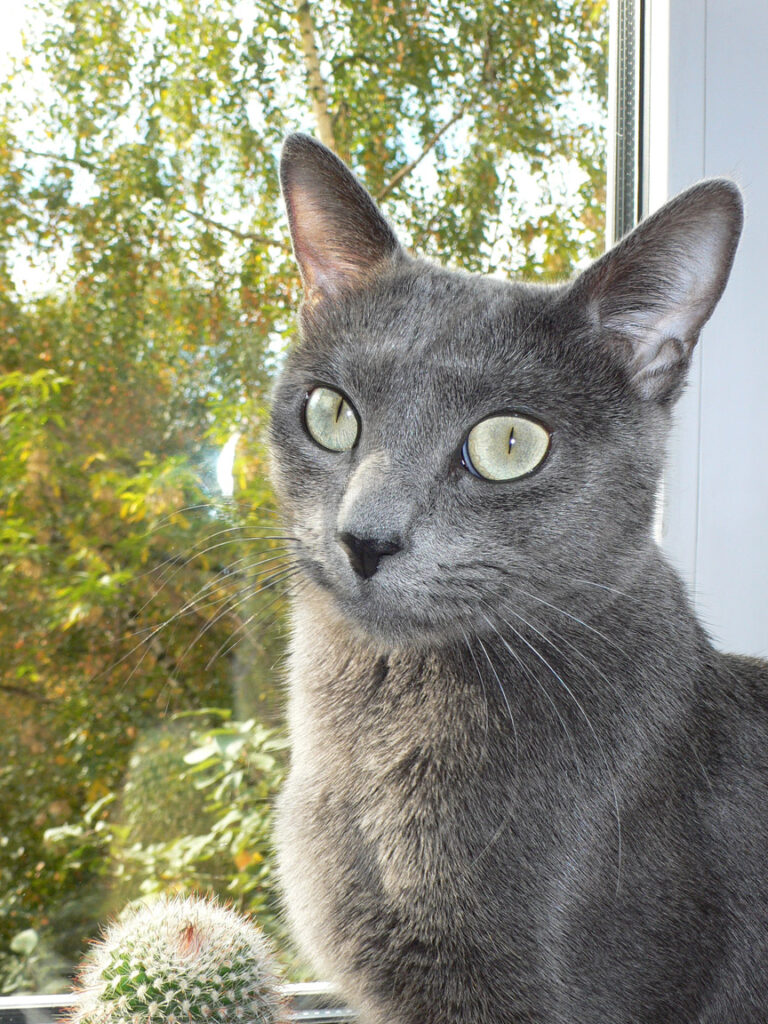
The Russian Blue is a pedigreed shorthair cat with a dense silver-tipped blue coat, vivid green eyes in mature cats, and a graceful medium-sized build. Many are playful and closely attached to familiar people while remaining cautious with visitors. Good care centers on predictable routines, daily enrichment, weight control, preventive medicine, and a safe indoor environment.
Is a Russian Blue right for you?
A Russian Blue can suit someone who wants an intelligent, interactive cat but appreciates a companion that also seeks private resting places. Many enjoy household routines and may watch a new person from a distance before approaching. Reserved behavior should be respected rather than forced; trust grows through quiet choices, play, and positive handling.
The breed does not need a huge home, but it does need vertical territory, scratching surfaces, hiding places, and daily shared activity. A quiet reputation does not mean the cat should be left without enrichment. Food puzzles, climbing routes, window views, and short play sessions help prevent boredom and excess weight.
Size, lifespan, coat, and appearance
| Trait | Typical Russian Blue |
|---|---|
| Size | Medium-sized; males often up to about 10 lb and females commonly about 5–8 lb |
| Life expectancy | Often 10–20 years, with individual variation |
| Coat | Short, fine, dense double coat that stands away from the body |
| Color | Even blue-gray with silver-tipped guard hairs |
| Build | Fine-boned, long, firm, and muscular with large ears and a wedge-shaped head |
Kittens may have less intense eye color that develops toward green with maturity. Coat color alone does not prove breed ancestry: many mixed-breed cats are solid gray. A true Russian Blue is identified through a documented pedigree and breed standard rather than appearance or a seller’s claim.
Temperament and family compatibility
Russian Blues are often observant, playful, and affectionate with people they know. Some follow family members from room to room, retrieve toys, or learn how doors and containers work. Others prefer interaction on their own terms. Breed tendencies never guarantee an individual cat’s behavior.
They can live successfully with considerate children who understand quiet handling and allow the cat to leave. Adults should supervise, teach children not to chase or carry unwilling cats, and provide high resting places that remain off limits to children and dogs.
Introduce other cats or calm dogs gradually through scent exchange, separate rooms, barriers, and short supervised meetings. Each animal needs its own food, water, litter, beds, and escape routes. Do not force face-to-face contact or assume that a playful kitten will welcome every pet.
Play, enrichment, and an indoor home
Offer several interactive play sessions each day using wand toys, tossed soft toys, and games that imitate stalking and capture. End with a small reward or meal when appropriate. Rotate toys to maintain interest and put string, elastic, feathers, and small swallowable pieces away after use.
Russian Blues are capable climbers and jumpers. A sturdy cat tree, shelves, window perch, cardboard boxes, and multiple scratching surfaces expand usable space. Puzzle feeders and simple training can exercise the mind. Teach targeting, carrier entry, scale use, and nail-care positions with tiny rewards.
Indoor living protects cats from vehicles, predators, toxins, infectious exposure, and fights. A secure catio or harness training can provide controlled outdoor access. Check screens and balconies carefully; ordinary insect screens do not safely contain a determined cat.
Feeding, hydration, and weight control
Feed a complete and balanced diet appropriate for life stage and health. Measure food rather than repeatedly topping up the bowl, include treats in the daily total, and use body condition instead of package estimates alone. Russian Blues are sometimes described as enthusiastic eaters, so automatic portioning and puzzle feeders may help.
A healthy cat should have ribs that are easy to feel beneath a light covering and a visible waist from above. Excess weight increases risk for diabetes, arthritis, urinary problems, and reduced quality of life. Ask a veterinarian to set a calorie target and monitor change gradually; sudden calorie restriction can be dangerous for cats.
Provide fresh water in several quiet locations, separated from litter. Some cats prefer wide bowls or circulating fountains. A sudden increase or decrease in thirst, appetite, or urination needs veterinary assessment. Complete refusal of food, especially with lethargy or vomiting, should be addressed promptly.
Coat, nails, ears, and dental care
The dense short coat usually needs gentle combing once or twice a week, with more attention during seasonal shedding. Brushing removes loose hair and creates an opportunity to check the skin and body. Frequent bathing is unnecessary unless recommended for a specific problem.
Trim nail tips before they become sharp or catch on fabric, and provide stable vertical and horizontal scratchers. Inspect ears for redness, odor, discharge, or repeated scratching. Clean only when needed with a veterinarian-approved method; cotton swabs can push debris deeper or injure the ear.
Brush teeth daily with cat-safe toothpaste when possible. Dental disease is common across cats even when breath seems normal. Drooling, pawing at the mouth, red gums, reduced appetite, dropping food, or choosing soft food can indicate pain and should prompt an examination.
Litter boxes, routine, and time alone
Provide one litter box per cat plus one extra, distributed in quiet accessible places rather than lined together. Use boxes large enough for turning and digging, scoop at least daily, and avoid abrupt litter changes. A covered box may trap odor or make a cautious cat feel cornered.
Urination or defecation outside the box is a medical or environmental signal, not spite. Arrange a veterinary evaluation, then review box cleanliness, location, litter preference, conflict, mobility, and household change. Straining, frequent trips with little urine, crying, or inability to pass urine is an emergency, especially in males.
Many Russian Blues tolerate a normal workday when their environment is prepared, but kittens and highly social individuals need more contact. Maintain predictable feeding and play, offer safe solo enrichment, and arrange care for longer absences. A pet camera can reveal distress or inactivity that is otherwise missed.
Health care and screening
Russian Blues are generally described as a healthy natural breed without one universally recognized breed-specific screening panel. That does not make an individual immune to common feline disease. A breeder should share family health history, veterinary records, infectious-disease testing, and any screening relevant to the line.
Preventive care should follow age and lifestyle. Discuss examinations, vaccination, parasite control, dental care, microchipping, blood pressure, and senior laboratory monitoring with a veterinarian. Weight, muscle condition, mobility, coat, appetite, water intake, litter habits, and behavior can reveal early change.
Seek urgent care for open-mouth breathing, collapse, seizures, major trauma, suspected poisoning, repeated vomiting, a painful swollen abdomen, or inability to urinate. Cats hide illness, so smaller changes such as reduced jumping, hiding, poor grooming, or altered sleep deserve attention when persistent.
Reproduction, neutering, and welfare
Breeding should be limited to mature pedigree cats with stable behavior, veterinary evaluation, compatible pedigrees, and health information from close relatives. Breeders need plans for pregnancy and birth emergencies, neonatal care, early social development, careful placements, and lifetime return support.
Discuss spaying or neutering timing with a veterinarian. Prevent accidental mating by keeping intact cats securely indoors and separated when necessary. Identification, microchip registration, and local licensing or breeding rules remain the owner’s responsibility.
Choosing a kitten or rescue Russian Blue
A responsible breeder should provide pedigree and registration information, allow time for questions, describe the parents’ health and temperament, raise kittens in a clean enriched home environment, and use a contract with a return policy. Avoid sellers who label any gray kitten a Russian Blue, promise “hypoallergenic” status, or push immediate payment and shipping.
Adult Russian Blues sometimes become available through breeders or rescue groups, while shelters have many appealing gray domestic shorthairs. Ask about handling, children, pets, litter habits, food, veterinary history, and adjustment to change. Choose the individual cat that fits the household rather than relying on color alone.
Common questions
Are Russian Blue cats good family pets?
Many form close family bonds, but introductions should be calm and children must respect the cat’s choice to retreat or rest.
Are Russian Blue cats hypoallergenic?
No cat is reliably allergen-free. Allergens come mainly from saliva and skin secretions, so individual reactions must be assessed directly.
How much grooming does a Russian Blue need?
The short dense coat usually benefits from gentle brushing once or twice weekly, plus routine nail, ear, and dental care.
Can a Russian Blue live in an apartment?
Yes, when the home includes climbing space, scratching surfaces, hiding places, daily interactive play, and secure windows or balconies.
How can I tell if a gray cat is a Russian Blue?
Color alone cannot confirm the breed. Reliable identification requires pedigree records from a recognized registry and conformity with the standard.
Readers considering quieter shorthair companions can compare the body type, routine, and grooming needs of the British Shorthair.
Sources and image credit
- Cat Fanciers’ Association: Russian Blue breed profile and standard
- The International Cat Association: Russian Blue breed information
- American Association of Feline Practitioners: feline life-stage guidance
- Featured photograph by Pavel via Wikimedia Commons, released into the public domain. Image may be cropped for presentation.
