
Australian Shepherd
Australian Shepherd care guide covering exercise, training, coat care, feeding, health screening, herding behavior and household fit.
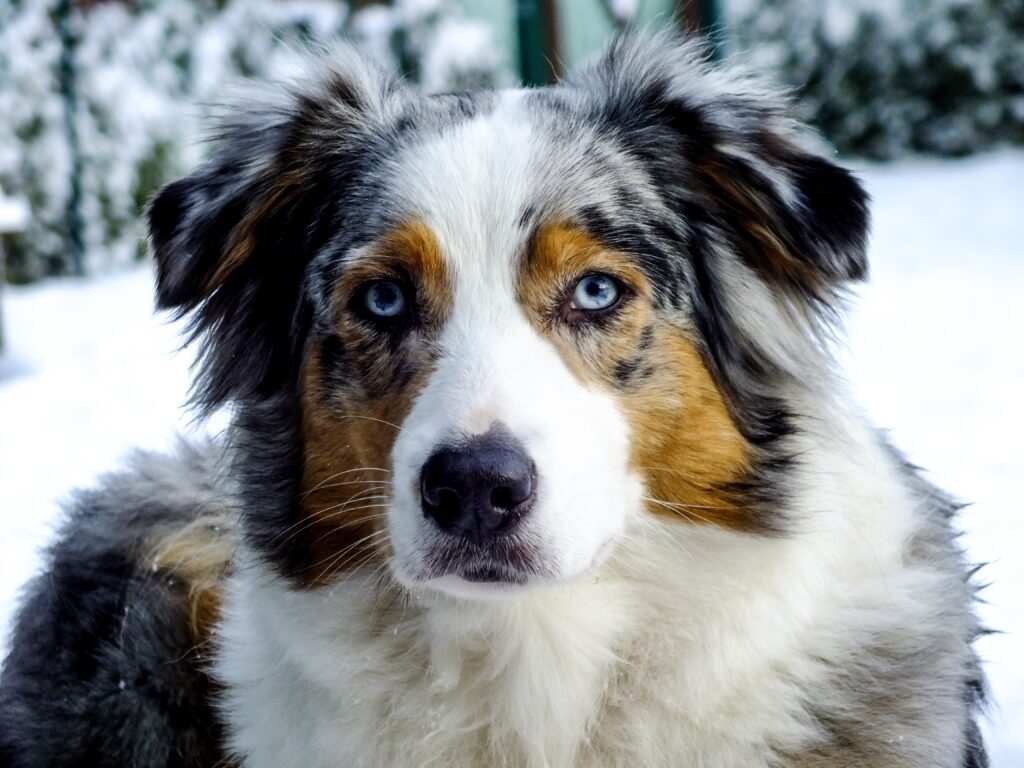
The Australian Shepherd is a medium-sized American herding breed known for stamina, quick learning and close attention to its handler. Despite the name, the modern breed was developed in the western United States. The American Kennel Club lists preferred adult heights of 20–23 inches for males and 18–21 inches for females, with typical weights of 50–65 pounds and 40–55 pounds respectively. An Australian Shepherd can be an exceptional companion for an active household, but intelligence and athletic ability create daily responsibilities. This is not a dog that reliably stays content with an occasional short walk and little interaction. For another highly responsive herding breed, the Border Collie guide offers a useful comparison of daily work, arousal and chase management.
Temperament and household fit
Australian Shepherds were selected to move livestock and respond rapidly to people. Many are loyal, observant and eager to work, while some are reserved with strangers. Breed tendencies do not predict every individual: genetics, early experience, health and training all matter. A suitable home appreciates an alert dog and can provide structured activity without expecting constant excitement. A bored Aussie may invent jobs such as chasing, barking, chewing or controlling movement around the house.
Many live successfully with respectful children, but supervision is essential. Herding behavior can include circling, staring at movement or nipping at heels, especially when children run. Adults should interrupt calmly and redirect the dog to a trained behavior rather than punishing instinctive responses. Introduce cats and other dogs gradually, use barriers when needed and protect every animal’s rest and feeding space. Apartment life is possible for an individual whose exercise, toilet and quiet-settling needs are met, although access to a secure outdoor area makes management easier.
Exercise and mental enrichment
A healthy adult generally needs substantial daily physical activity plus work for the brain. The exact amount varies with age, fitness and temperament. Brisk walks, hiking, controlled retrieving, swimming where safe, scent searches and dog sports can all contribute. Continuous high-impact running and repeated jumping are inappropriate for growing puppies; ask a veterinarian how to increase exercise while bones and joints develop. Older dogs may need shorter sessions, easier footing and more recovery time.
Mental work is as important as mileage. Rotate food puzzles, hide part of a meal for a search, teach useful household tasks and practice calm observation in new places. Herding, agility, obedience, tracking and rally can provide an outlet when taught safely. Avoid relying only on frantic ball chasing, which can build arousal without teaching the dog to settle. Include decompression walks, sniffing and quiet rest. In hot weather, exercise during cooler hours, carry water and stop for heavy panting, weakness, confusion or poor coordination.
Training, socialization and alone time
Reward-based training channels the breed’s speed and sensitivity. Start with name response, recall, loose-leash walking, leave-it, cooperative handling and settling on a mat. Use food, toys and access to activities as rewards. Short, clear sessions prevent frustration, while harsh corrections can increase fear or defensive behavior. A reliable recall takes months of practice; use a long line and secure fencing until it is dependable, especially around livestock, wildlife and traffic.
Thoughtful socialization means positive, controlled exposure rather than forcing a puppy to greet everyone. Pair people, friendly vaccinated dogs, household sounds, grooming, car travel and varied surfaces with safety and choice. Teach brief independence from the beginning through a comfortable pen or gated room, a chew and gradual absences. An adult dog walker or sitter may be necessary during long workdays. Crates are useful for transport and rest when introduced positively, but they must not replace exercise, social contact or toilet breaks.
Coat, ears, teeth and nails
The weather-resistant double coat is straight to wavy and of medium length, with feathering on the legs and a fuller ruff. Colors include blue merle, red merle, solid black and solid red, with or without white and tan markings. Brush through the coat once or twice weekly and more often during seasonal shedding. A slicker brush and metal comb can find loose undercoat and tangles behind the ears, in the furnishings and under the legs. Do not shave a healthy double coat as routine summer care; shade, water and sensible activity are safer heat-management tools.
Bathe when dirty with dog-safe products and dry the dense coat to the skin. Check ears for odor, redness, discharge or pain, especially after swimming. Brush teeth daily with canine toothpaste and arrange professional dental care when advised. Trim nails before they become long enough to change gait or click heavily on the floor. Gentle handling practice with frequent rewards makes grooming safer. A groomer or veterinary professional can demonstrate tools and nail technique.
Feeding and maintaining a healthy body
Feed a complete and balanced diet for the dog’s life stage and measure portions. Calorie needs change with body size, exercise, neuter status and health, so a package guide is a starting estimate rather than a prescription. Training treats count toward the daily total. You should be able to feel the ribs beneath a light covering and see a waist from above. Review body condition and growth with a veterinarian, particularly during puppyhood.
Extra weight stresses joints and reduces heat tolerance. Use part of the normal meal during training, choose small rewards and limit table food. Provide fresh water at all times. Sudden diet changes can cause digestive upset, so make routine transitions gradually. Do not add supplements or impose a boutique diet because of online claims; discuss any medical concern and the appropriate nutrition with a veterinarian.
Health screening and veterinary care
Responsible breeders document health testing rather than saying their dogs have merely been “vet checked.” The Australian Shepherd Club of America emphasizes hip evaluation and eye examination, and current breed-club recommendations may include additional genetic or clinical tests. Ask to see searchable results for both parents and discuss the current program with the breed club, the Orthopedic Foundation for Animals and your veterinarian. A CHIC number confirms that required results were made public; it does not by itself mean every result was normal.
Australian Shepherds can be affected by hip dysplasia, inherited eye disorders, epilepsy, autoimmune thyroid disease and sensitivity associated with the MDR1 gene. These are risks, not diagnoses. Never change a drug based only on breed or a home DNA result; tell the veterinarian about any documented test before medication. Seek veterinary care for seizures, collapse, persistent limping, vision changes, unexplained weight or coat changes, repeated digestive trouble or a decline in stamina. Maintain vaccination, parasite prevention, dental care and regular examinations according to local veterinary advice.
Choosing an Australian Shepherd
Meet adult relatives where possible and ask how the breeder evaluates temperament, herding drive, sound sensitivity and recovery after surprise. A responsible breeder explains the breed’s difficult traits, supplies verified health results, raises puppies in a clean enriched environment and remains available after placement. Avoid sellers who advertise merle-to-merle breeding, promise a particular eye color as more important than health, or always have puppies ready for immediate payment. Merle-to-merle pairings increase the risk of puppies with serious hearing and vision defects.
Rescue can be an excellent route for households willing to match an adult dog’s known energy and behavior. Ask about reactions to children, animals, handling, visitors and being left alone. Before arrival, prepare secure fencing, an identification tag and microchip plan, a well-fitted harness, safe chew items, barriers and a quiet bed. Keep the first days predictable, continue the familiar food initially and arrange a veterinary visit soon after adoption.
Safety, welfare and long-term commitment
Use a leash near roads and livestock and restrain the dog with an appropriate travel crate or tested vehicle harness. Check fences carefully because athletic dogs may jump, climb or exploit gaps. Keep medicines, xylitol, chocolate, grapes, raisins and other toxins inaccessible. Never leave a dog in a parked vehicle. Teach children to leave sleeping, eating or retreating dogs alone and separate pets whenever an adult cannot supervise.
An Australian Shepherd needs both activity and an off-switch. Good welfare includes sleep, social contact, gentle training, opportunities to sniff and solve problems, preventive care and freedom from constant pressure to perform. The right household enjoys daily participation and is prepared to adapt exercise as the dog ages. When those needs are met, the breed’s focus and versatility can support a remarkably strong partnership.
Frequently asked questions
Are Australian Shepherds from Australia?
No. The modern breed was developed in the western United States, although dogs and shepherding traditions associated with Australia contributed to its name.
How much exercise does an Australian Shepherd need?
Most healthy adults need substantial daily physical activity plus training or problem-solving. The safe amount depends on age, fitness, weather and health.
Are Australian Shepherds good with children?
Many live happily with respectful children, but adults must supervise and manage herding behaviors such as chasing or heel nipping.
How often should an Australian Shepherd be brushed?
Brush at least once or twice weekly and more often during seasonal shedding, checking the dense undercoat and feathering for tangles.
What health tests should an Australian Shepherd breeder show?
Ask for publicly verifiable hip and eye results and the current breed-club testing panel. A veterinarian or breed club can explain additional recommended tests.
Sources and image credit
- American Kennel Club breed information
- AKC official Australian Shepherd standard
- Australian Shepherd Club of America breed standard
- Australian Shepherd Club of America health information
- Orthopedic Foundation for Animals CHIC program
Featured image: Australian Shepherd in snow, photograph from PxHere via Wikimedia Commons, dedicated under CC0 1.0.
