
Boxer
Boxer care guide covering temperament, exercise, training, feeding, heat safety, cardiac health screening, grooming, and family compatibility.
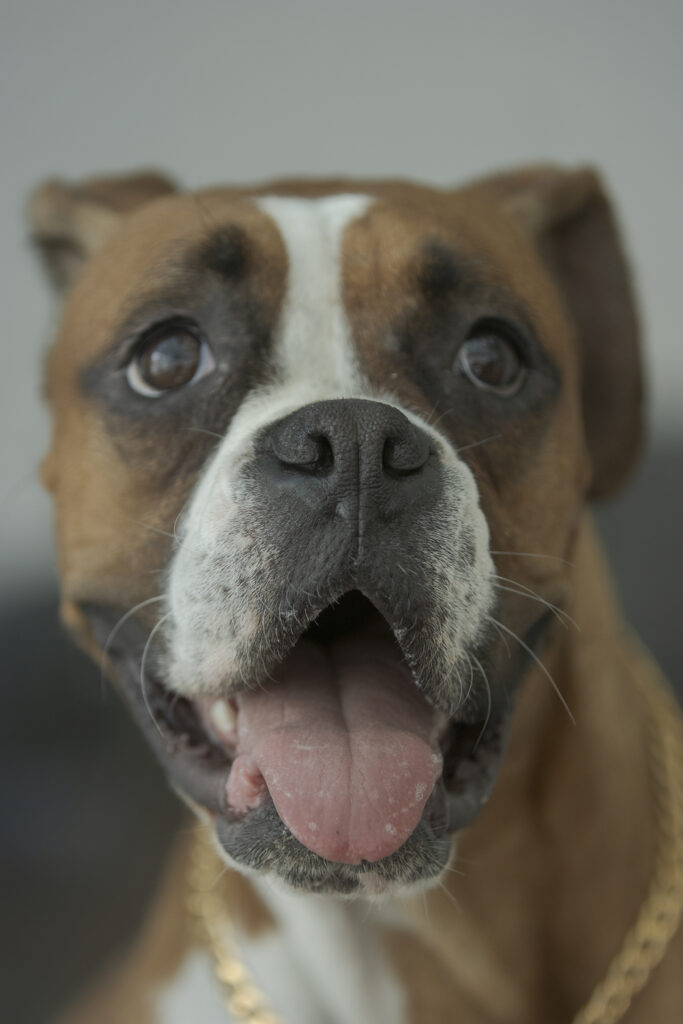
The Boxer is an athletic, people-focused German working breed known for expressive faces, playful energy, and a close bond with family. A well-matched Boxer needs daily exercise, varied reward-based training, indoor companionship, careful heat management, and health screening that reflects the breed’s cardiac and cancer risks. People considering a still larger companion should compare the space, handling and bloat precautions in the Great Dane guide. Readers comparing athletic working companions can also review the Doberman Pinscher guide for exercise, training and health-screening needs.
Is a Boxer right for you?
A Boxer can thrive with an active household that wants an involved companion and can provide training, exercise, supervision, and regular veterinary care. Many remain exuberant well into adulthood. Their jumping, pawing, and full-body play can overwhelm people who expect a naturally calm dog, so manners must be taught early and reinforced consistently.
Boxers generally want to live with their people. Long hours alone without exercise or enrichment can lead to distress, barking, chewing, and frantic greetings. Their short muzzle and coat also make them poorly suited to outdoor housing: they can overheat in warm weather and become cold in low temperatures.
Size, lifespan, coat, and appearance
| Trait | Typical Boxer |
|---|---|
| Height | Females about 21.5–23.5 inches; males about 23–25 inches at the shoulder |
| Weight | Males commonly 65–80 lb; females are often about 15 lb lighter |
| Life expectancy | Commonly 10–12 years, with individual variation |
| Coat | Short, smooth, close-lying coat in fawn or brindle, often with white markings |
| Build | Square, muscular, medium-large working dog with a broad muzzle |
A Boxer should look powerful without being coarse or overweight and should move freely. The natural ears fold forward; cosmetic ear cropping and tail docking remain restricted or prohibited in many places and provide no pet-care benefit. White Boxers are not albino, though predominantly white individuals have an increased risk of congenital deafness.
Temperament and family compatibility
Many Boxers are affectionate, alert, playful, and confident. They may be reserved until introduced to strangers and can become useful watchdogs, but fearfulness or uncontrolled aggression should never be treated as desirable protection. Early, positive exposure to people, surfaces, handling, sounds, and suitable dogs helps develop stable behavior.
Boxers can be devoted family companions, yet their size and bouncing play require supervision around children, older adults, and anyone unsteady on their feet. Teach four paws on the floor, settling on a mat, and calm greetings. Children should never climb on, hug tightly, disturb food, or follow a dog into its quiet retreat.
Compatibility with other dogs varies. Use gradual introductions and separate high-value resources. Cats and small pets require careful management because chase behavior can occur. A successful history with one animal does not guarantee safety with every unfamiliar pet.
Exercise, enrichment, and heat safety
Healthy adults usually need vigorous activity every day, divided into manageable sessions. Brisk walks, hiking in cool weather, retrieve, scent games, agility foundations, and obedience practice can work well. Puppies need shorter self-paced play and should avoid repetitive forced running or high jumping while joints are developing.
Give the brain a job through food puzzles, nose work, trick training, controlled tug, and problem-solving games. Exercise alone will not teach calm behavior; deliberately reward resting, waiting at doors, and disengaging from excitement. A securely fenced area is useful, but yard access does not replace shared activity.
The short muzzle can reduce cooling efficiency. Avoid hard exercise in heat or humidity, choose cooler hours, carry water, and stop for heavy or noisy breathing, slowing, weakness, disorientation, vomiting, or collapse. Never leave a Boxer in a parked vehicle. Seek urgent veterinary help for suspected heat illness.
Training, social development, and time alone
Boxers learn quickly when sessions are brief, varied, and rewarding. Repetition without purpose can lose their attention. Teach recall, loose-leash walking, drop, leave-it, cooperative handling, visitor routines, and an emergency stop. Harsh corrections can create fear or conflict and do not show the dog what behavior will earn reinforcement.
Adolescence often brings renewed jumping, pulling, and impulsive play. Continue structured practice beyond puppy class and prevent rehearsal of unwanted behavior with gates, leashes, and prepared enrichment. A qualified reward-based trainer can help before problems become established.
Build alone time gradually from short calm absences. Destruction at exits, persistent vocalization, drooling, toileting only when alone, or escape injuries may signal separation-related distress. Ask a veterinarian and behavior professional for help rather than relying on punishment or prolonged panic.
Feeding and healthy weight
Feed a complete and balanced diet appropriate for age, health, activity, and body condition. Measure portions, count treats, and adjust intake with veterinary guidance. Ribs should be easy to feel beneath a light covering and a waist should be visible from above. Extra weight adds joint strain and makes cooling harder.
Divide food into measured meals and avoid intense exercise immediately around a large meal. Deep-chested breeds can develop gastric dilatation-volvulus, a life-threatening stomach expansion and twist. A swollen painful abdomen, repeated unproductive retching, restlessness, weakness, or collapse requires immediate emergency care.
Fresh water must always be available. Secure chocolate, xylitol, grapes, raisins, medicines, compost, and rubbish. Discuss any supplements with a veterinarian because unnecessary products can unbalance the diet or interact with treatment.
Coat, skin, nails, and dental care
The short coat usually needs weekly brushing and occasional bathing. Check the skin for lumps, redness, hair loss, or persistent itching while grooming. Clean facial folds gently and keep them dry, without applying harsh products. Sun protection and shade may be appropriate for lightly pigmented skin under veterinary guidance.
Inspect ears for odor, discharge, redness, or repeated shaking. Trim nails before they alter gait and examine paws after rough surfaces. Brush teeth daily with dog toothpaste when possible and arrange professional dental assessment as advised. Bad breath, bleeding gums, loose teeth, or facial swelling can indicate painful disease.
Health screening and veterinary care
Responsible Boxer breeding programs use cardiac evaluations, hip and elbow assessment, thyroid testing, and breed-relevant DNA tests according to current parent-club recommendations. Important concerns include aortic or subaortic stenosis, arrhythmogenic right ventricular cardiomyopathy, hip disease, degenerative myelopathy, thyroid disease, and several cancers. Screening lowers risk but cannot guarantee health.
Ask how cardiac screening was performed and at what age; a simple puppy examination is not equivalent to recommended adult testing. Fainting, exercise intolerance, unusual weakness, persistent cough, rapid breathing at rest, or an irregular heartbeat warrants prompt veterinary assessment.
Check the body regularly for new or changing lumps and have them examined rather than guessing by appearance. Seek emergency care for collapse, breathing difficulty, heat illness, repeated retching, seizures, severe injury, or pale or blue gums. Routine examinations, vaccination based on exposure, parasite prevention, and dental care remain essential.
Reproduction, neutering, and responsible ownership
Breeding requires mature dogs with stable behavior, verified breed-specific health results, functional breathing, sound structure, and pedigrees reviewed for inherited disease. Breeders must plan for pregnancy and birth emergencies, puppy social development, careful placements, and lifetime return support.
Discuss spaying or neutering timing with a veterinarian using the individual dog’s health, size, behavior, and pregnancy-prevention needs. Until then, securely separate intact males and females whenever mating is possible. Follow local licensing, leash, identification, housing, and breeding rules.
Choosing a puppy or rescue Boxer
A responsible breeder should provide verifiable health results, explain cardiac monitoring and family longevity, discuss temperament openly, and use a contract with return support. Avoid sellers advertising rare colors, extreme size, guaranteed protection, or immediate shipping without assessing the home.
Boxers and Boxer mixes are also available through shelters and rescues. Ask about exercise, dog and cat history, visitor behavior, time alone, handling, skin, lumps, cardiac findings, and current medications. An adult dog’s established energy and temperament may make matching easier.
Common questions
Are Boxers good family dogs?
Many are affectionate family companions, but their energetic jumping and strength require training and close supervision around children or unsteady adults.
How much exercise does a Boxer need?
Healthy adults usually need substantial daily activity and mental work, adjusted for age, conditioning, medical status, temperature, and humidity.
Do Boxers tolerate hot weather?
They can overheat quickly because of their short muzzle, so exercise should be reduced and shifted to cooler times with water, shade, and indoor cooling.
Do Boxers shed?
Yes. Their short coat sheds throughout the year, though weekly brushing usually controls loose hair and supports skin checks.
What health tests should Boxer breeders perform?
Current parent-club guidance includes cardiac evaluation plus hip, elbow, thyroid, and relevant DNA testing; buyers should verify actual results.
The smaller French Bulldog shares important heat and airway-management concerns but has different exercise and handling needs.
Sources and image credit
- American Kennel Club: Boxer breed profile
- American Boxer Club: health screening recommendations
- Orthopedic Foundation for Animals: Boxer screening requirements
- Featured photograph by Mostafa Meraji via Wikimedia Commons, dedicated to the public domain under CC0 1.0. Image may be cropped for presentation.
