
Poodle
Poodle care guide covering Standard, Miniature and Toy sizes, temperament, exercise, grooming, feeding, training, health screening, and family compatibility.
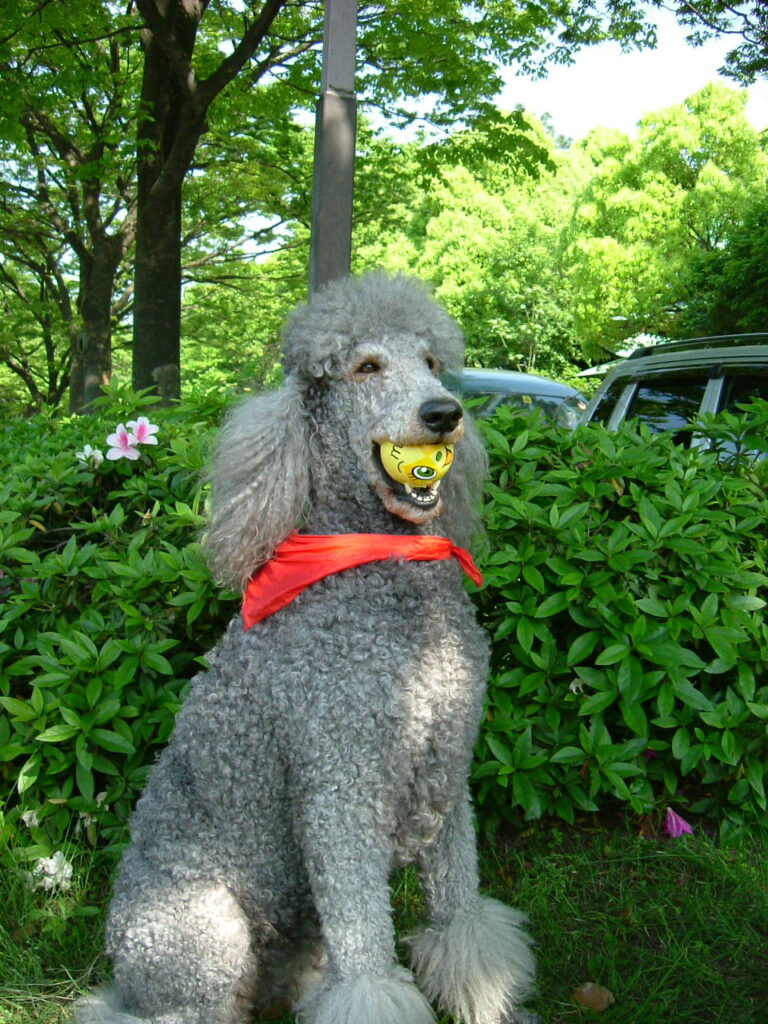
The Poodle is an athletic, people-oriented dog breed recognized in Standard, Miniature, and Toy size varieties. Although elaborate show clips make the breed instantly recognizable, Poodles were developed from water-retrieving dogs and remain active, trainable companions. Their coat sheds relatively little, but it grows continuously and demands regular brushing and clipping. Choosing a Poodle therefore means planning for exercise, mental work, professional-quality grooming, and health screening appropriate to its size. For another trainable small dog with regular professional grooming needs, compare the wiry coat and terrier behavior in the Miniature Schnauzer guide.
Standard, Miniature, and Toy Poodles
In the American Kennel Club standard, a Standard Poodle stands over 15 inches at the shoulder, a Miniature stands over 10 inches and up to 15 inches, and a Toy is 10 inches or under. All three share the same basic proportions and breed identity. “Teacup,” “moyen,” and marketing terms based on color are not additional AKC size varieties.
| Variety | Typical adult size | Practical considerations |
|---|---|---|
| Standard | Over 15 in; commonly about 40–70 lb | Most powerful and athletic; needs larger equipment and substantial activity |
| Miniature | Over 10–15 in; often around 10–15 lb | Active small companion; sturdy but still needs careful handling |
| Toy | 10 in or under; often around 4–6 lb | Physically delicate; vulnerable to falls, rough play, and cold |
Published weights are guides rather than targets. Body condition and sound development matter more than achieving a particular number. Life expectancy varies by size and individual health, with the broad breed range commonly given as about 10–18 years.
Is a Poodle right for you?
Poodles can suit households seeking a responsive dog that enjoys training, games, and close contact with people. They often learn patterns quickly and can excel in obedience, agility, scent work, retrieving, and assistance roles. Intelligence does not make them self-training: they can also learn barking, stealing, or attention-seeking behaviors when those actions are repeatedly rewarded.
The coat is the largest routine commitment. A clipped pet still needs brushing, bathing, drying, ear and nail care, and appointments about every four to eight weeks depending on coat length and the groomer’s advice. A household unwilling to maintain the coat should choose a different breed rather than allowing painful mats to develop.
Temperament and family compatibility
Poodles are often alert, active, and attached to their families. Many are friendly after appropriate social development, while some are initially reserved or sensitive to noise and abrupt handling. Size does not determine personality, and no breed label guarantees behavior around children or other animals.
Standard Poodles can knock over a small child when excited. Toy Poodles can be injured by squeezing, dropping, or rough play. Adults should supervise, teach children to leave a resting or eating dog alone, and provide a quiet retreat. Introduce cats and dogs gradually, using gates, leads, and separate resources until everyone is relaxed.
Exercise and enrichment
All Poodle varieties need daily activity, though the form and amount should match size, age, health, and fitness. Walks with time to sniff, retrieving, safe swimming, food puzzles, and short training sessions provide a useful mix. Standard Poodles usually tolerate longer outings than Toy Poodles, but miniature dogs are not ornaments and still need meaningful exercise.
Puppies need short, varied exploration and ample sleep rather than forced distance running or repeated jumping. Small dogs should not be carried everywhere; safe movement helps confidence and fitness. Use a well-fitted life jacket around boats or deep water, supervise swimming, and prevent access to strong currents, cold water, or harmful algae.
Teach an off-switch as well as active skills. Reward settling on a mat, provide safe chews, and vary games so the dog does not depend on frantic ball chasing. Sudden reluctance to exercise, jumping, or using stairs warrants veterinary assessment.
Training and social development
Start reward-based training when the puppy arrives. Focus on recall, loose-lead walking, toilet habits, calm greetings, comfortable handling, giving up objects, and resting alone for gradually increasing periods. Tiny dogs need the same clear, kind education as larger dogs; allowing behavior because it seems harmless can leave a Toy Poodle anxious or difficult to handle.
Socialization should pair new people, sounds, surfaces, vehicles, grooming tools, veterinary handling, and calm dogs with safety and choice. Do not force a worried puppy into contact. Regular practice with feet, face, ears, and body makes lifelong grooming and medical care less stressful. Choose trainers and groomers who use patient, low-stress methods.
Feeding and healthy weight
Feed a complete and balanced diet for the dog’s life stage and size. Toy puppies have small stomachs and may need appropriately divided meals, while Standard puppies require controlled growth and a large-breed formulation when advised by the veterinarian. Homemade diets should be formulated by a qualified veterinary nutritionist.
Measure portions and include treats in the daily calories. You should be able to feel the ribs beneath a light covering and see a waist from above. Weight should be monitored under the coat, which can conceal changes. Toy owners must prevent access to gaps where food, medication, or toxic objects can fall. Standard owners should know the emergency signs of gastric dilatation-volvulus: abdominal swelling, repeated unproductive retching, distress, and collapse.
Coat care and grooming
Poodle hair grows continuously and traps shed hairs within the curls. This reduces loose hair around the home but does not make the breed maintenance-free. Brush and comb to the skin often enough to prevent tangles, concentrating behind the ears, under the legs, around the collar, and where limbs rub the body. Surface brushing can leave hidden mats at the roots.
Most pets wear a short, practical trim and visit a groomer every four to eight weeks. Long coats may need daily attention. Never cut close to the skin with scissors because skin can pull into a mat. Severe matting requires professional removal and may reveal irritation or wounds underneath.
Routine care also includes nail trimming, dental cleaning with dog-safe toothpaste, and ear checks. Hair removal from the ear canal is not automatically necessary for every dog; ask the veterinarian and groomer what suits the individual. Odor, pain, redness, discharge, or repeated head shaking needs veterinary assessment.
Allergies and shedding
Poodles are low shedding compared with many breeds, but no dog is completely hypoallergenic. Allergens come from saliva, skin secretions, and dander as well as material carried on the coat. An allergic person should spend time with adult Poodles and consult an allergy professional before acquiring one. Grooming and cleaning may reduce exposure but cannot guarantee symptoms will disappear.
Health screening and veterinary care
Health priorities differ by variety. Standard Poodles can be affected by hip dysplasia, eye disease, thyroid disease, sebaceous adenitis, von Willebrand disease, epilepsy, and gastric dilatation-volvulus. Miniature and Toy Poodles have concerns that include patellar luxation, eye disease, and Legg-Calvé-Perthes disease. DNA tests answer specific genetic questions but do not replace orthopedic, eye, or veterinary examinations.
The Poodle Club of America publishes separate screening recommendations for Toy, Miniature, and Standard breeding dogs. Ask for verifiable results for both parents that match the puppy’s variety. A claim that dogs were “vet checked” is not equivalent to breed-relevant screening. Testing reduces avoidable risk but cannot promise lifelong health.
Routine examinations, dental care, vaccination based on veterinary advice, parasite prevention, and lean body condition remain important. Seek prompt care for collapse, abdominal swelling, persistent lameness, seizures, eye pain, skin inflammation, ear disease, or major changes in appetite, thirst, or behavior.
Reproduction, neutering, and safety
Breeding should involve mature dogs with stable temperament, documented variety-specific health results, sound structure, and a plan for every puppy. Pregnancy, birth, and neonatal care can become emergencies, especially in very small dogs. Breeding for unusually tiny size can magnify welfare risks and should not be supported.
Discuss spaying or neutering with a veterinarian using the individual dog’s size, sex, development, medical history, lifestyle, and pregnancy-prevention needs. There is no single timing rule for every Poodle variety. Until a decision is made, securely separate intact males and females during fertile periods.
Use a secure lead, identification, and fencing, and check local licensing and microchip rules. Toy Poodles need protection from falls, large-dog collisions, predatory wildlife, and being stepped on. Standards need early lead skills and safe transport because adult strength can make poor management hazardous.
Choosing a puppy or rescue Poodle
A responsible breeder should clearly identify the size variety, discuss temperament and grooming, provide verifiable health results, show where puppies are raised, and remain available after purchase. Avoid sellers advertising “teacup” dogs, guaranteed allergy-free coats, extreme colors, immediate shipping, or perfect health and temperament.
Poodles and Poodle mixes also enter shelters and breed rescues. Ask what staff have observed around people, dogs, grooming, food, handling, and time alone. A mixed dog’s adult coat, size, and shedding cannot always be predicted from appearance or parentage, so adopters should prepare for full Poodle-level grooming unless the mature coat proves easier.
Common questions
Are Poodles hypoallergenic?
No dog is completely hypoallergenic. Poodles shed relatively little, but allergens remain in saliva, dander, skin secretions, and the environment.
How often does a Poodle need grooming?
Most pets need thorough home brushing and professional-quality clipping roughly every four to eight weeks, with the exact schedule determined by coat length and condition.
What are the three Poodle sizes?
The AKC recognizes Standard, Miniature, and Toy Poodles. The varieties share one breed standard apart from height divisions.
Are Poodles good family dogs?
Many are affectionate, trainable companions, but the individual dog’s temperament, size, social development, and supervision around children determine compatibility.
Do Poodles need a lot of exercise?
They are active dogs that need daily physical activity and mental work. The amount and intensity should match the dog’s size, age, health, and fitness.
If coat maintenance is a major deciding factor, compare the grooming and training needs of the Yorkshire Terrier and Shih Tzu.
Sources and image credit
- American Kennel Club: Poodle breed information and care
- Poodle Club of America: variety-specific health concerns and testing
- Poodle Club of America: official breed standard
- Featured photograph of a Standard Poodle by Sakurai Midori via Wikimedia Commons, licensed under CC BY-SA 3.0. It represents the Standard size variety; image may be cropped for presentation.
